
 Our top pick
Hilo: Hawaii Volcanoes National Park Flight
Helicopter tour
From$445 /person
See dates and book Free cancellation

Kilauea in the shortest air time. Take off from Hilo and be over the caldera in minutes, with pilots who know every crater and waterfall. Save nearly an hour of flying that a west-side departure burns just getting there.
“First helicopter ride and I was scared, only watching through the camera. Great team and skilled pilots who explain the scenery.”
Every flight here starts at Hilo or nearby, so you spend your air time over Kilauea, the Hamakua Coast and the waterfalls instead of crossing the island. Days run from a 50-minute loop to a full 10.5-hour ground and air combo.
Our top pick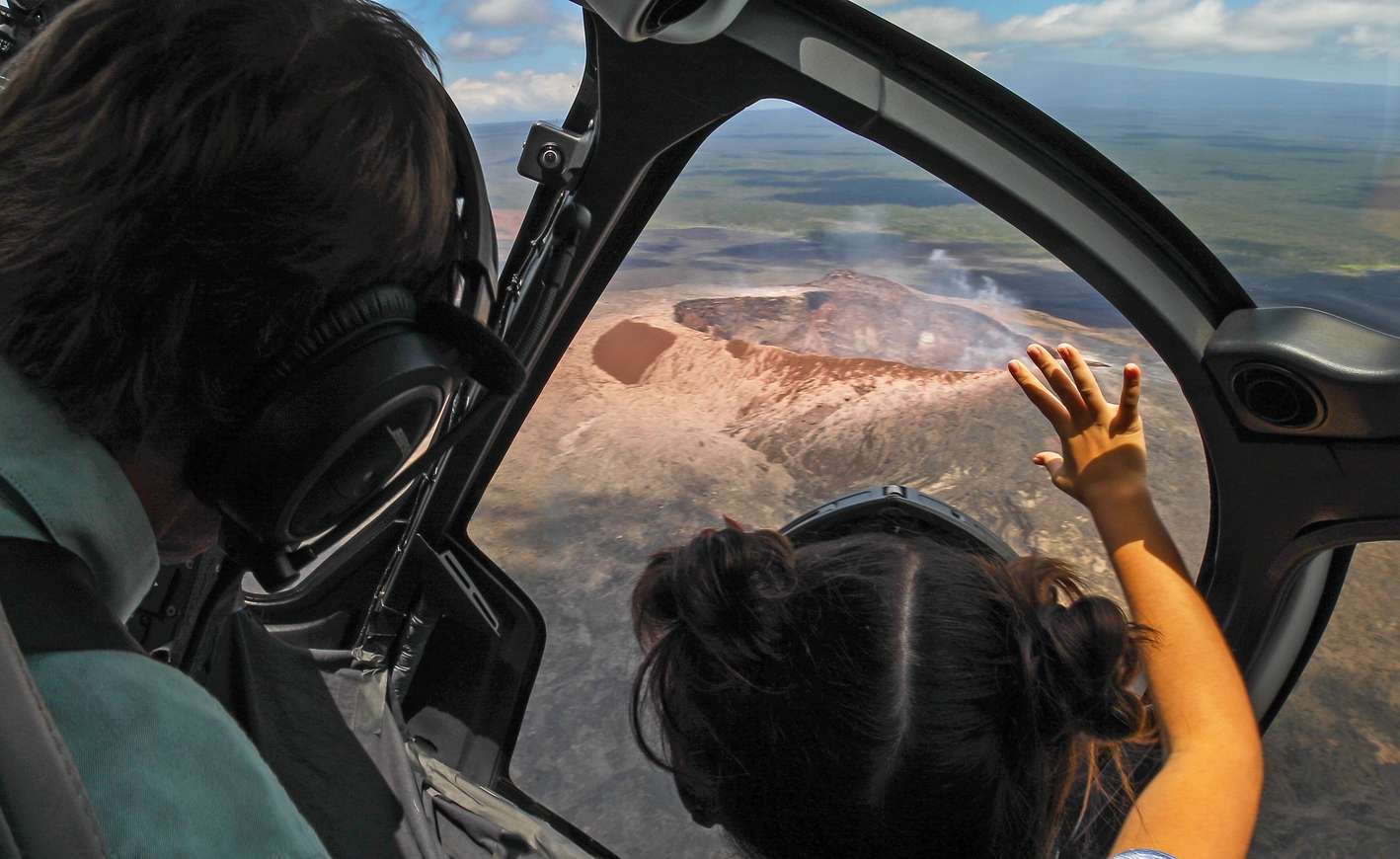
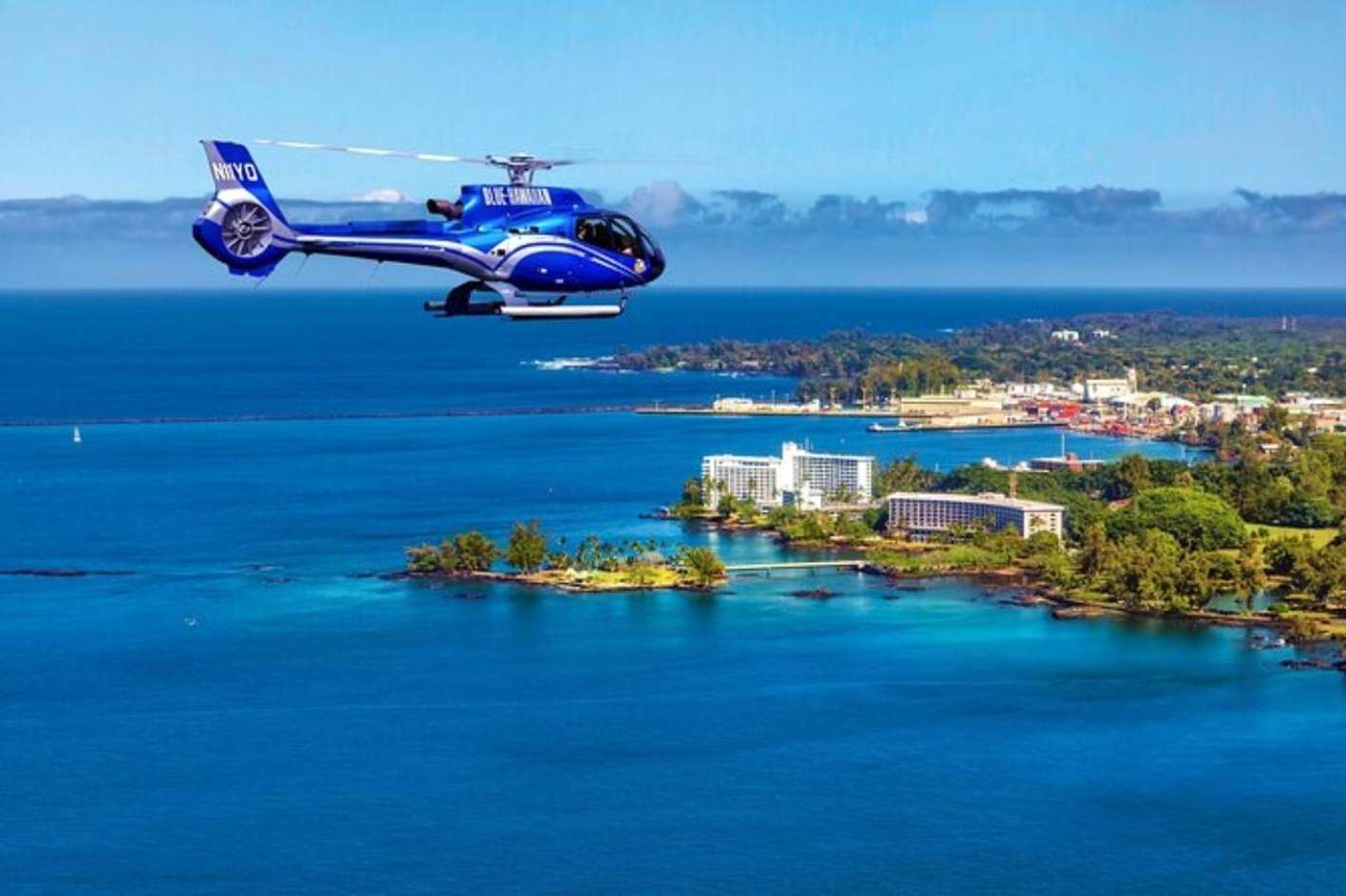
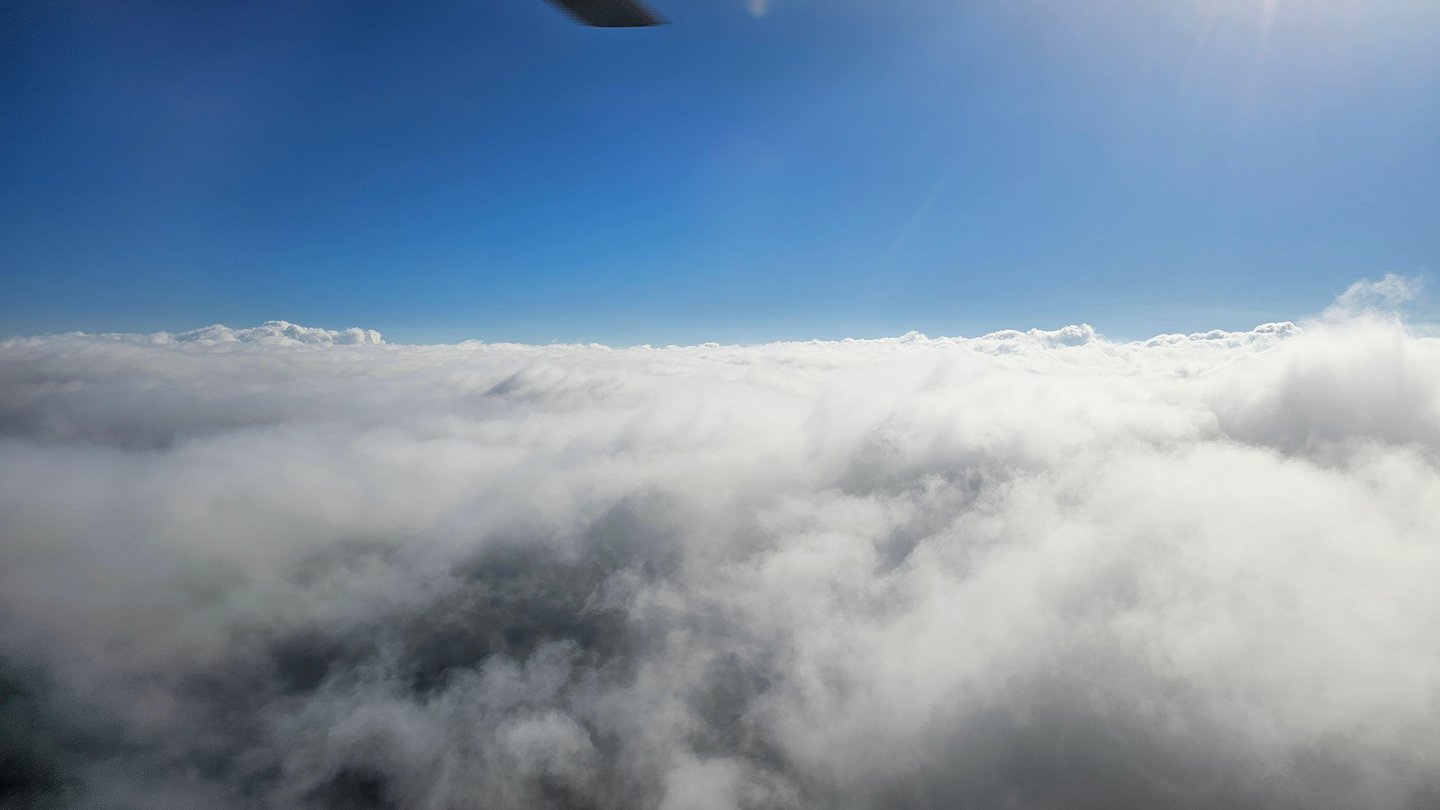
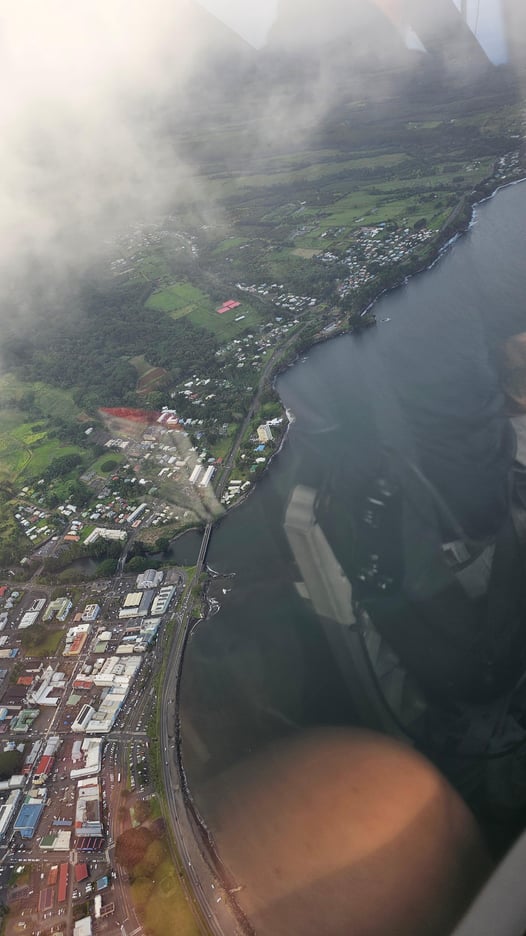
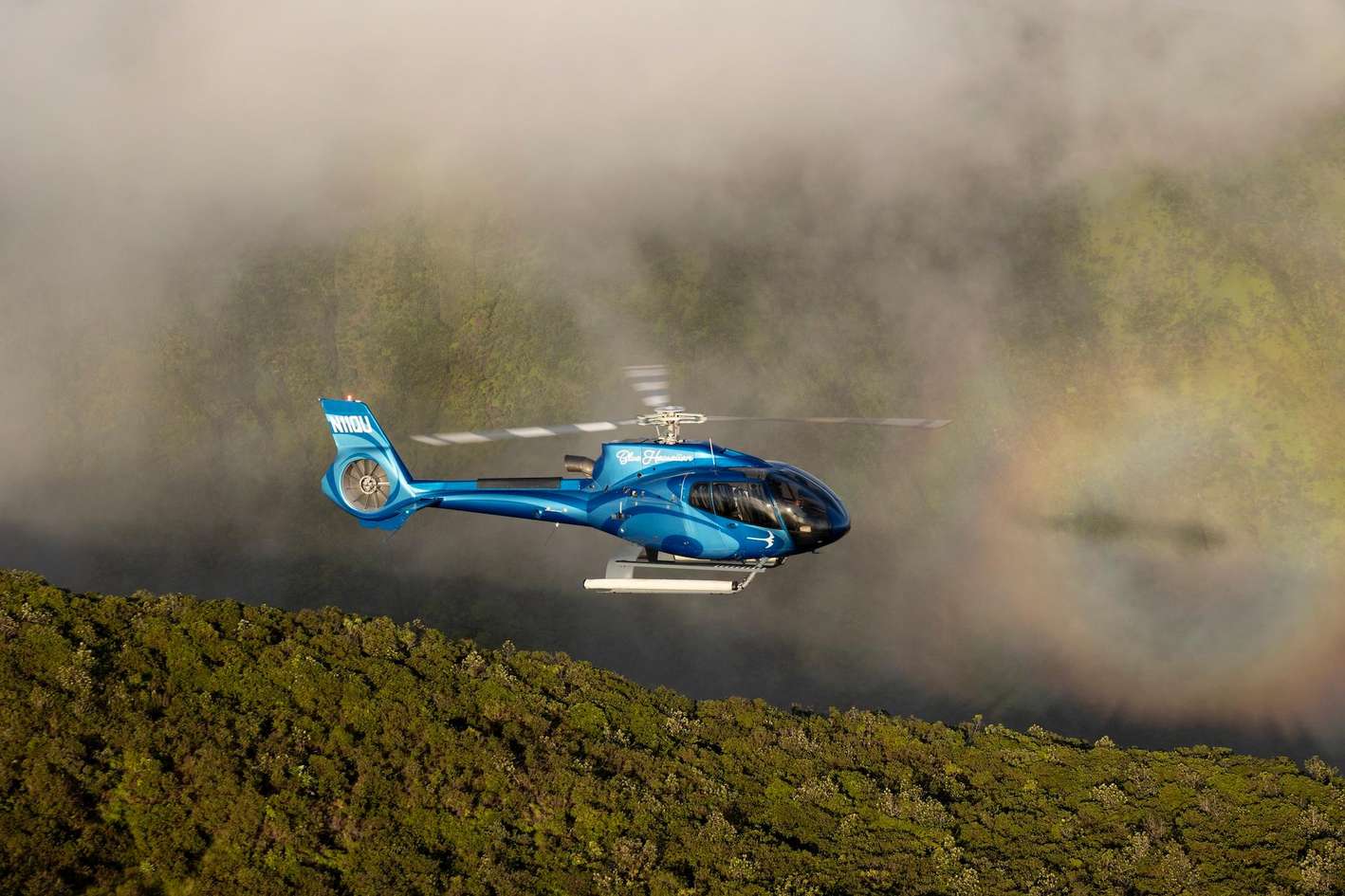
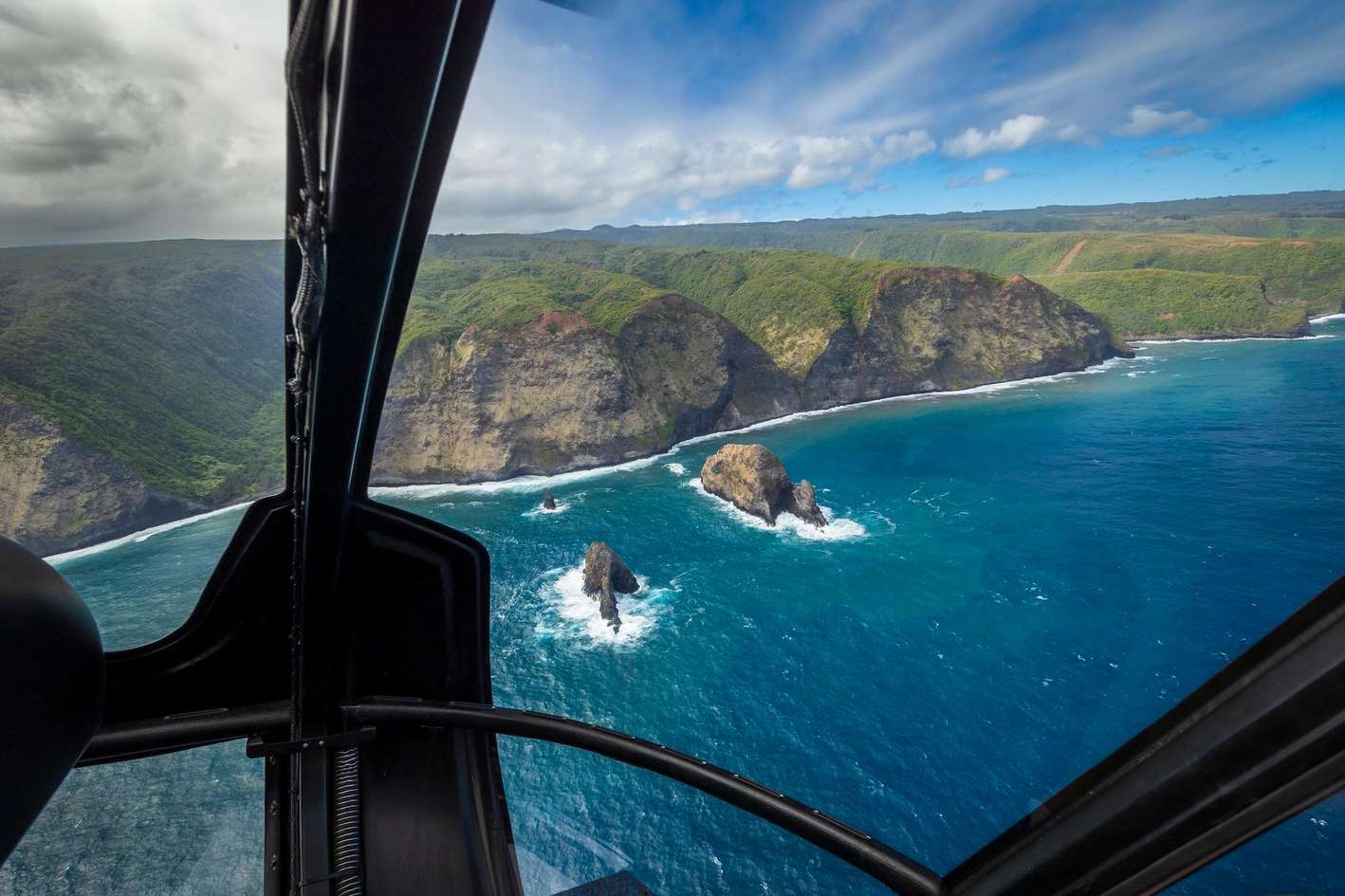
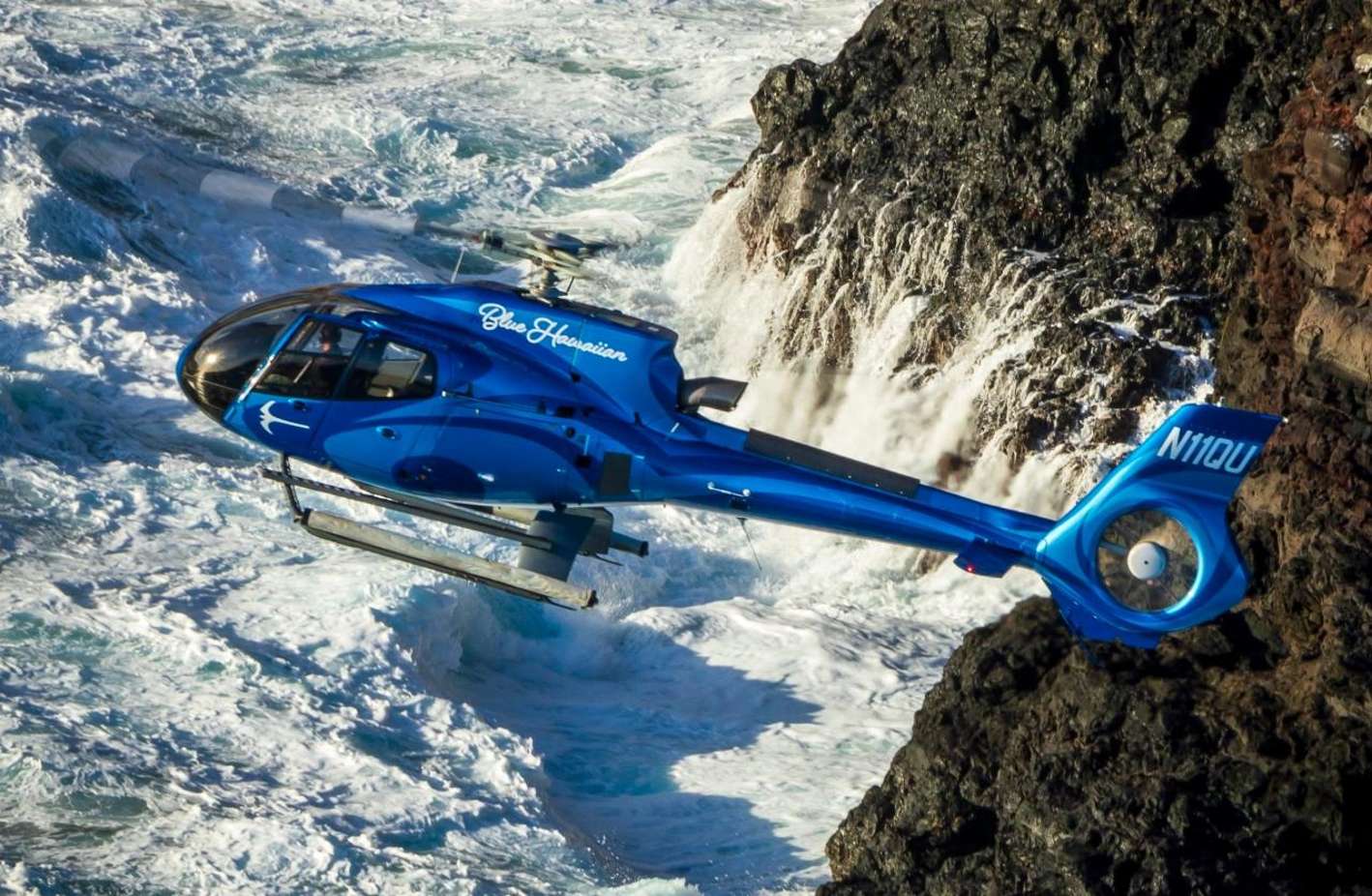
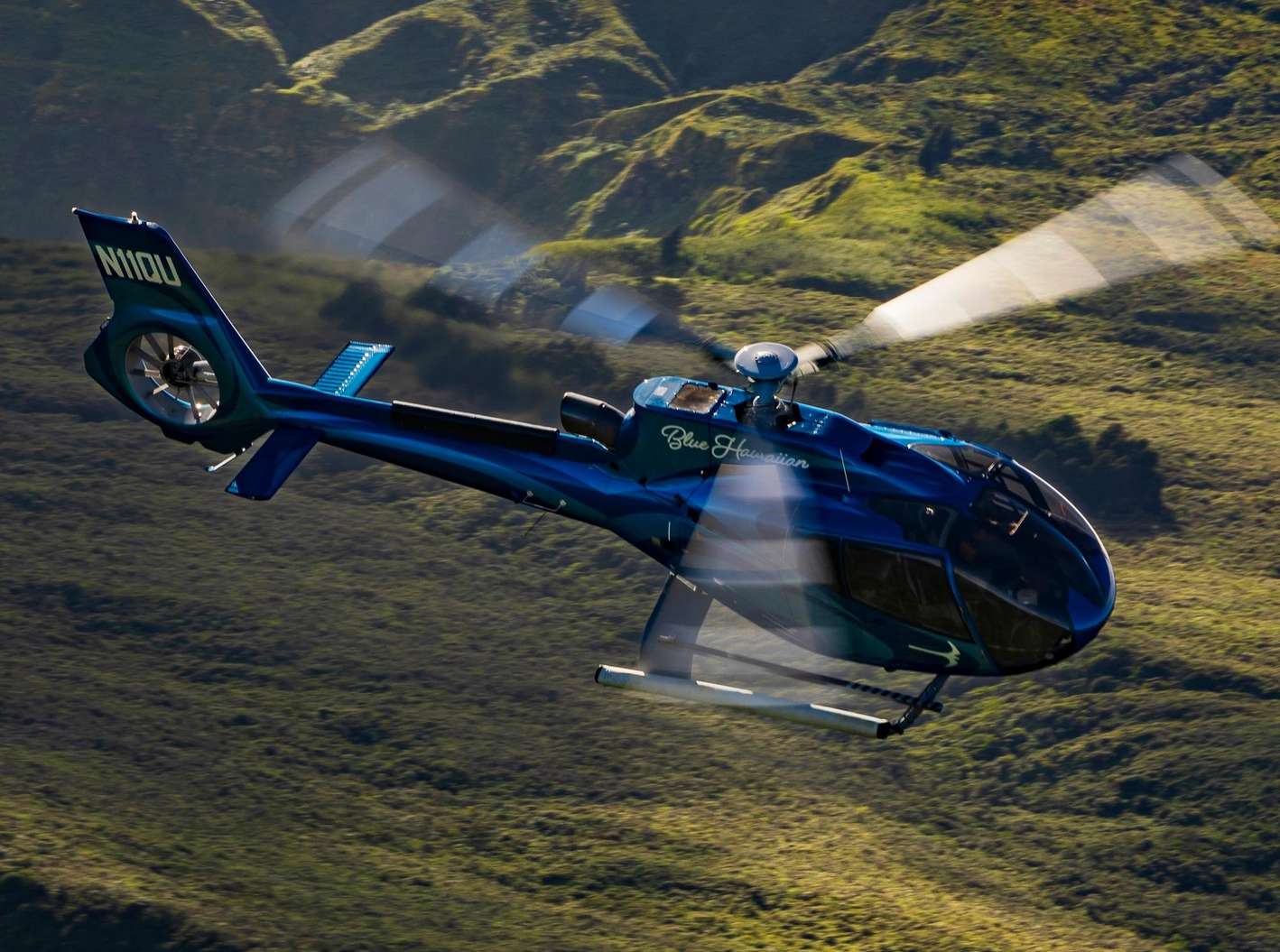





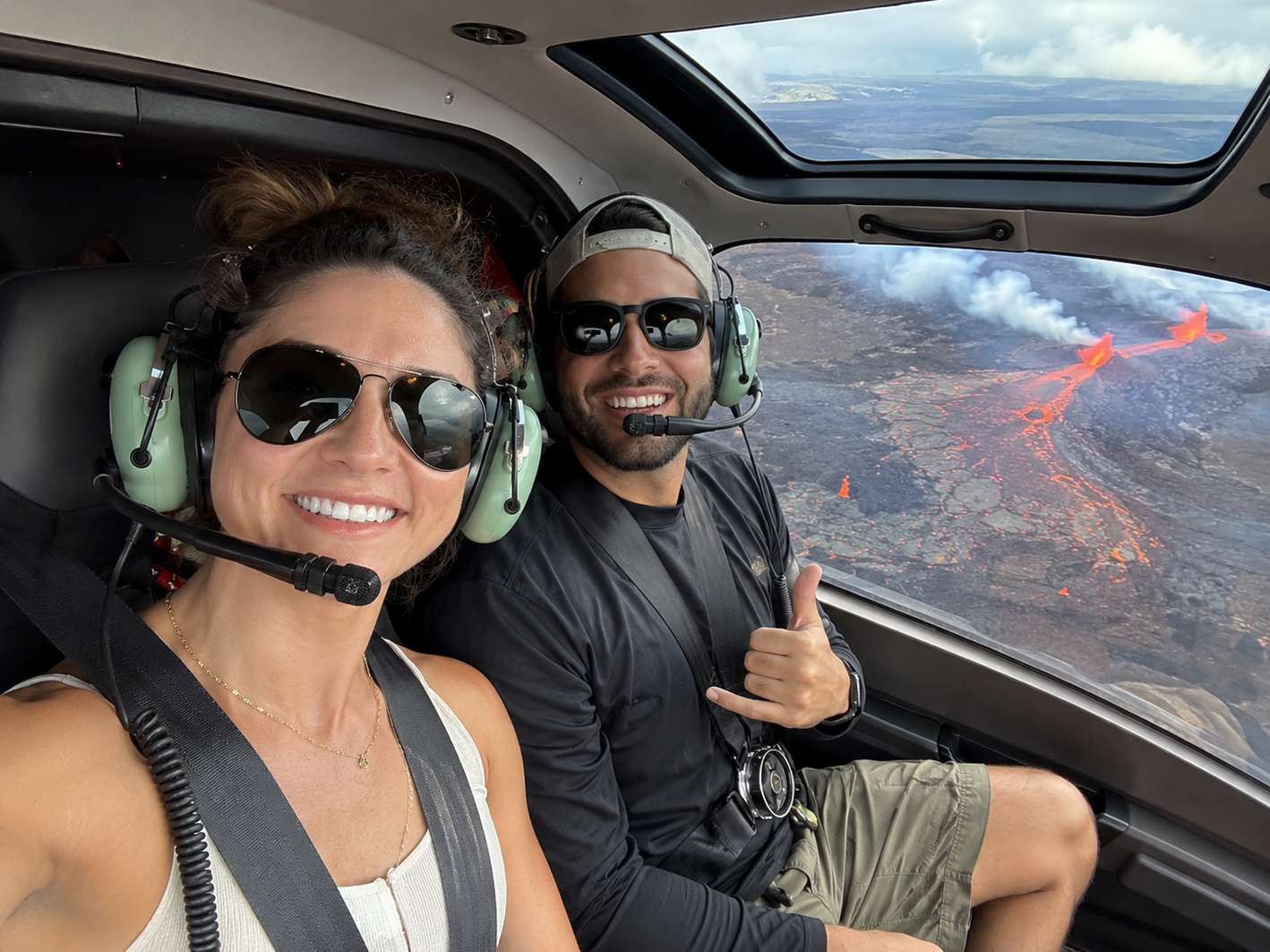
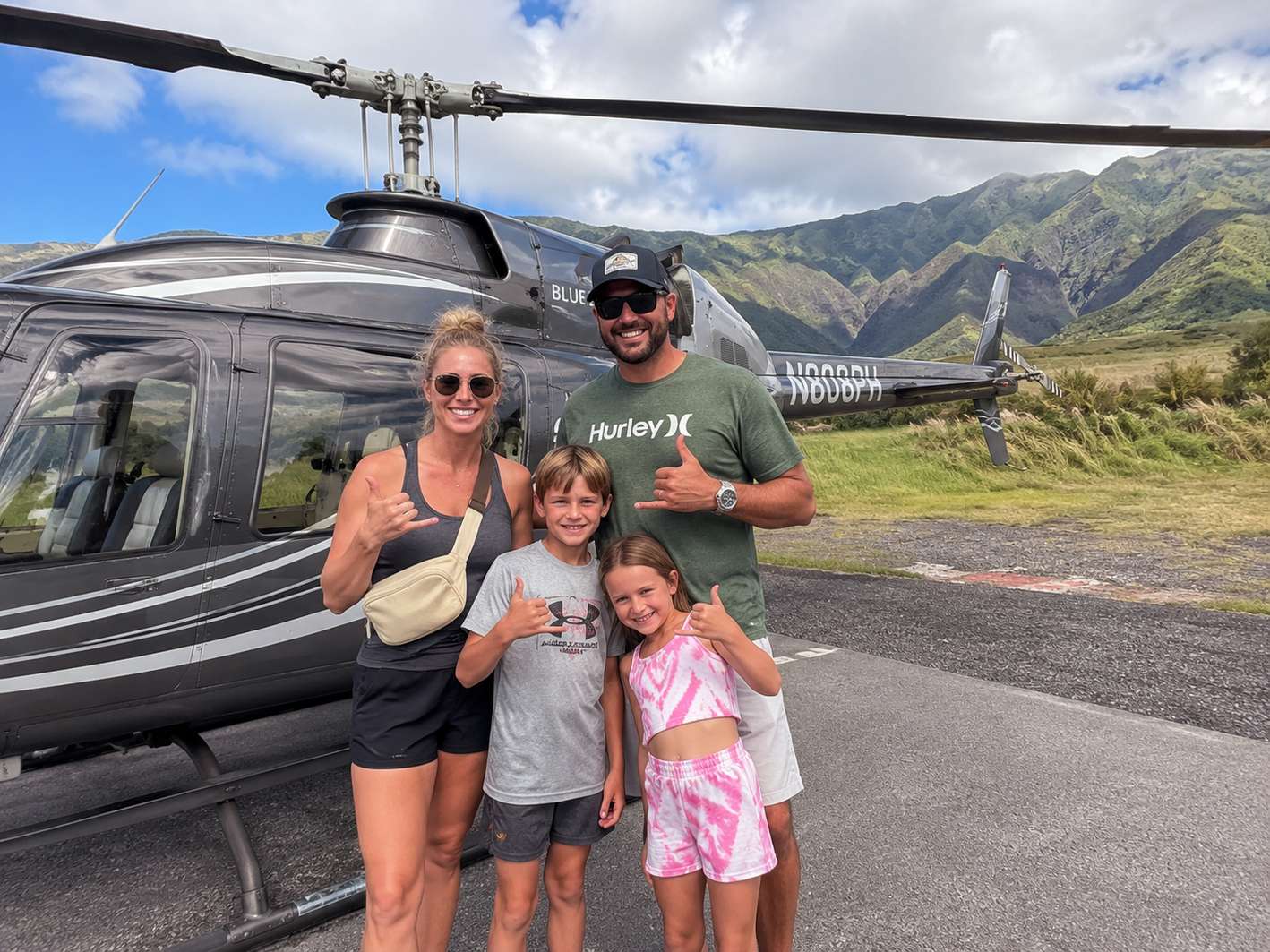


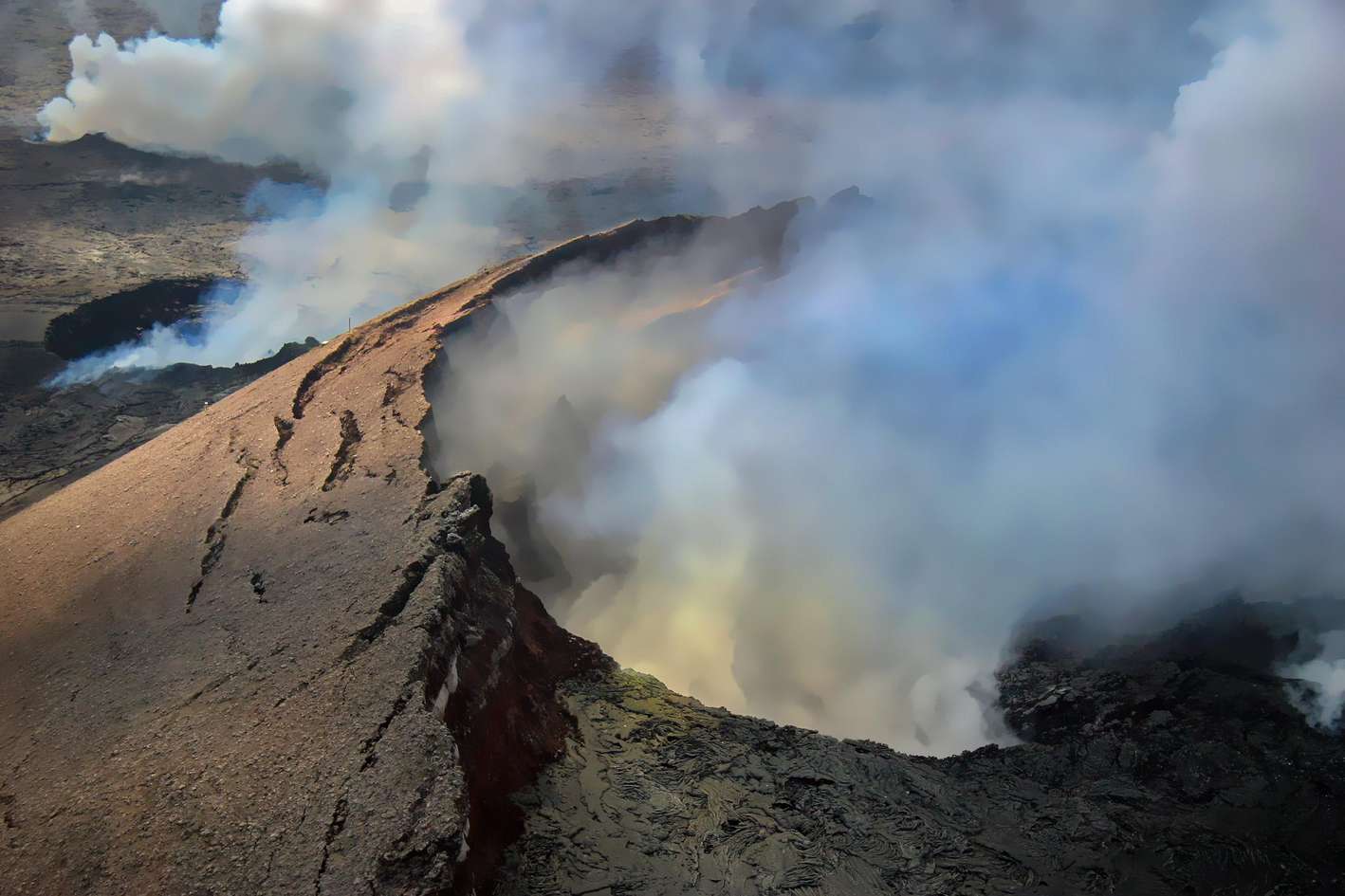
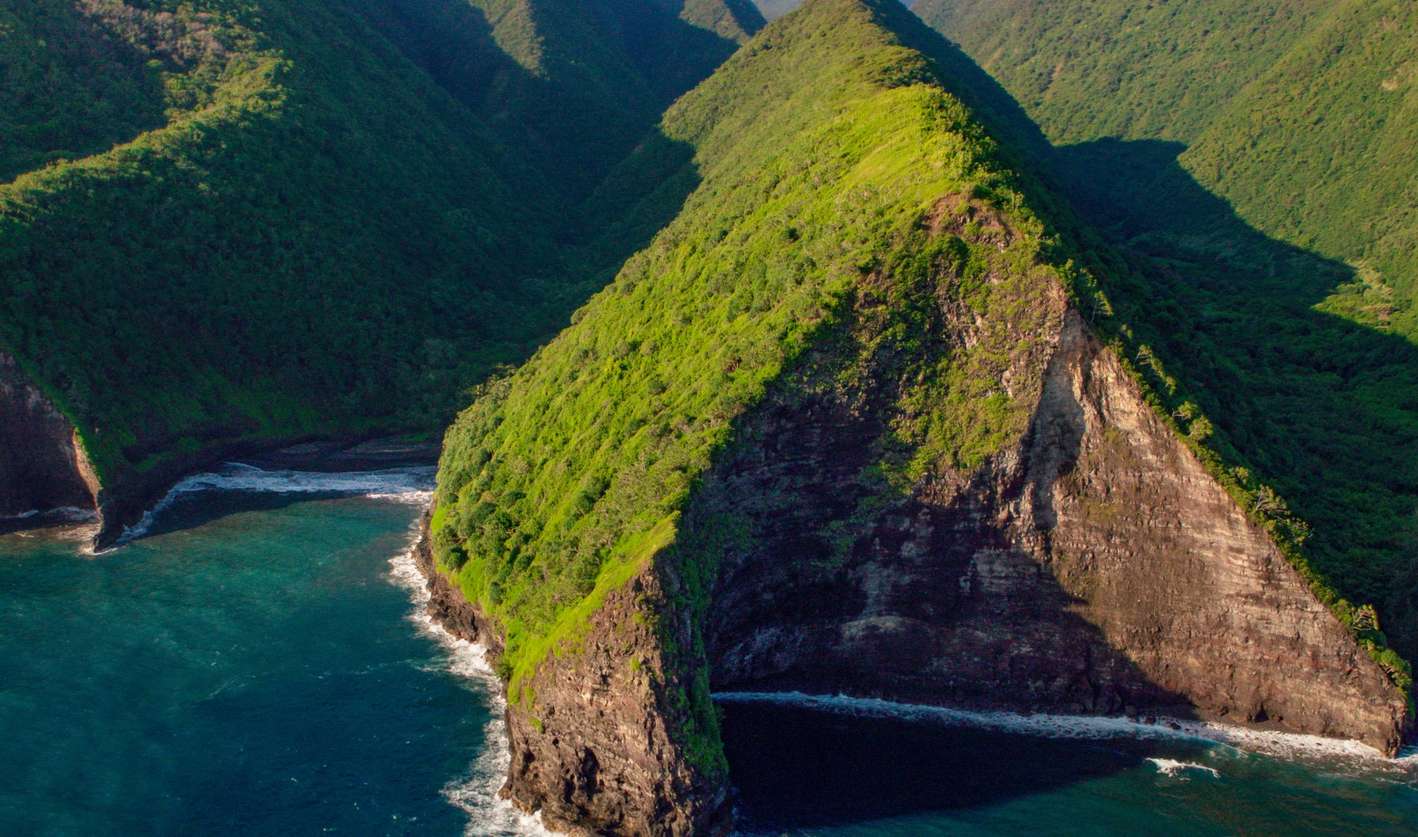
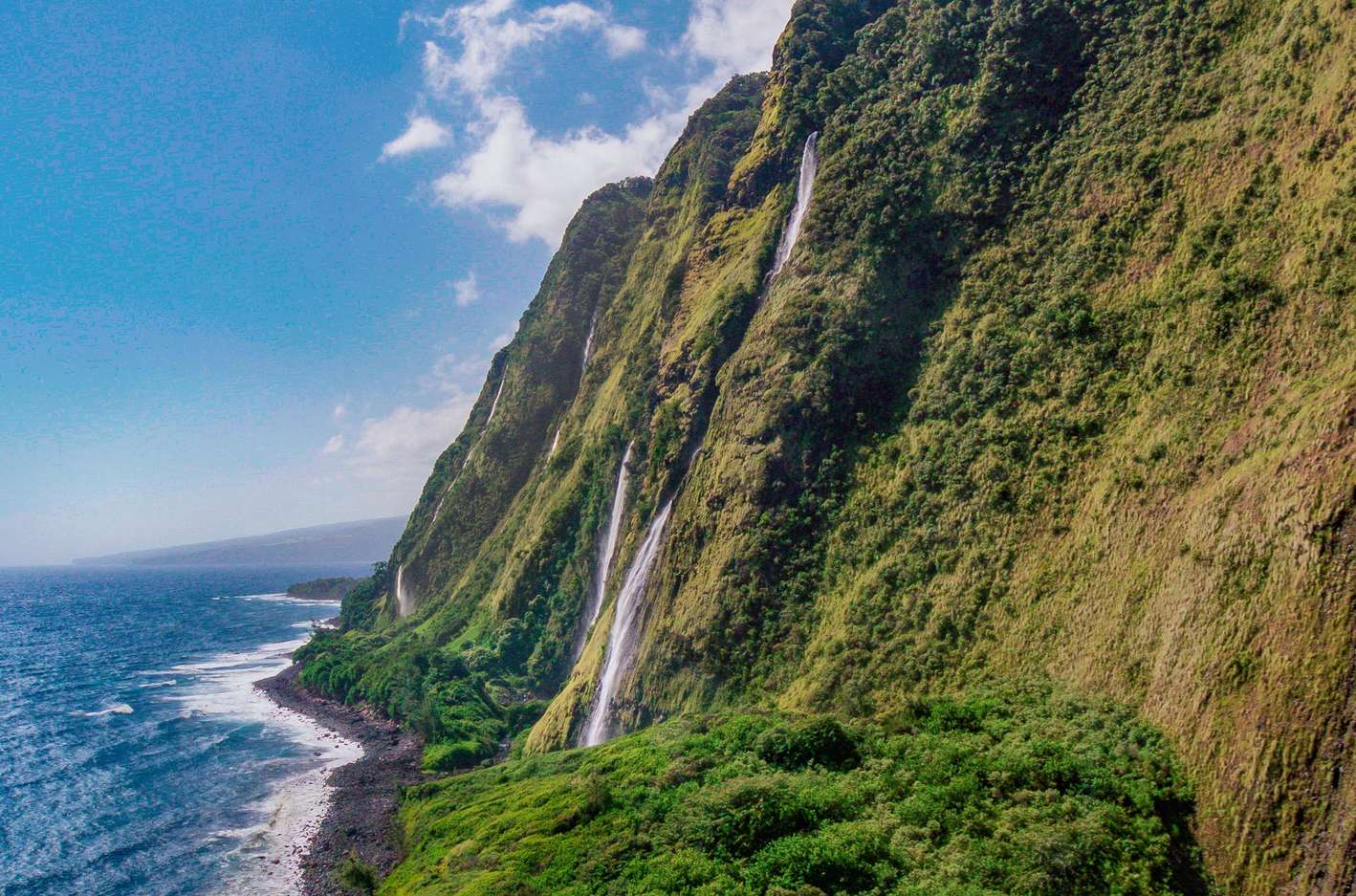
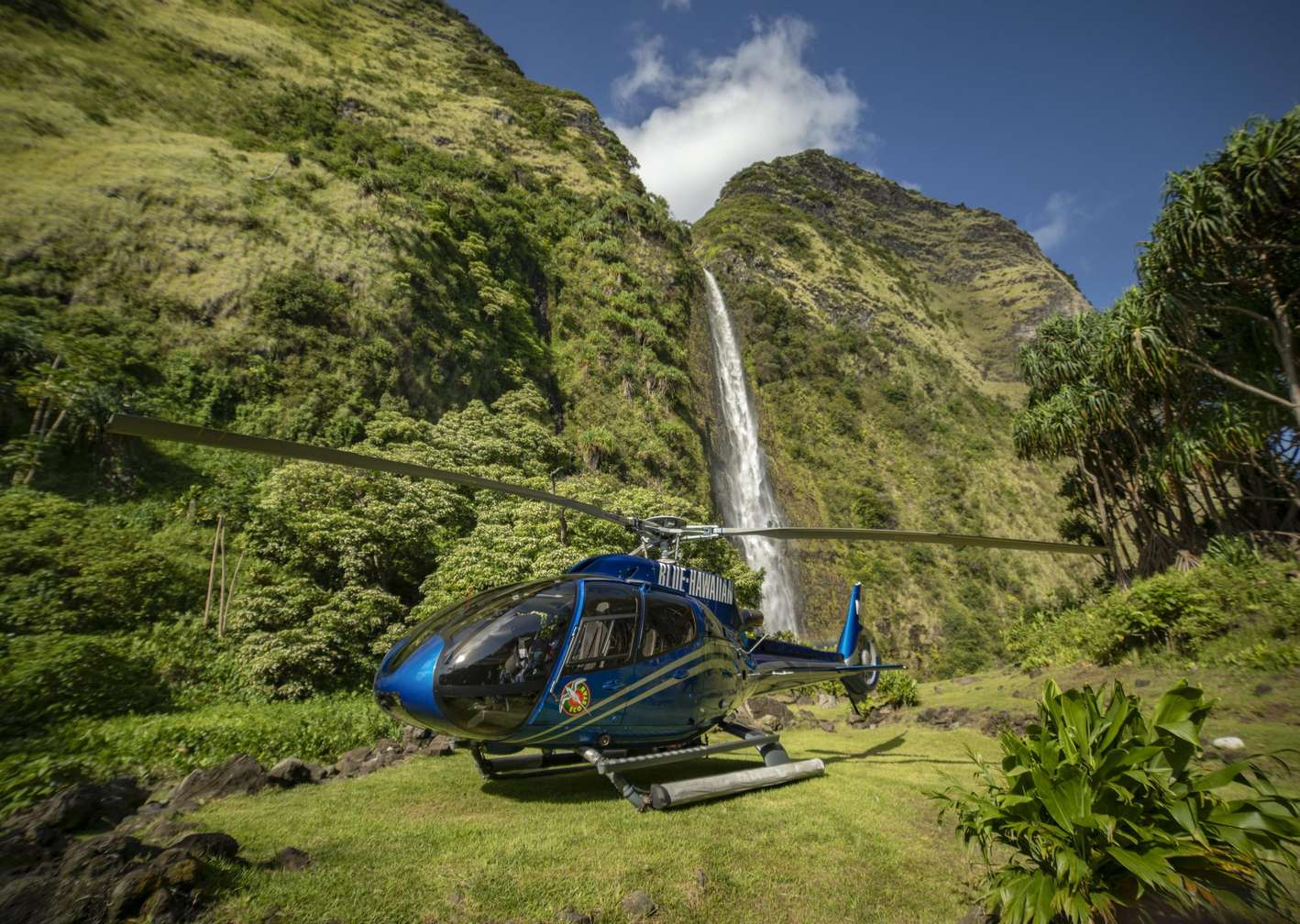
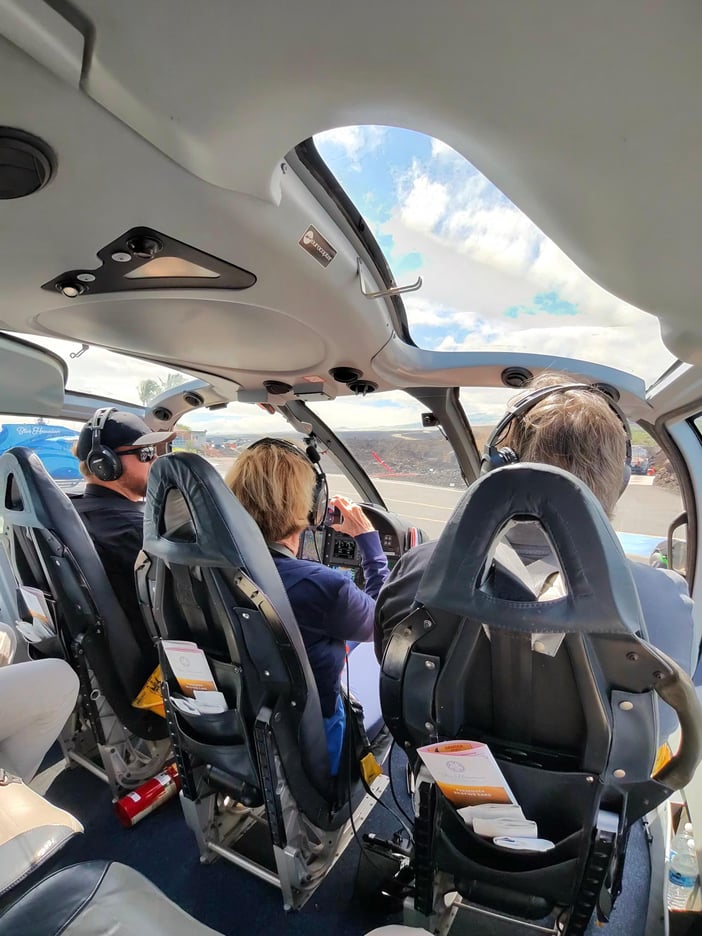
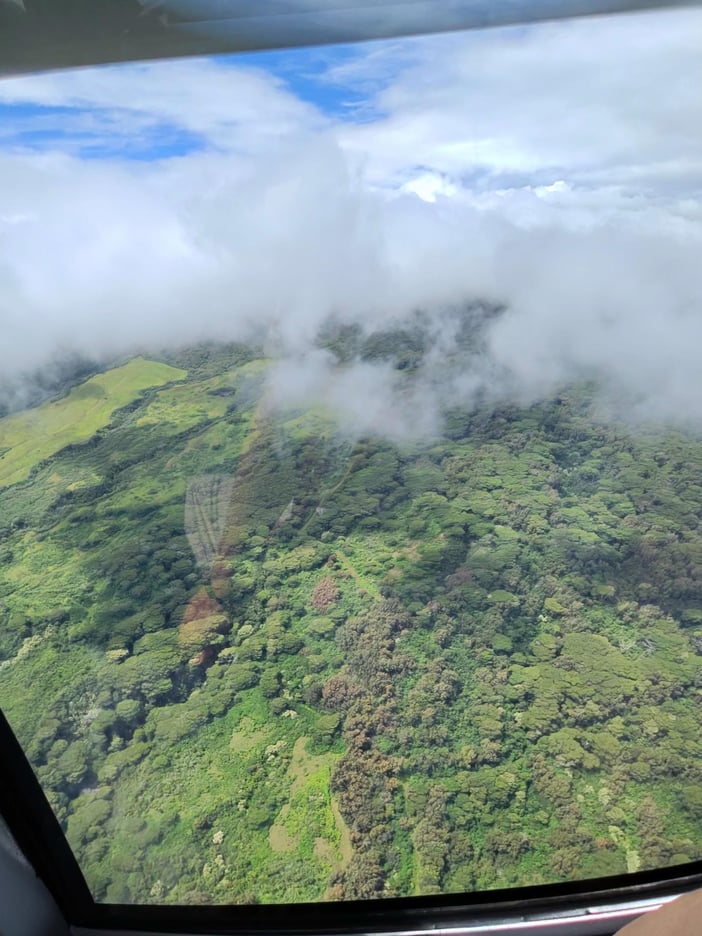
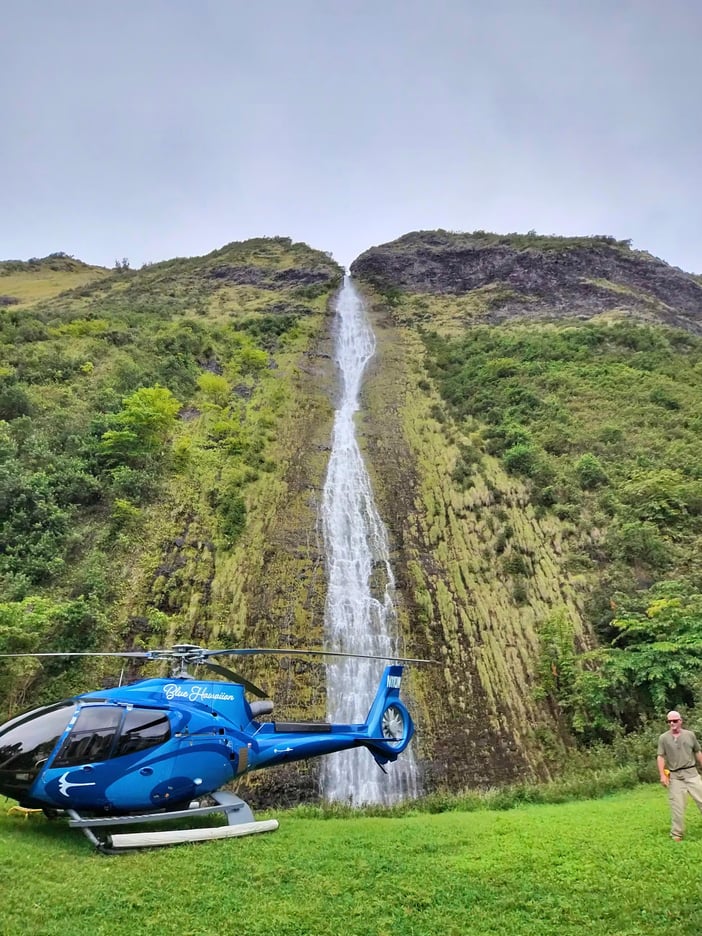
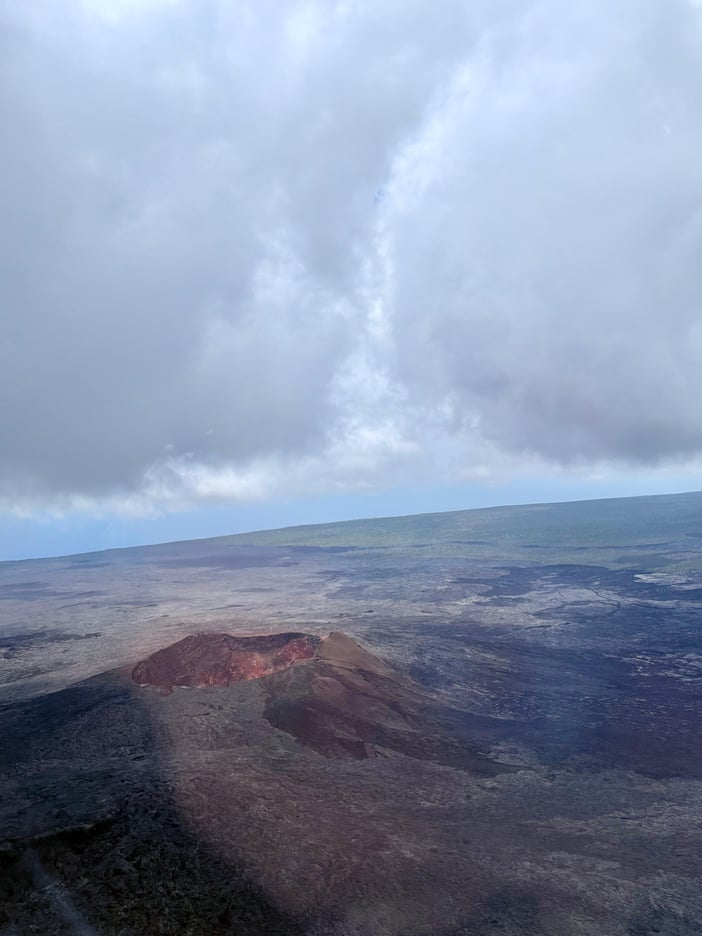
Worth it! Friendly staff, good seats, and our pilot reached Kilauea despite the vog, explaining.
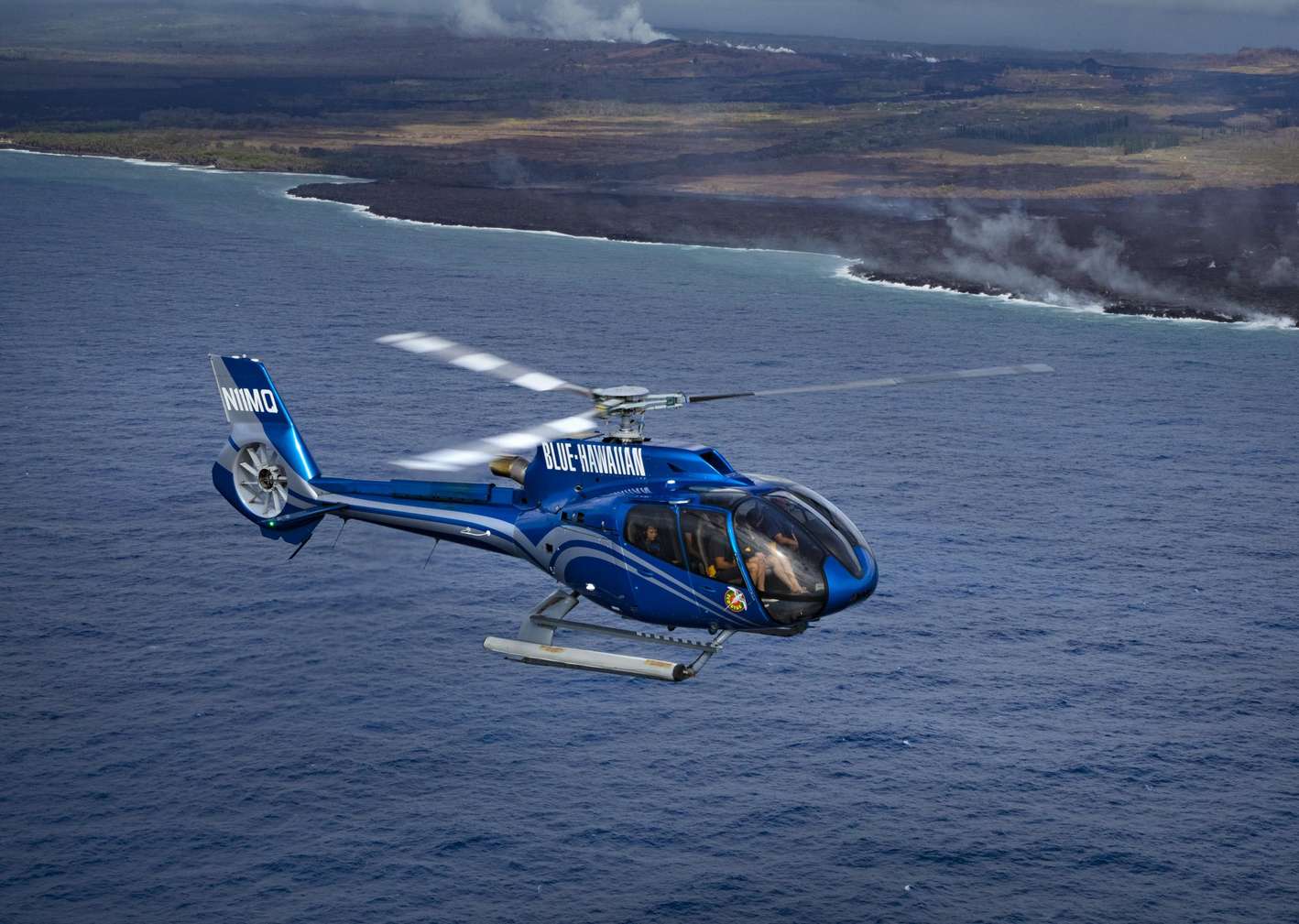
Drove ourselves there, easy check-in. Our pilot Dave was fantastic - knowledgeable and entertaining. Friendly, competent staff. Amazing time! Highly recommend booking through Blue Hawaiian!!
Our guide was super kind and knew tons about volcanoes and geology. Really nice trip - so much to see in one day.
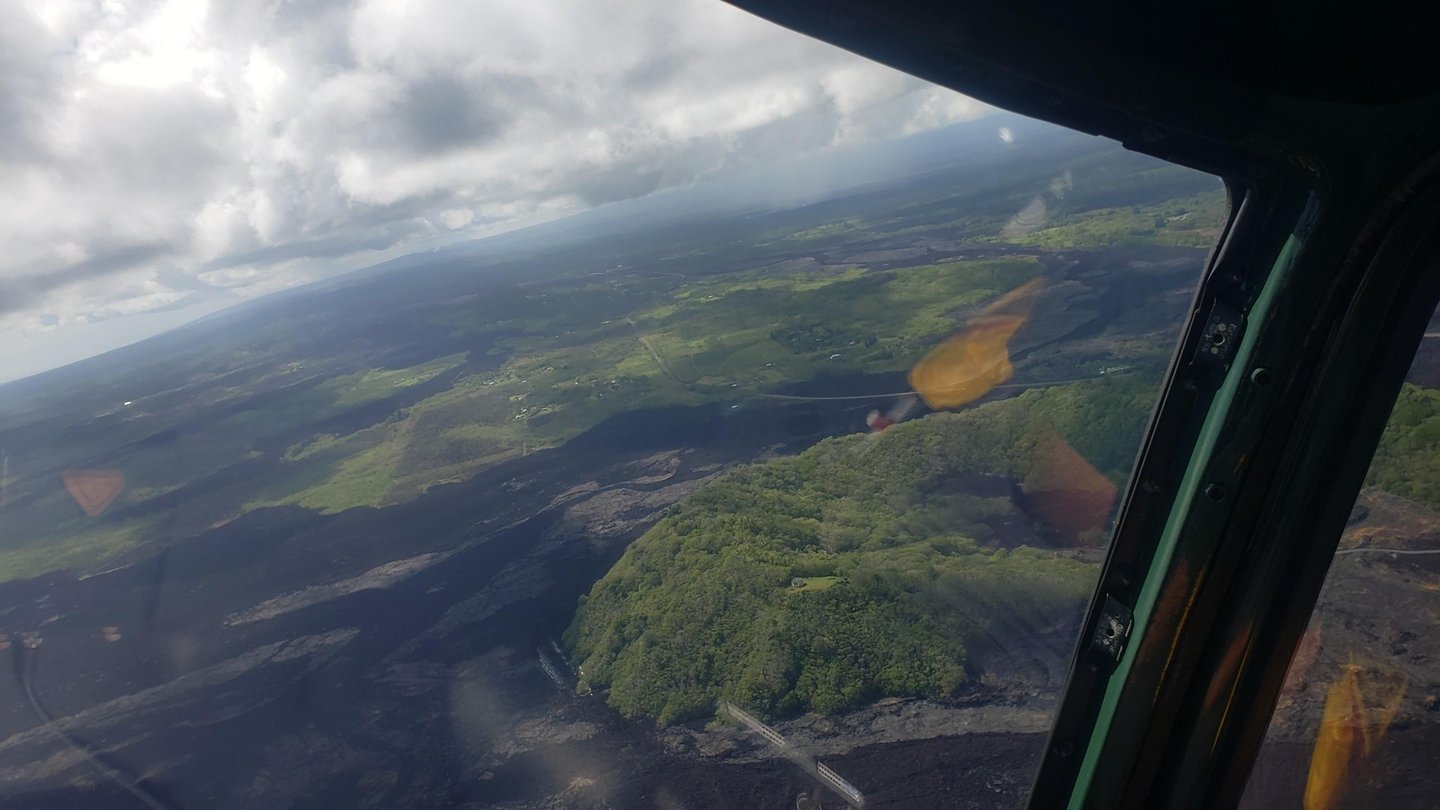
Totally worth it! Andrew was knowledgeable and skilled, the views breathtaking, and ground staff kept us safe, informed, and patient with scheduling. Safari Flights: 10 out of 10.
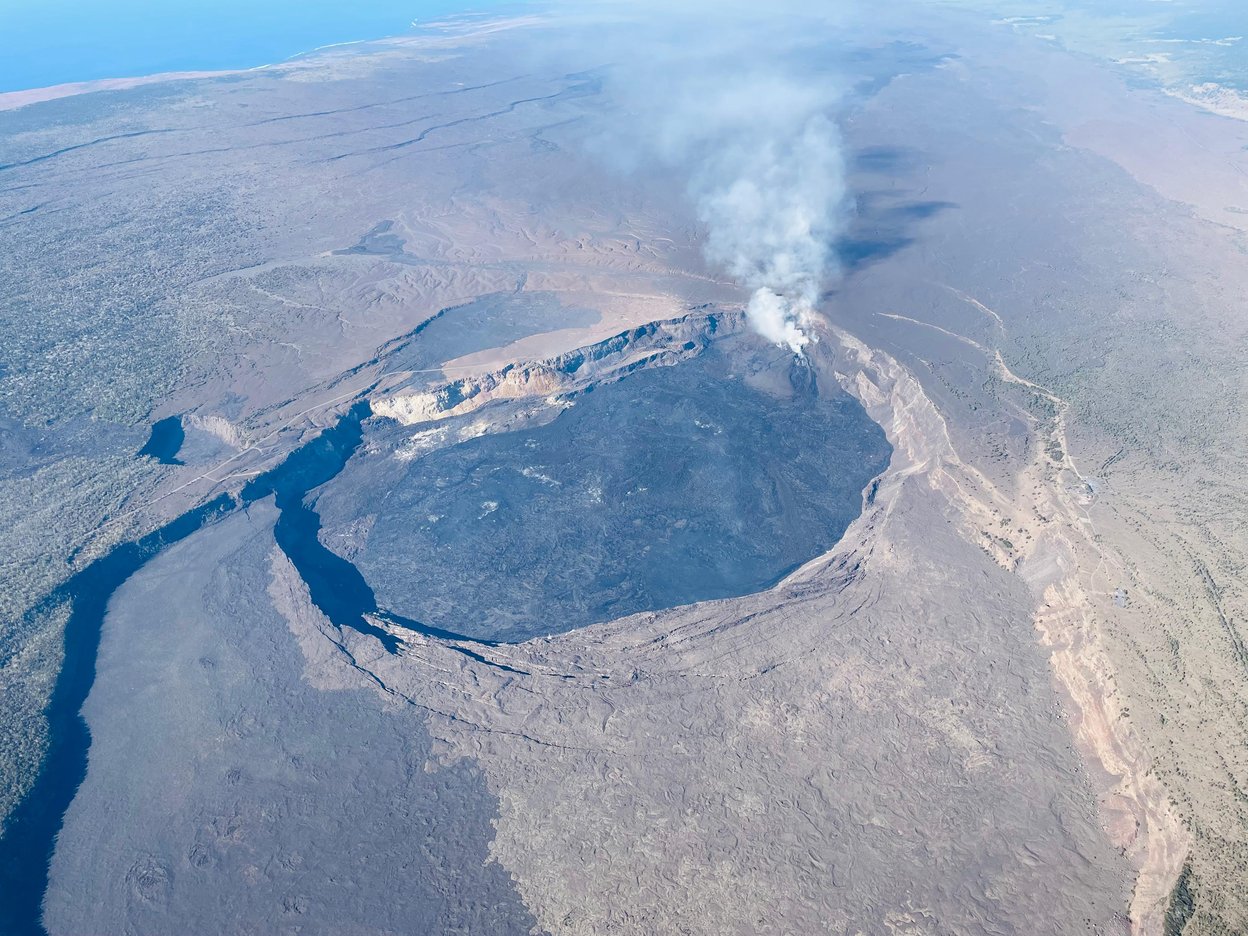
It was dreamy. Perfect weather, and our pilot Timm was outstanding - flew calmly and safely and narrated the whole way. Highly recommend.
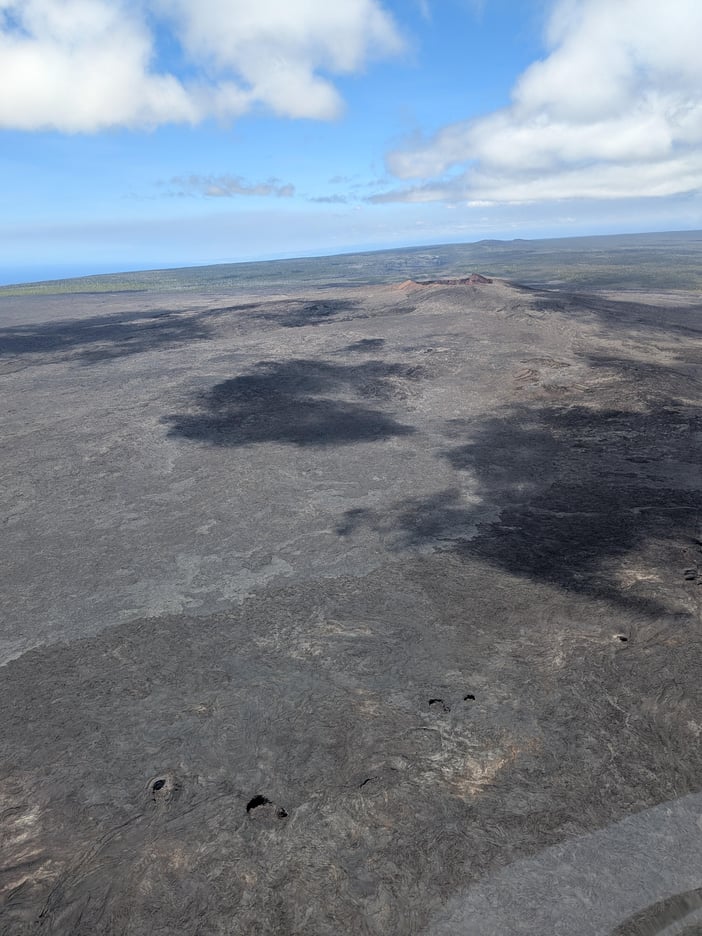
Kam is professional and knowledgeable, warns you before bumpy stretches, circles every site twice so both sides get the view, and answers all your island and volcano questions.
First flight ever and I was nervous, but Blue Hawaiian's great team and thorough safety briefing left me zero fear. Our pilot explained everything mid-flight. Flying over an active volcano is unforgettable.
Most reviewers praise their pilots, calling them knowledgeable, skilled and entertaining as they explain the volcanoes.
Several nervous first-time flyers say the ride felt smooth and the team soon had them leaning over the views.
Many travelers wish the weather had let them see more waterfalls and active lava, and some hope to fly again.
Choose a date early in your trip so a weather cancellation still leaves room to rebook. Aim for a morning slot between 8 and 11 am, when skies over Kilauea are clearest and the air is calmest.
Compare the routes: one flight runs an hour over the national park and Kilauea caldera, another spends 50 minutes on the volcano and Hamakua Coast, and a third focuses on waterfalls. Pick the route that matches what you want to see.
After payment, a confirmation arrives with your meeting point and check-in time, and the operator may message you about weight checks or changes. Note the cancellation window on your booking: most Hilo tours refund fully if you cancel 24 hours ahead, though one requires two days.
On the day, head to the check-in location in your confirmation rather than the main airline terminal. Helicopter guests check in at the Commuter Air Terminal, while General Lyman Terminal handles airline ticketing and baggage.
Arrive 45 minutes to an hour before departure with a passport or ID card, since late arrivals can lose their seat with no refund. Staff weigh every guest to balance the aircraft, and you will get a safety briefing before boarding.
2220 Kekuanaoa St
2220 Kekuanaoa St
SCP Hilo Hotel, Hilo Hawaiian Hotel, Hilo International Airport, United States, Grand Naniloa Hotel Hilo - a DoubleTree by Hilton
SCP Hilo Hotel, Hilo Hawaiian Hotel, Hilo International Airport, United States, Grand Naniloa Hotel Hilo - a DoubleTree by Hilton
SCP Hilo Hotel, Hilo Hawaiian Hotel, Hilo International Airport, United States, Grand Naniloa Hotel Hilo - a DoubleTree by Hilton
Visit, Sightseeing (30 minutes)
Pass by (15 minutes)
Pass by (15 minutes)
Scenic views on the way (50 minutes)
Scenic views on the way (1 hour)
Grand Naniloa Hotel Hilo - a DoubleTree by Hilton, SCP Hilo Hotel, Hilo Hawaiian Hotel, Hilo International Airport, United States
Grand Naniloa Hotel Hilo - a DoubleTree by Hilton, SCP Hilo Hotel, Hilo Hawaiian Hotel, Hilo International Airport, United States
Grand Naniloa Hotel Hilo - a DoubleTree by Hilton, SCP Hilo Hotel, Hilo Hawaiian Hotel, Hilo International Airport, United States
Low clouds, rain, and vog over the Hilo side can obscure the crater and force pilots to reroute the flight or cancel it outright.
Book your flight early in your trip, not on the last day, and aim for a morning slot between 8 and 11 am when skies over Kilauea are clearest; if weather cancels the tour, you can reschedule or get a full refund.
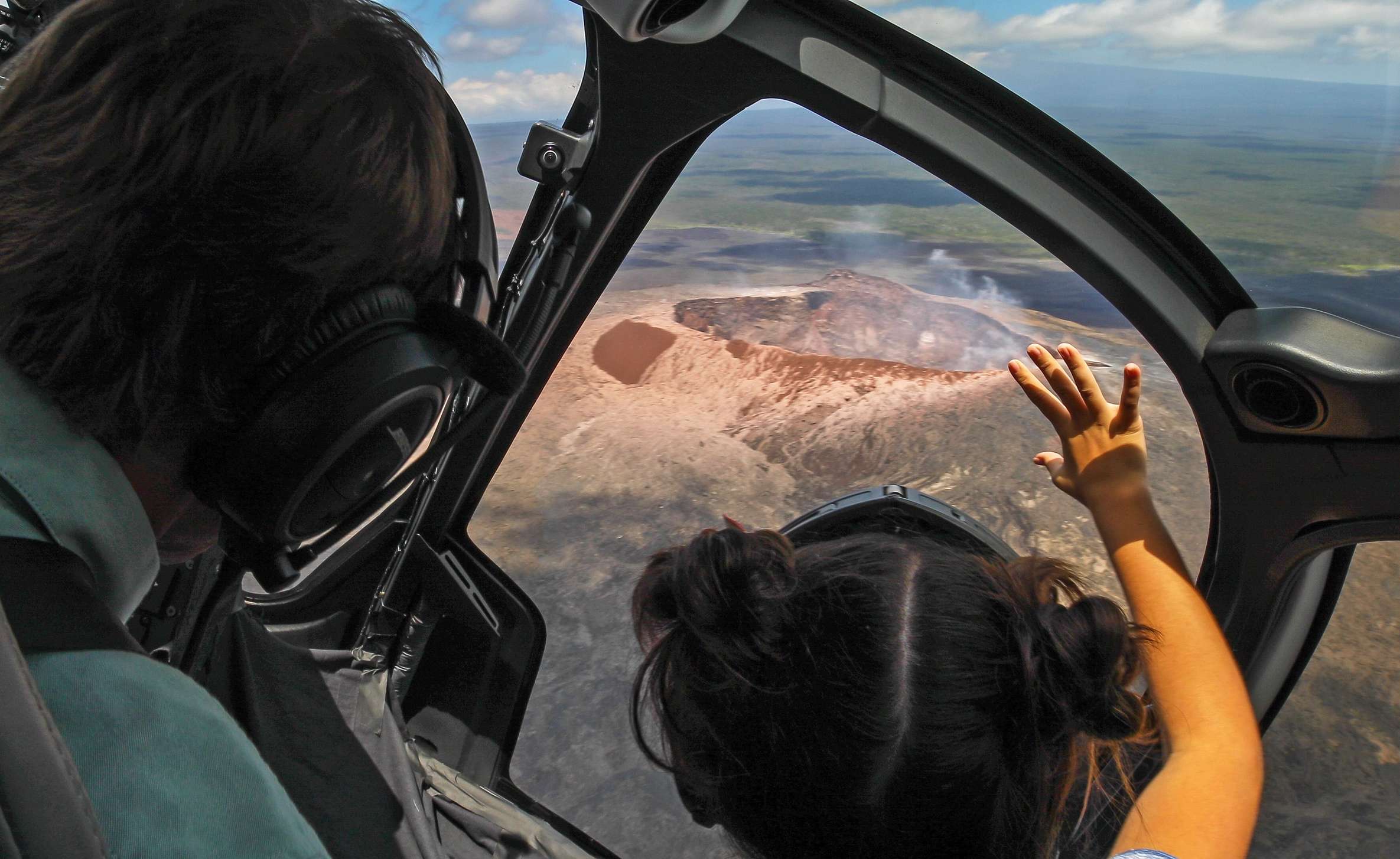
The rotor noise fades into your headset, and the pilot swings out of Hilo toward the caldera while the lava plains scroll underneath.
From this side of the island, that sight comes fast: a Hilo departure keeps the hour of flying over the volcano and the waterfalls instead of spending the first half crossing the island from Kona.
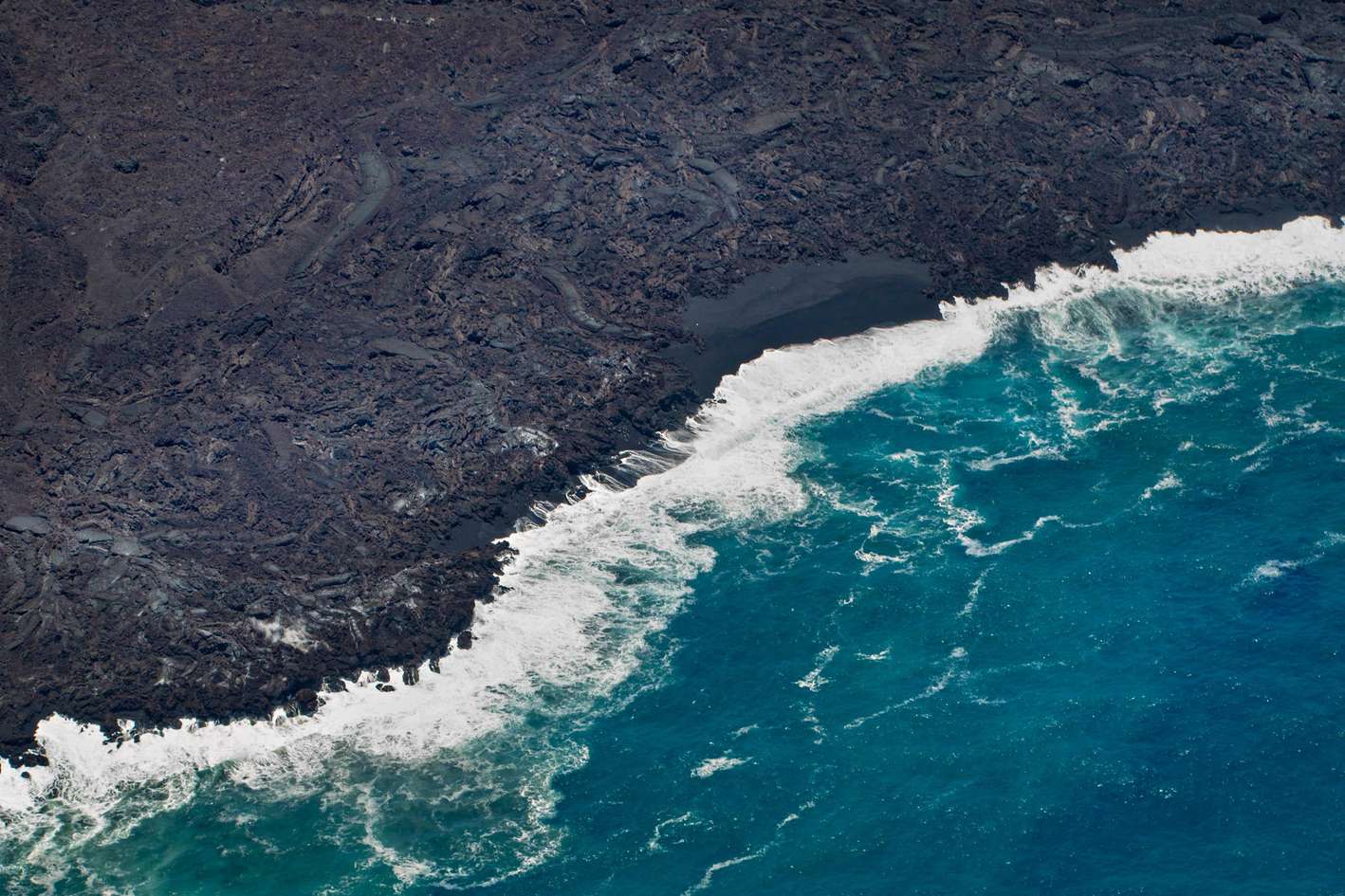
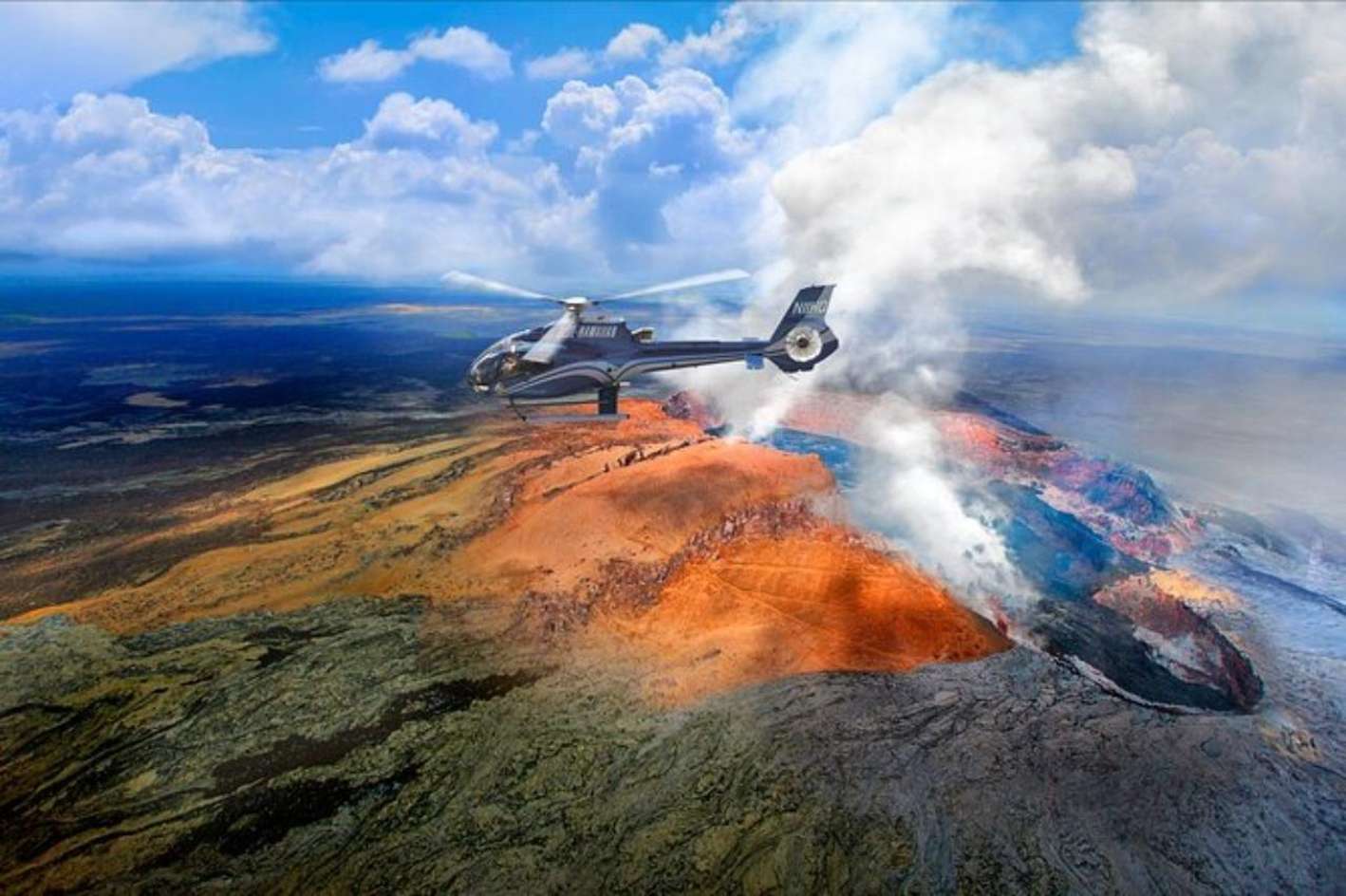
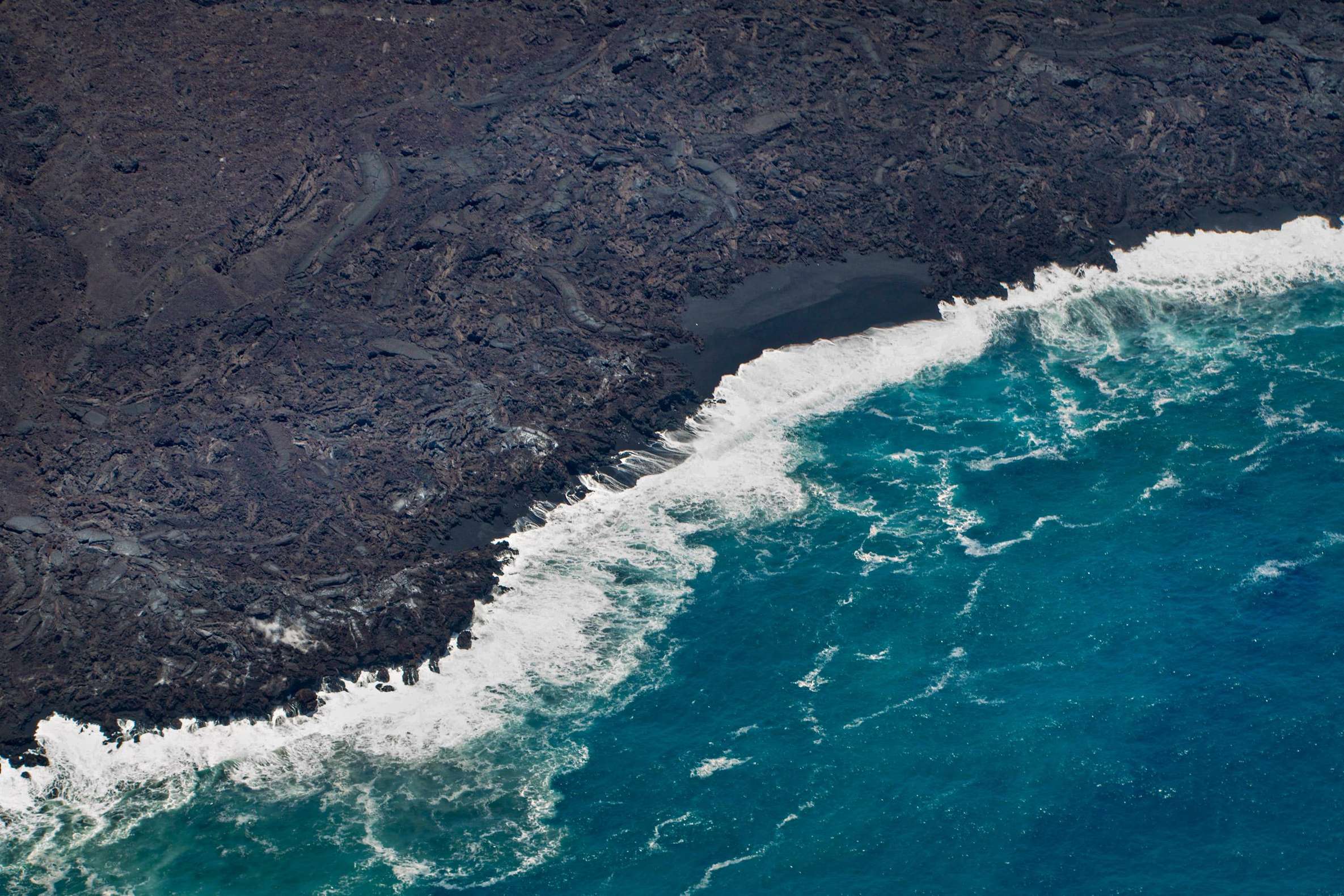
Three flights run from here, and they are easy to tell apart. The National Park Flight spends its full hour over Kilauea, taking in the Puʻu ʻŌʻō cone and the black sand beaches where lava met the sea.
Discover Hilo loops for 50 minutes from the Heliport, with commentary through noise-canceling headphones. The Waterfall Experience flies north out of Honokaa for an hour over the valleys.
Fares from Hilo run roughly half the price of identical volcano routes from Kona, because the aircraft does not have to cross the island first. The hour you buy here is the hour you spend over the volcano.
| Kilauea caldera, Puʻu ʻŌʻō cone and Mauna Kea and Mauna Loa in the distance | Active volcano, black sand beaches and the Hamakua Coast | Waipio Valley sea cliffs, Kohala valleys and waterfalls | |
|---|---|---|---|
| Flight time | 1 hour | 50 minutes | 1 hour |
| Departs from | Hilo | Hilo Heliport | Honokaa |
| Best for | The volcano first, as much of the hour as possible | A shorter loop with plenty of volcano time | Valleys and waterfalls over the crater |
The Hawaii Volcanoes National Park Flight is the one built for the volcano-first traveler, and that is who this page is for.
The terminal is the part that catches people out. Helicopter check-in happens at the Commuter Air Terminal, a separate building from the General Lyman Terminal where the airlines ticket, so follow the commuter terminal signs and not the departures crowd.
Give the drive more time than the map suggests. From Hilo Harbor, where the cruise ships dock, the airport departure area is a 20-minute drive without traffic; the Hele-On Route 101 bus also serves the harbor and the airport, but you have to walk from the ship to its stop.
Coming over the mountains on Saddle Road, budget a good 50 minutes.
Then the morning runs on a strict clock. One Hilo operator requires you to arrive a full hour before departure for weigh-in and the safety briefing; other tours check in 45 minutes ahead, and late arrivals may lose the seat without a refund.
Weights go into a balance program that assigns every seat, so couples cannot count on sitting together. Ground staff walk you to the pad, tell you to keep clear of the tail rotor and crouch low under the main rotor, and then you are boarding.
Most Hilo departures leave from a pad minutes from the ship or the highway, which is exactly why the day still has hours left after you land.
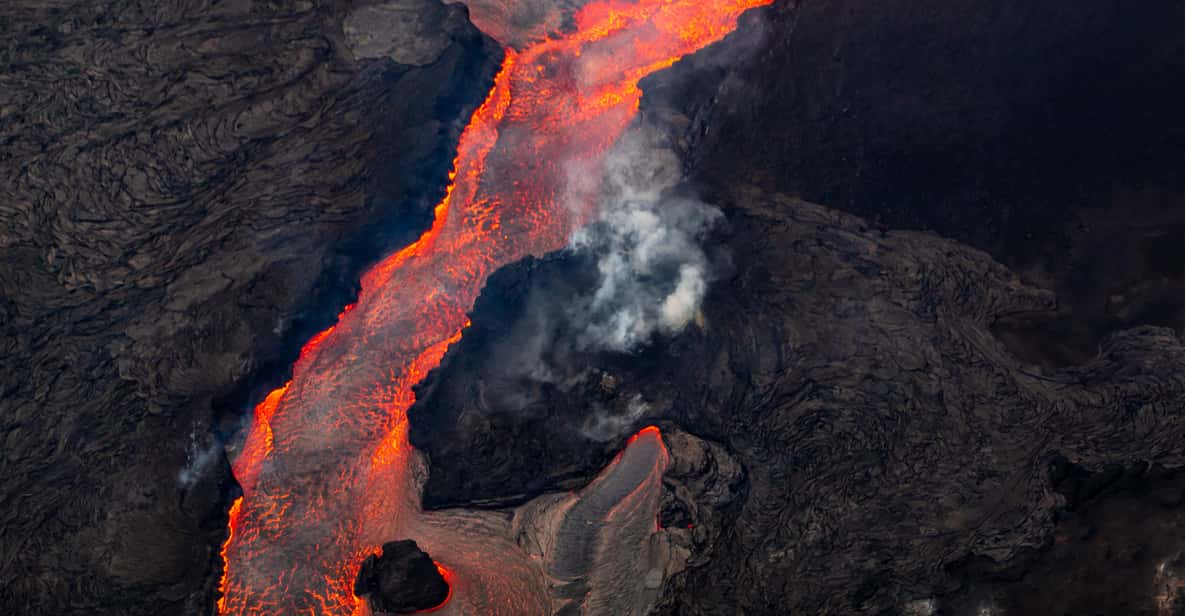
West-side travelers face the honest question: is the drive to Hilo worth it when helicopters leave from Kona too?
Saddle Road, the cross-island highway that carries the official name Daniel K. Inouye Highway, takes about an hour and a half from Kailua-Kona and about an hour and 20 minutes from the Waikoloa resort area when the traffic is light.
Add a buffer. Airport guidelines suggest allowing 1.5 to 2.5 hours for the crossing, because weather and elevation change the pace along the way. A 10 am flight means leaving the Kona resorts before eight.
The comparison runs both ways. Waikoloa Heliport sits 37 minutes closer to Kailua-Kona by road than Hilo Airport does, so if your schedule is tight, a west-side flight may fit the day better.
What you give up is the flight time itself: from Hilo, the aircraft is over the volcano almost at once, while a Kona departure spends the first chunk of the hour crossing dry lava plains before the caldera comes into view.
If you are driving over anyway, plan the day around it. The park is another short hop past the airport once the flight is done, and the route back is the same road. One crossing, a full morning in the air, and the drive home with the rest of the island ahead of you.
From the Waikoloa resorts the crossing runs a few minutes shorter than from Kailua-Kona, which still means a very early alarm for a morning Hilo flight on the west side.
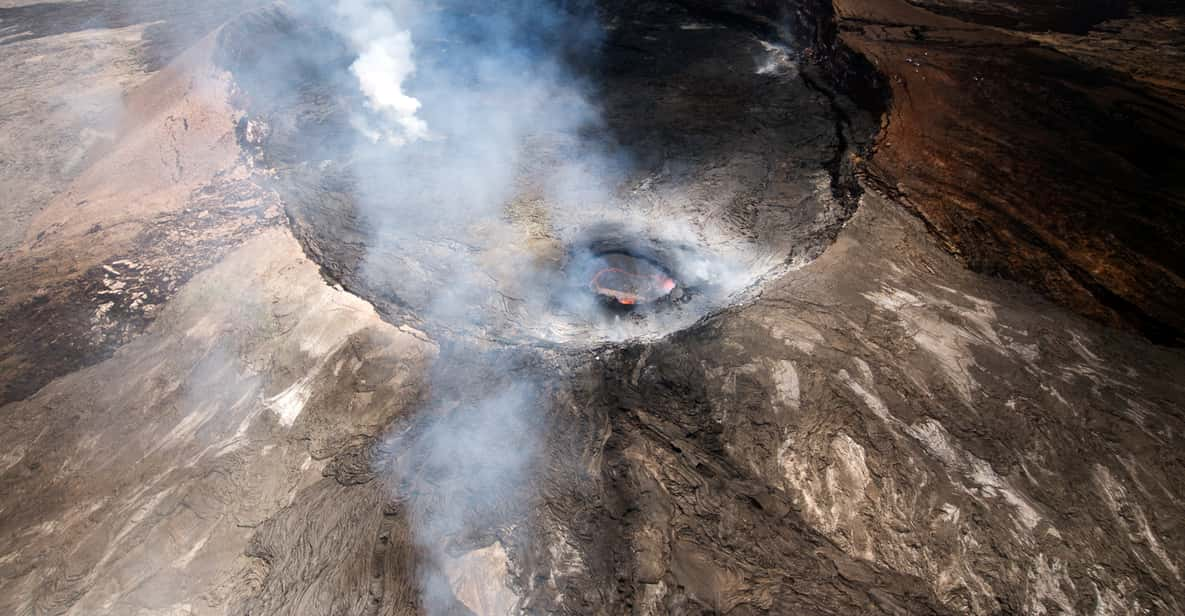
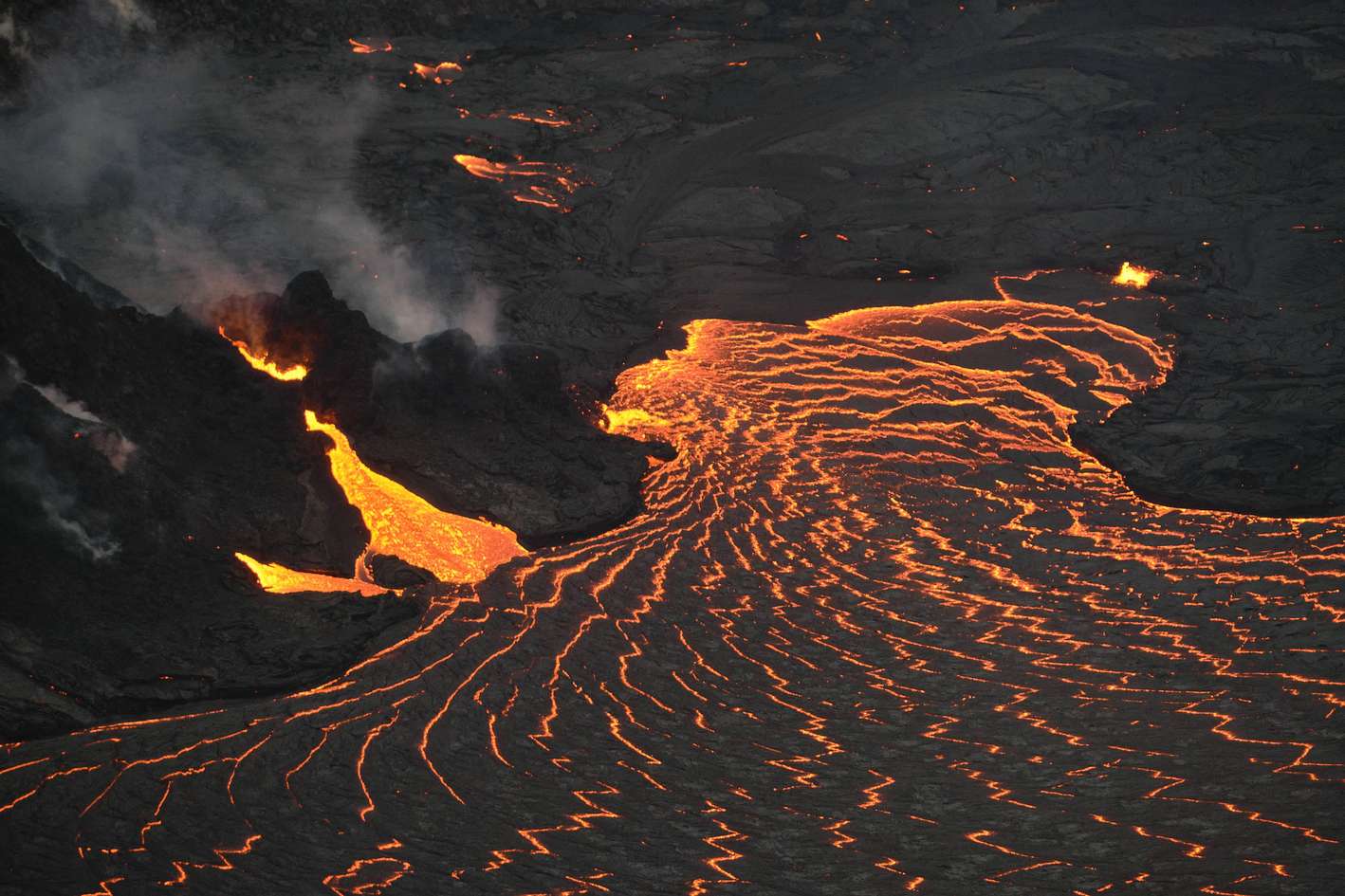
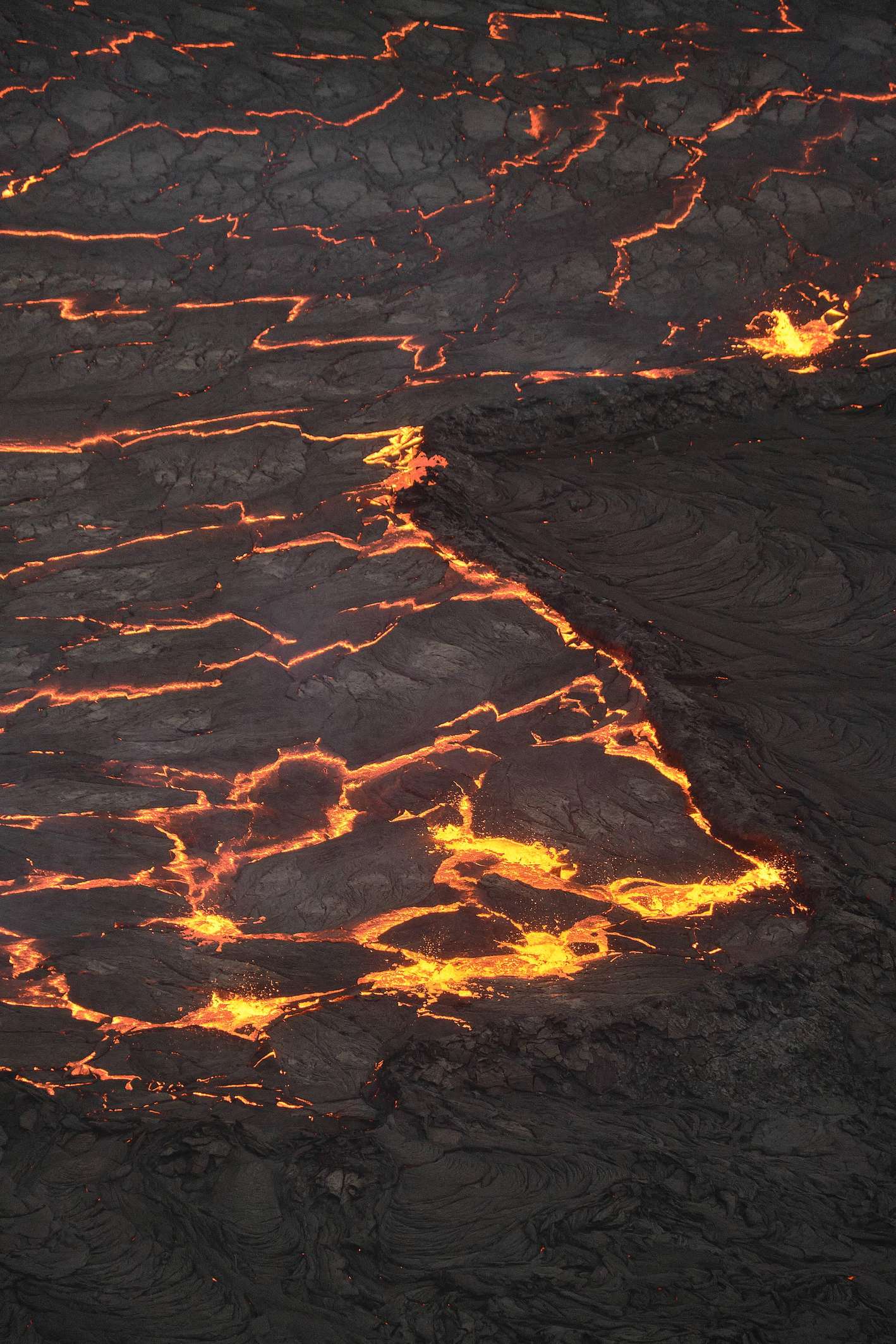
Set the lava expectation now, before the disappointments do. Molten red lava is rare from the air, because Kilauea erupts in brief windows and spends most of its time quiet.
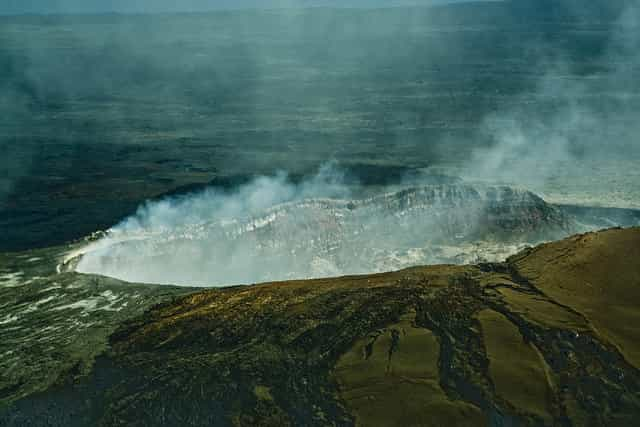
When the surface is quiet, the flight shows you steam vents rising from the crater floor, the vast hardened formations of old flows and the black fields where lava last reached the sea. Many visitors find that enough; a few find a quiet crater underwhelming and prefer the valleys.
When the volcano is erupting, the airspace changes too. A temporary flight restriction can close the caldera, extending two nautical miles from Halemaʻumaʻu crater with a ceiling of 5,000 feet, and the park's air-tour routes are drawn to avoid the summit altogether.
You fly close and low by sightseeing standards, but not over the top of the crater. Fumes are not a problem inside the cabin on eruption flights; pilots position well enough that nothing smells of sulfur.
The honest framing people who go often use: the crater is one act in a bigger show. Flights over the caldera also pass waterfalls, rainforest and roadless coast, and if clouds close the volcano, that is where the hour goes instead.
The designated park routes keep flights away from Kilauea's summit, so expect the caldera from the side, seen along its rim
When no eruption is running, the vents and the scale of the old lava fields carry the flight
Cloud that closes the crater sends pilots to the windward sights, and older coastal lava fields and rainforest waterfalls often look better after rain
So plan the day around more than the crater: the flight gives you an hour of island, and a clouded caldera leaves the waterfalls and old flows to carry it.
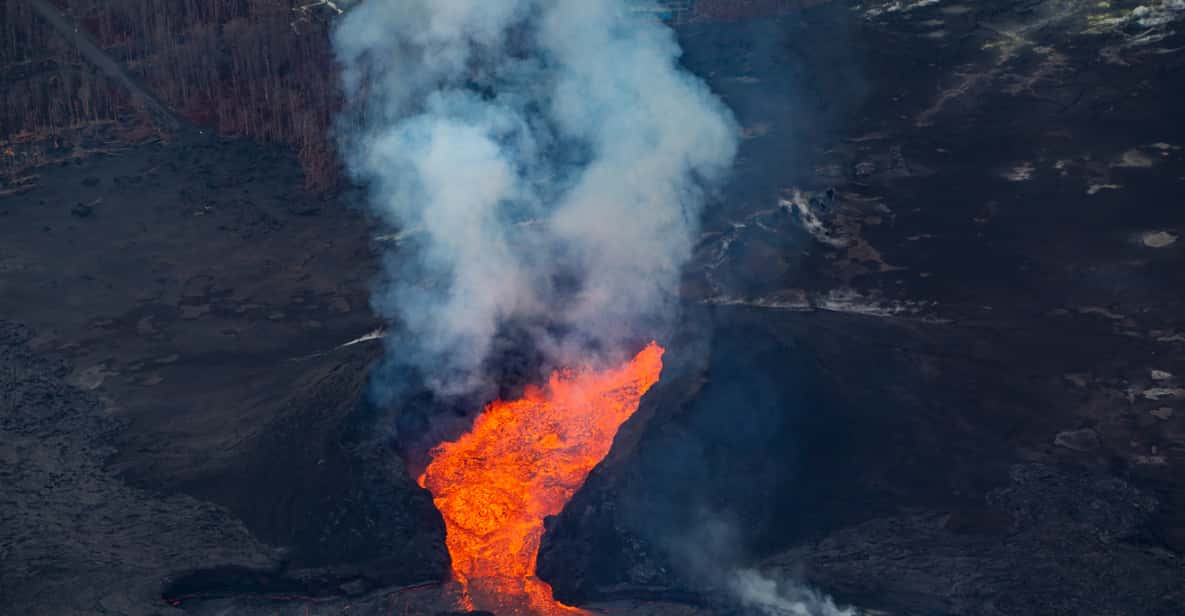
Cloud closes the crater, and the pilot banks northeast instead. The flight's second act, and from Hilo it begins minutes after takeoff.
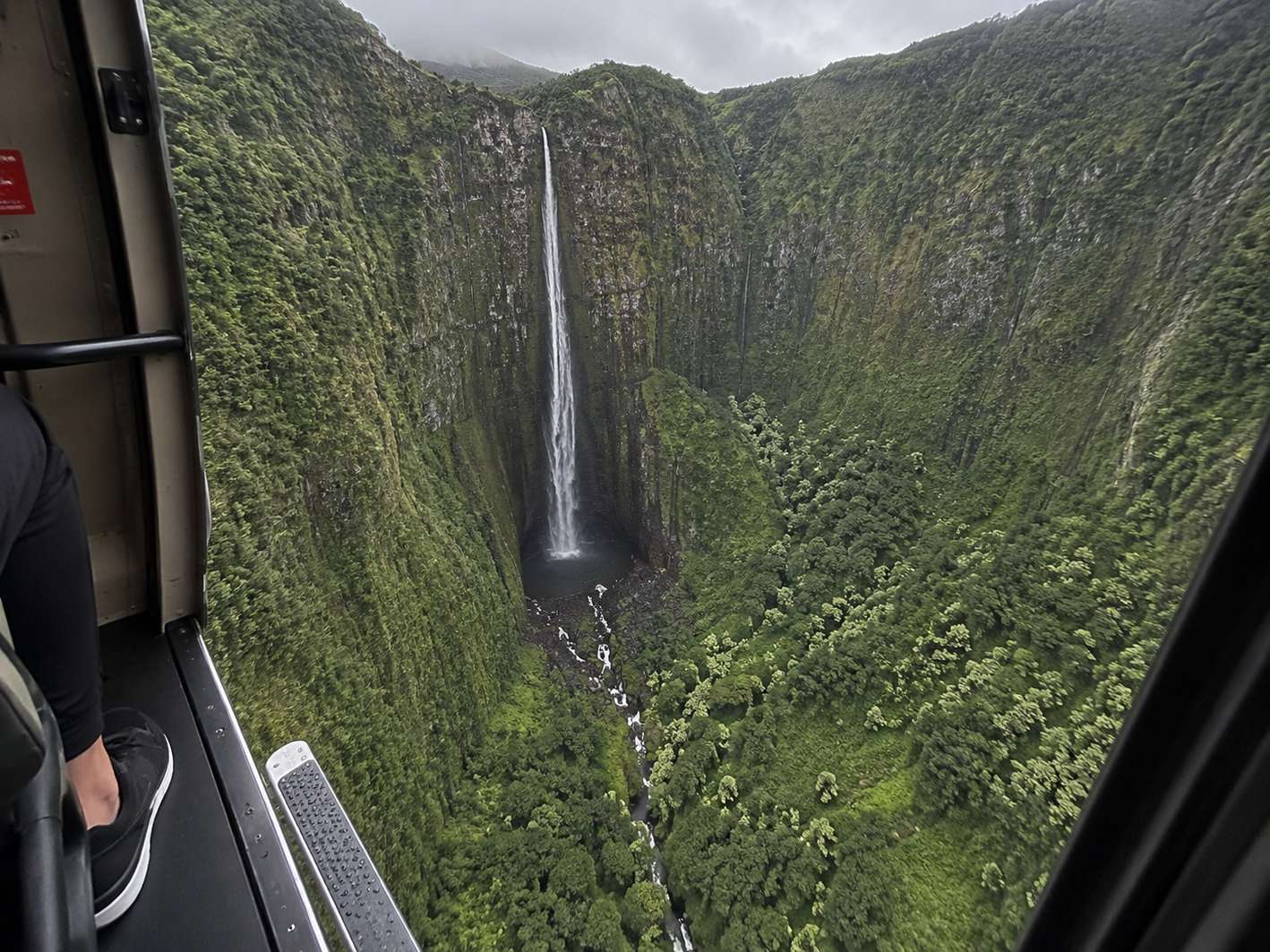
The windward routes show the waterfalls that Hilo departures can reach and west-coast flights rarely touch: ʻAkaka Falls on the Hamakua Coast, Rainbow Falls and Peʻepeʻe Falls along the Wailuku River, and the upper river gorges that are hard to reach any other way.
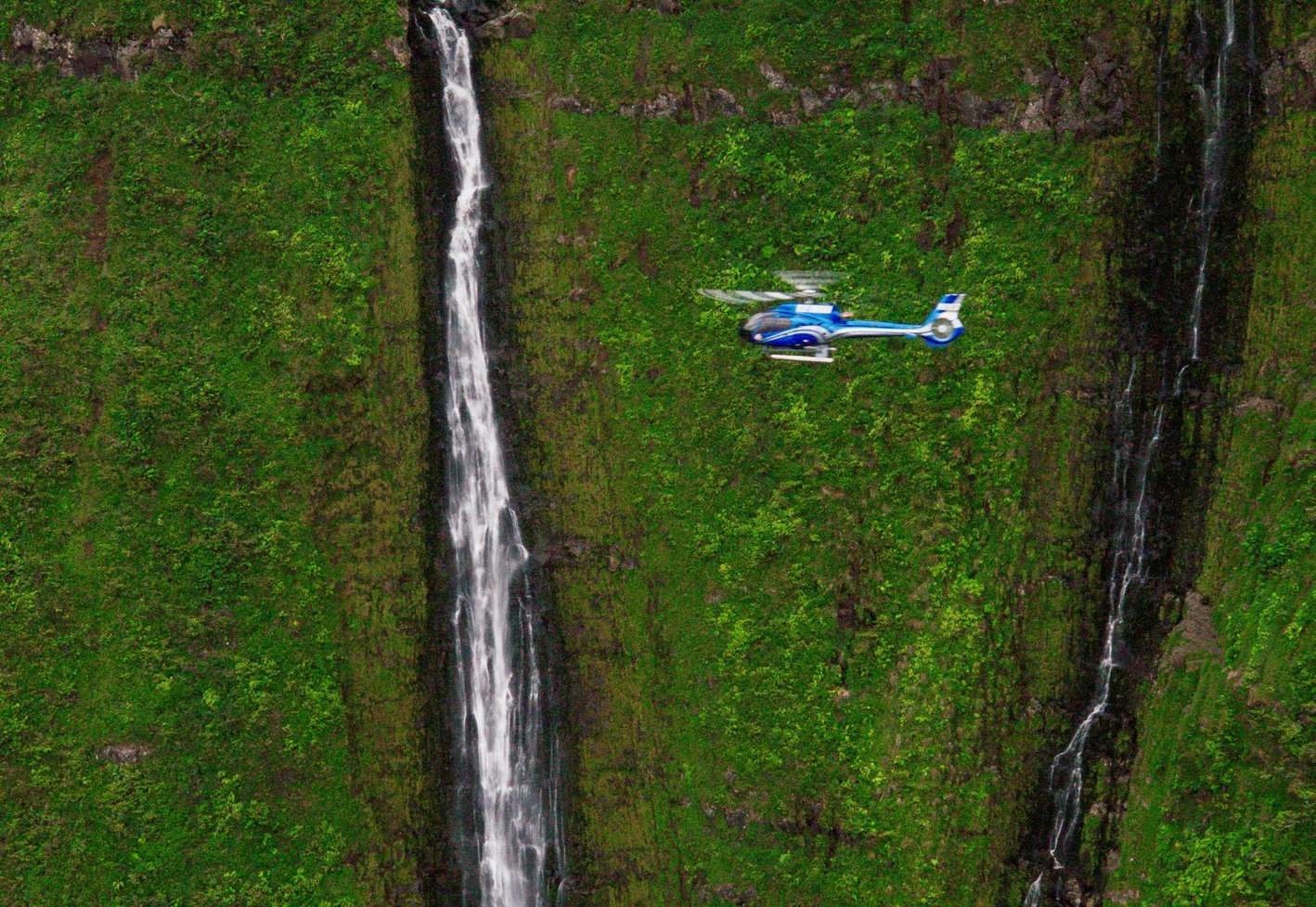
From a helicopter, the water appears out of the jungle wall and drops hundreds of feet into ravines no road reaches.
Volume changes with the season. Winter, from November through March, brings the heaviest rain, and the falls run thunderous after the storms. Summer keeps them flowing steadily on trade-wind showers, a steady, moderate drop all day.
The Hilo Waterfall Experience Helicopter Tour is built around this half of the island: an hour out of Honokaa over the North Shore, with a pilot who is a State of Hawaii Certified Guide narrating the valleys and the old settlement sites, in an Eco-Star with large windows.
Choose it over a volcano flight when the falls matter more to you than the crater.
Whatever slot you land on, ginger goes in the pocket before boarding, because the banking over the valleys comes with or without the sun.
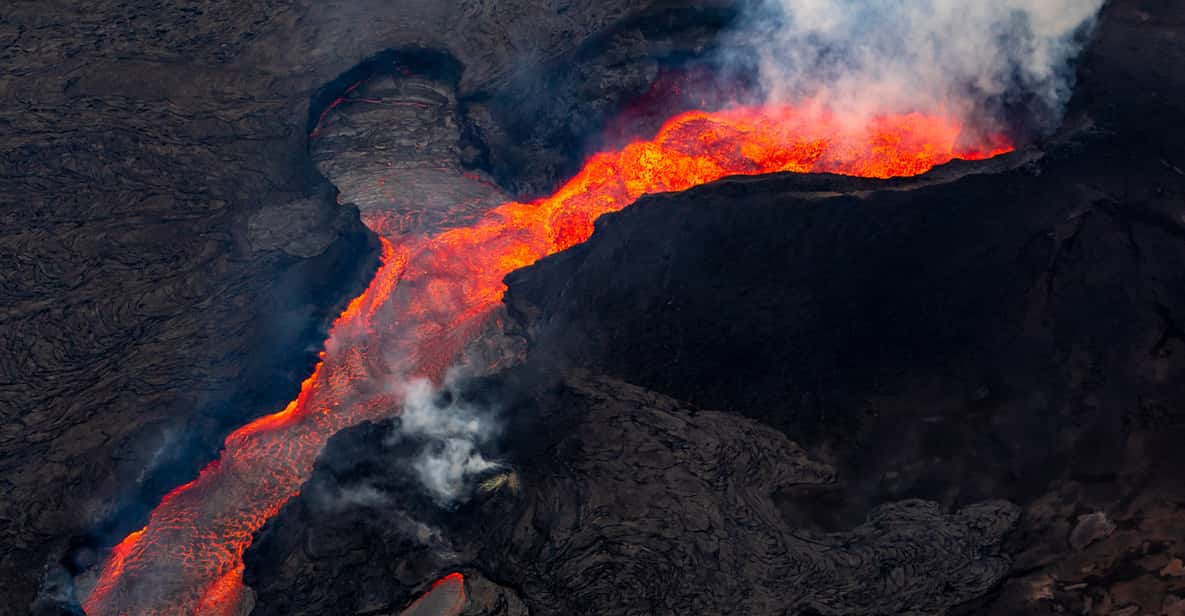
Trade winds run on a schedule, and so does the cloud they build.
Morning between 8 and 11 am offers the clearest skies and calmest winds over Kilauea and Hilo; through the afternoon the winds strengthen, turbulence picks up, and cloud and showers stack over the volcano and the rainforest slopes, peaking in the middle hours of the day.
East-side mornings come with a wrinkle of their own. Hilo is a rainy coast, and the early hours can carry showers that a late-morning slot dodges. That is why pilots who fly out of Hilo often point at 11 am: early rain has moved through, and the afternoon build-up has not started yet.
The windward and leeward sides behave differently too. Cloud is frequent over the Hilo slopes through the day; the summits of Mauna Kea and Mauna Loa rise above the trade-wind inversion, so on a clouded morning the peaks can still be out even when the crater is not.
Book the earliest slot that fits; if the morning is full, the 11 am flight still beats the 2 pm one. The caldera is a weather window, and the window closes.
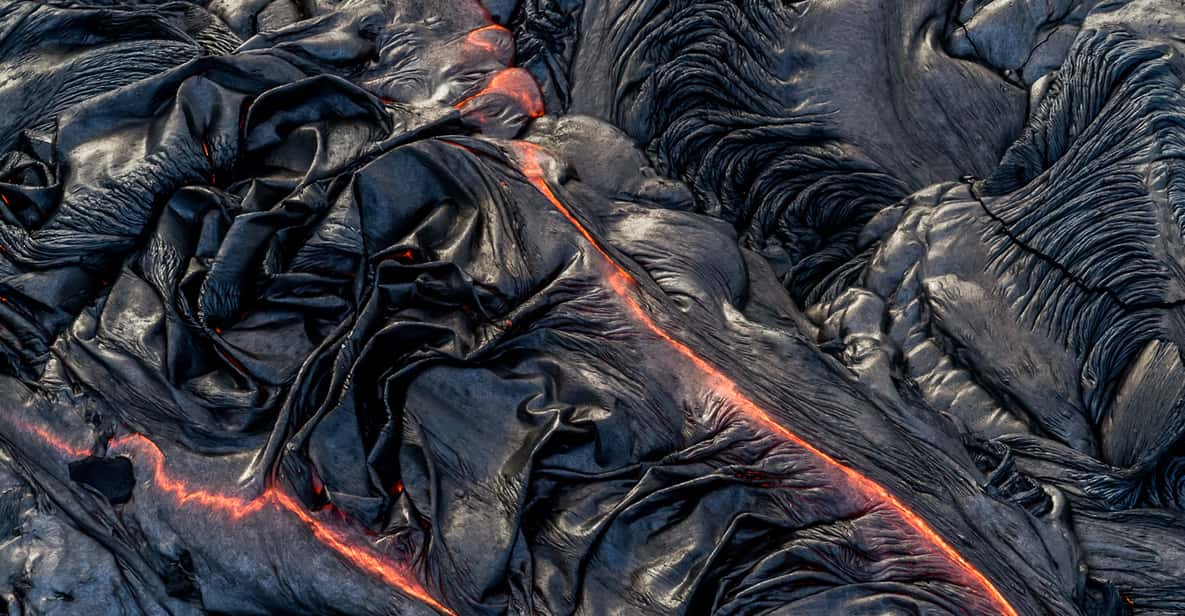
The single most common complaint about east-side flights is the weather, so here is how it actually plays out.
Clouds usually mean a reroute, not a cancellation: when low cloud, rain or vog hides the summits, pilots leave the planned route and fly wherever the weather allows, typically toward the windward sights, older coastal lava fields and rainforest waterfalls that often run stronger after the rain.
The park's air-tour rules require exactly that. A pilot who cannot hold the planned route at its prescribed altitude must exit safely and either pick another route or leave the plan boundary. Passing showers alone rarely ground a flight; low visibility, heavy rain and high winds do.
When a flight is truly canceled, the operators offer a reschedule or a full refund. The line to understand is the route change: some operators treat a change of route or sights as flying the tour, with no refund or discount for the difference.
That is why the flight goes early in your trip, so a canceled morning has somewhere to move to.
| If this happens | What happens then |
|---|---|
| Cloud closes the caldera | The pilot reroutes to windward sights such as coastal lava fields and waterfalls, flying the tour a different way |
| Low clouds or heavy rain cancel the flight | You get the choice of rescheduling or a full refund |
| A route change only | Some operators refund nothing for a changed route, points of interest or shorter flight time, so book the flight early in the trip with room to reschedule |
| The tour is moved to another day and you cannot make it | Operators that reschedule a tour for weather refund the full amount |
The practical takeaway: keep the morning flight early in the itinerary, and read the cancellation terms before you pay, because the refund hinges on whether the operator cancels or only changes the route.
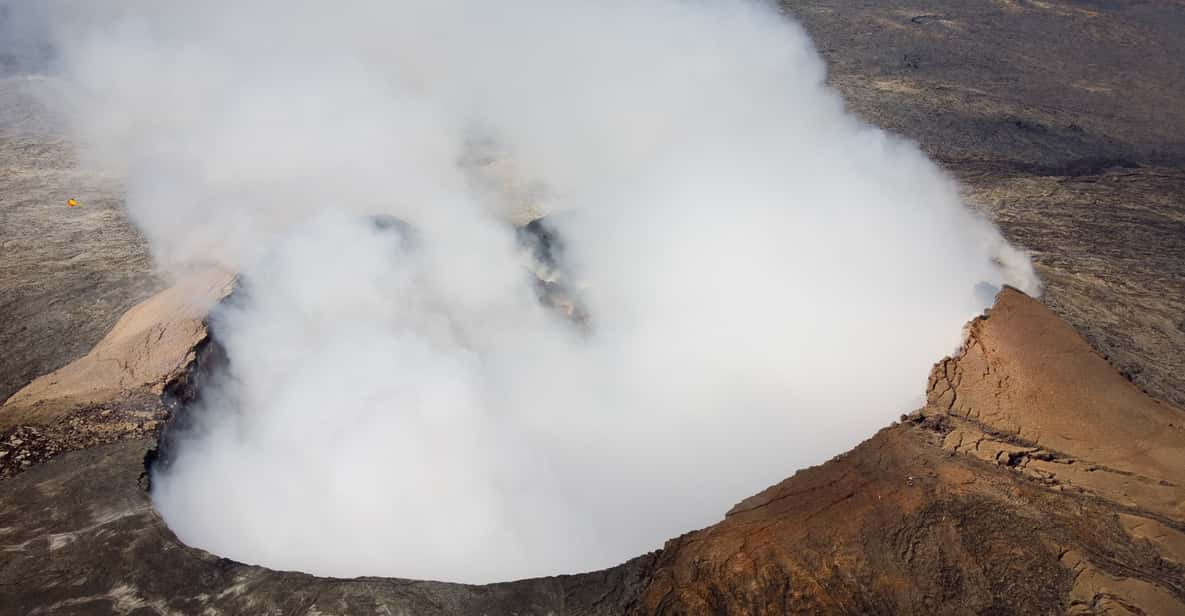
Hilo flies in every month; the seasons just shift the odds. June to September is warmer, with highs around the upper twenties, but rain still lands on roughly three weeks of every month.
December to March is cooler, February and March run the cloudiest, averaging more than half the sky covered, while January tends to be the clearer of the winter months.
Read that as a schedule, not a forecast. The east side takes rain year-round, so the month you pick matters less than the morning slot you pick, because the 8 to 11 am window holds the best odds of an open crater in any season.
Booking lead time is the other half of the equation. In peak summer, June through August, and the winter holidays, December through January, helicopter slots typically sell out two to four weeks ahead, and the prime morning departures can go 30 days to six weeks out.
Book the early flight before you leave home, not after you arrive.
One more reason to fly on day one or two of the trip: if the weather cancels it, there are still days left to try again.
January brings relatively clear skies with over 18 dry days and lower cloud cover, though winter showers can still prompt occasional route diversions.
Tap a month to read it.
April experiences frequent rainfall across 23 wet days, often requiring pilots to adjust routes toward clearer coastal sections.
Tap a month to read it.
March is the wettest month with 20 rainy days, leading to higher chances of clouds obscuring the volcano and flights rerouting to waterfalls.
Tap a month to read it.
What the monthly pattern says for your booking: no month spares the east side, so plan around the morning window and let the calendar follow the itinerary, never the other way round.
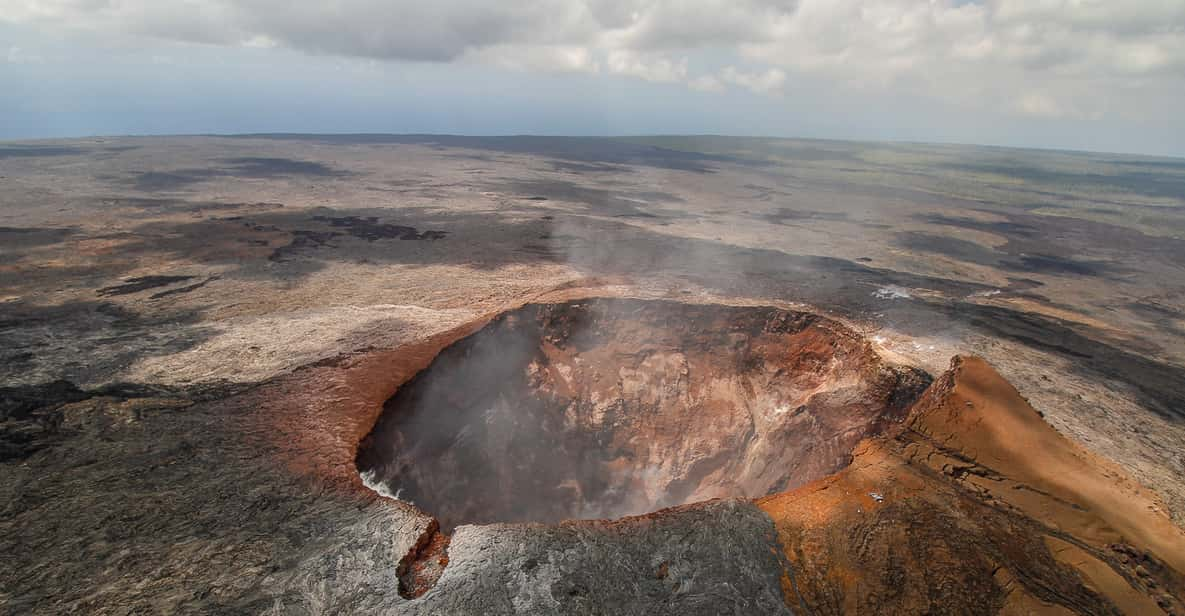
Open-door flying does exist on this side of the island. Doors-off tours have run from Hilo, so the windward rain does not rule them out, and they change how the flight feels: the cabin runs 10 to 15 degrees cooler at flight altitude, and the wind does the rest of the work on your face.
Dress for it. Long pants, a long-sleeved shirt and a windproof jacket over comfortable layers, with closed-toe shoes on your feet. Loose clothing that can flap is out, scarves and hats are left behind, and long hair goes back in a tight band.
Phones and cameras fly on a wrist or neck strap, and some operators hand out cases for exactly that. Eyeglasses and sunglasses are fine; the headsets hold them against your head.
The rules have edges. On Big Island tours that publish one, children need to be about 12 to sit beside an open door, and doors-off flights carry minimum weight rules that vary by aircraft. Check the specific tour's terms before booking if either applies.
The Big Island: Kilauea Volcano Eruption Heli Tour offers the doors-off option on a 1.5-hour flight with straps and cases included, flying out of the west side over Kilauea and the Kona coast. If the open door is the point, that is the flight that does it.
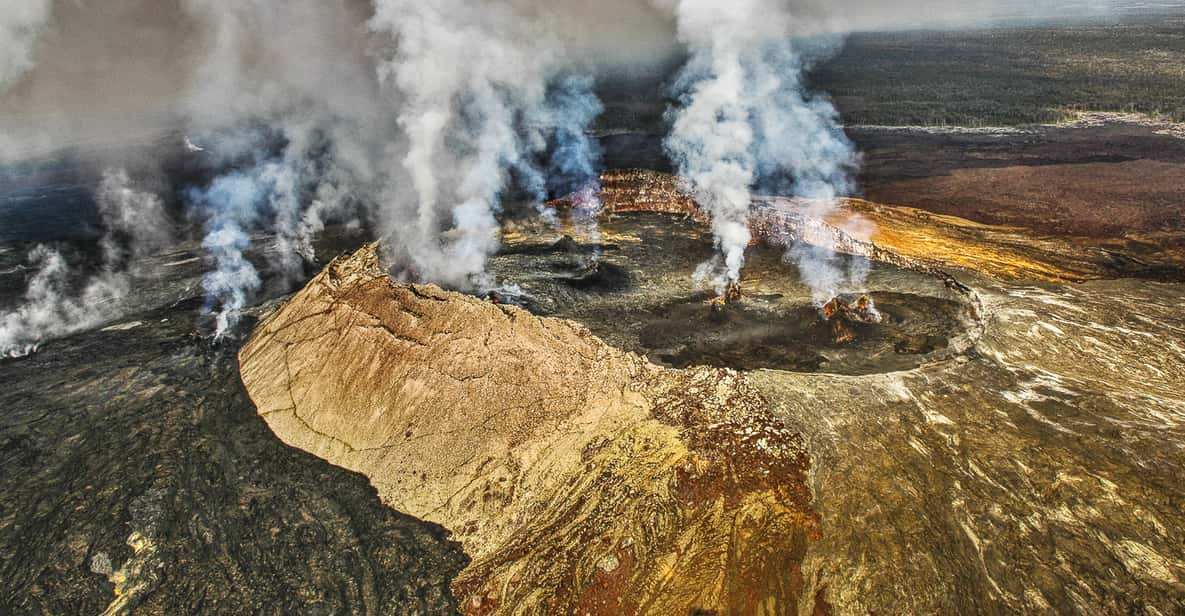
Straight answers, because they matter here. Fatal air tour accidents in Hawaii average less than one a year across all the islands, and the injury risk on a commercial tour is comparable to or lower than a daily mainland interstate commute.
The crash rate fell by nearly half after Hawaii tightened its own air-tour rules in the 1990s. If an engine fails, the helicopter does not drop: pilots train autorotation, gliding the aircraft to a safe landing without power.
Single-engine flights over water carry flotation gear, and pilots brief you before any overwater segment.
Motion sickness is rarer than people expect, because helicopters fly smoothly. What does unsettle some passengers is the banking over the calderas and the updrafts on the mountain slopes.
Ginger or a motion sickness remedy before takeoff works best; once symptoms start, medication absorbs too slowly to catch up. A front seat helps, and mentioning a bad stomach to the ground crew sometimes gets you one.
Who stays on the ground: passengers who have scuba dived in the previous 24 hours, pregnant travelers, people unable to sit upright, and anyone flying with a cold or flu, vertigo, claustrophobia or a fear of heights. The dive rule is the one that surprises people, so plan the snorkel trip after the flight.
Land by ten and the whole afternoon is still yours, because Hilo stacks its sights close together. Rainbow Falls sits 1.5 miles from downtown, where the 80-foot Waianuenue drops through a wall of mist that makes its own rainbows on sunny mornings.
Two miles upriver, Boiling Pots pairs with it in a single 45-minute visit. ʻAkaka Falls, 442 feet of it, is a 25-minute drive north on a paved 0.4-mile loop trail.
In town, Liliʻuokalani Gardens sits free on Hilo Bay with Coconut Island just offshore, the farmers market opens daily from 7 am, and the Pacific Tsunami Museum runs from 10 to 4 on Kamehameha Avenue.
The park is the other half of the day, about an hour's drive from Hilo. See it both ways. From the air, the caldera's scale makes sense in a way ground lookouts never manage, with lava flows and vents laid out across miles of roadless terrain.
On foot, the crater rim trails and the Kilauea Iki hike down into a hardened lava lake put you inside the landscape instead of above it.
Those last stops sit past the airport along Highway 11, so they fold into the same afternoon drive: the flight in the morning, the crater rim at noon, the drive home before dark.
So, the hour in the air or the rental car. The drive from Hilo Airport to Kilauea takes about an hour up Highway 11, the Hele-On bus runs the trip in under three with a transfer, and a guided full-day tour takes about eight with everything included.
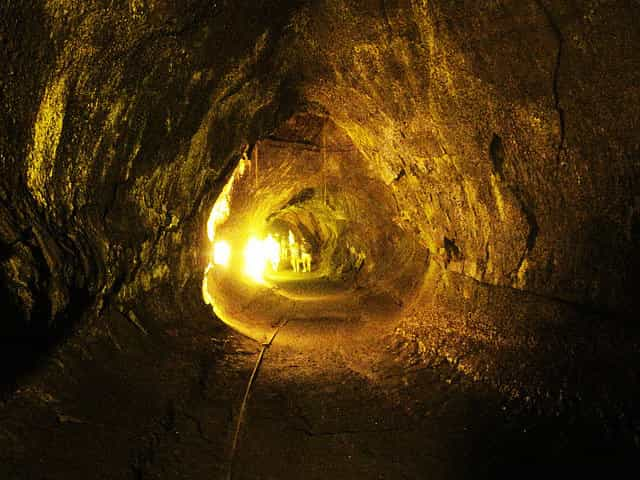
On the ground you get the crater rim, the lava tube and the Kilauea Iki trail.
What you never get from a car is the shape of the place: the caldera from above, the old flows running to the sea, and the waterfalls hidden in the gorges where no road goes.
Take the flight if the volcano is the reason you came, or if you have flown on Kauai or Maui already and want what only this island does: volcanic terrain from the air.
The Big Island is the only Hawaiian island where lava can be seen from a helicopter, though a quiet surface means steam and hardened fields when the rivers of it are absent.
Drive yourself when the budget argues, or when a quiet volcano and a cloudy forecast would sting at a full fare. The park rewards a slow day on foot regardless.
The one-hour drive up Highway 11 is the number that frames the choice: a rental-car day gets you the crater rim and trails for the cost of a fuel bill, and the flight gets you what the road cannot, for the cost of a fare.
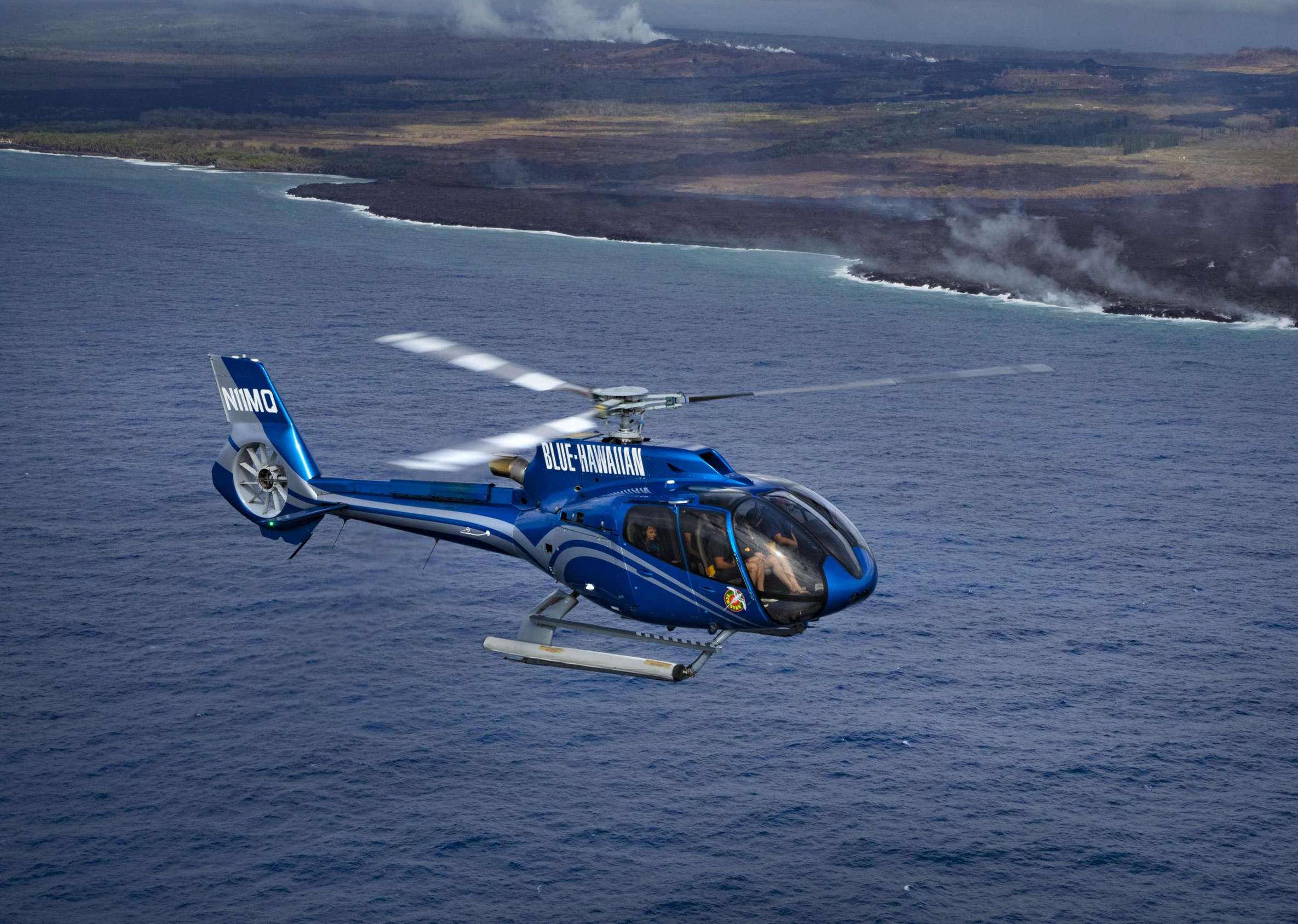
Book the Hilo flight when the volcano is the point of the trip: it is the only way to see the caldera's scale, the old lava fields and the waterfalls in the roadless gorges, and the east-side departure gives you the full hour over that scenery instead of a cross-island transit.
Drive to the park when the budget argues or the crater is quiet, and spend the day on the crater rim trails instead. Either way, fly or drive early in your stay, so the weather has room to disappoint you once.
Seeing molten lava from the air is rare because Kilauea erupts in short, intermittent windows. When the surface is quiet, you will see steam vents, vast crater formations, and hardened lava flows from past eruptions.
Passing showers are normal along the windward coast and usually do not stop flights. When low clouds or heavy rain drop visibility below safety minimums, pilots cancel, delay, or reroute, and a weather cancellation gets you a full refund or a rescheduled flight.
Hilo sits minutes from the volcano, so nearly all your airtime goes to the crater and the Hamakua Coast instead of crossing the island. Base fares out of Hilo run roughly half the cost of equivalent volcano flights from Kona.
Yes. Open-door flights have operated out of Hilo, and one Kilauea eruption tour sold on this site runs from the west side with a doors-on or doors-off choice. Check the options on each tour card before you book.
The two go together. Trails in Hawaii Volcanoes National Park put you inside the caldera rim and the Kilauea Iki crater, while a flight reveals lava flows, vents, and waterfalls high on the Wailuku River that are hard to reach or fully grasp by car.
The departure area at Hilo International Airport is a 20-minute drive from Hilo Harbor without traffic. Hele-On Route 101 also serves the harbor and airport, though you must walk from the ship to the stop.
It depends on the tour. One Hilo flight asks guests to show up a full hour before departure, while others check in 45 minutes ahead. Late arrivals can lose their seat with no refund, so build in extra time.
Yes, and the thresholds vary by operator.
Morning, between 8 and 11 am, gives you the clearest skies and calmest winds over Kilauea before trade winds build cloud and showers over the volcano in the afternoon.
Tipping is optional but common in Hawaii. People who fly regularly leave a modest cash tip for the pilot when they land, and tips left at the desk usually go to the ground crew.
Helicopter flights are smooth, so even travelers prone to car or boat sickness usually feel fine. The banking turns can bother some people, so take ginger or motion sickness remedy before boarding and keep your eyes on the horizon.
Wear dark, solid-colored clothing so it stays out of window reflections in photos. Cabins are climate controlled, so casual clothes are comfortable, with a light layer if you chill easily or book a doors-off flight.
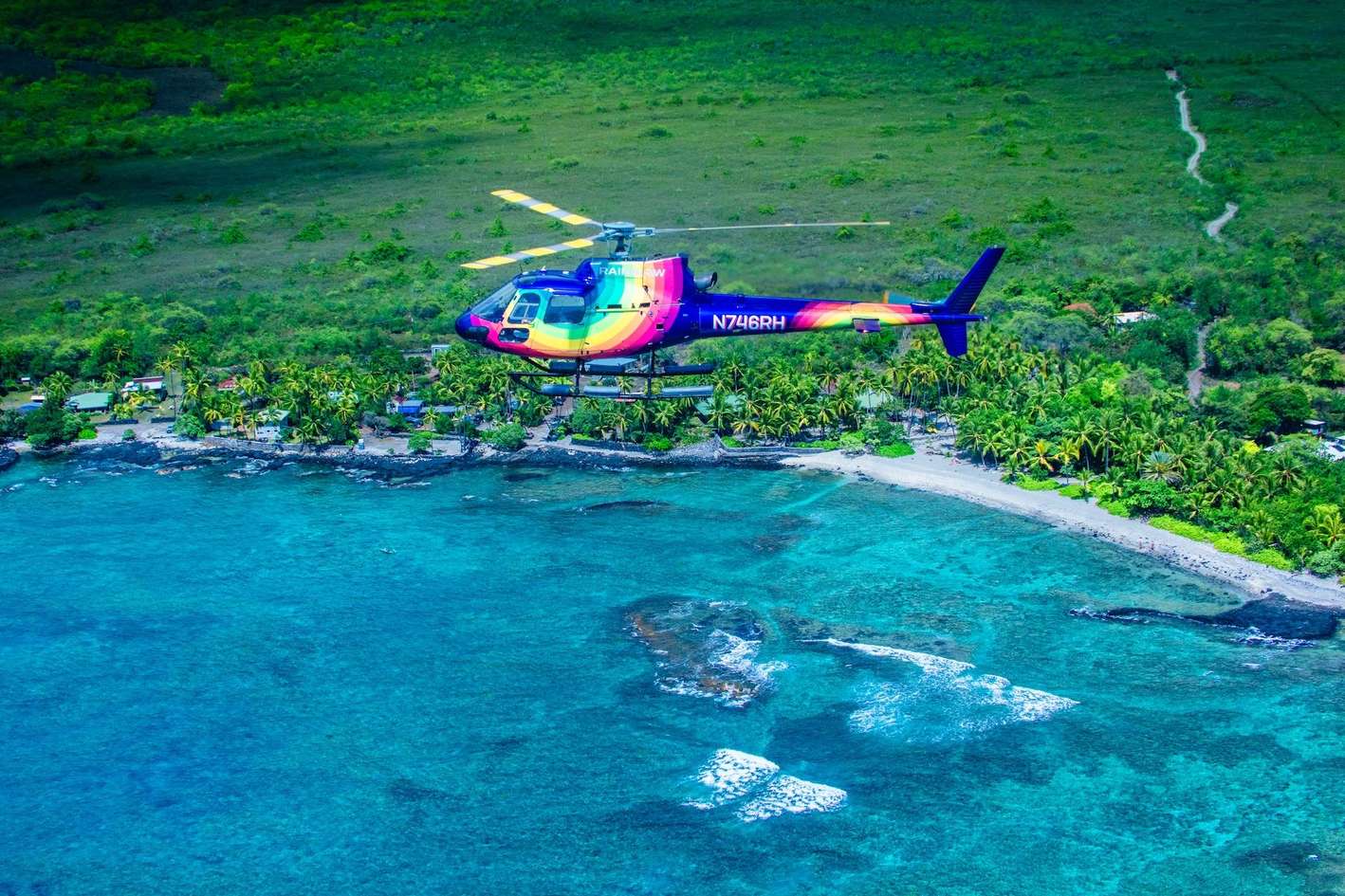
Kona Airport runs its helicopter departures from a general aviation pad south of the main airline terminals.
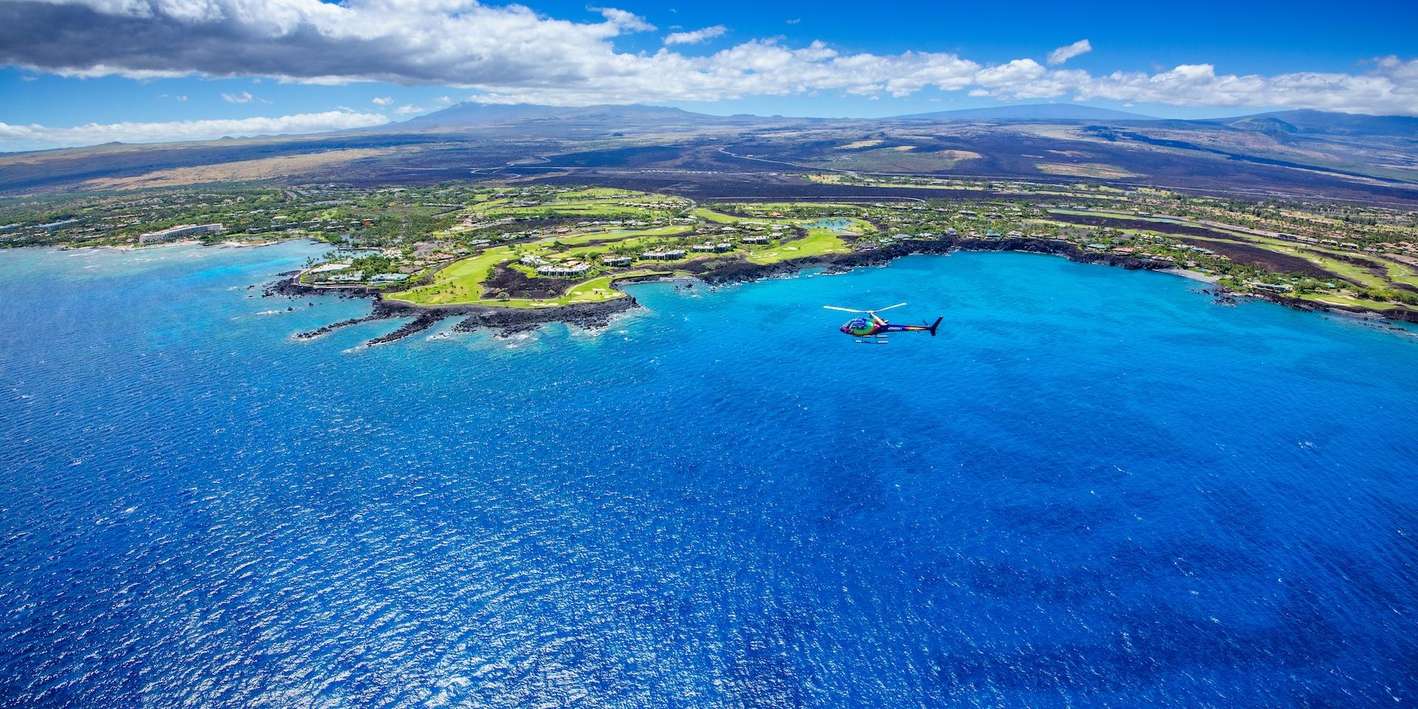
West-side departures trade a two-hour drive to Hilo for Kona routes along the Kohala valleys and coast.
Volcano flights island-wide explain when molten lava shows and how close each route gets to the caldera.

Flying in from Oahu? These day trips pair a 45 to 60 minute interisland hop with a volcano helicopter.
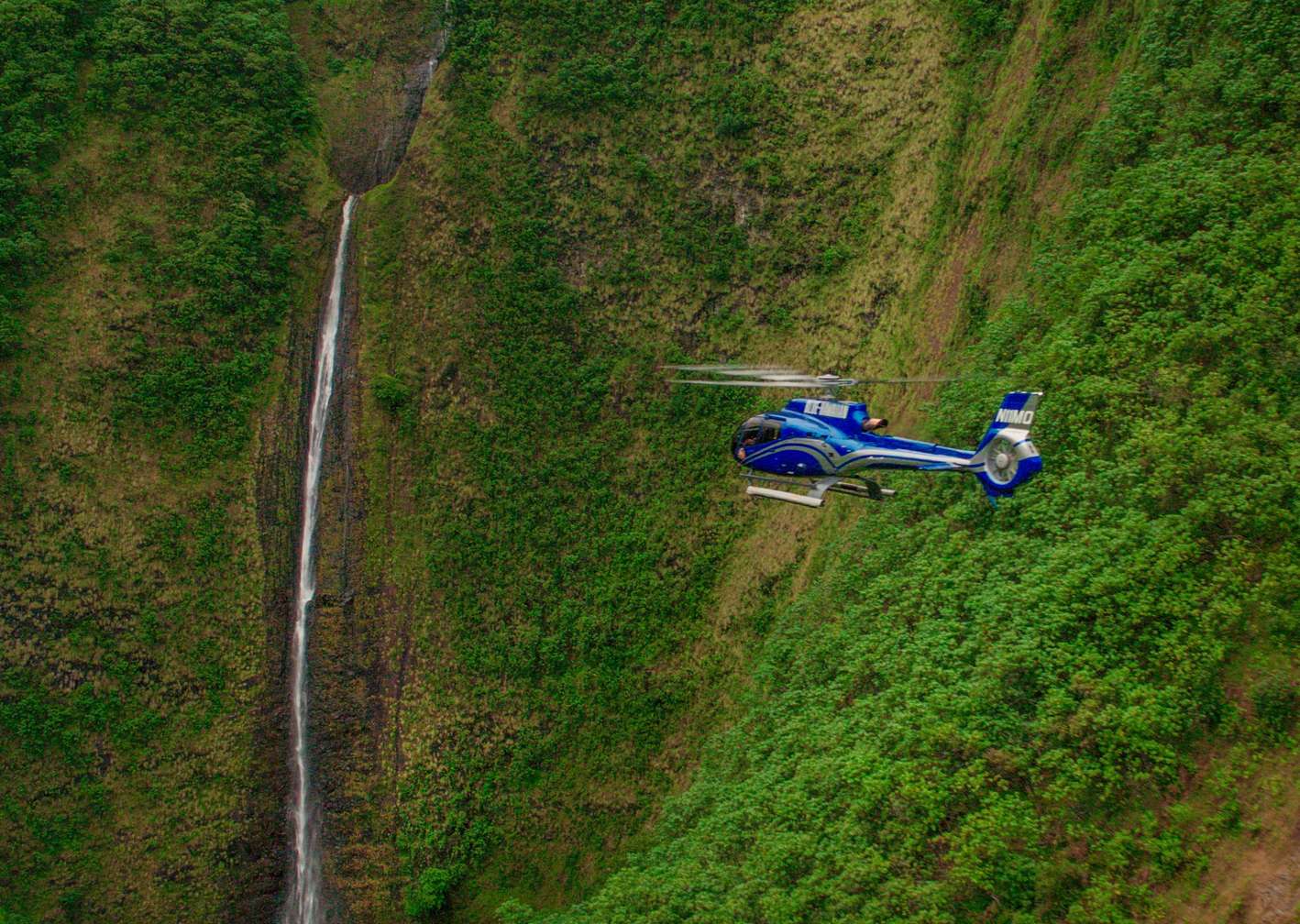
Nervous about the flight? Crash rates and the safety rules behind Hawaii air tours are covered in plain terms.
Check the age and weight limits before you book, including doors-off minimums and extra-seat thresholds.
Still weighing the cost? Compare what each island's flights show you and decide if the Big Island wins.

Hilo fares run about half the Kona price; the full rate breakdown by route and duration sits on this page.
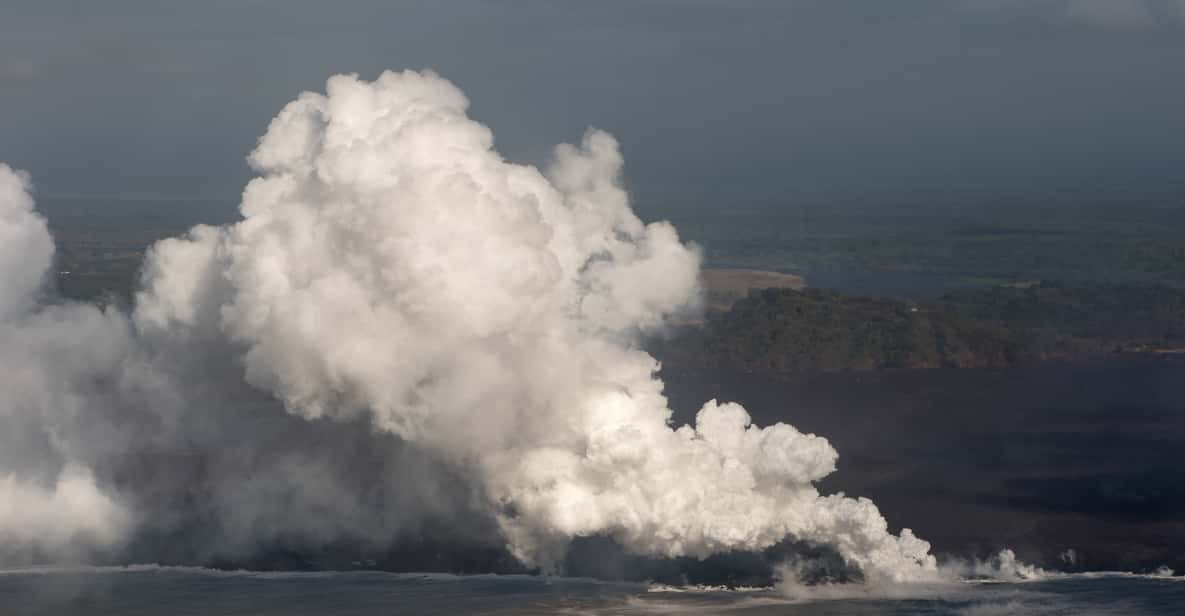
A one-hour flight from Hilo takes you over the Kilauea caldera and Puʻu ʻŌʻō cone, with free cancellation up to 24 hours ahead.