- 1
Book a morning slot between 8 and 11 am, early in your trip, so weather cancellations have buffer days to reschedule into.
- 2
Stay out of the water for 24 hours after your last scuba dive; the cabin pressure can get you denied boarding.
- 3
Arrive 45 minutes to a full hour before takeoff for check-in and weigh-in, and plan a cash tip for your pilot on landing.
Some health conditions and recent activities can stop you from boarding: tour operators turn away pregnant passengers, people who cannot sit upright, and anyone who went scuba diving within 24 hours of the flight. Check the tour's rules for vertigo, claustrophobia, and cold or flu before you book, and plan your last dive at least a full day before takeoff. If a condition might apply to you, confirm it with the tour operator when you reserve.
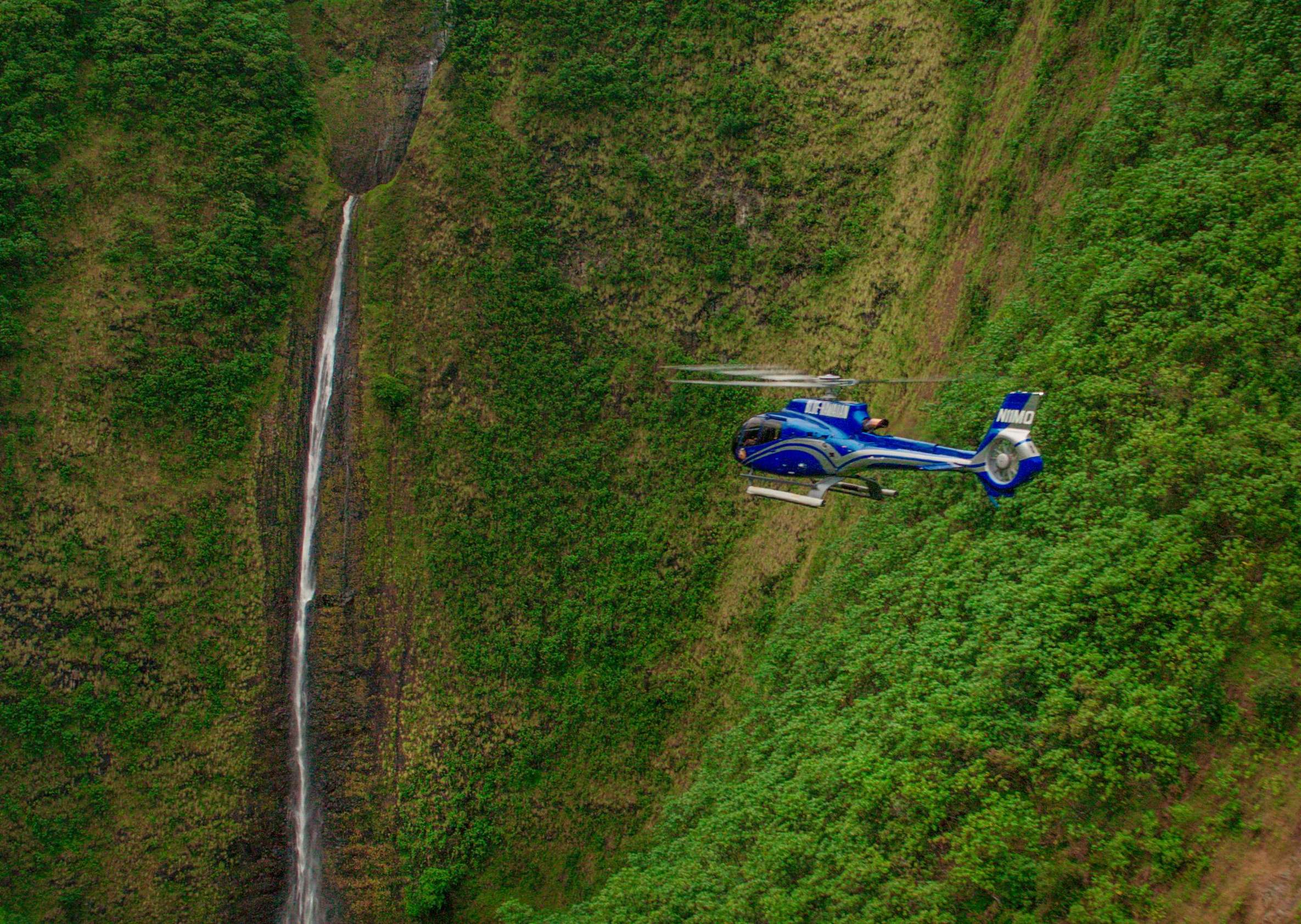
What safe Hawaiian helicopter tours look like from the air
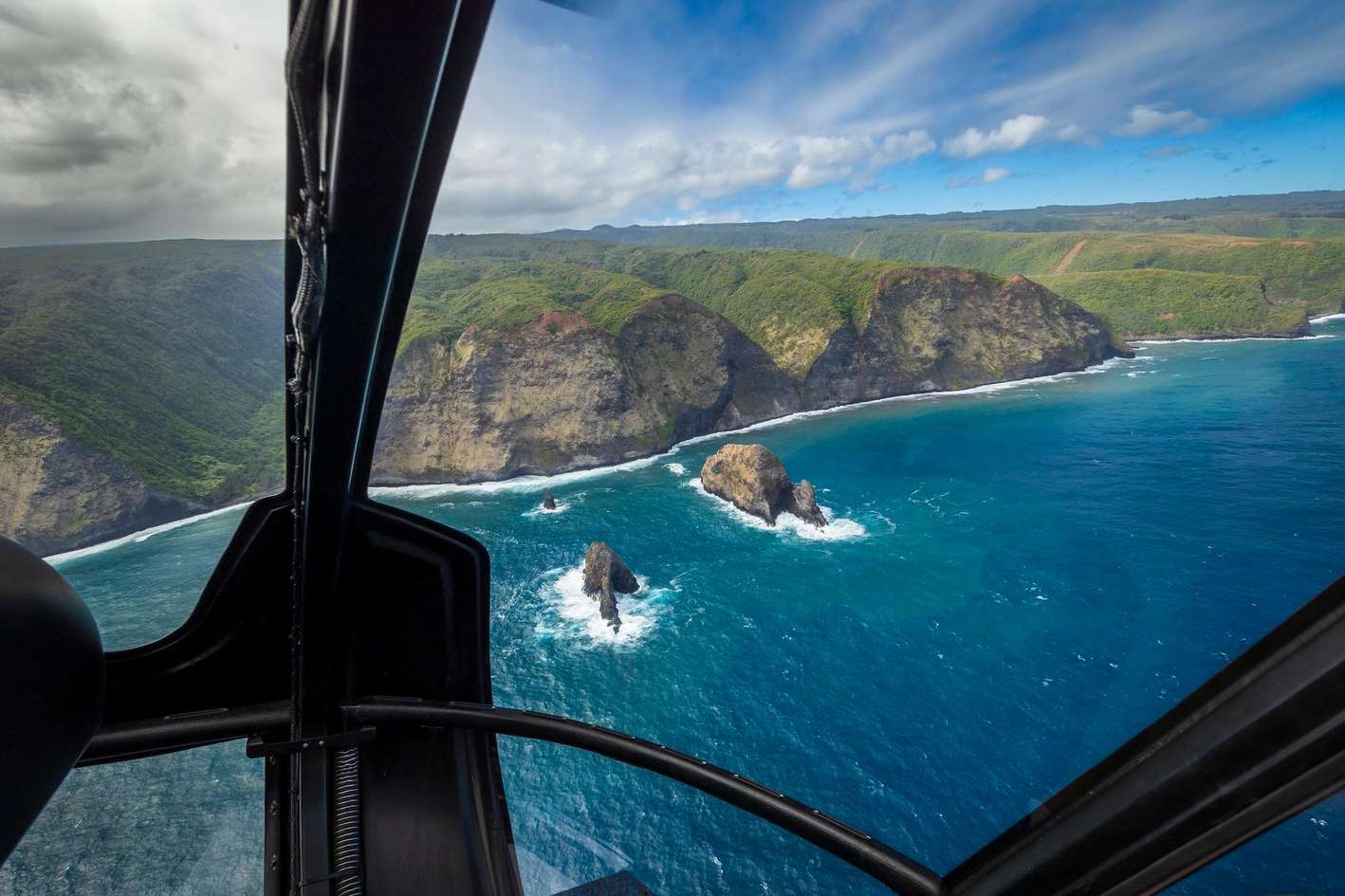
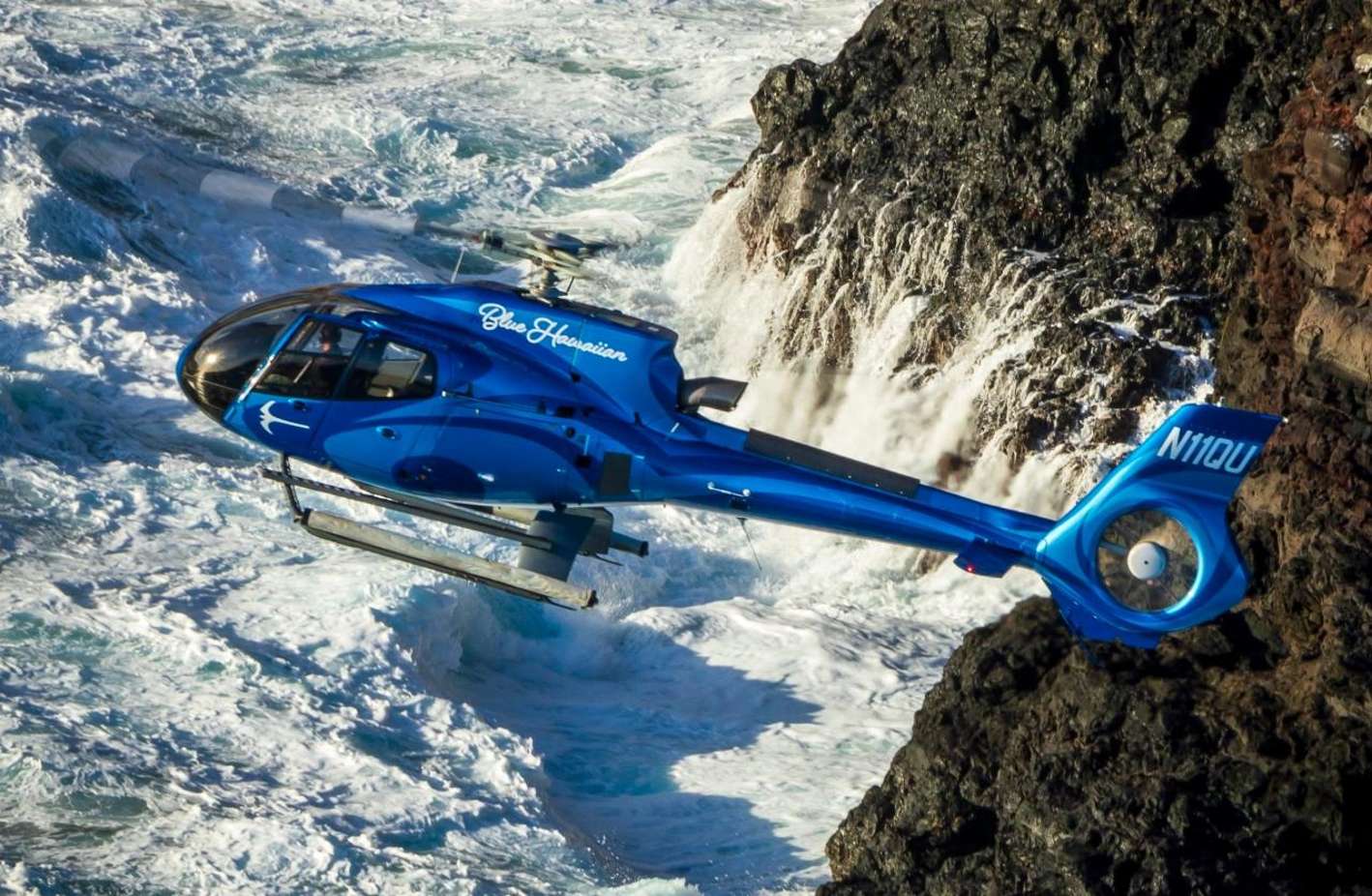
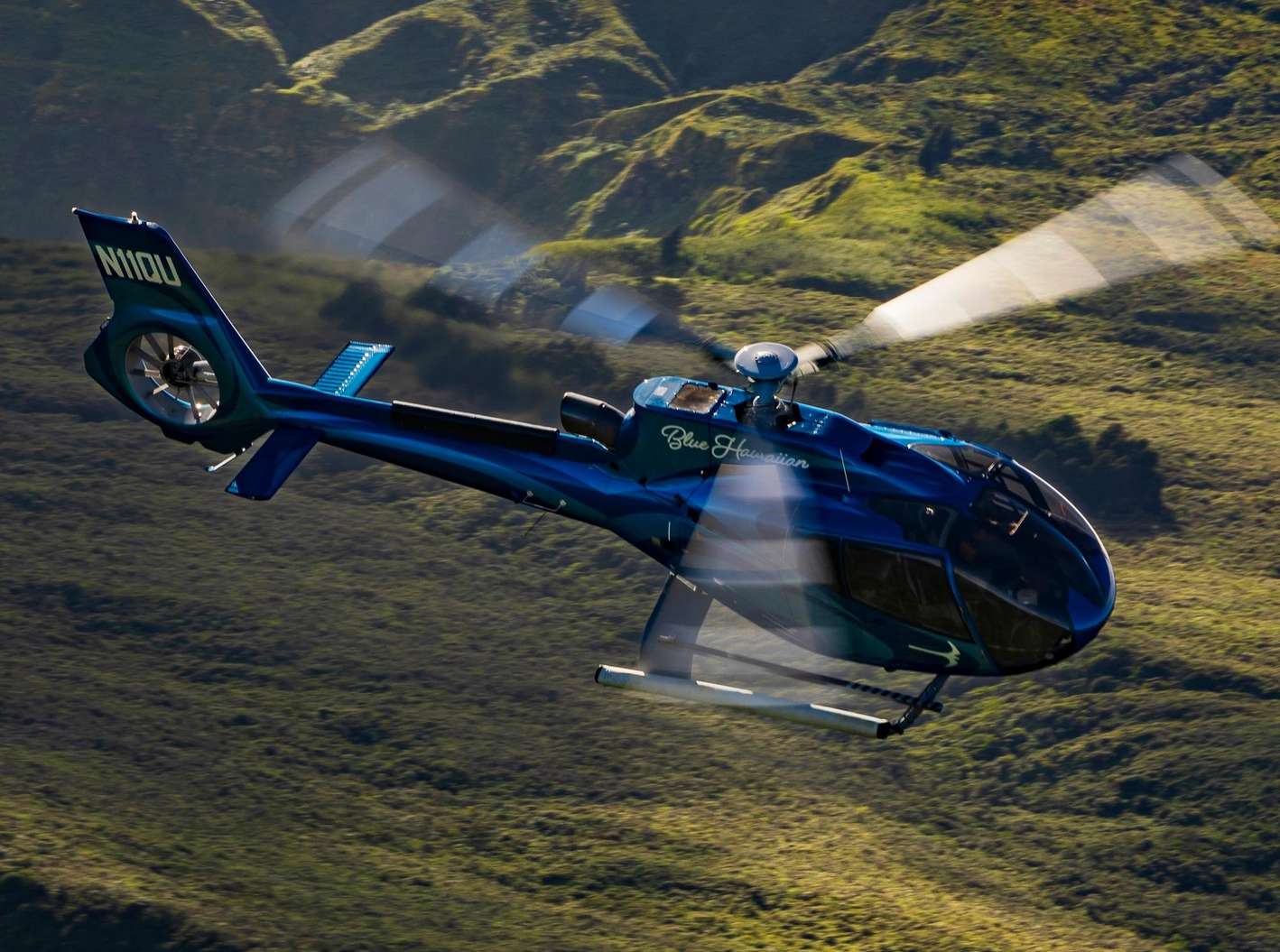
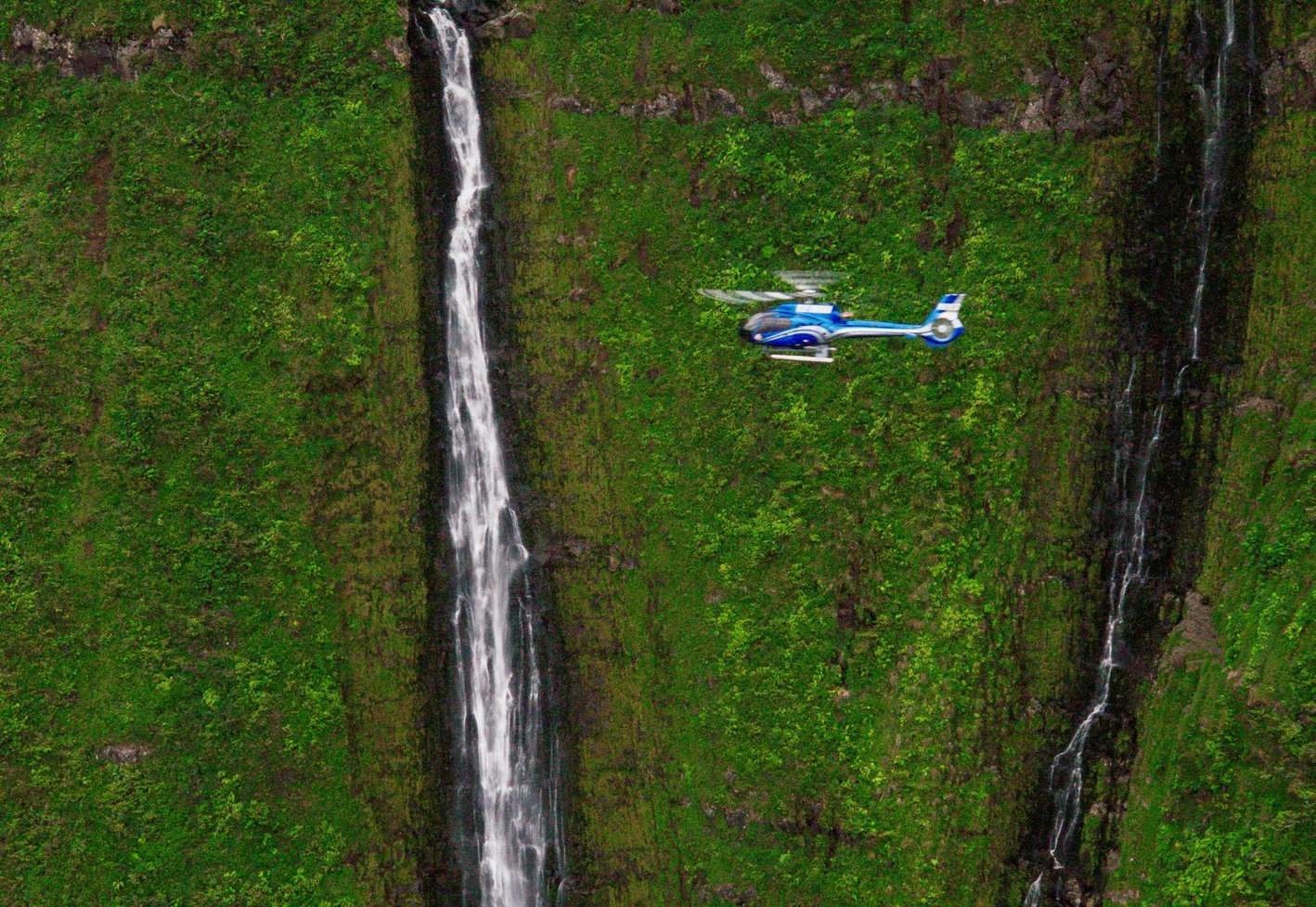
How often do Hawaii helicopter tours crash - the actual numbers
The number behind the headlines is small. Fatal air tour accidents in Hawaii average less than one per year, despite the volume of flights that leave heliports on every island every day.
A 2009 study found the crash rate fell 47% after Hawaii got its own air tour rule in 1994, dropping from 3.4 to 1.8 per 100,000 flight hours. The statistical risk of injury on a commercial tour flight is comparable to, or lower than, driving on a mainland interstate during your daily commute.
The headlines skew the picture in two ways. A crash is news precisely because it is rare, so a week of coverage can feel like a pattern. And the movies have taught everyone that an engine failure means a fall, which is not how helicopters behave.
The aircraft do not plummet when an engine quits. Pilots train for it, using autorotation, a glide technique that lets them land a helicopter safely with no engine power at all. Routes are also planned so a pilot is always within reach of a landing spot.
Three beliefs do the most damage to nervous first-timers, and all three are wrong:
Pilots are trained in autorotation glide landings and routes are planned around safe landing spots
Fatal air tour accidents average less than one per year across all islands, against very high daily flight volumes
The injury risk on a commercial tour is comparable to, or lower than, a mainland interstate commute
So the honest starting point is this: the risk you board with is small, counted, and managed by rules. The chapters that follow walk through each layer of it, from the federal rulebook to the weather desk.
FAA Part 135 rules and oversight for Hawaii air tours
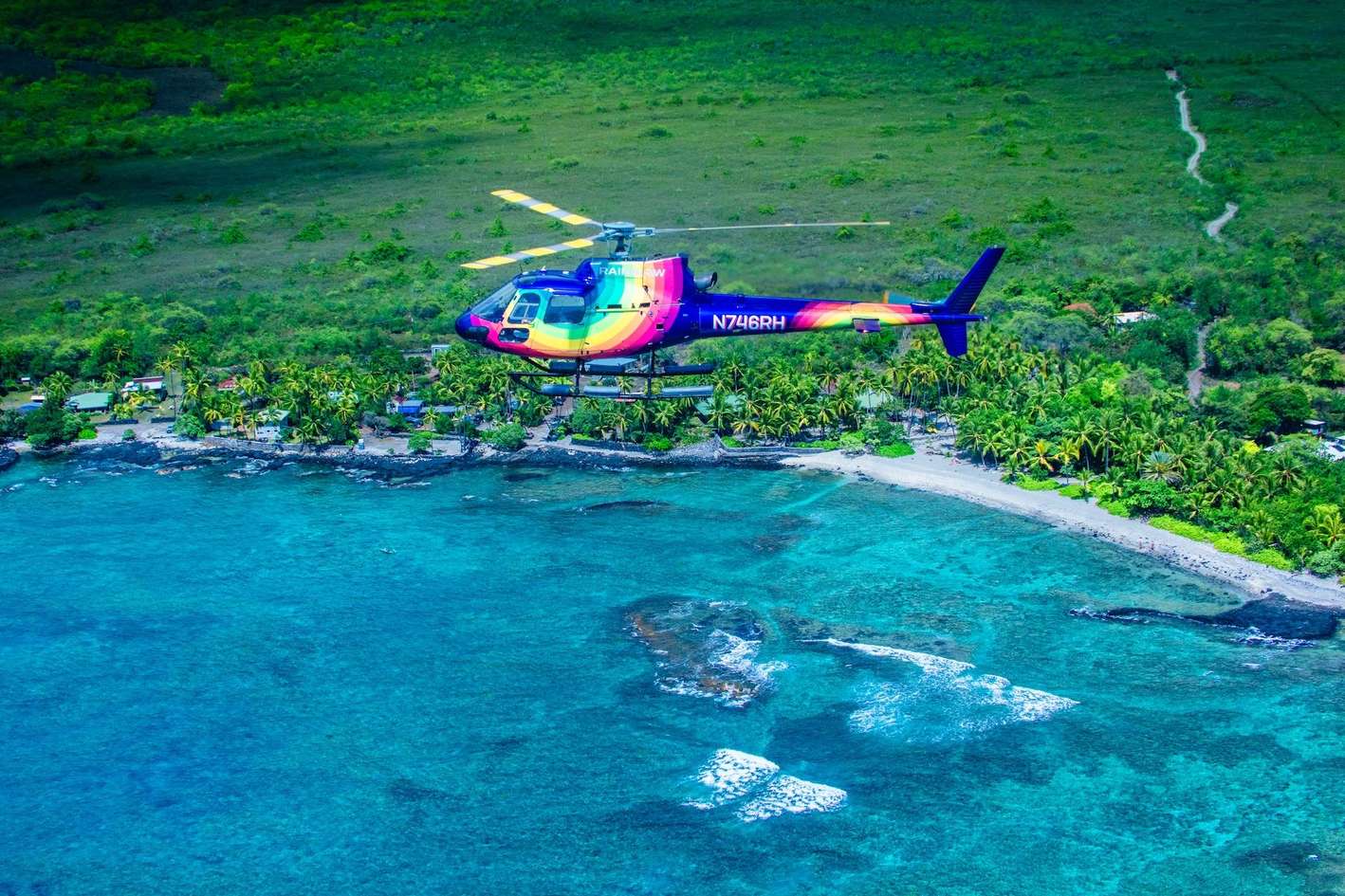
A sightseeing flight flies under a rulebook of its own. Companies can hold FAA Part 135 certification, which brings stricter maintenance and pilot qualification standards than general aviation. On top of that, Hawaii commercial air tours follow Part 136, and when its rules are tighter, operators must follow them.
Two of those rules change what your flight looks like. Hawaii air tours generally may not fly below 1,500 feet above the surface or closer than 1,500 feet to people or property, so sightseeing flights stick to set corridors above the terrain.
And before every flight the operator completes a performance plan, which the pilot in command must fly.
Water gets its own layer of rules. Any single-engine helicopter flying beyond an island's shore must carry approved flotation equipment or have floats fitted, and on legs over open water occupants generally wear life preservers from before takeoff until the flight leaves the coast.
The pilot briefs you on ditching, the gear, and getting out after a water landing.
Part 135 certification is the single credential worth checking before you book. You can also look up operators in official FAA and NTSB accident databases, or simply ask how many island flight hours their pilots have.
Pilot certification and Big Island microclimate training
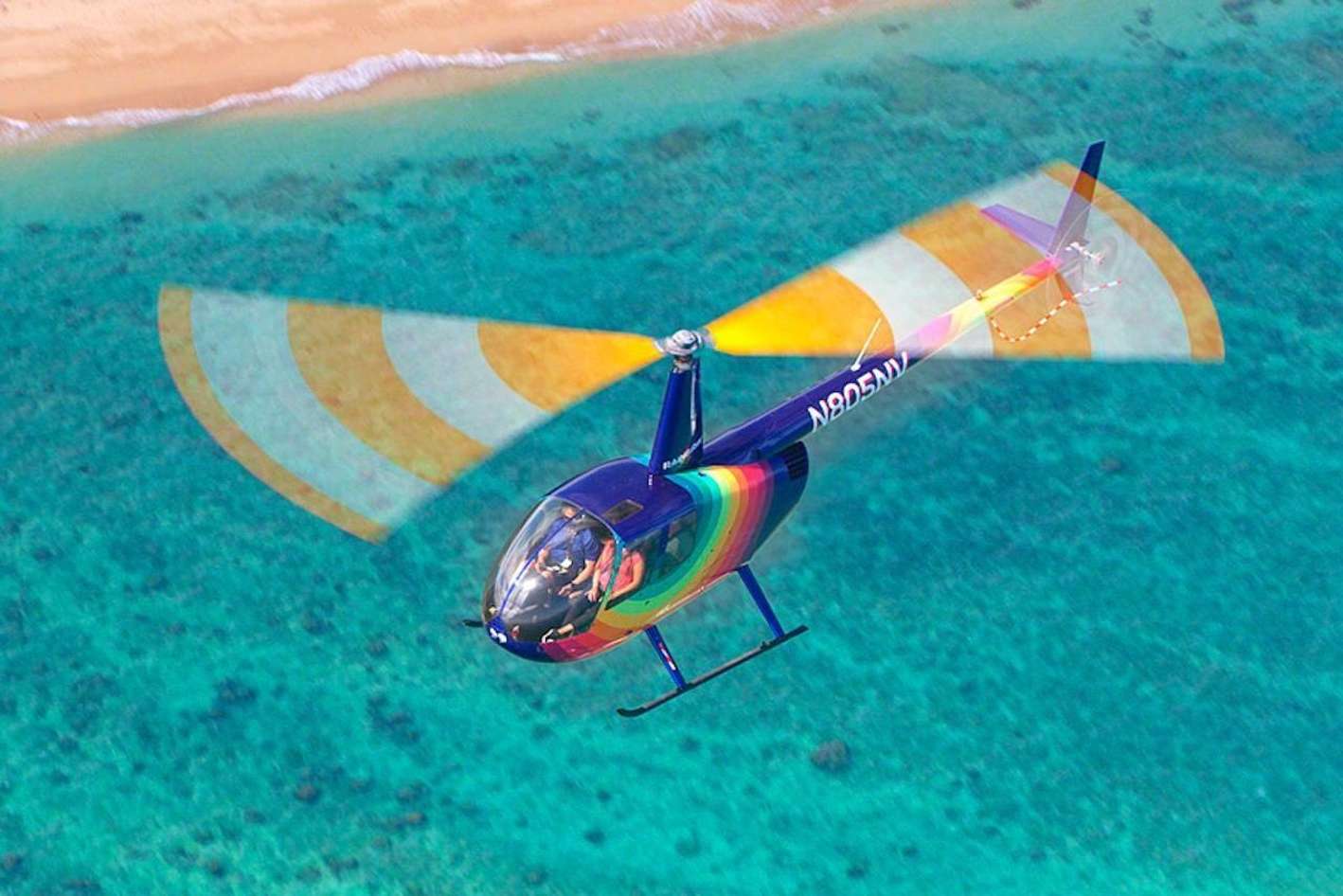
The pilot flying you has trained past a basic commercial license. For Hawaii commercial air tours below 1,500 feet, the FAA requires operator-specific training, and its guidance says that training should cover mountain flying techniques, high density altitude, and cue-based, island-specific weather.
That last part matters more on the Big Island than anywhere else in the chain. This island holds several climates at once: dry leeward Kona, cloud-capped summits above the trade-wind inversion, and rain-soaked windward slopes near Hilo.
A pilot who reads those cues, a cloud building over Hualalai's slopes by early afternoon, a wind shift along the Kohala ridges, is the difference between a smooth tour and a wasted one.
The question that reveals pilot quality is simple: how many flight hours does this pilot have on island routes?
People who fly here often say the knowledgeable, engaging pilots are the ones who bring the geology and history to life from the cockpit, and that even nervous first-timers settle down once they hear the briefing and feel how steady the aircraft is.
Operators whose pilots have logged thousands of hours in these mountains add a layer of skill no brochure can promise.

Finding the safest helicopter tour on the Big Island
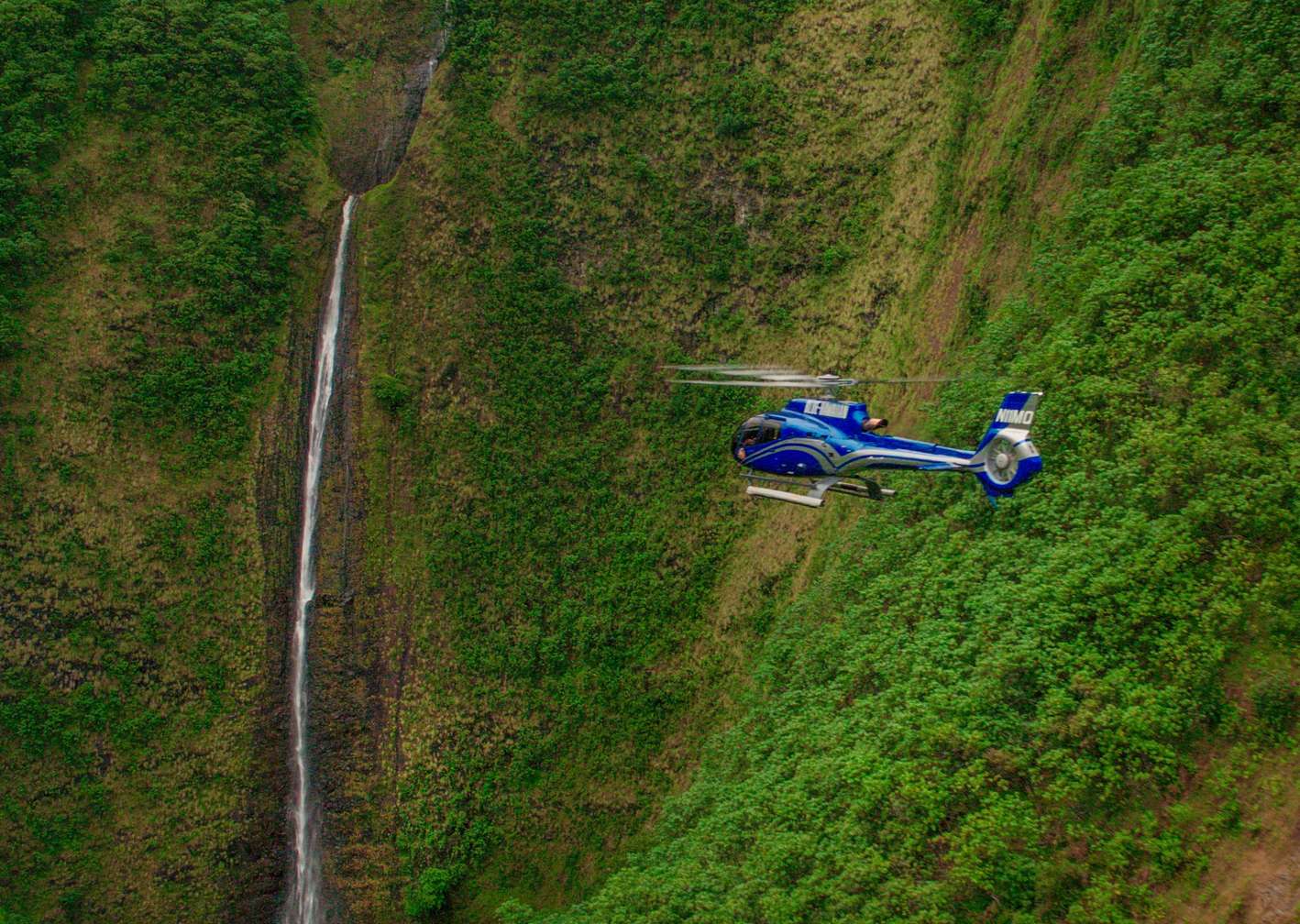
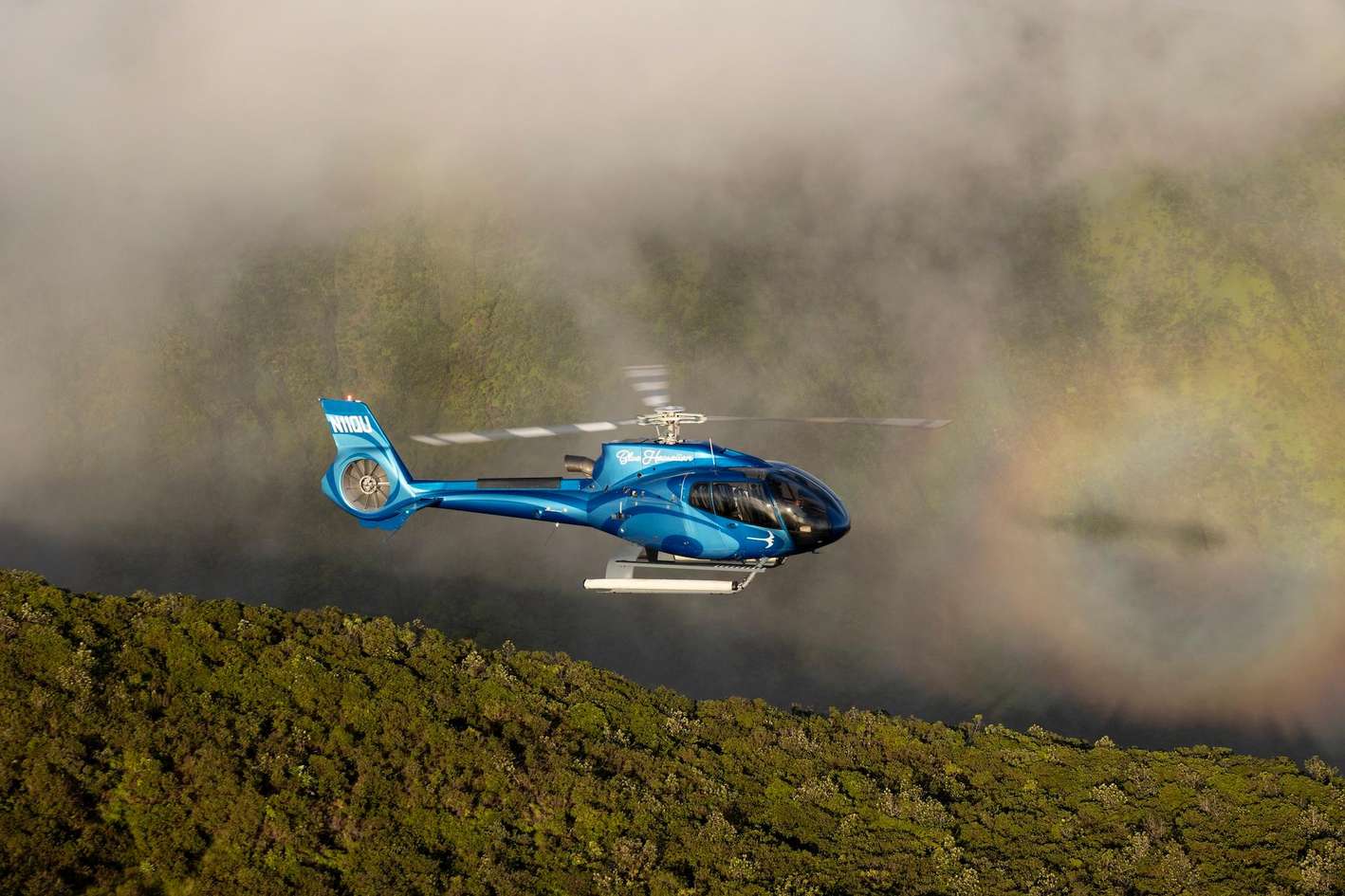
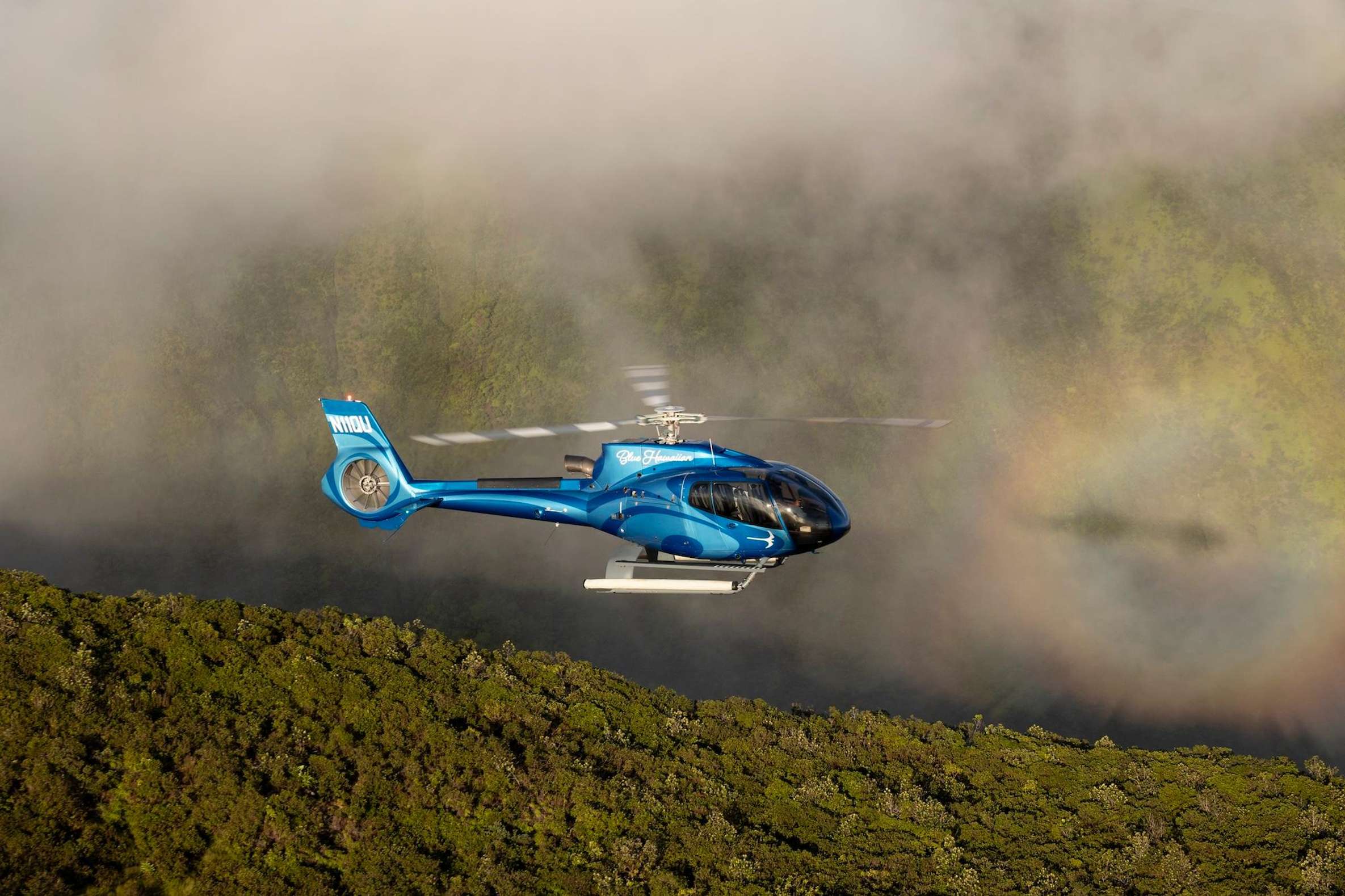
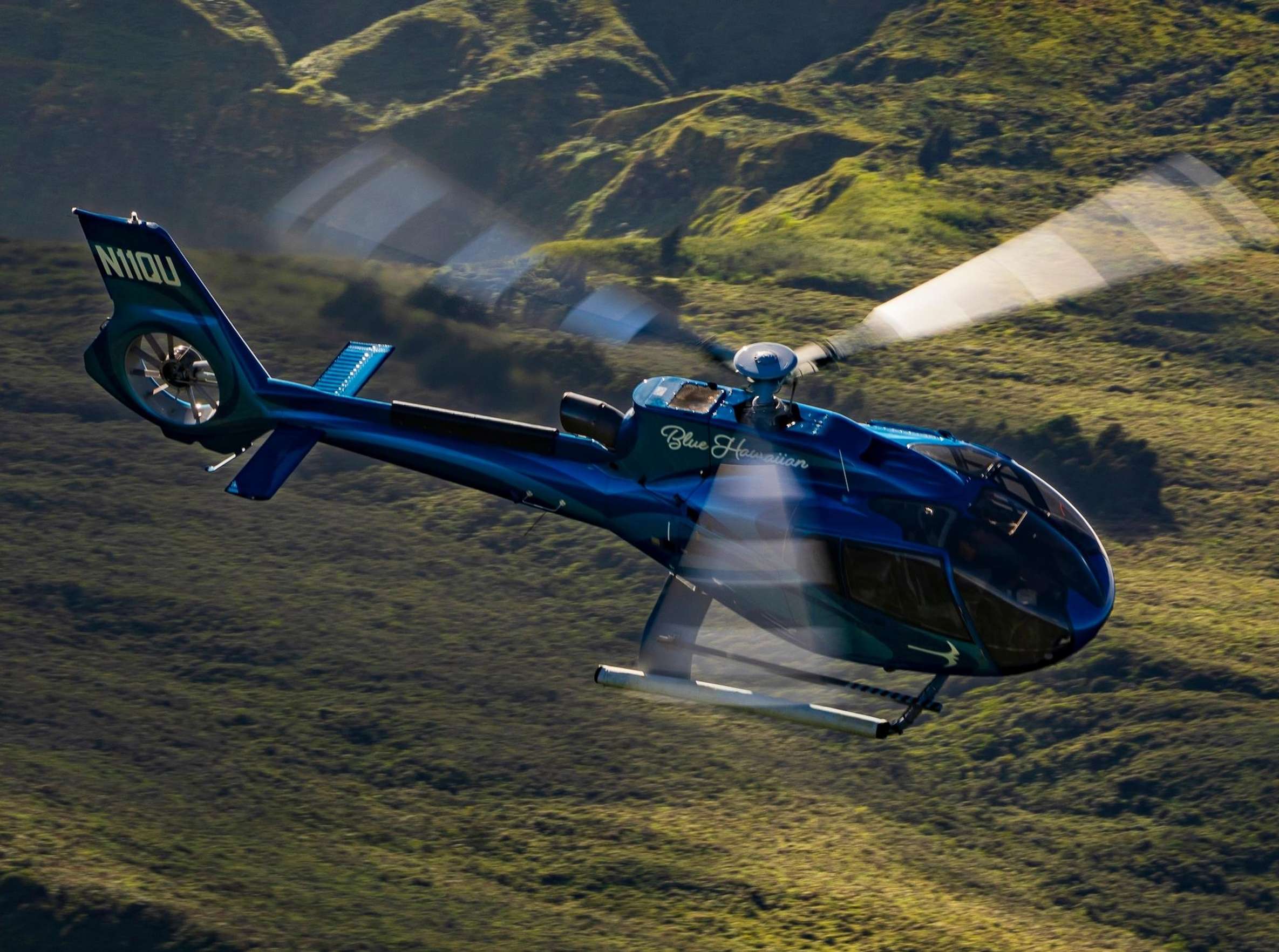
Step into an Eco-Star EC-130 and the mechanical-failure fear starts to lose its grip. This is a purpose-built touring aircraft, and the engineering shows. The seats, front and rear, are high-backed and energy-absorbing.
The fuel system is crash-resistant. The engine runs a dual-channel FADEC control system with a third, independent automatic backup channel, and the cockpit display is built to cut pilot workload.
The tail rotor is the detail most passengers never notice. On this aircraft it sits shrouded inside the fantail, the Fenestron design, so there is no exposed spinning blade at the back. Dual hydraulics were added specifically so a hydraulic failure still leaves the aircraft landable.
Ask what helicopter you will fly in before you book; the model is a real safety variable. One type carries the opposite record: the Robinson R44 had the highest fatal accident rate among major civilian helicopter models tracked from 2006 to 2016.
Some Big Island tours fly it, including certain doors-off Kona flights, and it has minimum weights for doors-off seats that other aircraft do not. Operators running modern EC-130s give you the stronger aircraft and, as a bonus, raised rear theater seating and wraparound windows.
Weather, vog, and when flights get rerouted or canceled
Mechanical failure is rare. Weather is the thing that actually shapes your flight day. Low cloud, rain, and thick vog from the volcano frequently obscure the summits and crater areas, and when conditions fall below safety minimums, pilots divert the route or cancel outright.
On routes covered by the national park's air-tour plan, the rule is explicit: if weather stops a pilot from continuing at the prescribed altitude, they must safely exit the route and either find another one where the weather allows or leave the plan boundary. Pushing through is not an option.
A cancellation, in other words, is the safety system working. People who fly here regularly will tell you to read it that way: an operator that scrubs a flight at the check-in desk because the wind shifted is one taking its protocols seriously.
The calendar tells you where the odds sit. Rain falls on roughly one day in two across the wettest windward months of spring, while early autumn brings the driest, clearest stretch of the year.
January brings relatively clear skies with over 18 dry days and lower cloud cover, though winter showers can still prompt occasional route diversions.
Tap a month to read it.
April experiences frequent rainfall across 23 wet days, often requiring pilots to adjust routes toward clearer coastal sections.
Tap a month to read it.
March is the wettest month with 20 rainy days, leading to higher chances of clouds obscuring the volcano and flights rerouting to waterfalls.
Tap a month to read it.
Read that as a booking tool. A dry month means better odds the summit stays open; a wet month means plan the flight early in your stay and keep a spare day.
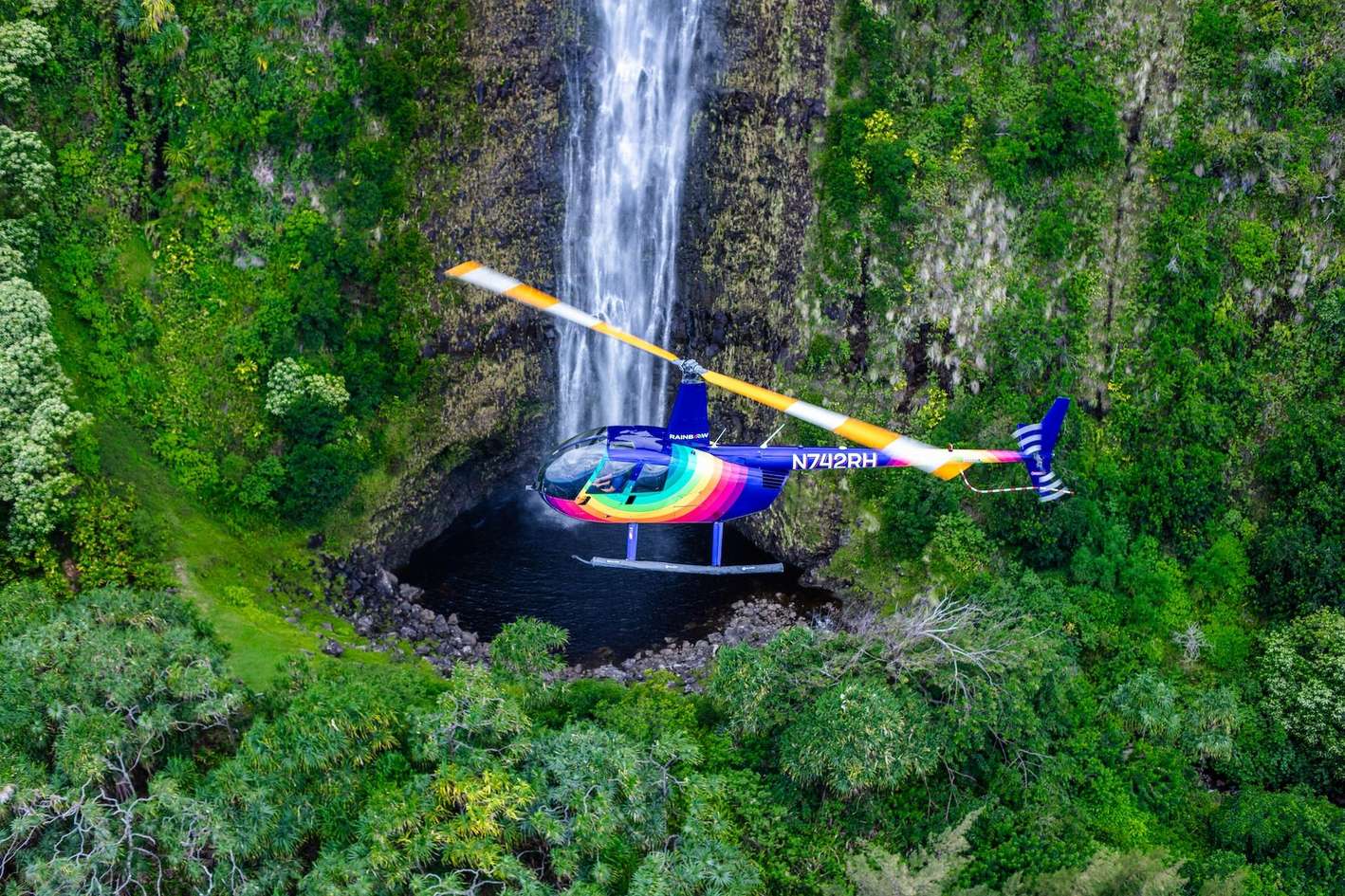
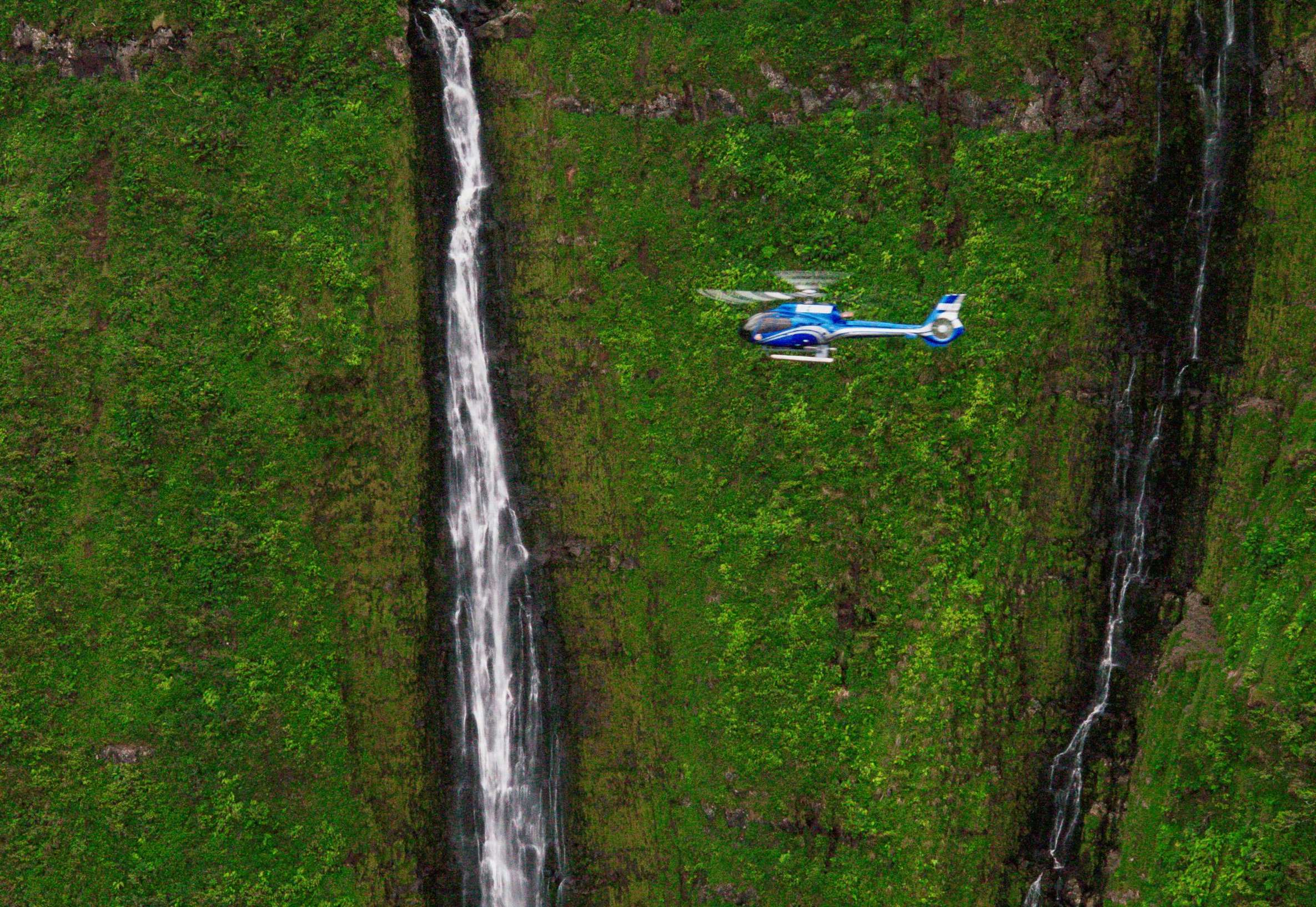
When clouds or vog close off the volcano, pilots usually swing toward windward sights instead, older coastal lava flows and rainforest waterfalls, which often run fuller right after a passing shower.
Best time of day to fly and how far ahead to book
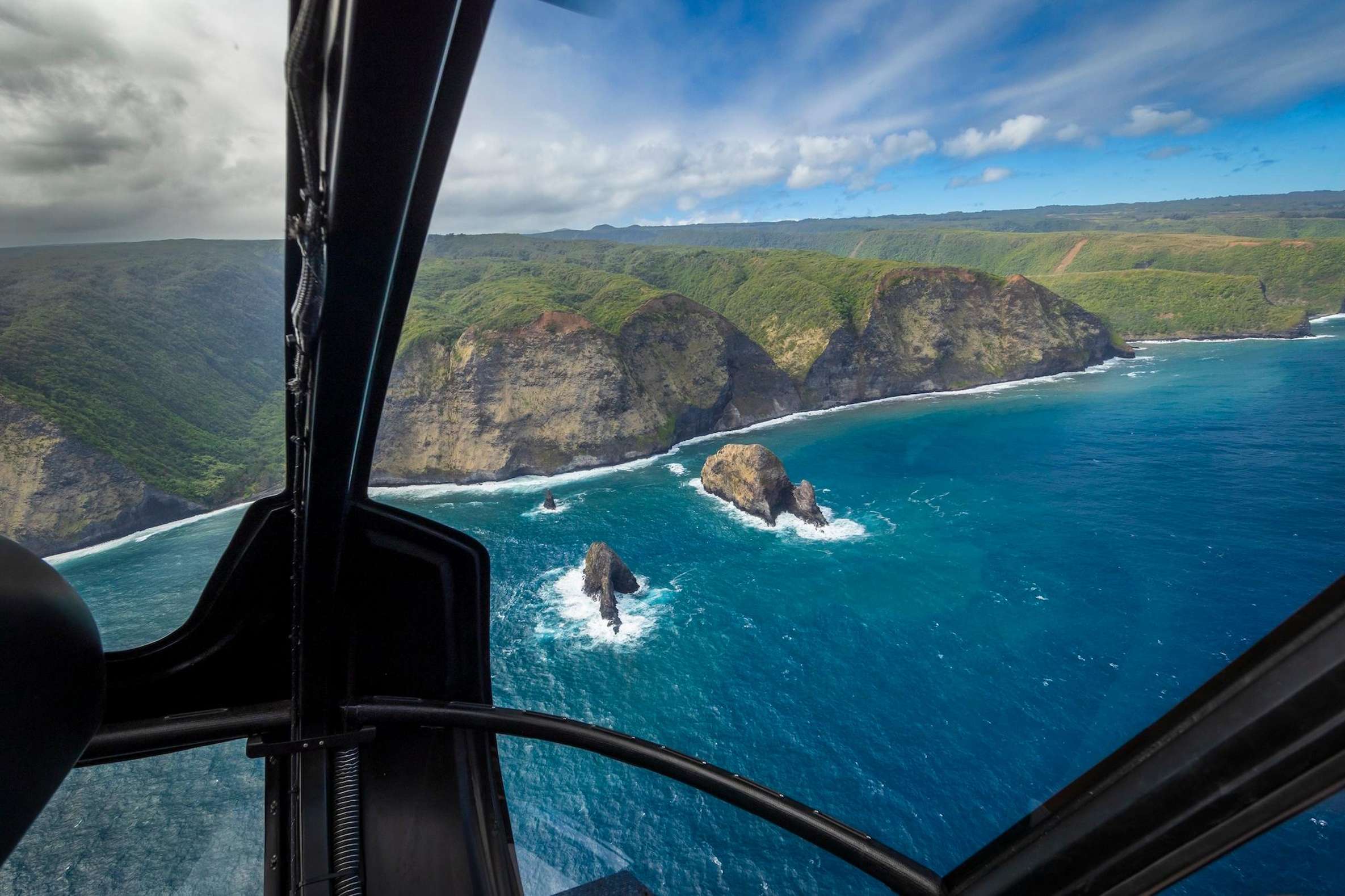
Mornings win, and by a clear margin. Between 8 and 11 am you get the calmest winds and the clearest skies over both the volcanic craters and the Kohala valleys, before daytime heating and the afternoon trade winds build dense cloud and choppy air.
By mid to late afternoon, cloud piles up over the interior ridges and the ride roughens.
Book the slot for early in your trip. Flights here get scrubbed for weather, and a tour scheduled for your last day that cancels has no second chance.
Flying on day two or three leaves buffer days to reschedule into, and it hands you an aerial overview of the island that helps you plan everything else by land.
The calendar matters too. In peak summer, June through August, and the December-to-January holiday stretch, time slots typically sell out 2 to 4 weeks in advance, and prime morning departures often book out 30 days to 6 weeks ahead.
If you want a specific 8 am flight in July or between Christmas and New Year, reserve it before you leave home; by the time you land, the good slots are usually gone.
Kilauea volcano flights and whether you will see lava
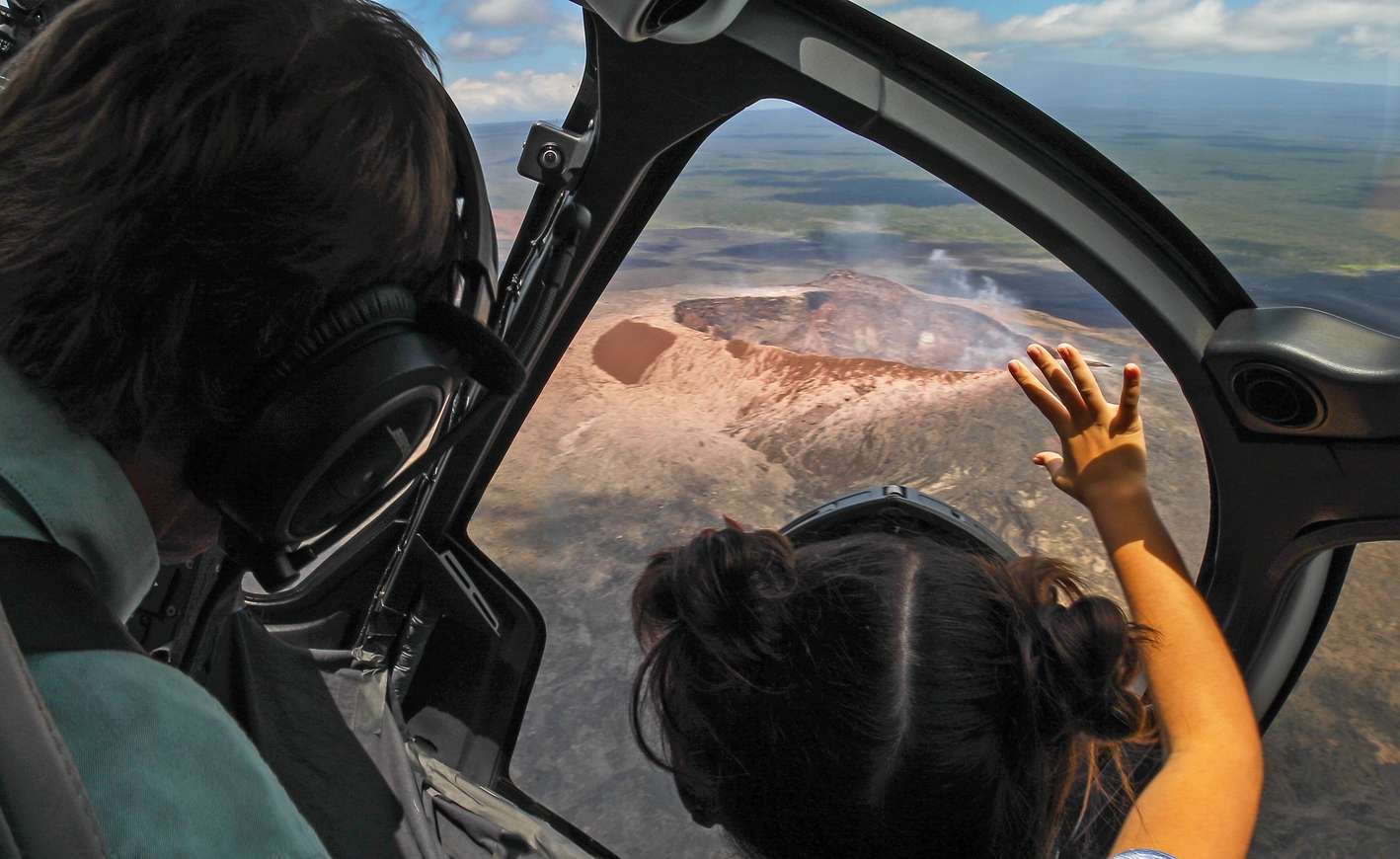
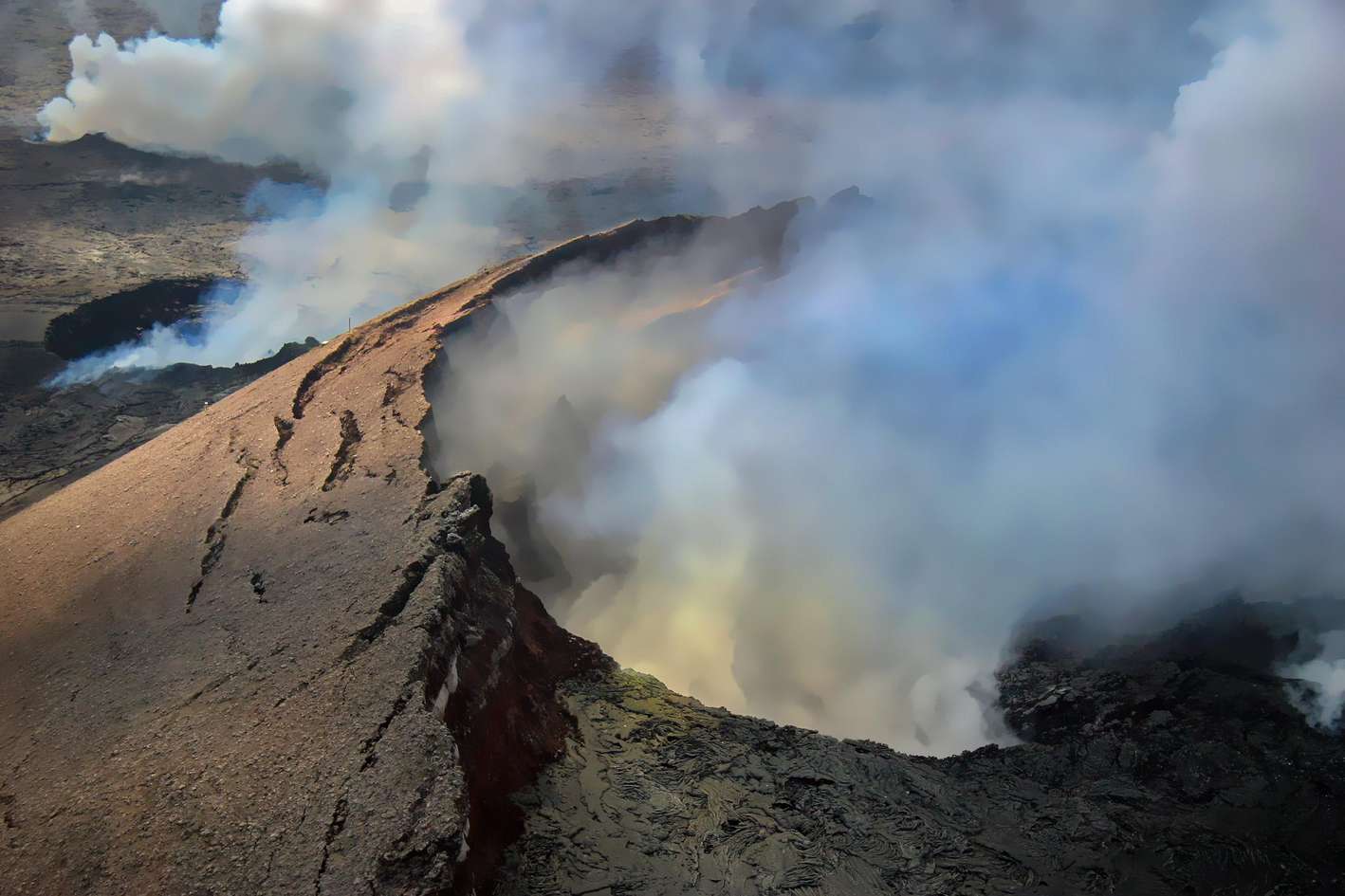
Set the expectation honestly before you spend a morning on it: molten red lava from the air is rare, because Kilauea erupts intermittently and in brief windows.
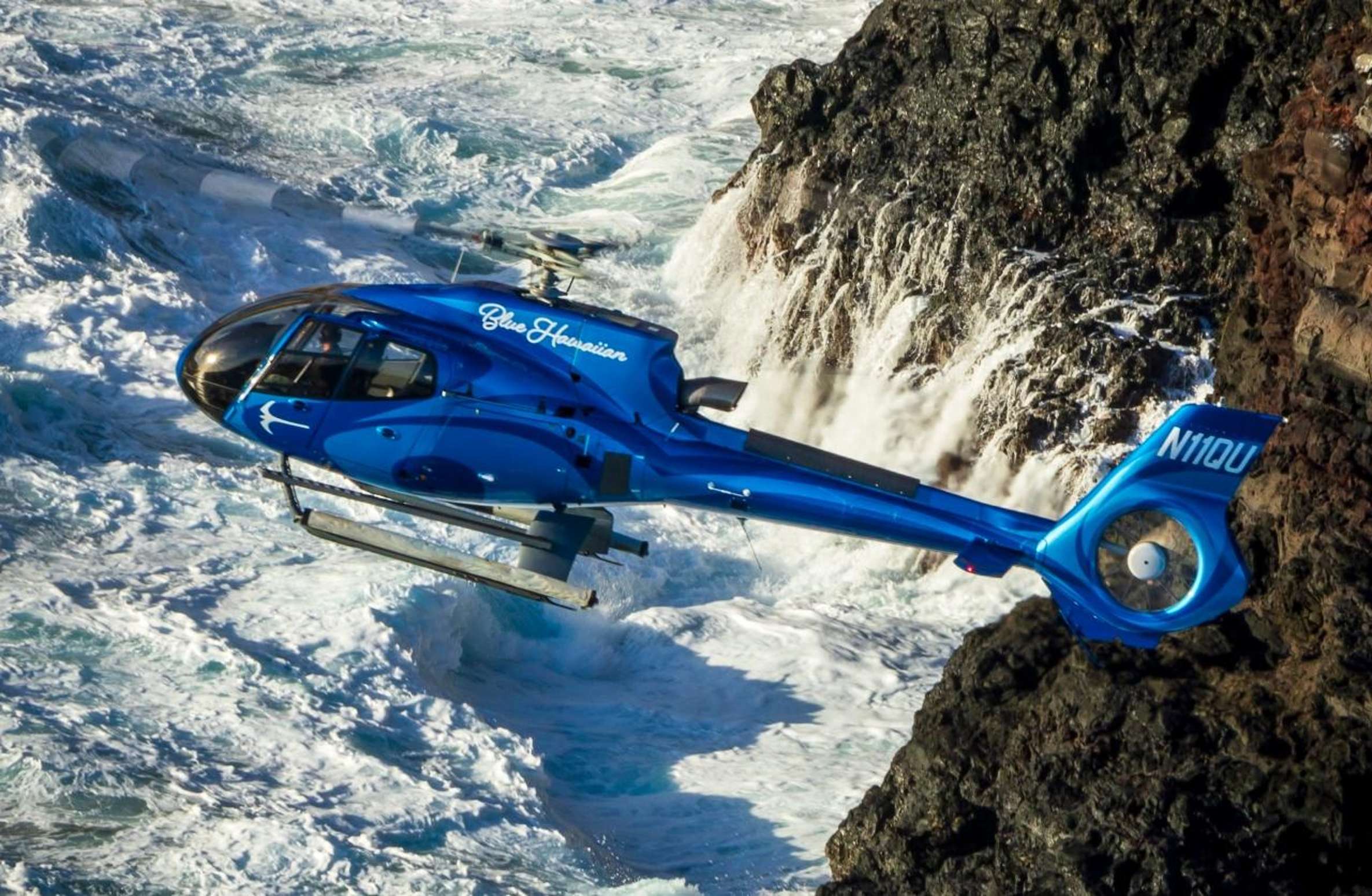
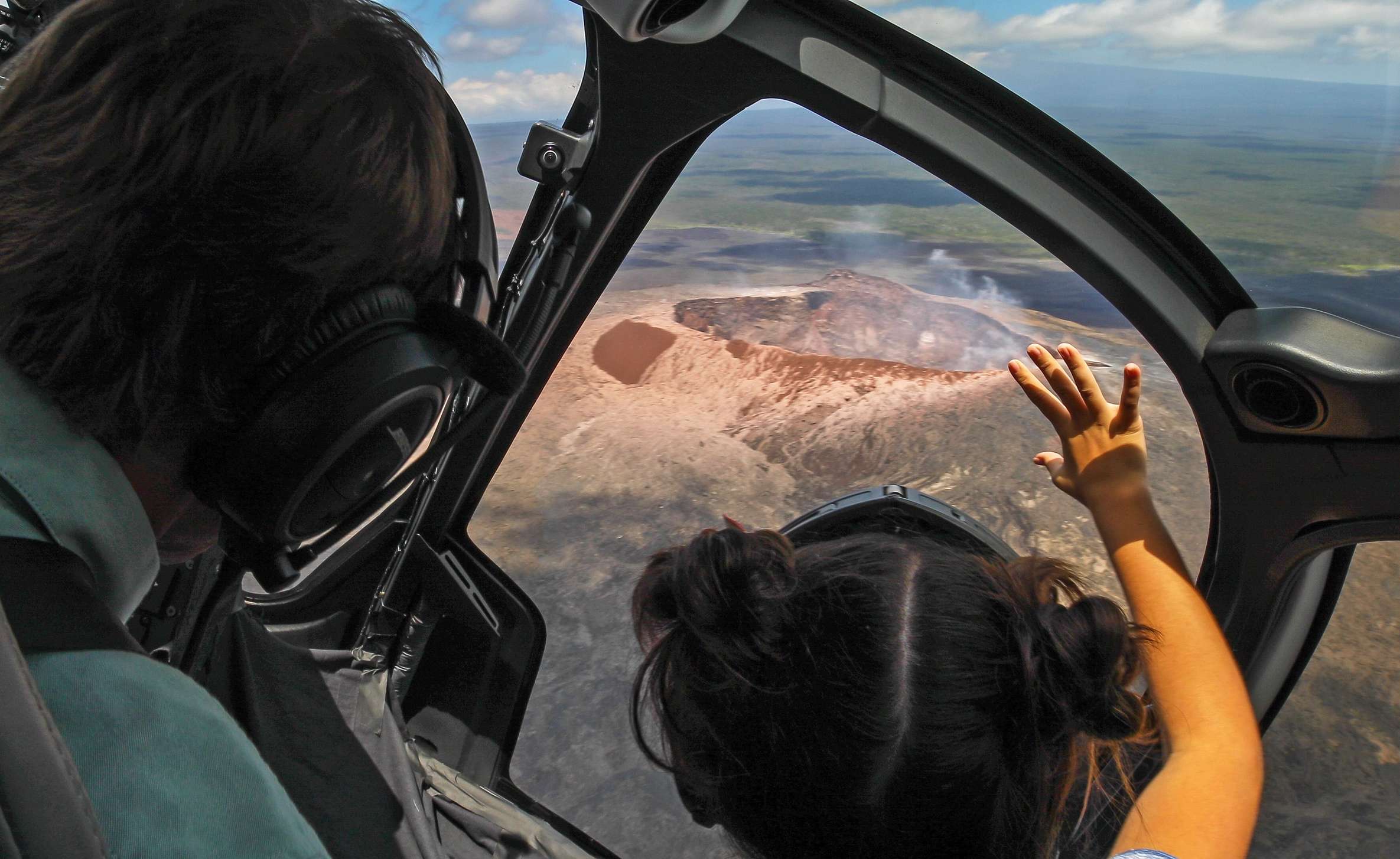
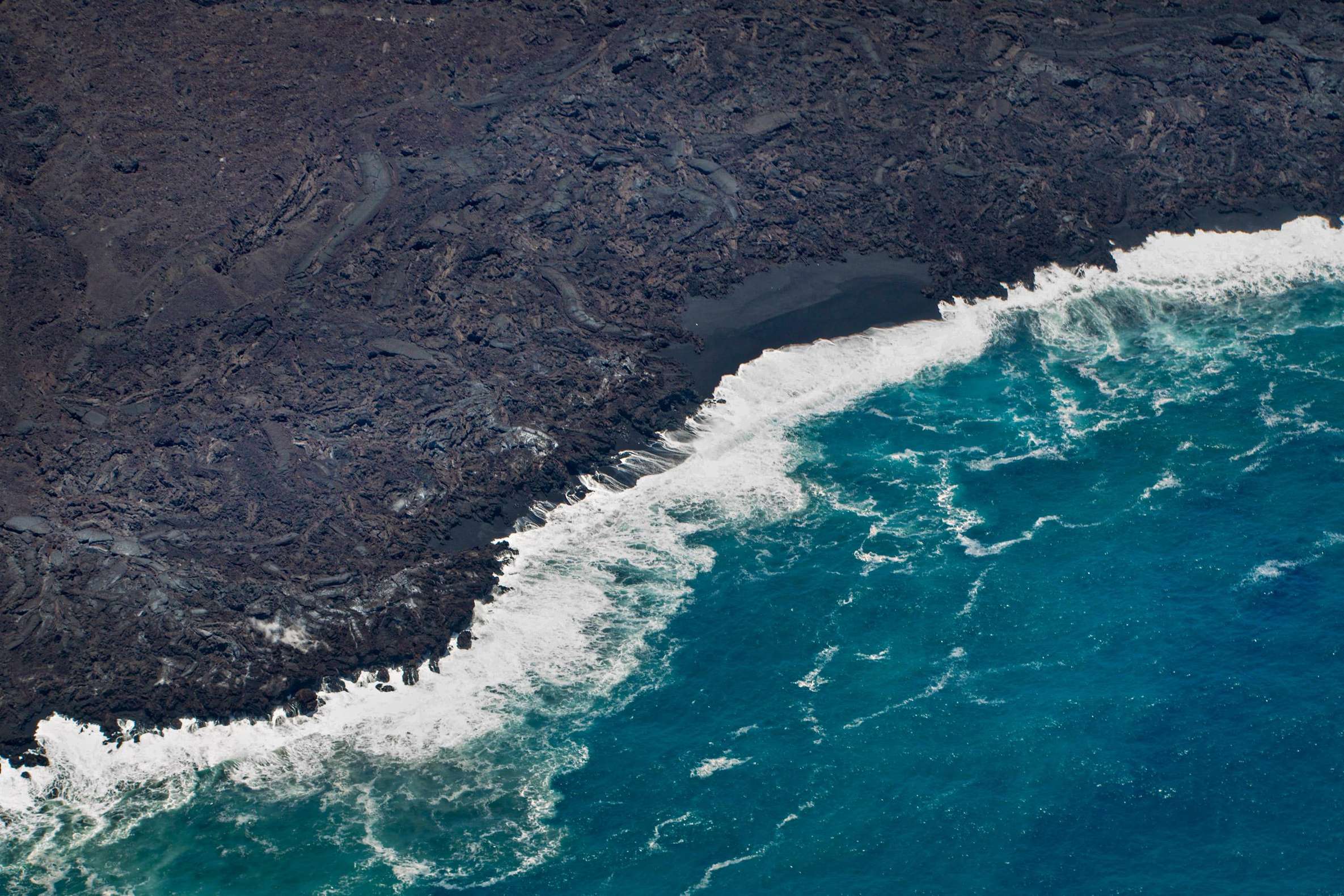
When the surface is quiet, a volcano flight shows steam vents, vast crater formations, and hardened flows from past eruptions. Black fields, steaming ground, a caldera you can read like a map. That is the everyday view.
During an eruption, the airspace itself can close. Temporary flight restrictions and volcanic hazards shut the area above the caldera, and a restriction over Kilauea extends two nautical miles from Halemaumau crater with a 5,000-foot ceiling.
The park's air-tour plan also designates routes that avoid the summit entirely, so authorized tours are not permitted to fly directly over it.
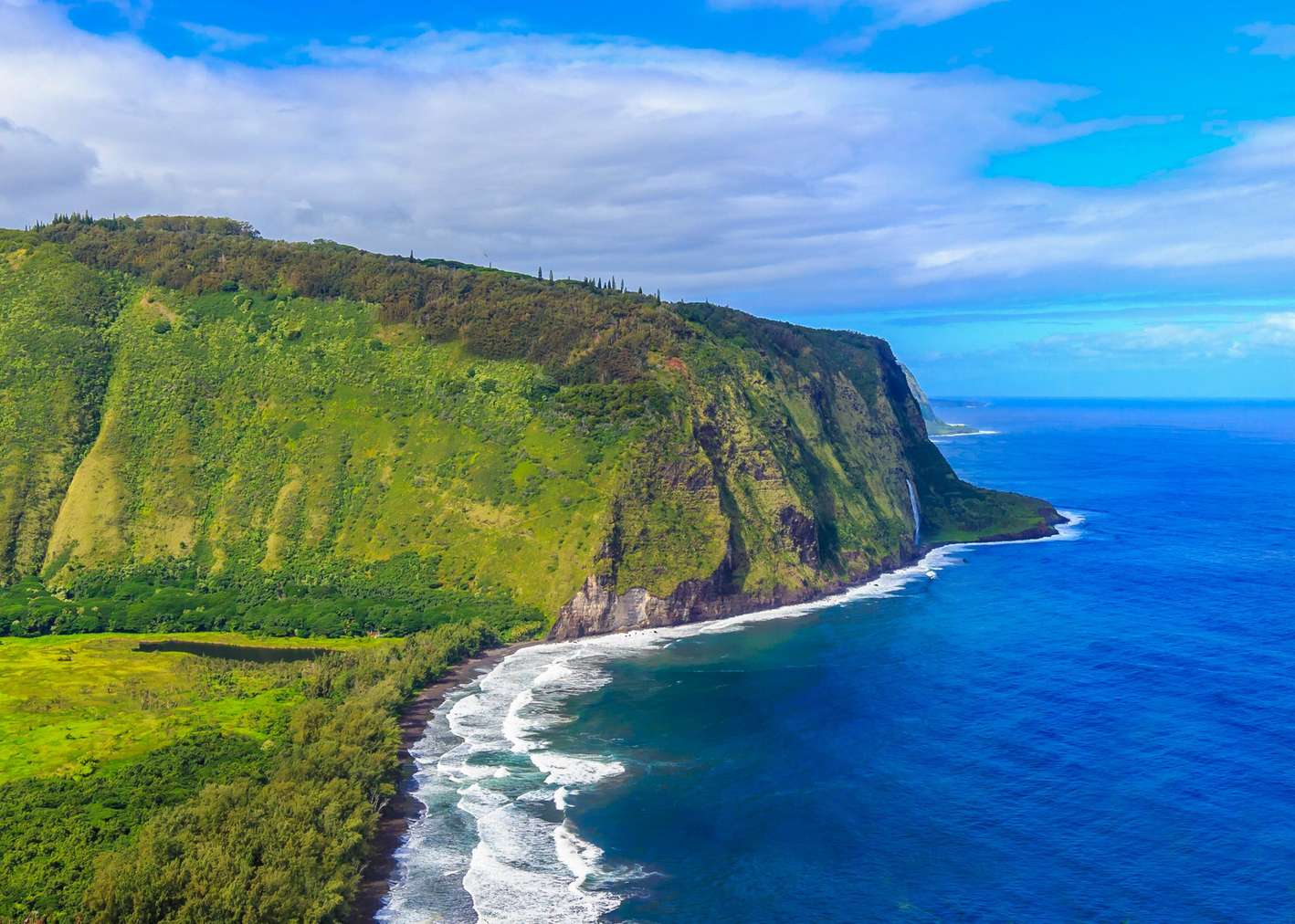
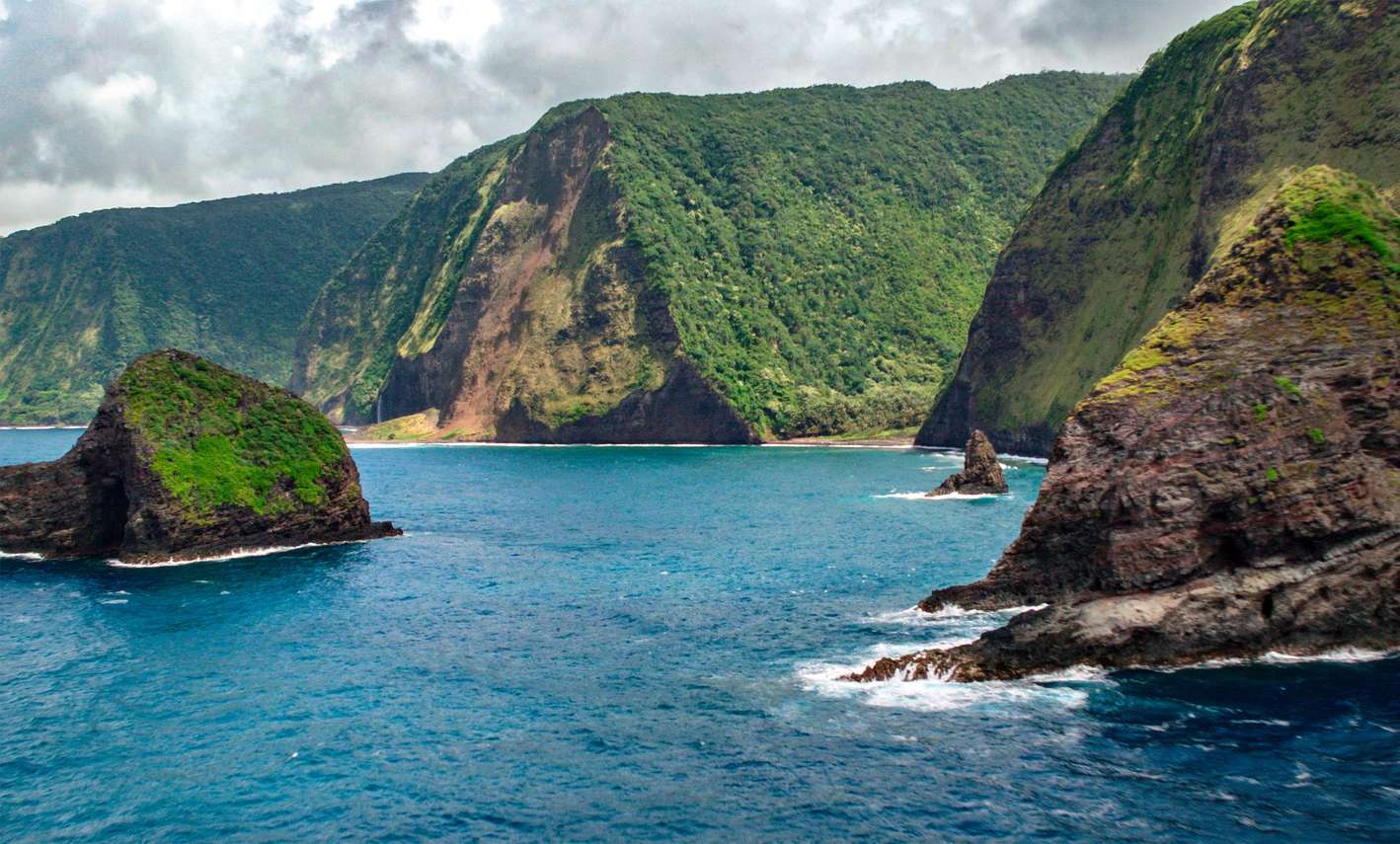
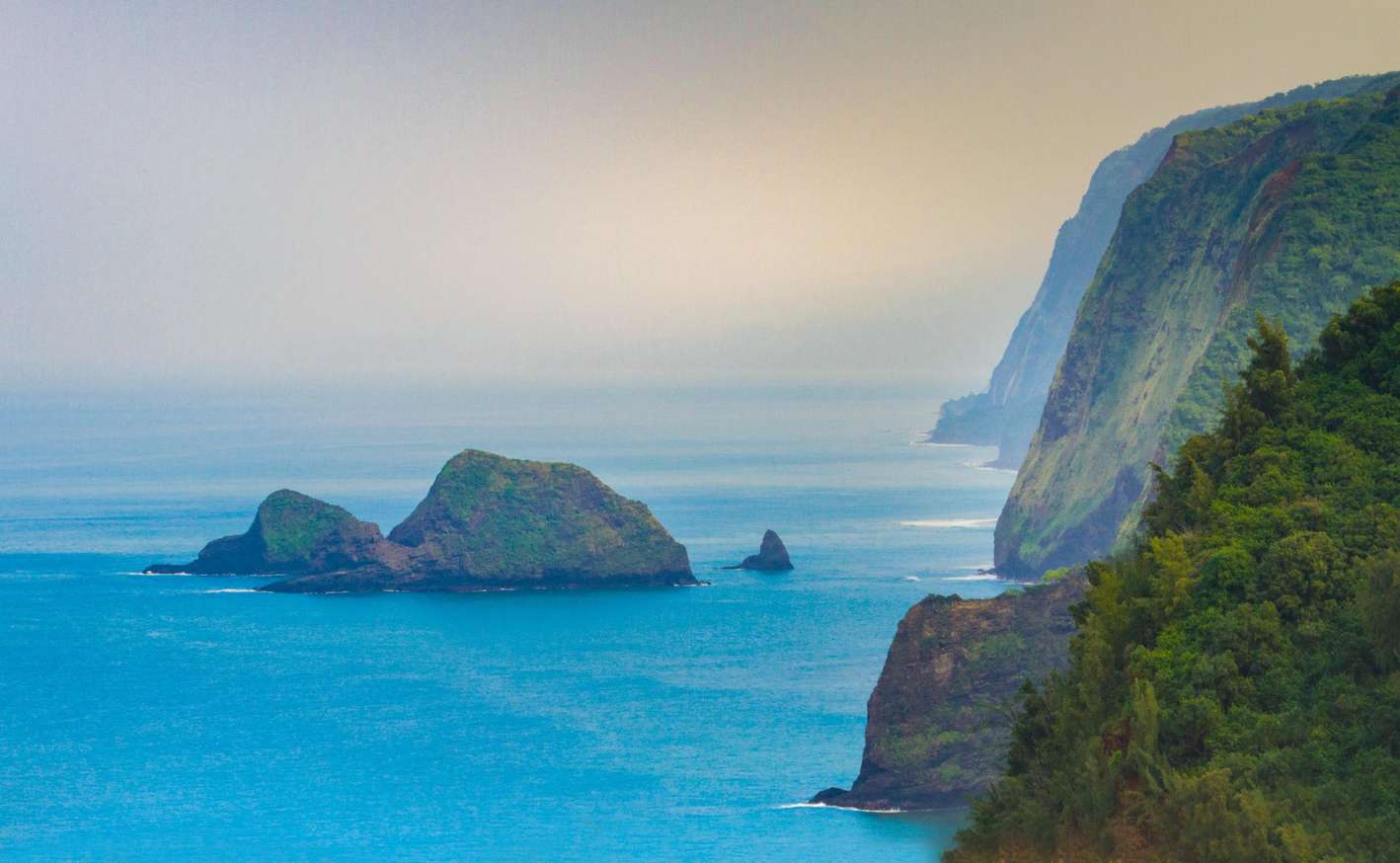
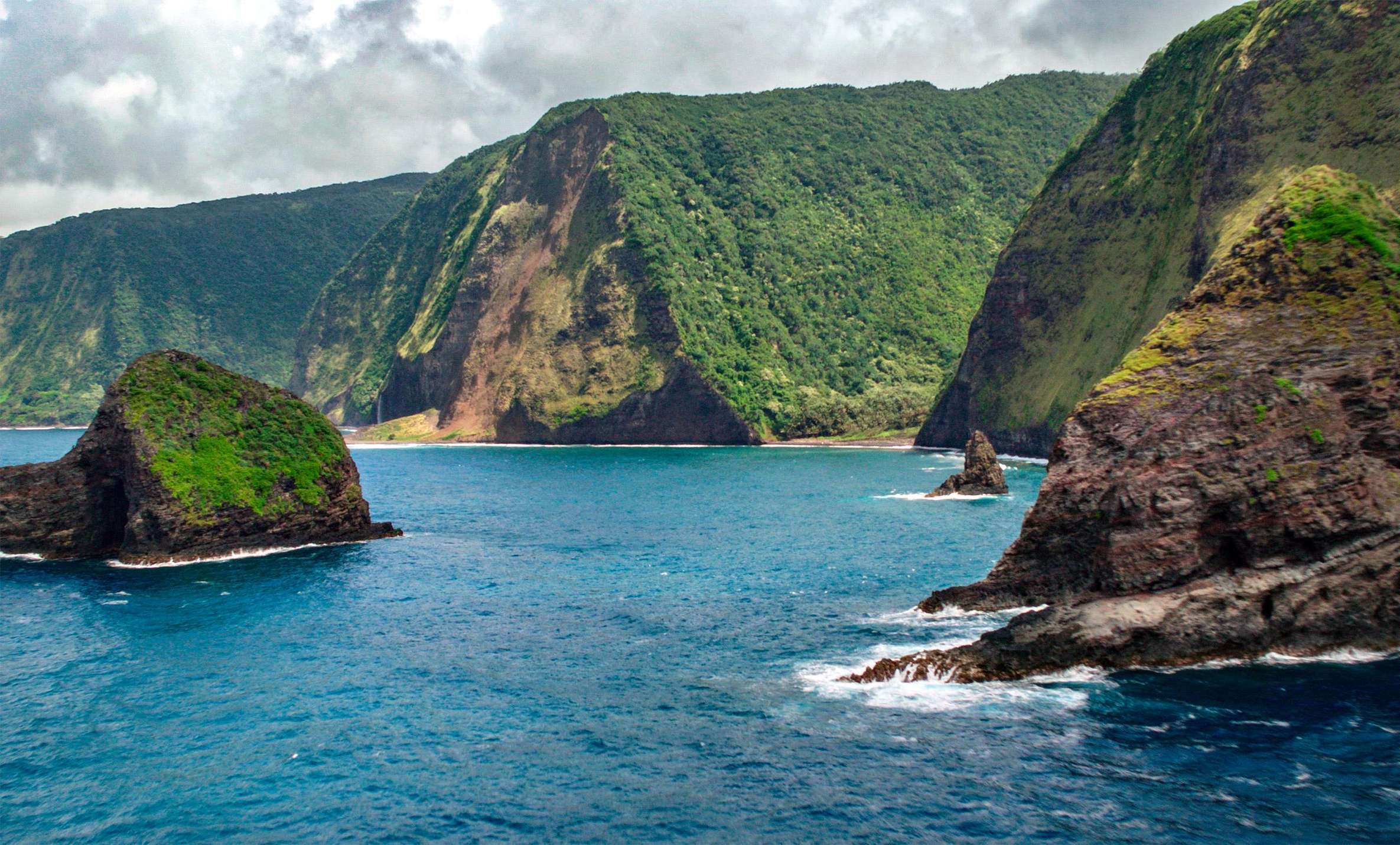
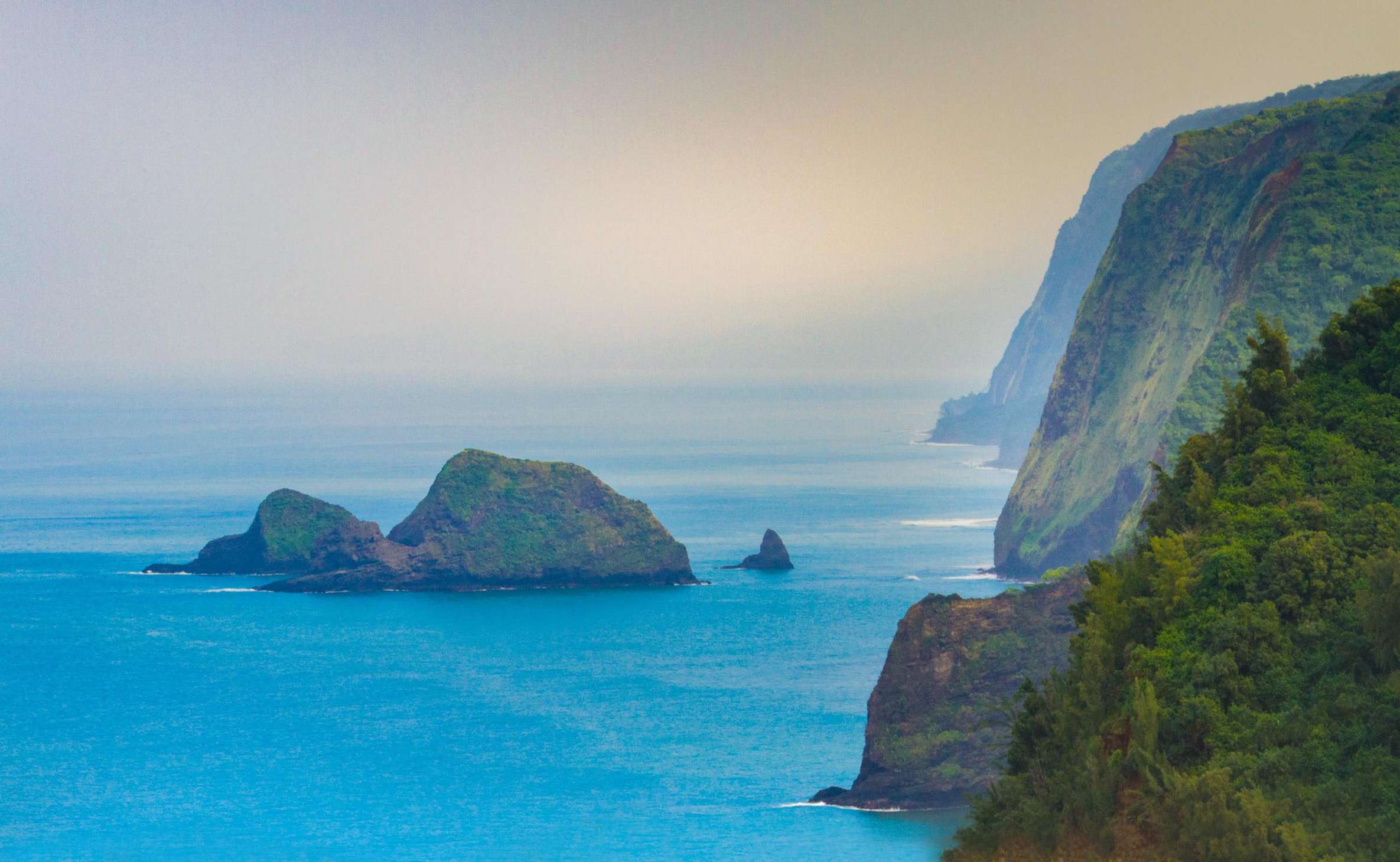
The flight holds up without lava. People who go when the volcano is quiet often find the Kohala Coast's green valleys and waterfalls more impressive than the inactive craters anyway, and the roadless terrain is the part no rental car can reach.
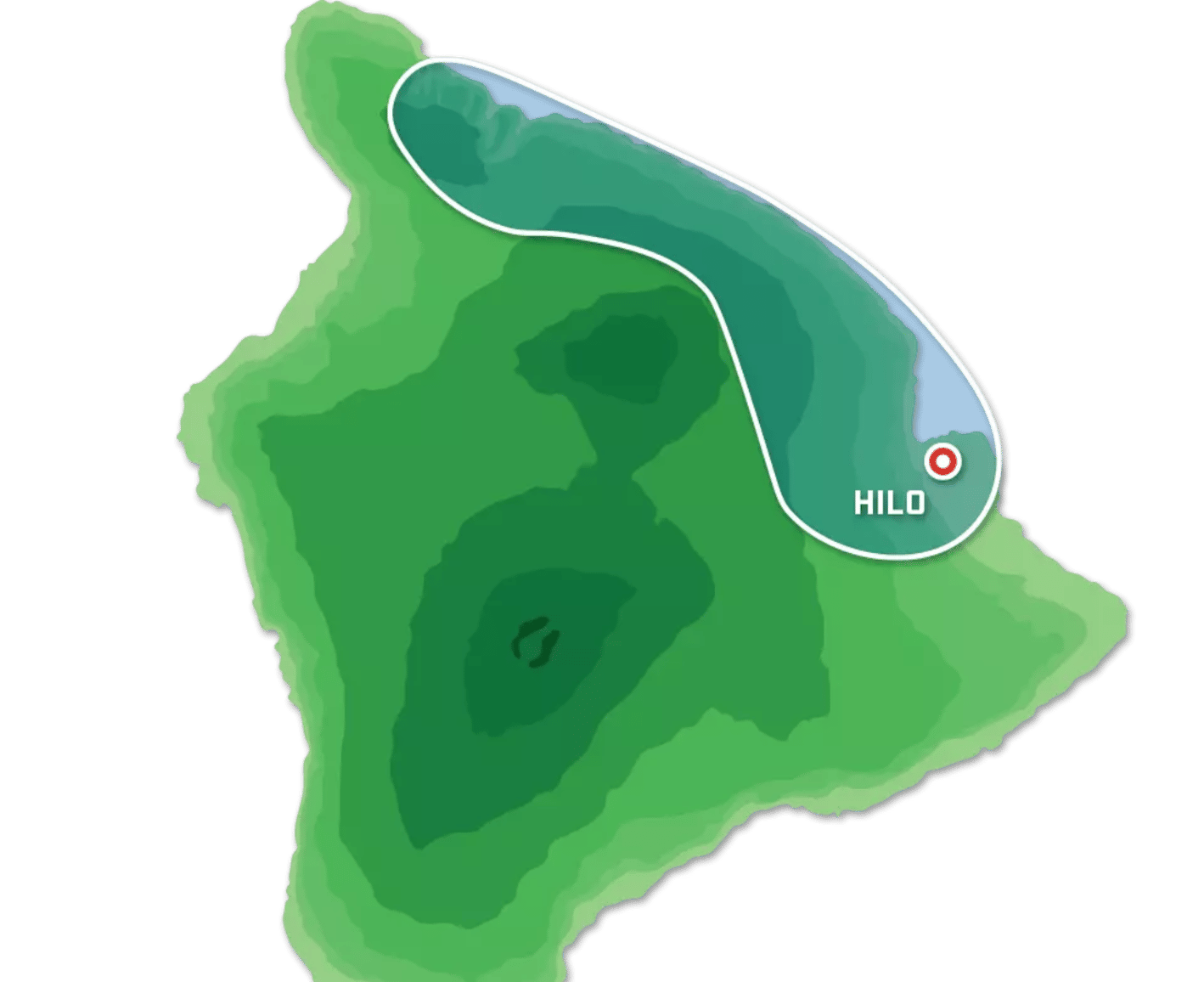
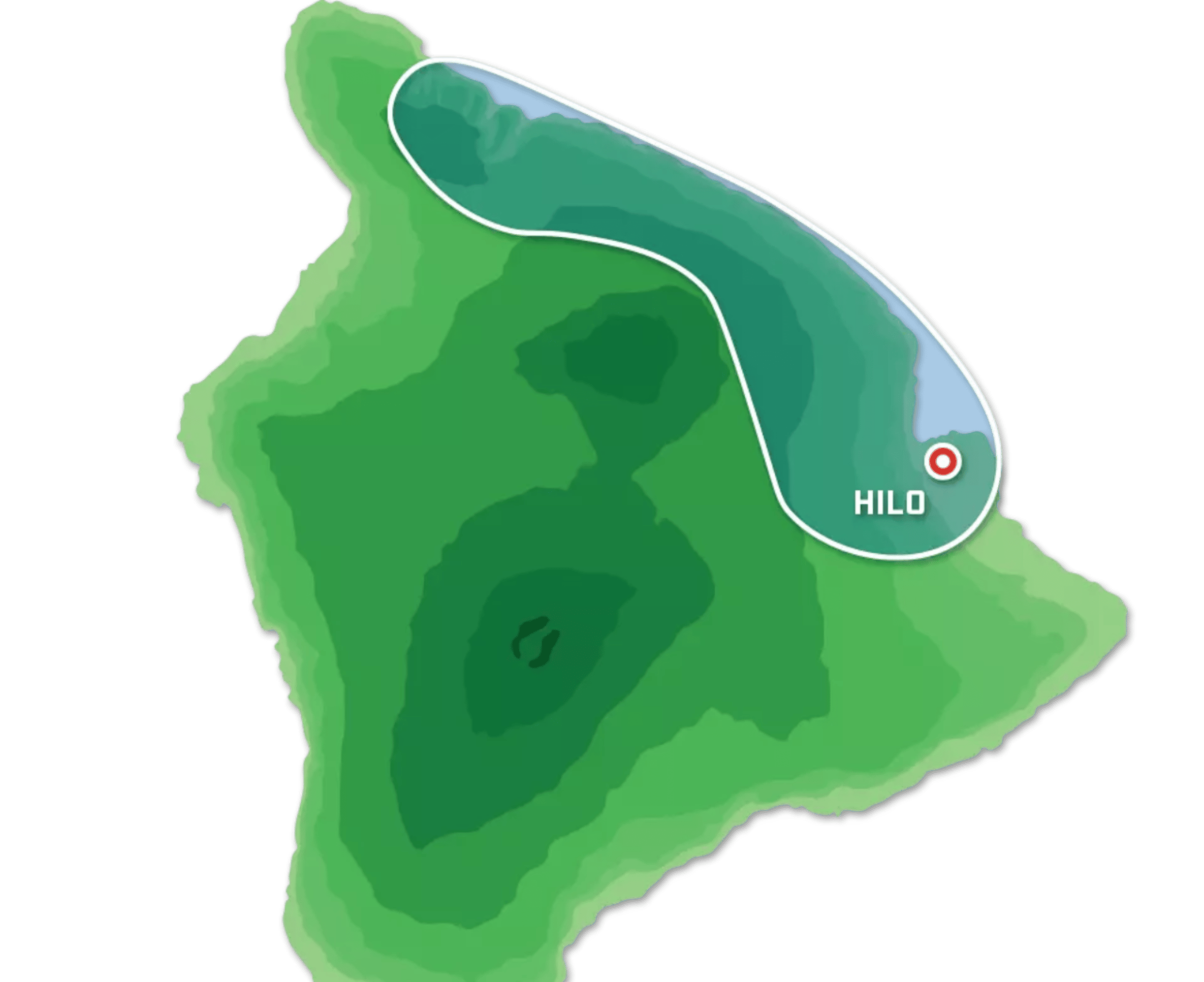
If the volcano is the reason you came, the Hilo: Hawaii Volcanoes National Park Flight runs about an hour out of Hilo, straight over the Kilauea caldera and the Puu Oo cone, with the shortest transit of any volcano route on the island.
Flying with doors off or closed - exposure, restraints, and who each suits
The doors-off seat is the one photographers dream about, and it deserves an honest description. A standard lap belt or a basic strap holds you in; there is no multi-point racing harness.
The cabin loses its doors, so you feel the full wind, and temperatures in flight run 10 to 15 degrees cooler than on the ground before the chill of moving air.
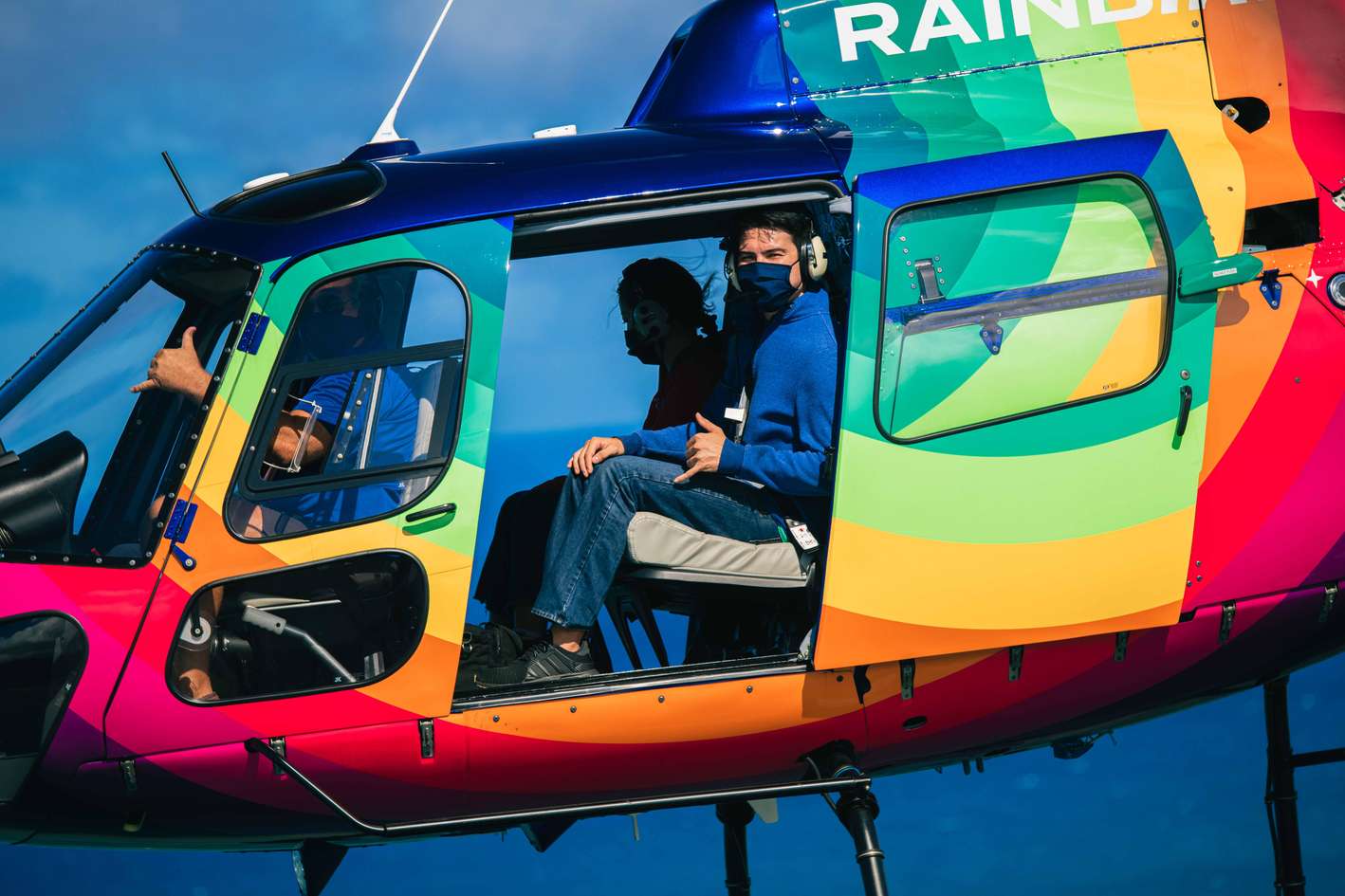
Phones and cameras must be tethered to you with a wrist or neck strap for the whole flight; hats, bags, scarves, and anything loose stay behind. There are hard lines on who can sit there. Every passenger wears a headset, children included, which protects ears from engine noise.
Match the seat to the person flying in it. A nervous flyer or someone prone to panic in exposed spaces belongs behind a closed, climate-controlled door.
The Kailua-Kona: Hualalai Volcano Doors On/Off Helicopter Tour lets you choose either configuration in one booking, and its operator supplies the straps and cases for cell phones that doors-off flying requires.
Health, weight, and passenger eligibility checks before you fly
A few rules can stop a boarding, and they are worth an honest look before you pay. Anyone who has scuba dived within 24 hours of the flight may be denied boarding, because lower cabin pressure raises the risk of decompression sickness.
People with vertigo, claustrophobia, or a current cold or flu, and pregnant women, are told by some tours not to fly. Passengers who cannot sit upright are not permitted. Weight is handled formally.
Every passenger is weighed at check-in so the operator can calculate the aircraft's center of gravity, and FAA weight-distribution rules dictate the exact seat assignments.
That is why you cannot pick your own seat or count on sitting together. ::alert When a health rule stops the flight Scuba diving within 24 hours of your flight | Plan your last dive at least a full day before takeoff or you may be denied boarding
Motion sickness is the worry most people carry aboard, and it mostly stays there. The flight is smooth, and travelers who get carsick or seasick often feel nothing in the air.
Take ginger chews or a preventative remedy before takeoff; once symptoms start, it is too late for the medicine to work well. Eat light, stay hydrated, and a front seat with a wide horizon helps if you are sensitive.
What happens on flight day - check-in, briefing, and boarding
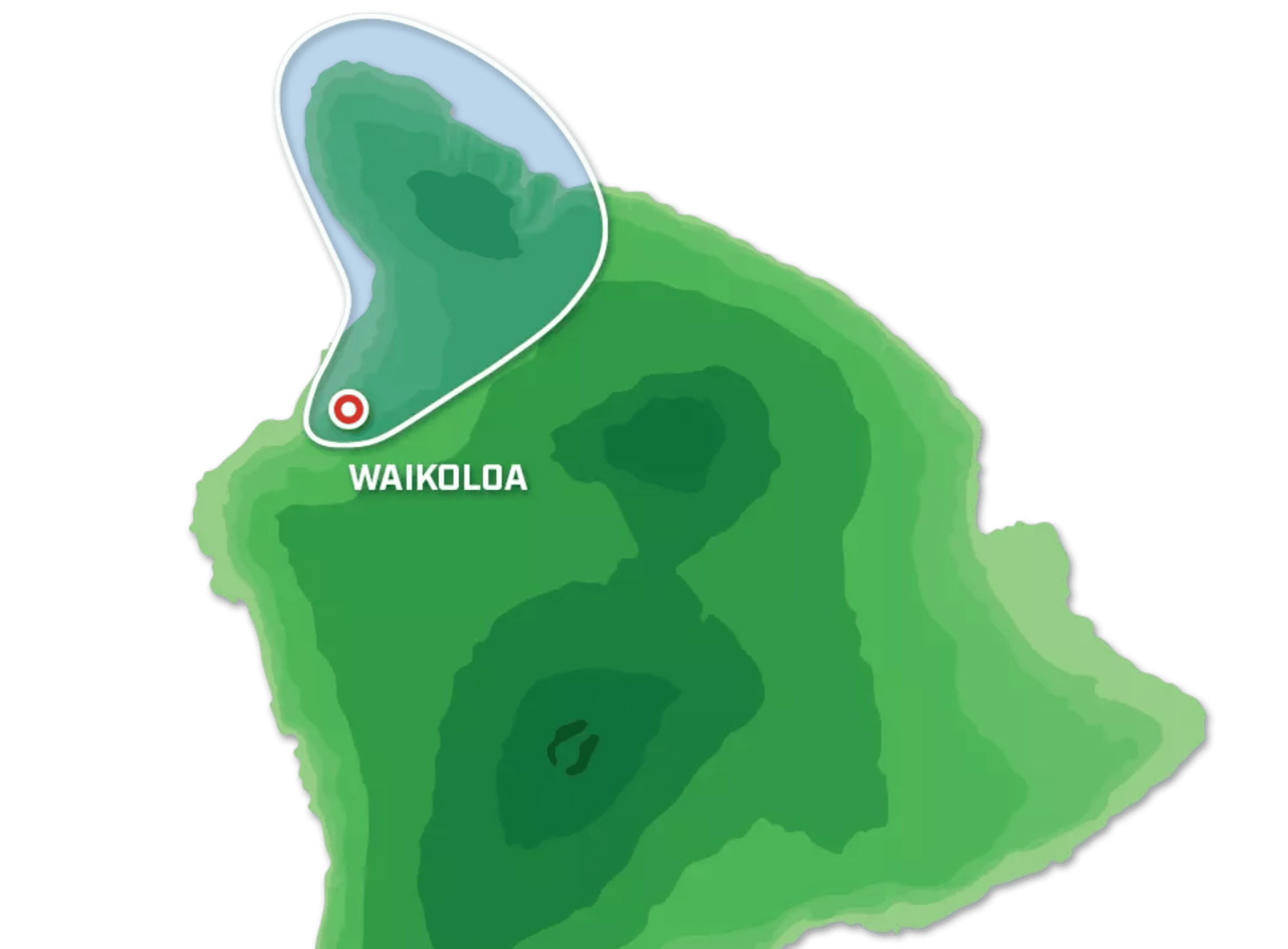
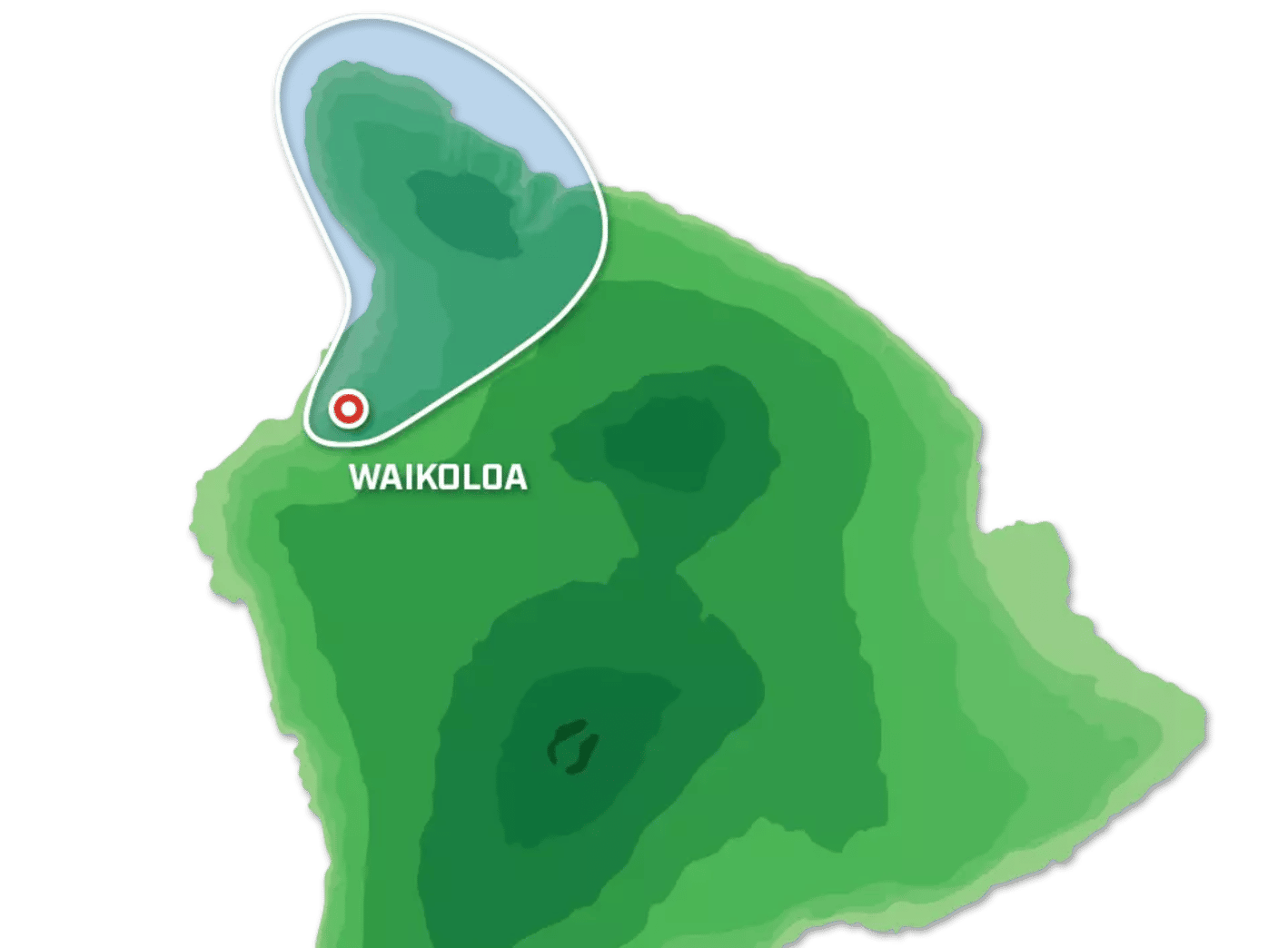
Flight day begins at the check-in desk. Check-in times differ by tour: 45 minutes before a Hilo departure, a full hour before Waikoloa flights and some volcano routes, and your confirmation states the one that applies to you.
Late arrivals may lose the seat with no refund. The weigh-in is routine; everyone steps on the scale, the numbers go into the balance calculation, nobody comments.
Then the briefing, and pay attention to it, because the tarmac itself is the hazard zone while rotors turn.
The crew walks you along the safe paths: stay away from the rear of the helicopter, where the tail rotor lives, crouch low passing under the main rotor, and on sloped ground keep clear of the upslope side.
If a hat blows off, let it go. Chasing a loose item near an operating helicopter is the one mistake that endangers everyone.
- 145 to 60 minutes before takeoffCheck-in and weigh-in at the heliport
Late arrivals may lose the seat without a refund
- 2Before boardingPre-flight safety briefing
Listen closely; it covers the rotor paths and, over water, flotation gear
- 3BoardingWalk the marked routes with the ground crew
Away from the tail rotor, low under the main rotor
- 4TakeoffA vertical lift, then a forward pitch
It levels into a smooth glide within moments
- 5LandingA cash tip for your pilot is customary
Ground crew generally share tips left at the desk
The first minute of flight feels unfamiliar, that initial lift and pitch forward, and then the island takes over. Nearly every nervous flyer reports the same thing: the jitters vanish once the scenery fills the windows.
What to pair with a morning Hilo flight - waterfalls, gardens, and the park
A morning flight leaves you a whole afternoon, and Hilo lines them up for you. Rainbow Falls, the 80-foot Waianuenue, sits inside town just 1.5 miles from downtown, famous for the rainbows that form in its mist.
Two miles upriver, Boiling Pots is a series of pools on the Wailuku River, and the two sights pair easily in a single 45-minute visit.
North of town, Akaka Falls drops 442 feet, reached by a paved 0.4-mile loop trail about 25 minutes from Hilo. In town itself, Liliuokalani Gardens on Hilo Bay is free and includes Coconut Island just offshore, and the sights here sit within ten minutes of each other.
Hawaii Volcanoes National Park is the natural second half of the day, about 45 minutes to an hour's drive from Hilo, which is precisely why a Hilo departure beats a cross-island drive from Kona by well over an hour each way.
Time the waterfalls to the season if you can. Trade winds feed the Hamakua Coast falls year-round, but volume peaks from November through March when winter storms add heavy rain. May through September brings a steadier, moderate flow. Even that is worth the stop; after a passing shower, the ravines run loudly.
Is it worth it - helicopter versus airplane and the other islands
For the reader who arrived worried about crash headlines, the answer is in the numbers and the rules: fatal accidents average less than one a year, the flights run under Hawaii-specific federal rules, the aircraft are purpose-built, and the pilots train for these mountains specifically. The remaining question is value.
Fixed-wing airplane tours cost roughly half what a helicopter does and give wide panoramic views, but they fly higher and cannot hover near a crater or a waterfall.
The helicopter's whole advantage is being low and slow, hanging in the air over a valley or the caldera rim. Families with children under ten sometimes find a plane less intimidating, which is a fair reason to choose it.
The Big Island is the one Hawaiian island where volcanic terrain is the draw. Kauai gives you the Na Pali Coast and Waimea Canyon, Maui gives Molokai's sea cliffs, and both are worth flying once.
This island offers craters, steam, lava fields, and Kohala valleys that no road reaches, a different experience even if you have flown another island already. Book the morning slot early in your trip, wear dark clothes, and let the flight introduce the island you spend the rest of the week exploring.
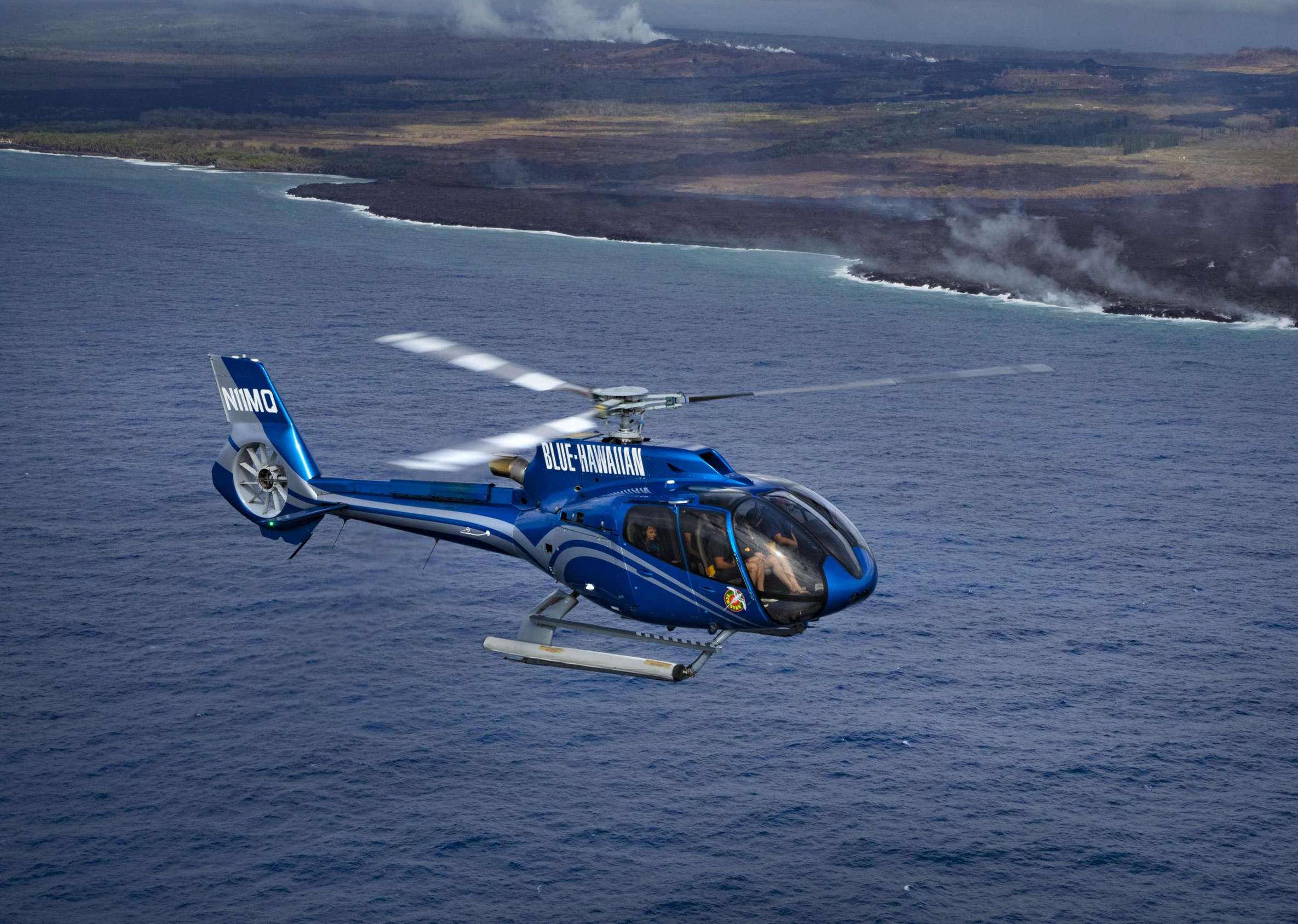
Drove ourselves there, easy check-in. Our pilot Dave was fantastic, knowledgeable and entertaining! Staff were friendly and competent. We had an amazing time, highly recommend booking through Blue Hawaiian!!
Safe enough to book, flown smart
Yes, Hawaiian helicopter tours are safe by the numbers: fatal accidents average less than one a year, the injury risk sits at or below a highway commute, and a 1994 Hawaii rule cut the crash rate nearly in half.
Pilots train for these microclimates, modern EC-130s carry energy-absorbing seats and crash-resistant fuel systems, and bad weather ends a flight before it becomes dangerous.
The answer changes if you scuba dived in the past 24 hours, are pregnant, or deal with vertigo or claustrophobia, and for families with young children set on doors-off seats.
What to know before you book a safe Hawaiian helicopter tour
Plan on arriving early: 60 minutes before departure from Waikoloa, 45 minutes from Hilo. You will be weighed and given a safety briefing. Late arrivals may lose their seat, and the booking is not refunded in that case.
Seats are assigned at check-in based on passenger weights, because the aircraft has to be balanced for flight. That also means a couple or a family cannot count on sitting together or choosing a window. A seat next to an open door is never guaranteed on a doors-off flight.
Some tours do not accept passengers who are pregnant, have vertigo, claustrophobia, motion sickness or a cold or flu, and anyone unable to sit upright will not be allowed to fly. If you have scuba dived, wait a full 24 hours before your flight or you may be denied boarding.
Ground staff walk you onto the tarmac and show you where to go. Stay away from the rear of the aircraft, where the tail rotor spins, crouch low passing under the main rotor, and keep off the upslope side when the pad sits on a hill.
Low clouds, rain and vog can block a crater or a valley, and operators cancel, delay or reroute flights when that happens. If weather cancels your flight, most give you a full refund or let you rebook another day.
Hawaii tour pilots train specifically for this island: mountain flying, high density altitude and reading local weather by sight. Before every flight the operator files a performance plan the pilot in command must follow.
A flight, pilot commentary and aviation-grade noise-canceling headsets come standard on most tours; doors-off flights include straps and cases for your phone. Usually not included are transport to the heliport and the in-flight video or photo packages sold afterward.
On board, hats, bags, purses, selfie sticks, water bottles and extra camera lenses stay behind. Phones and cameras must be tethered to you with a wrist or neck strap, and long hair goes up in a band. Doors-off flights also require closed-toe shoes.
“Fantastic trip! Ben and Joey were excellent, knowledgeable pilots about the Big Island and volcanoes..”
What makes Hawaiian helicopter tours safe in practice
How often do helicopter tours crash in Hawaii?
Fatal air tour accidents in Hawaii average fewer than one per year, despite thousands of flights across the islands. A 2009 study found the crash rate fell 47% after Hawaii's 1994 air tour rule, dropping from 3.4 to 1.8 per 100,000 flight hours.
How dangerous are helicopter tours in Hawaii compared to driving?
The statistical risk of injury on a commercial tour flight is comparable to, or lower than, driving on a mainland interstate during a daily commute. Air tours fly under specific federal rules written for Hawaii, including minimum altitudes of 1,500 feet.
What happens if a helicopter engine fails in mid-air?
A helicopter does not fall out of the sky when an engine quits. Pilots train for autorotation, a gliding technique that lets them steer the aircraft down and land it safely without engine power.
Is it safe to fly over Kilauea during an eruption?
Temporary flight restrictions can close the airspace above the caldera during volcanic activity, so tours cannot simply fly into a hazard. Flights that do run near an active eruption stay high enough or positioned so that volcanic fumes are not an issue inside the cabin.
What training do the pilots have for Big Island terrain?
Pilots flying commercial tours below 1,500 feet in Hawaii complete operator-specific training, and FAA guidance calls for instruction in mountain flying, high density altitude, and the island's own weather patterns. Before every flight, the operator files a performance plan the pilot must follow.
Are the helicopters themselves built for this kind of flying?
The Eco-Star EC-130 flown on several Big Island tours is designed for passenger touring. It has energy-absorbing seats, a crash-resistant fuel system, a shrouded tail rotor, and an engine control system with an independent automatic backup channel.
Why can't couples and families choose their own seats?
Seating is assigned by weight and balance calculations to keep the aircraft stable, and federal rules dictate the exact arrangement. That is also why some tours ask every passenger's weight at check-in.
What if the weather turns on the day of my flight?
Operators cancel, delay, or reroute flights when heavy rain, low clouds, or rough microclimates move in, especially on the Hilo side. If weather cancels your flight, you get a full refund or the option to rebook.
Will I feel sick flying over the volcano?
Helicopter flights are generally smooth, so travelers prone to car or boat sickness often feel fine in the air. Ginger chews or motion sickness medication taken before takeoff helps during banking turns, and a front seat gives you a wider horizon to look at.
Can health conditions keep me off a flight?
Some tours do not carry passengers who are pregnant, have vertigo, or cannot sit upright, and you cannot fly within 24 hours of scuba diving because of decompression risk. For any of these, check with the tour operator before you book.
When is the safest time of day to fly?
Morning departures between 8 and 11 am give you the calmest air and the clearest views over the volcanoes and Kohala valleys, before trade winds and afternoon clouds build over the ridges.