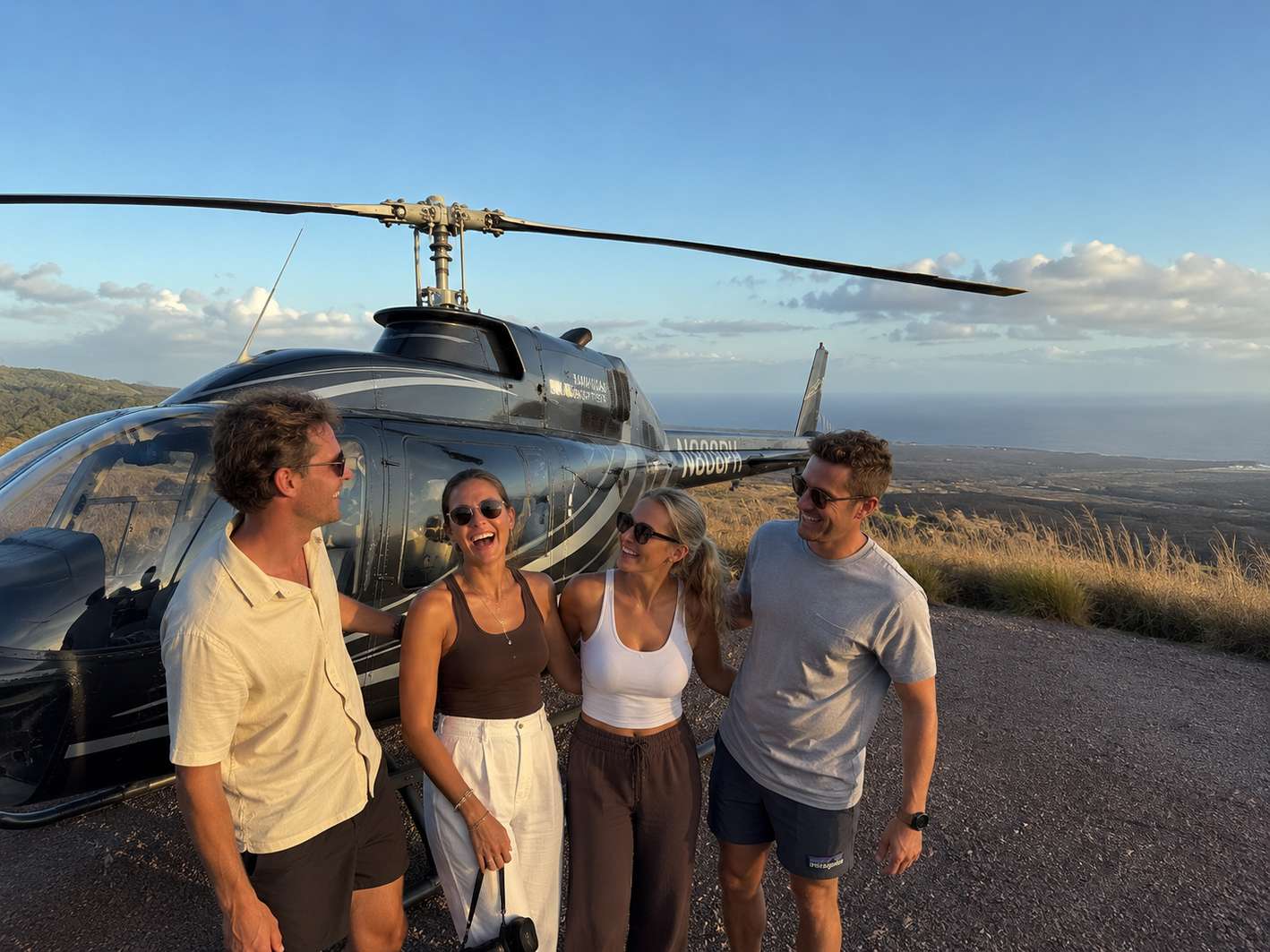
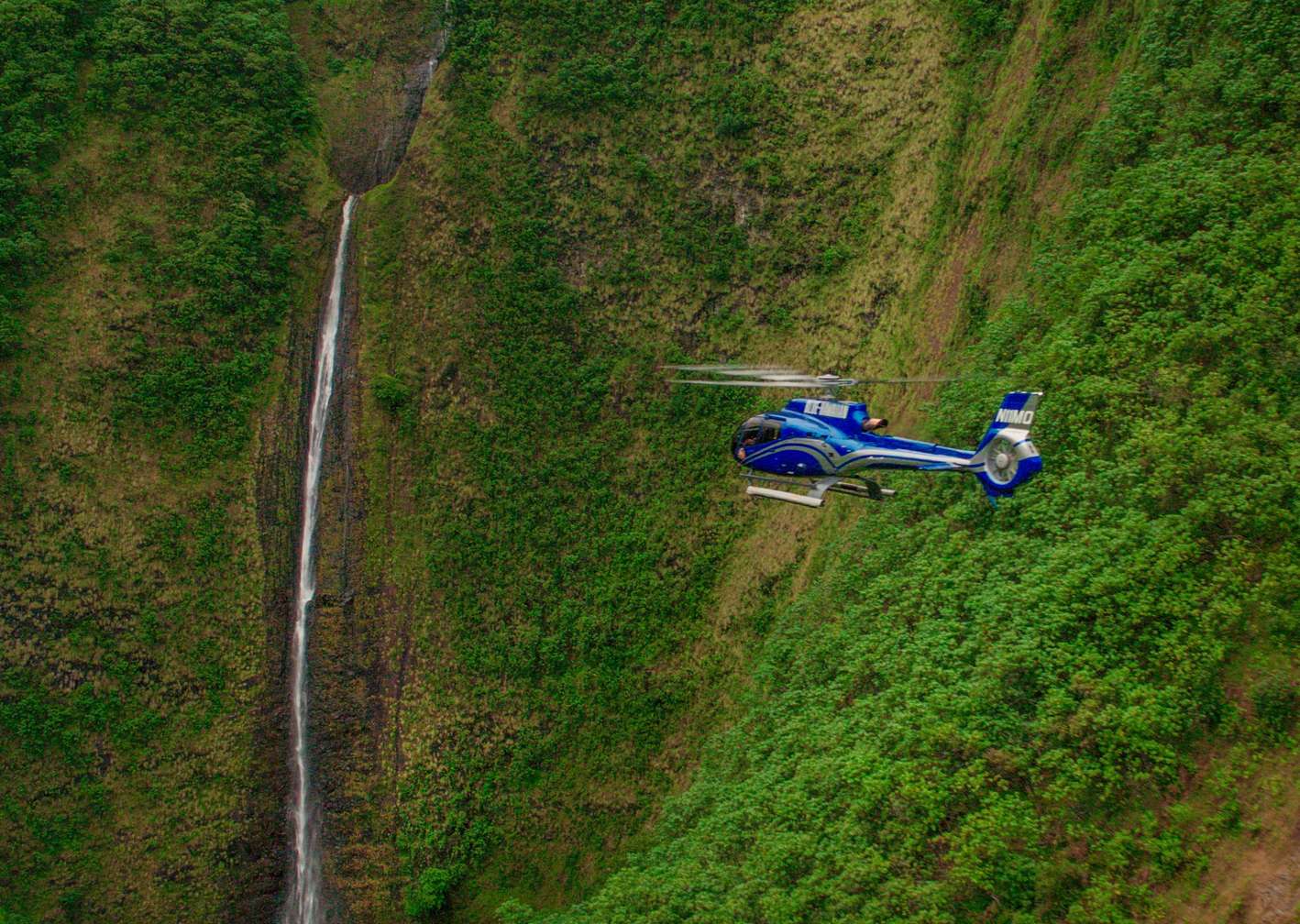
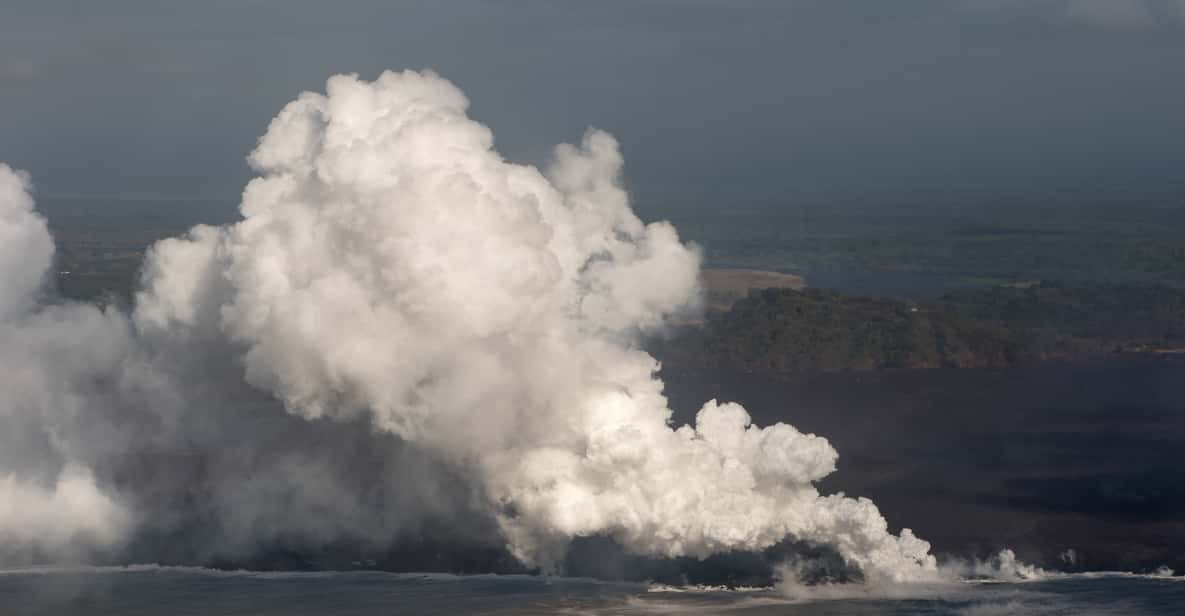
Hawaii Volcano Helicopter Tours Active Lava and National Park Flights
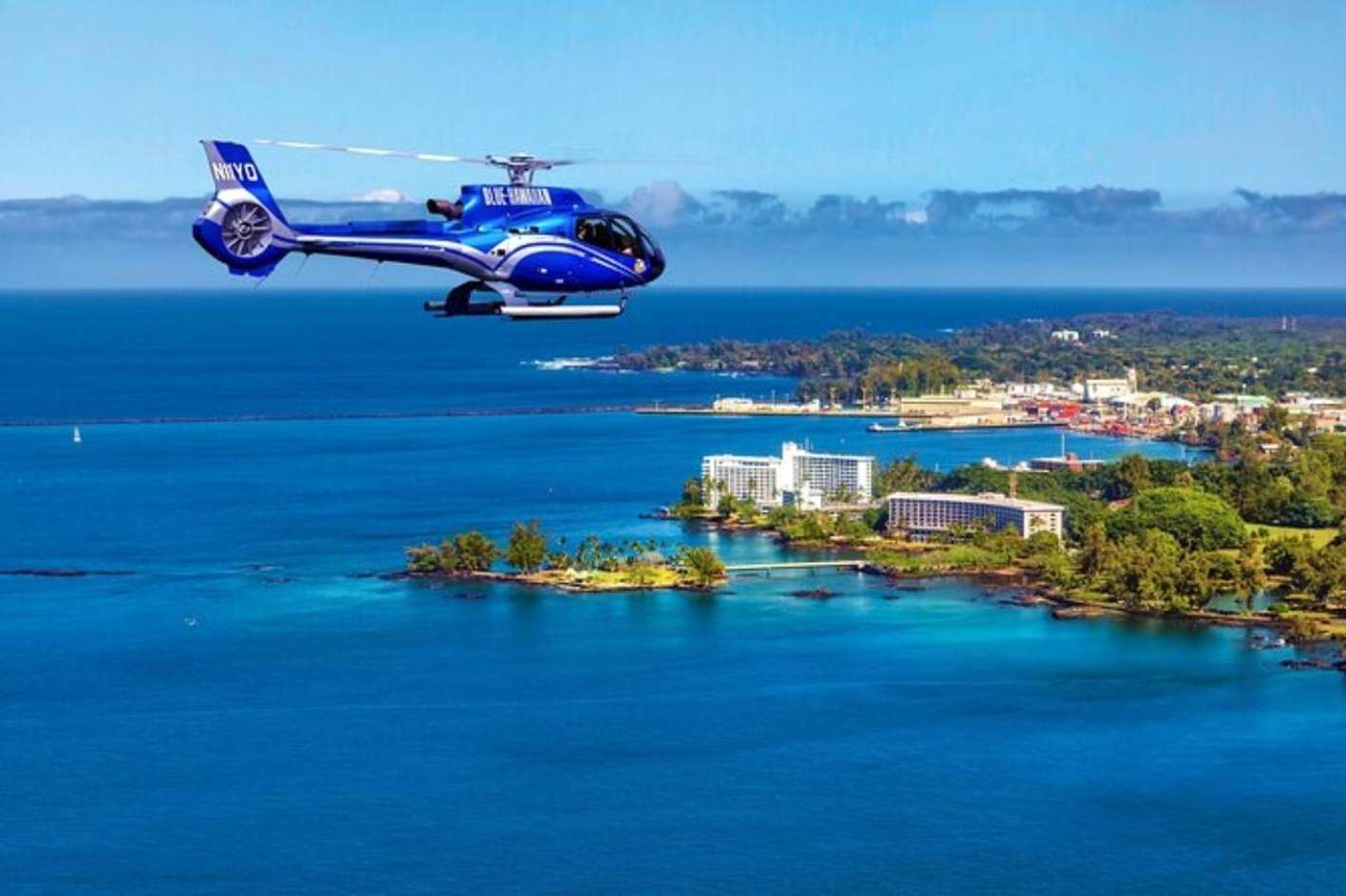
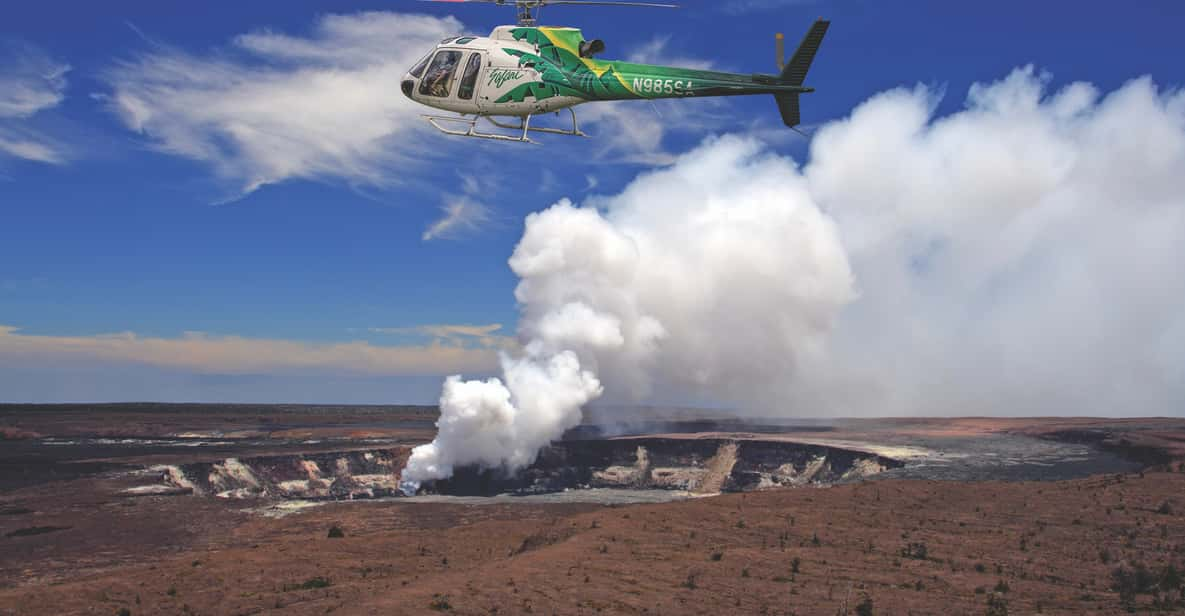
Book a hawaii volcano helicopter tour and look straight down into Kilauea's caldera, steam vents and fresh lava fields. Friendly pilots bring the island's geology to life through your headset. Pick Hilo for a short direct flight or Kona for the full island, and lock in the morning slot before it fills.
"Our pilot Sam knew her stuff, great history of the land and volcanoes. She made sure everyone got good views of the calderas. Safe, fun way to see Big Island from above!"
4.4★average rating412traveler reviews11 of 12free cancellation27countries travelers came from
Choosing your Hawaii volcano helicopter tour
Volcano flights come in two shapes: short, focused flights from Hilo that put nearly all the airtime over Kilauea, and longer cross-island routes from Kona or Waikoloa that add valleys, sea cliffs and waterfalls on the way. Staying on Oahu? A day trip flies you over for a helicopter leg without changing hotels. The departure base decides most of it.
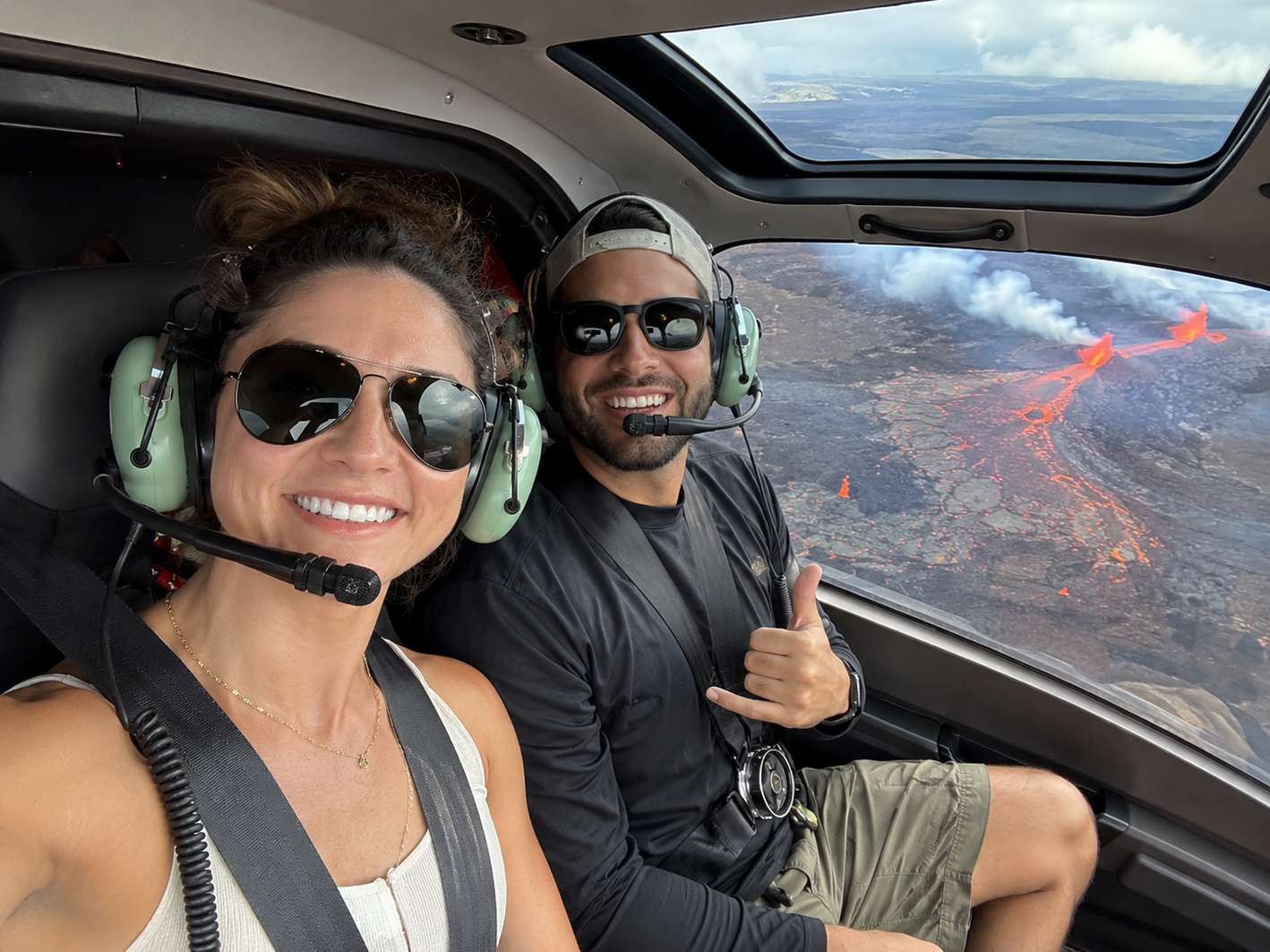
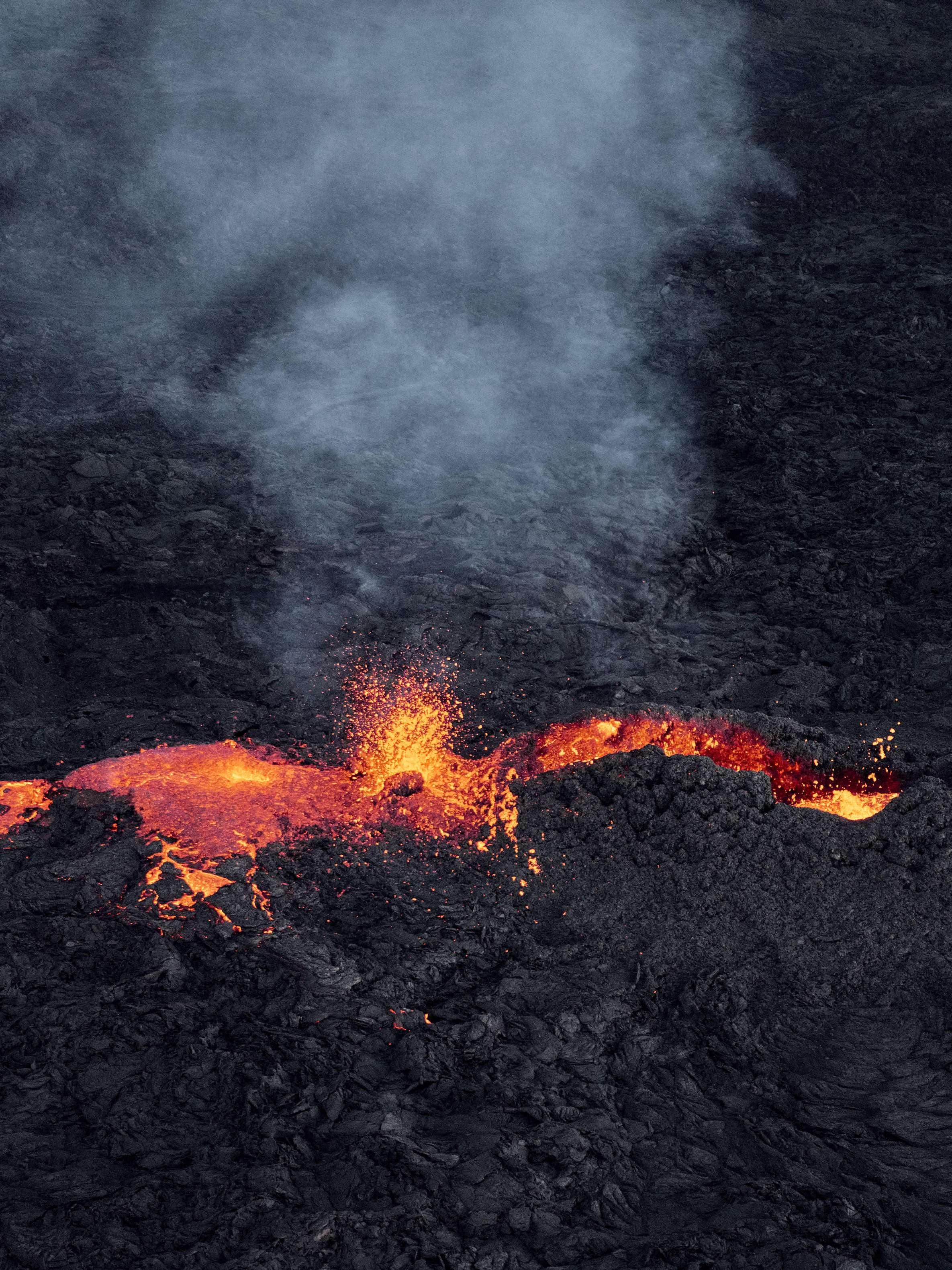
LavaActive molten lava is never guaranteed. Kilauea erupts in short windows, so many flights show steam vents, craters and hardened flows instead. Check the USGS Hawaiian Volcano Observatory updates and live webcams before booking.
Check-inArrive 45 minutes to an hour before departure, depending on the tour. Late arrivals can lose the seat with no refund.
WeightEvery passenger is weighed at check-in for FAA balance. At some thresholds you may need to buy a second seat, so check the rules on the tour you pick.
Doors offChildren generally need to be at least 12 to sit next to an open door, and some doors-off flights set a minimum weight. Doors-on flights take lap infants under 2.
ScubaWait a full 24 hours after diving before flying, or you can be refused boarding.
ClothingWear dark, solid colors on doors-on flights so your clothes do not reflect in the window photos. On doors-off flights wear long pants, a windproof jacket and closed-toe shoes, and leave hats, bags and loose items behind.
TimingMorning departures between about 8 and 11 am give the calmest air and clearest views over Kilauea and the Kohala ridges.
BookingPrime morning slots sell out 2 to 4 weeks ahead in peak summer and the December to January holidays.
WeatherLow cloud, rain and vog can force a reroute or cancellation. If weather cancels the flight, operators offer a full refund or a rescheduled slot, so book early in your trip to leave buffer days.
Which Hawaii volcano helicopter tour fits your trip?
Answer a few quick questions and the page narrows the volcano flights down to your best match, plus two runners-up.
1Where are you starting from?
2Who's coming?
3What's your budget?
4What kind of trip?
5What do you want to see?
Your best match
match
Hilo: Hawaii Volcanoes National Park Flight★ 4.2 (272) · 1 hour · Classic scenic flight
Popular with couples, solo travelers and families with kids or teens. It flies straight from Hilo to the Kilauea caldera.
The shortest route to the caldera, straight from Hilo with almost no transit.
sell-outMorning volcano helicopter tour slots on the Big Island sell out 2 to 4 weeks ahead during peak summer and the December to January holidays, with the best 8 to 11 am departures often gone 30 days to 6 weeks in advance.
Book your Hawaii volcano helicopter flight early in your trip and reserve the morning slot as soon as your dates are fixed, so you leave buffer days to reschedule if clouds or rain force a cancellation.
Hawaii volcano helicopter tours compared
Shortest flight
50 minutes·English
4.2(38)
Hilo: Discover Hilo Helicopter Tour
A 50-minute loop from Hilo that reaches Kilauea in minutes, so nearly all the airtime goes to the volcano and the Hamakua Coast.
Staying on Oahu does not rule out a Hawaii volcano helicopter ride. Full-day tours fly you from Honolulu to the Big Island in under an hour, put you over Kilauea and its lava fields by helicopter, and usually add ground time in Hawaii Volcanoes National Park before the return flight.
They suit travelers who want the volcano in one day without changing hotels or renting a car.
What a Hawaii volcano flight shows you, and what's included
7 stops12 places
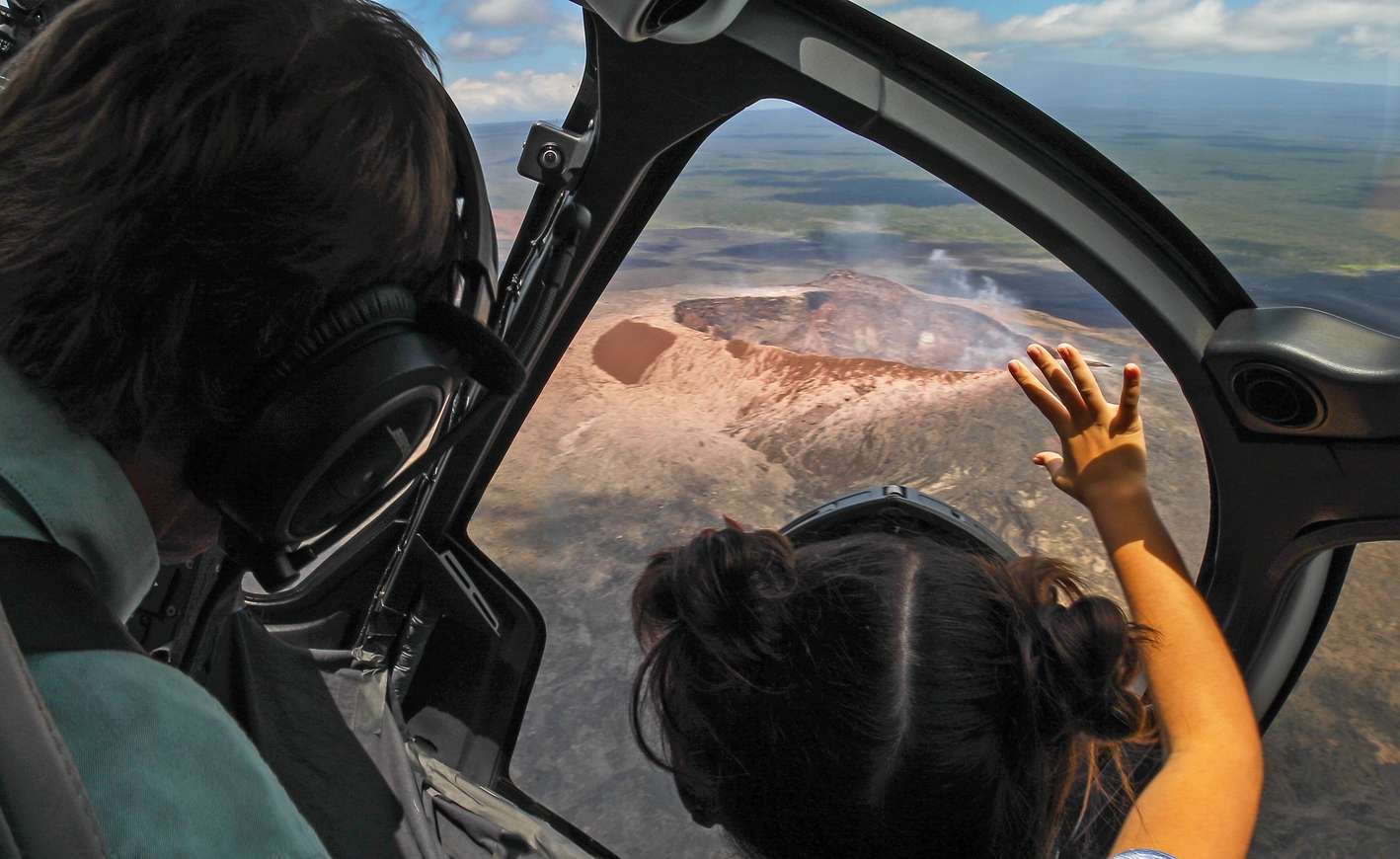
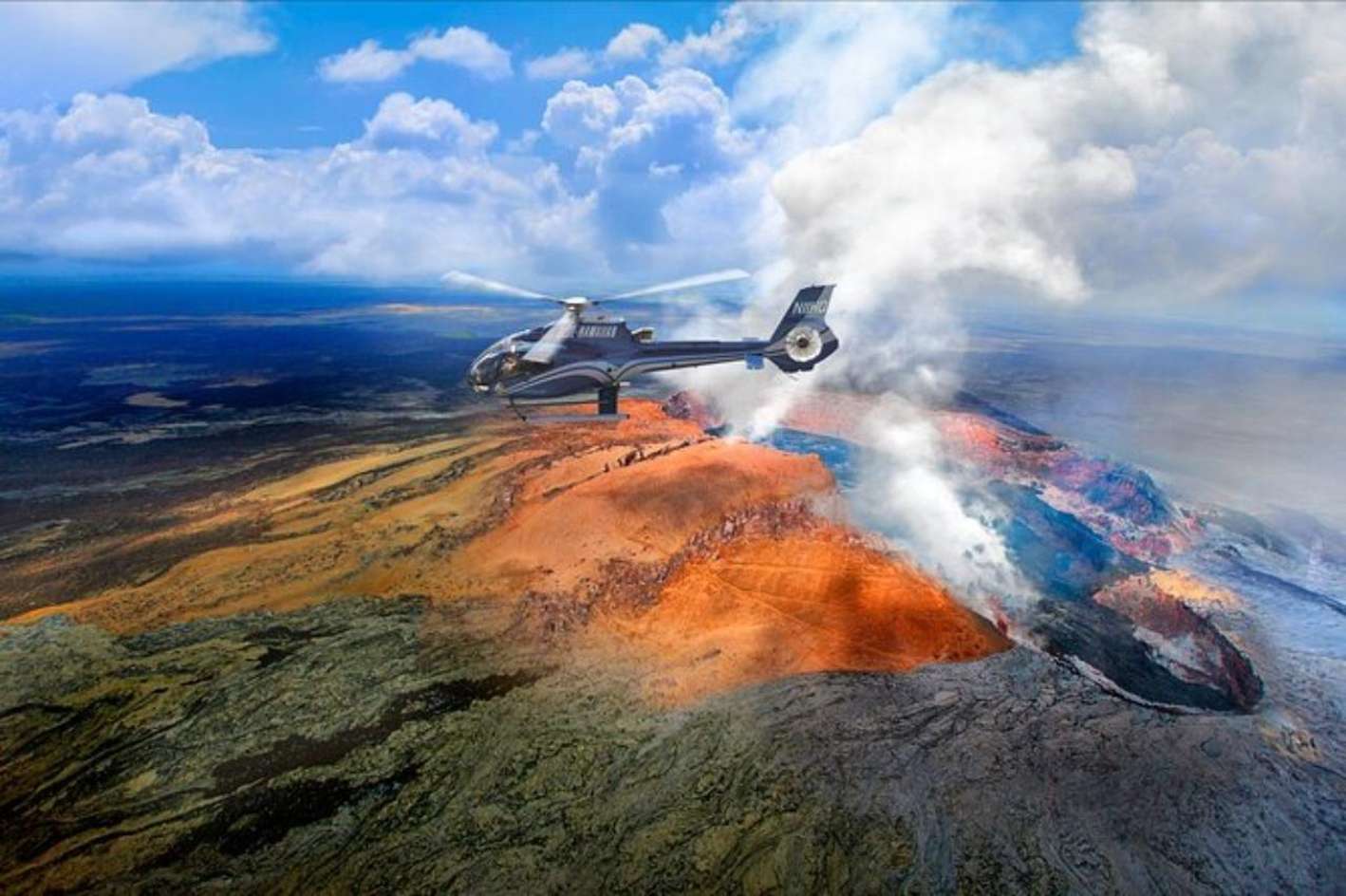
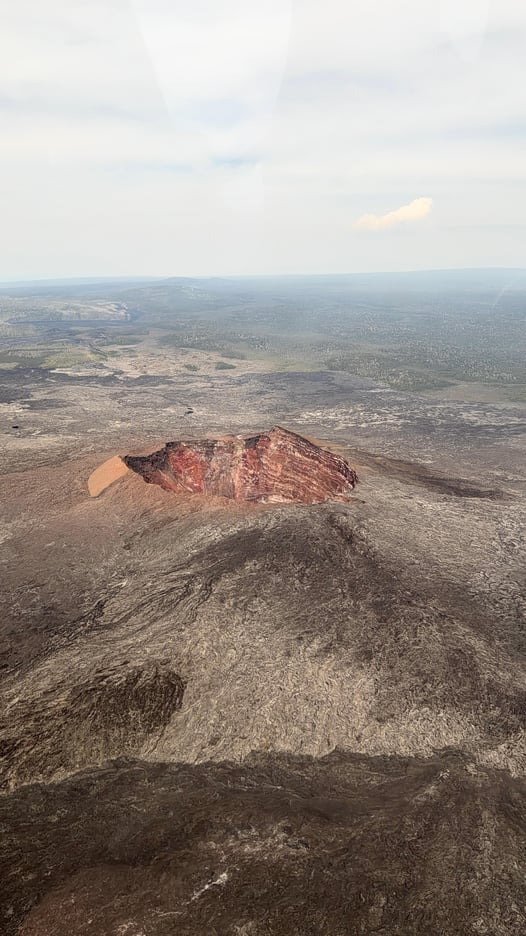
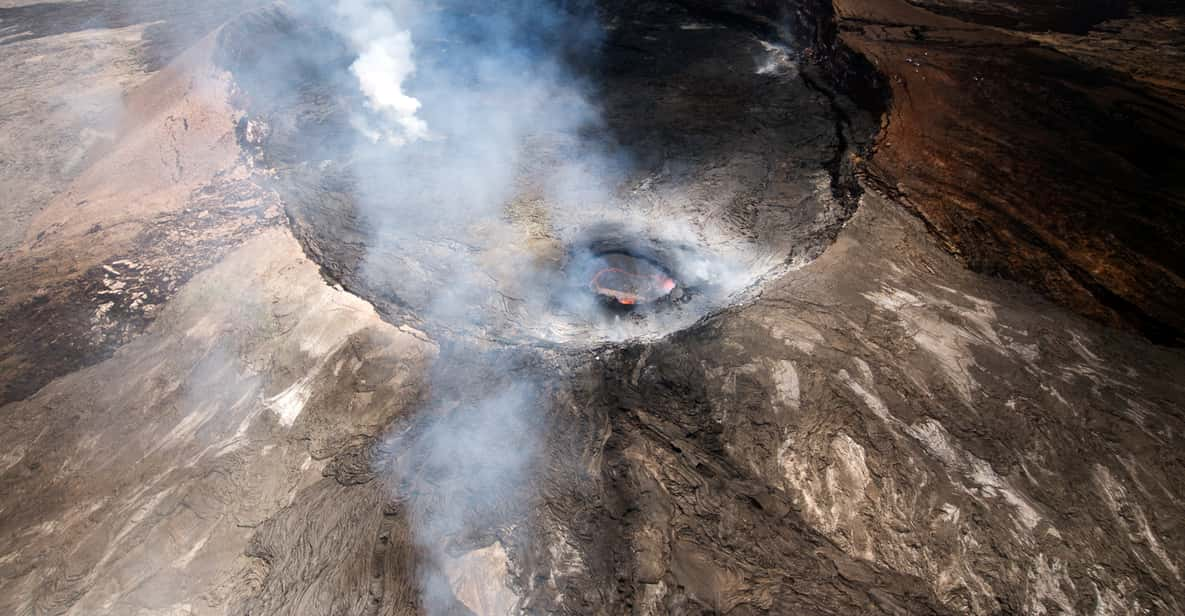
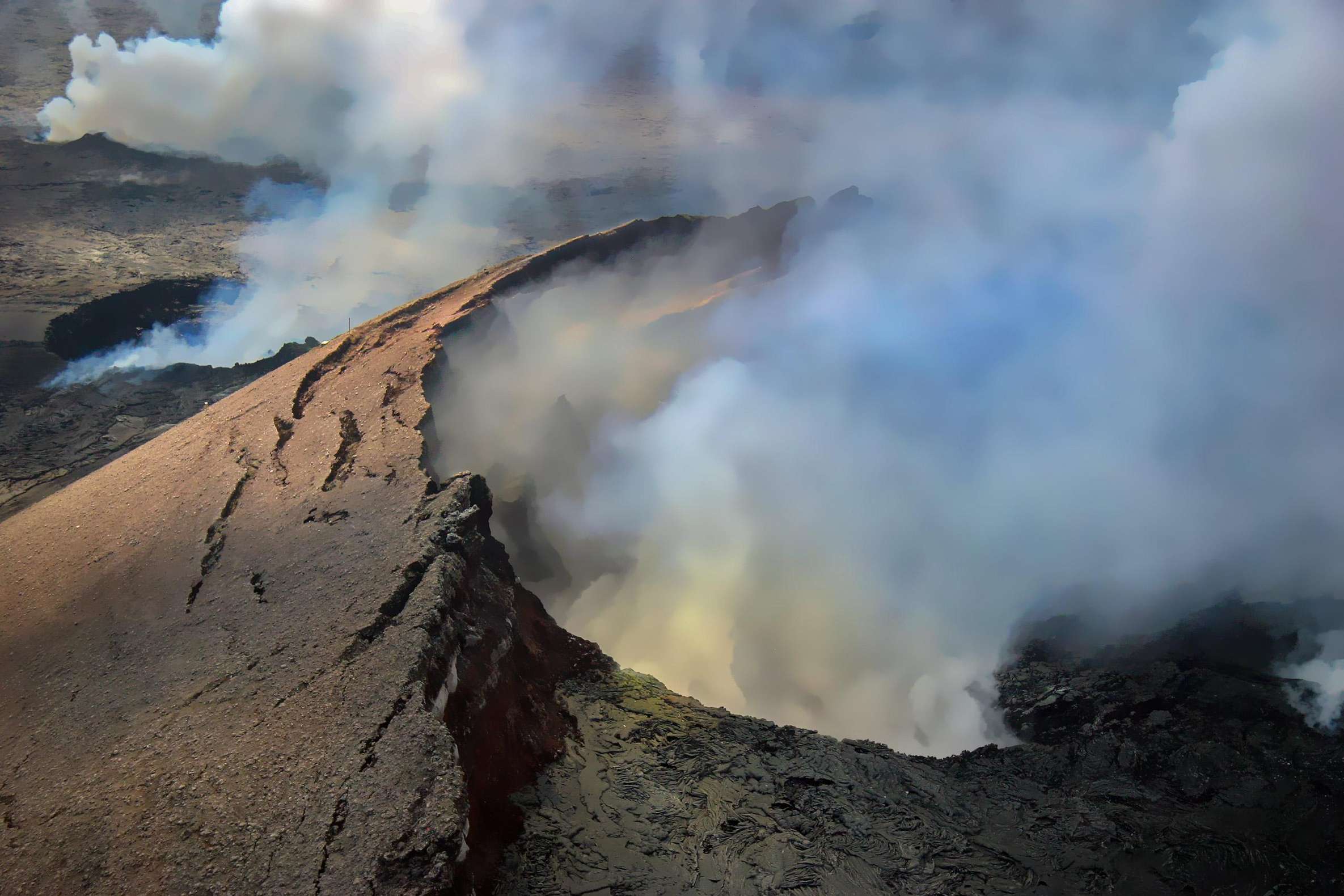
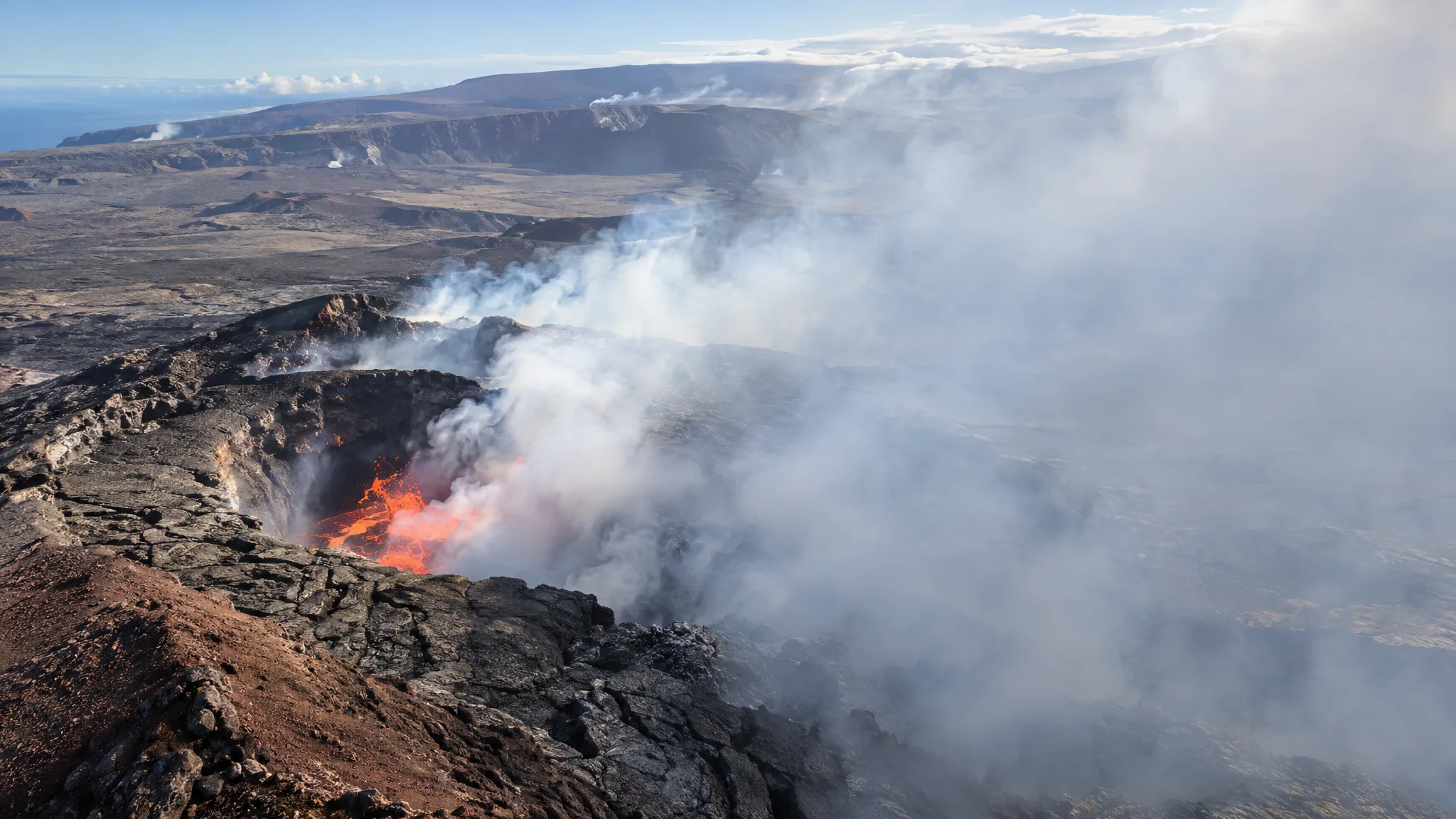
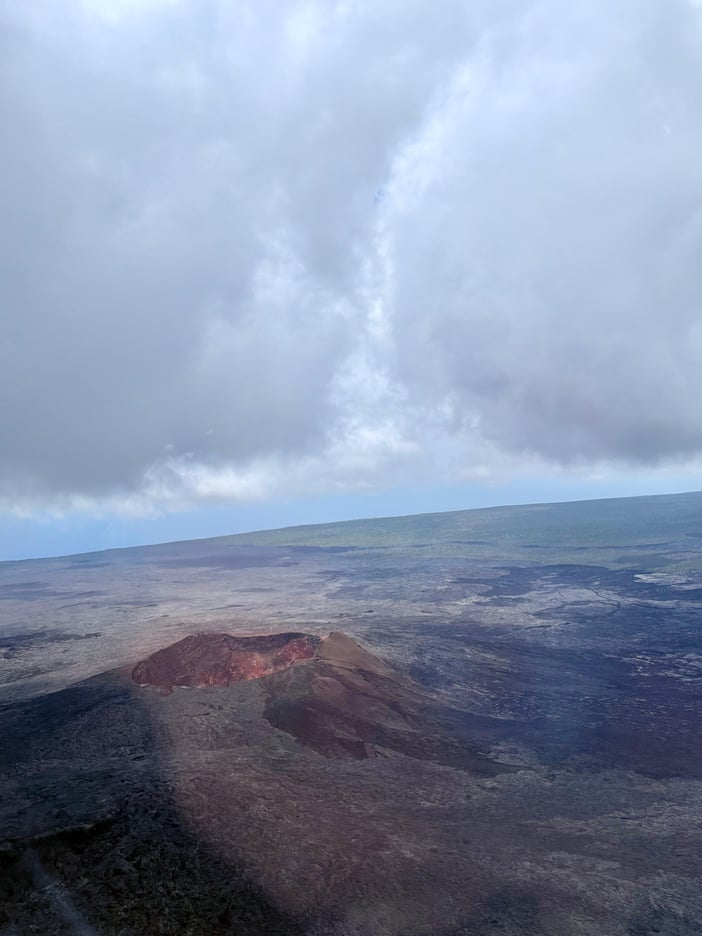
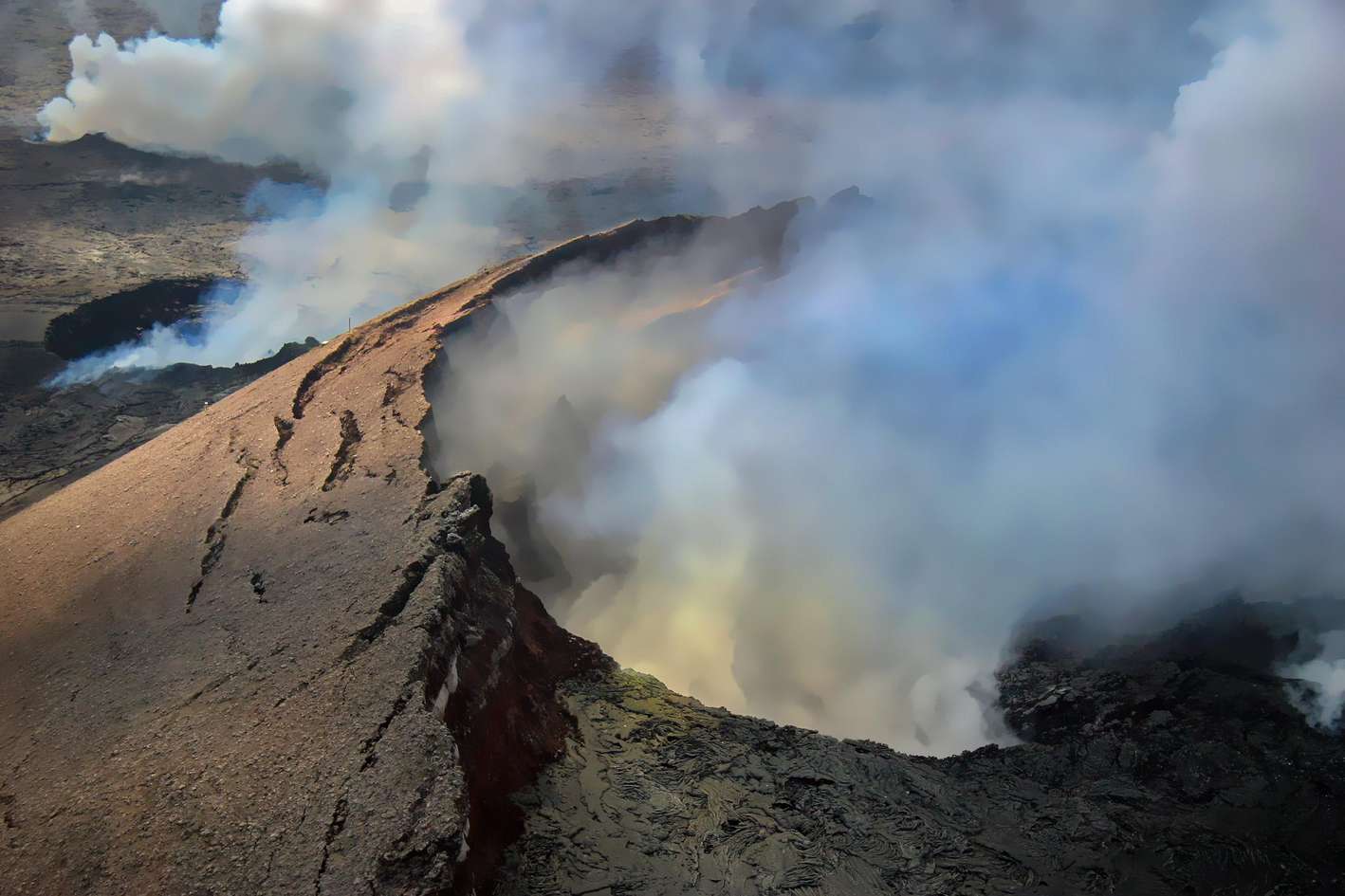
The first thing to appear below you is the Kilauea caldera, and it looks nothing like the ground-level view. From the air you look straight into the crater that collapsed in 2018, when part of the floor dropped more than 100 meters and the crater more than doubled in width.
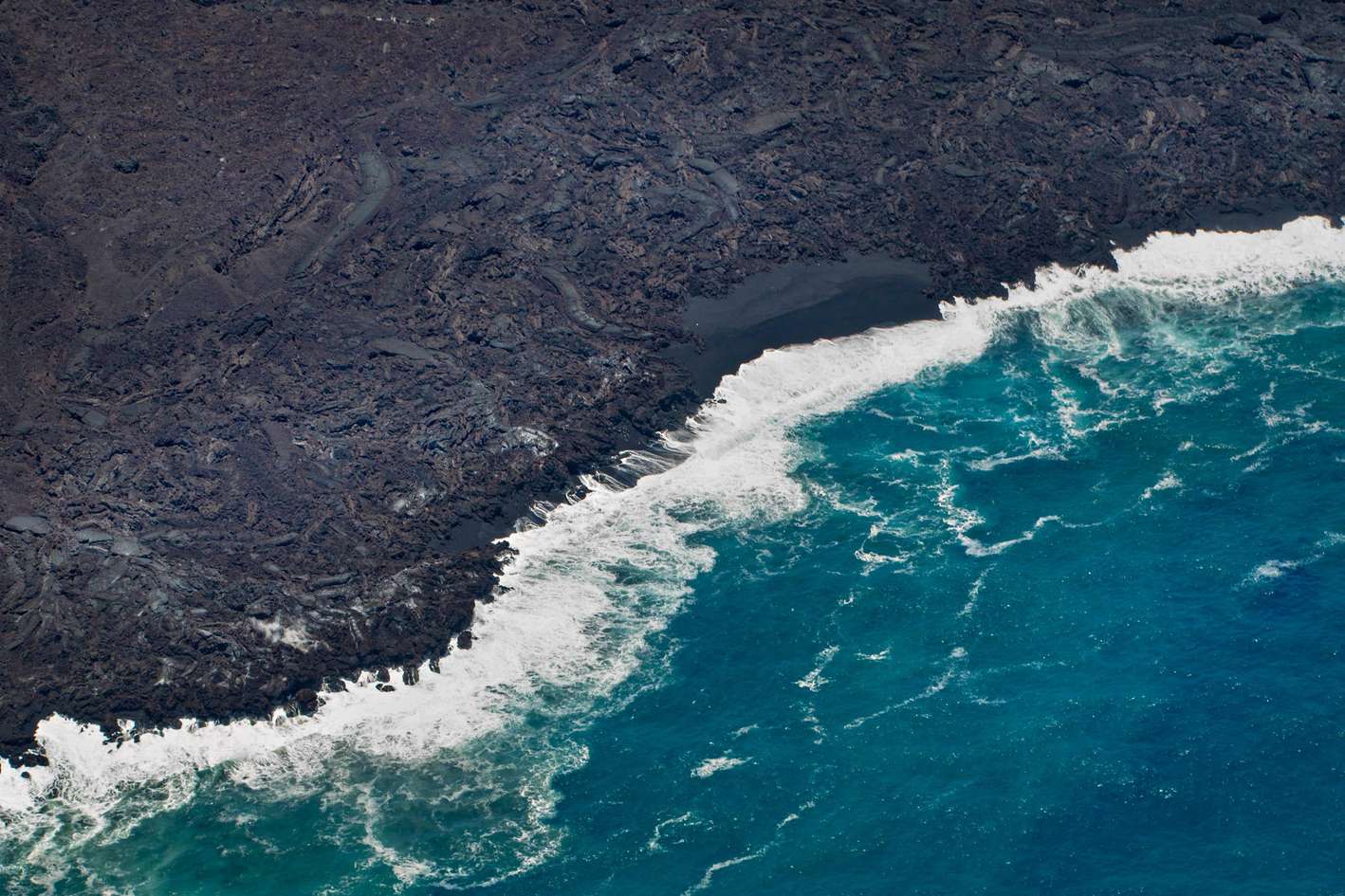
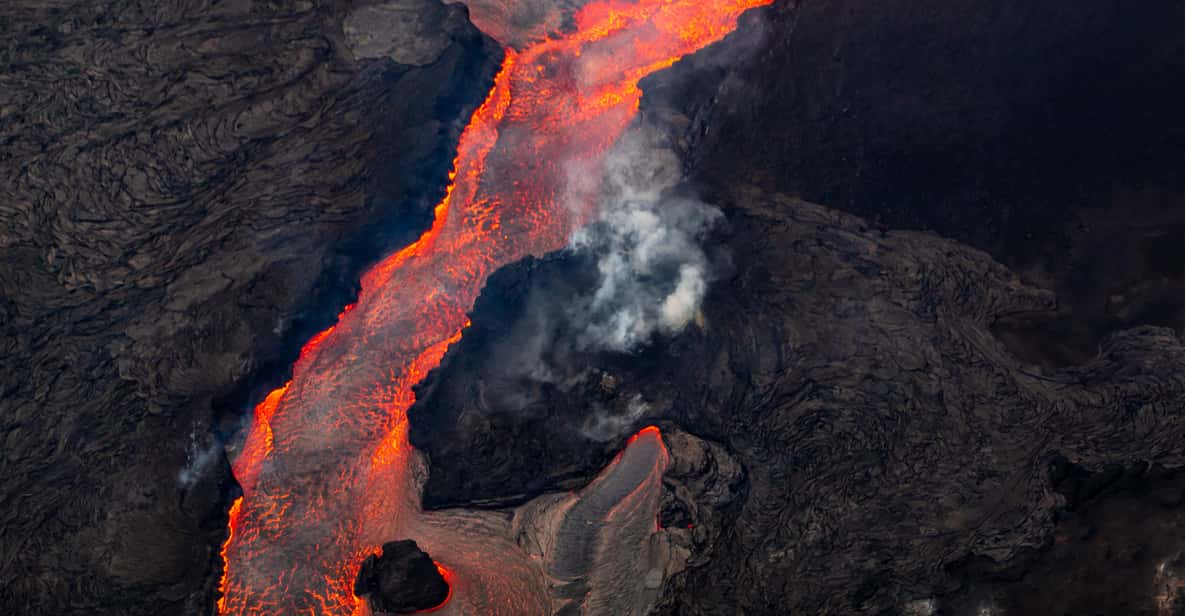
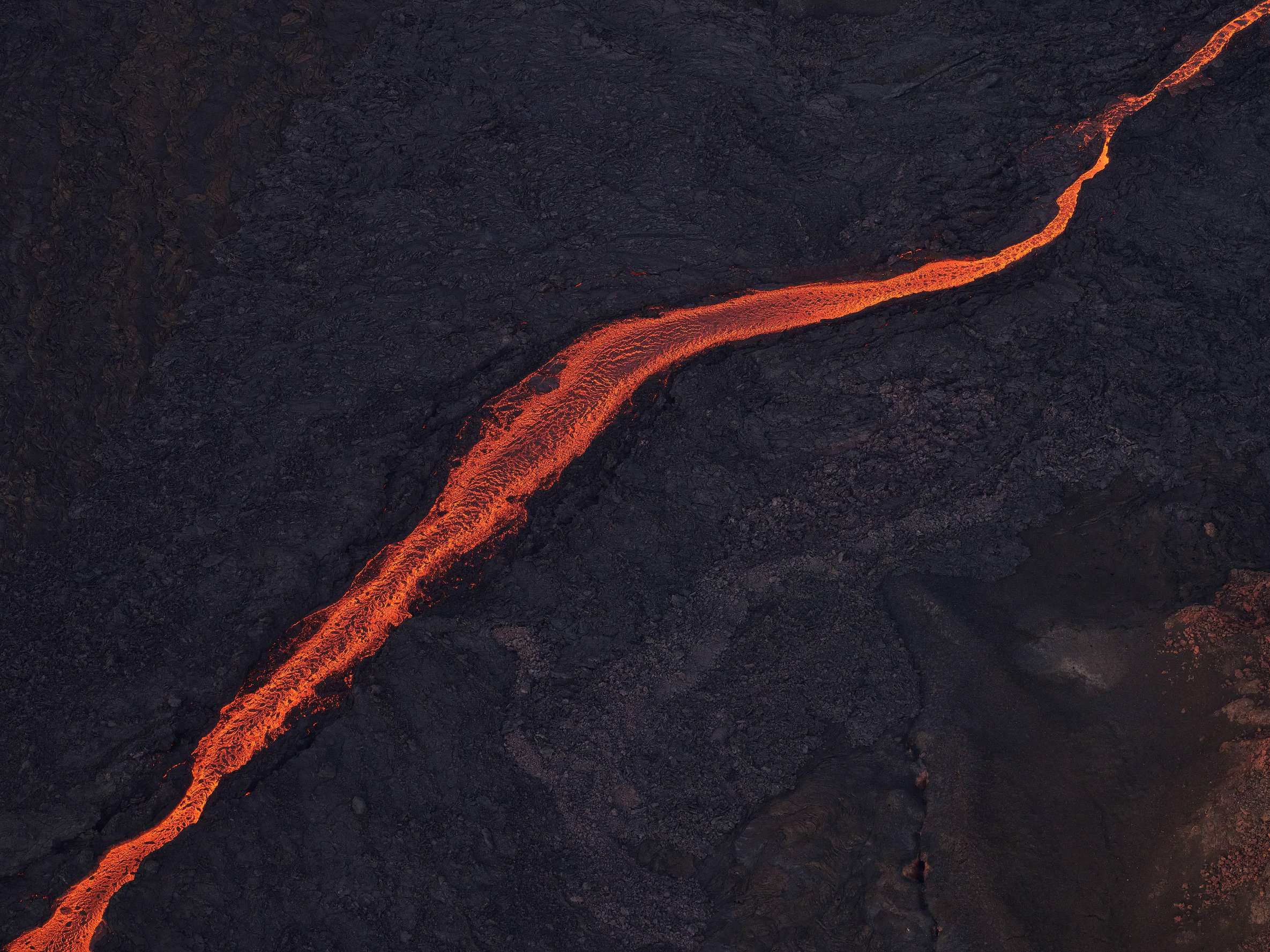
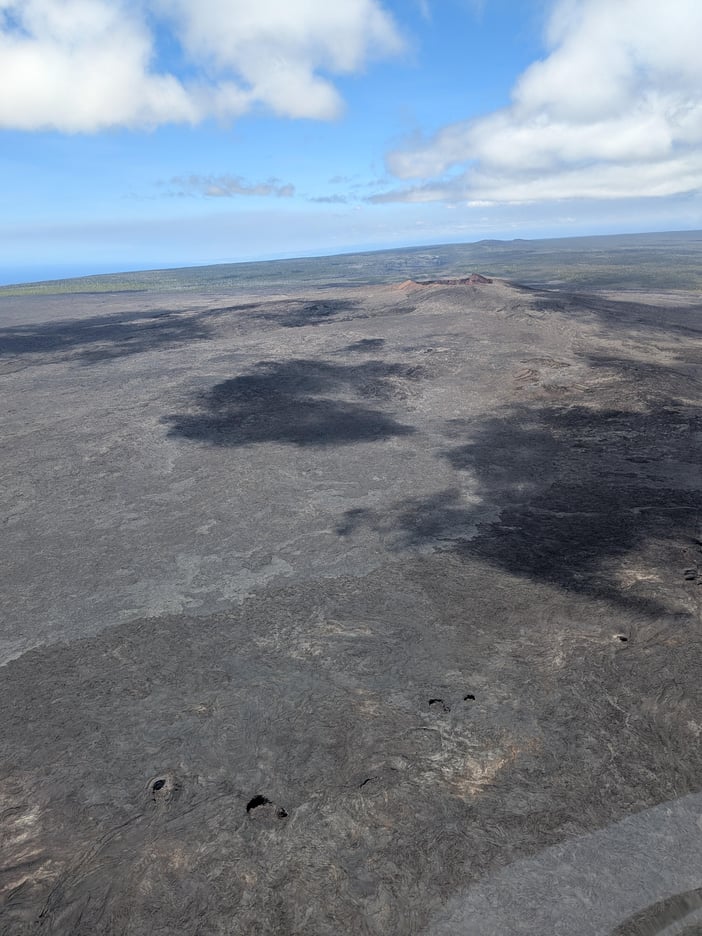
From there the route follows the marks of eruptions past and present. Steam rises from vents where groundwater hits heated rock, dark flows from the Puʻu ʻŌʻō eruption cover 144 square kilometers of Puna, and black sand beaches sit where old lava reached the sea.
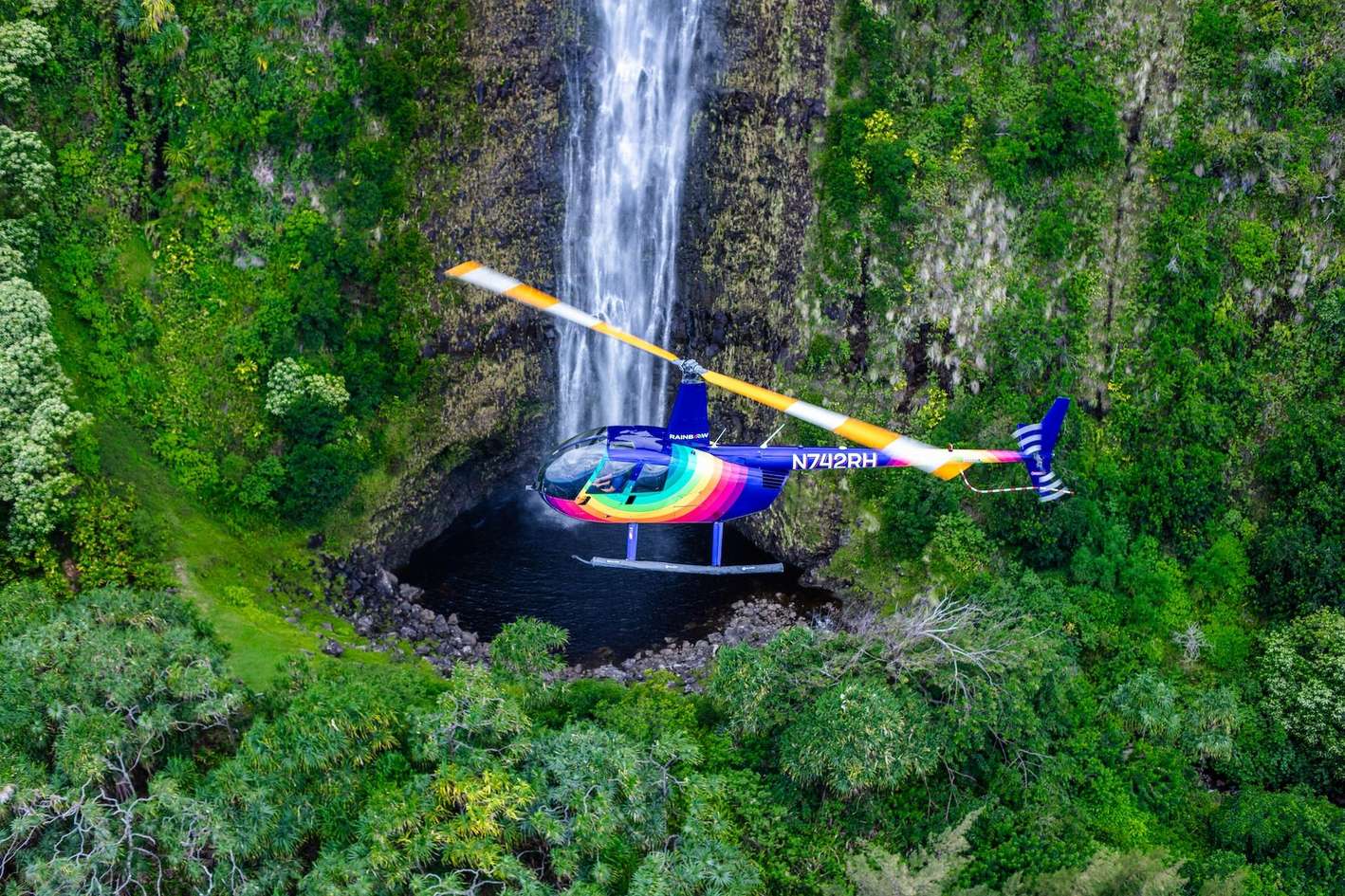
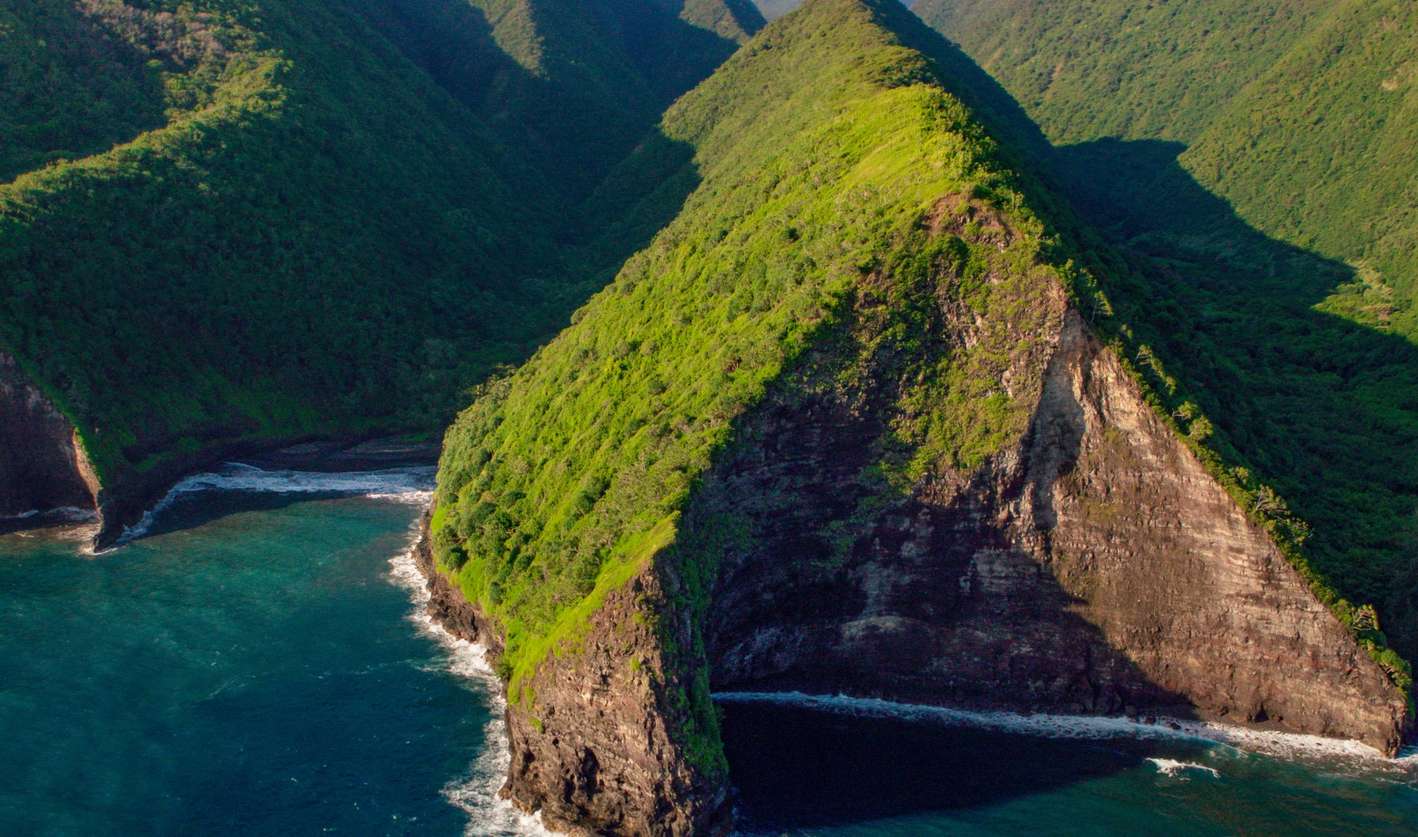
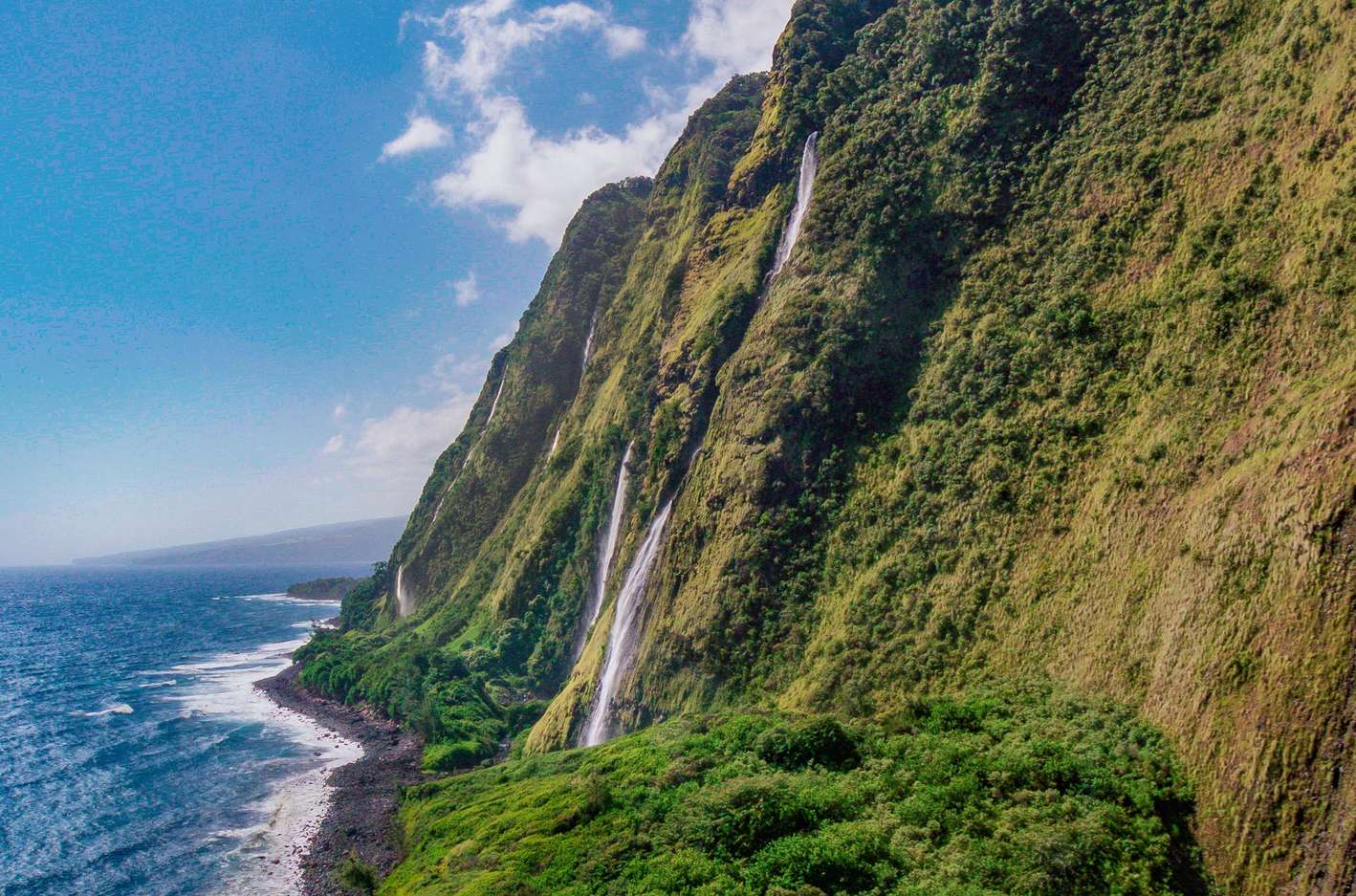
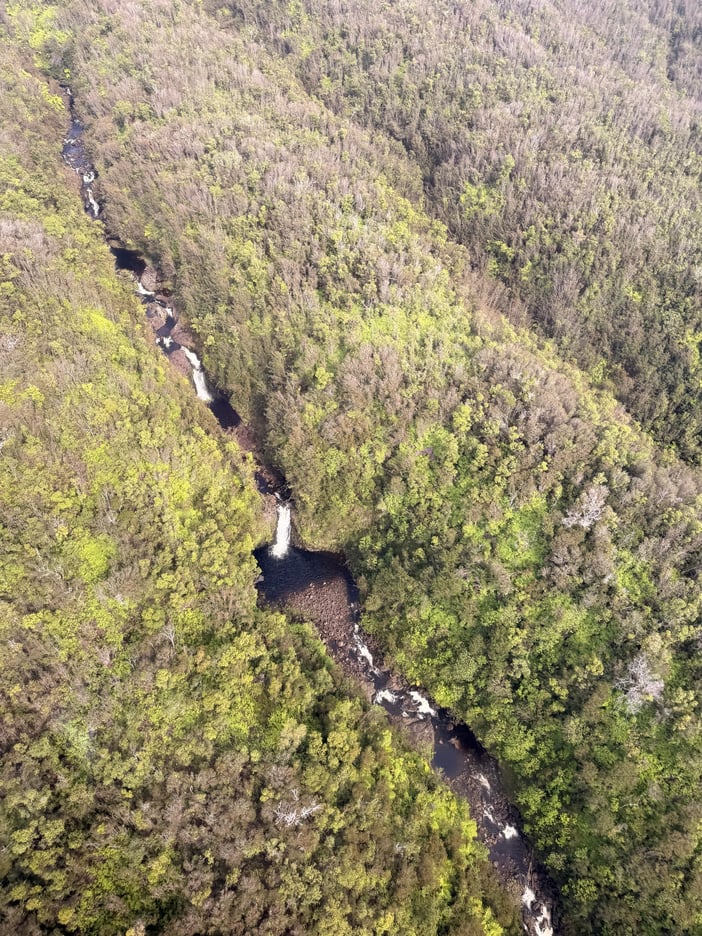
Then the flight turns north over waterfalls and dense rainforest, with Mauna Kea and Mauna Loa filling the horizon. Every seat faces forward, and the pilot narrates through headsets.
Meeting point2220 Kekuanaoa StThe flight lands back at the same Hilo heliport, leaving the rest of the day free for the town or the coast.2Hawaii Volcanoes National ParkThe helicopter flies straight from Hilo into the park, spending most of the hour over its volcanic terrain instead of in transit.3Kilauea, HawaiiYou circle the caldera and look down at Halemaʻumaʻu, the crater whose floor sank about 500 meters in the 2018 collapse.From this tour4Pu‘u ‘Ō‘ō, HawaiiThe volcanic cone that erupted for 35 years, its flows burying Kalapana in 1990 and adding new land to the southeast coast.5Mauna KeaThe 13,796-foot summit rises above the trade-wind clouds, so it often stands clear even when lower slopes sit under haze.From this tour6Mauna LoaThe world's largest active volcano anchors the horizon as the flight crosses back toward the east side of the island.From this tourDrop-off2220 Kekuanaoa StThe flight lands back at the same Hilo heliport, leaving the rest of the day free for the town or the coast.Street View
Where the other tours go
KohalaWai‘ilikahi Falls
Kailua-Kona: Kohala, Volcanoes and Waterfall Helicopter Tour
Most reviewers credit the pilot: they say a knowledgeable, entertaining guide turned the flight into a geology lesson.
Best surprise
Nervous first-timers say the ride felt smooth and calm, so much so that they forgot they had been scared.
Most common wish
Several reviewers wished they had been told sooner that low clouds would block the crater that day.
How to reserve your Hawaii volcano flight
01
Pick your date first
Choose a day early in your trip, not the last one, so bad weather leaves room to rebook. In peak summer and the December to January holidays, slots sell out 2 to 4 weeks ahead, and morning departures go first.
Pro tipA flight early in your stay doubles as an island overview for planning the rest of the trip
RecommendedAim for 8 to 11 am, when air over Kilauea's summit is calmest and skies clearest
02
Choose your flight option
Compare a short Hilo flight focused on Kilauea with a longer cross-island route from Kona or Waikoloa that adds Kohala valleys and Hamakua waterfalls. Then pick doors on or off, and any landing option.
ImportantOn doors-off flights, children must be at least 12 to sit by an open door, and minimum weights apply by aircraft
Common mistakeFirst-timers book afternoon flights and find clouds over the summit; locals fly mornings
03
Book and check the terms
Enter each passenger's weight at booking, since seating is assigned for balance and you cannot pick your own seat. After payment the confirmation arrives by email, and the operator's messages carry any changes.
ImportantGuests over the weight threshold need an extra or half-price seat arranged after booking, so declare true weights
Pro tipMost bookings allow a full refund when you cancel 24 hours or more ahead, so book early and adjust later
04
Get your documents ready
Have a passport or ID card and a credit card at hand for check-in, and read the operator's confirmation for the meeting point and any rules that apply to you before the day arrives.
ImportantAnyone who has scuba dived within 24 hours of the flight may be denied boarding
RecommendedWear dark, solid clothing so reflections stay out of your window photos
05
On the day, arrive early
Plan to reach the heliport ahead of the departure time, 45 minutes before a Hilo flight and 60 minutes before one from Waikoloa, for weigh-in and the safety briefing. Late arrivals can lose the seat with no refund.
Common mistakeCutting check-in too close; show late and the seat can go with no refund
RecommendedCheck the USGS livestream and the morning weather before you drive out
What to know before booking a Hawaii volcano helicopter flight
Can stop the dayGood to knowGood news
01
ChoosingWhat it is, who it suits, when to go
4
Seating
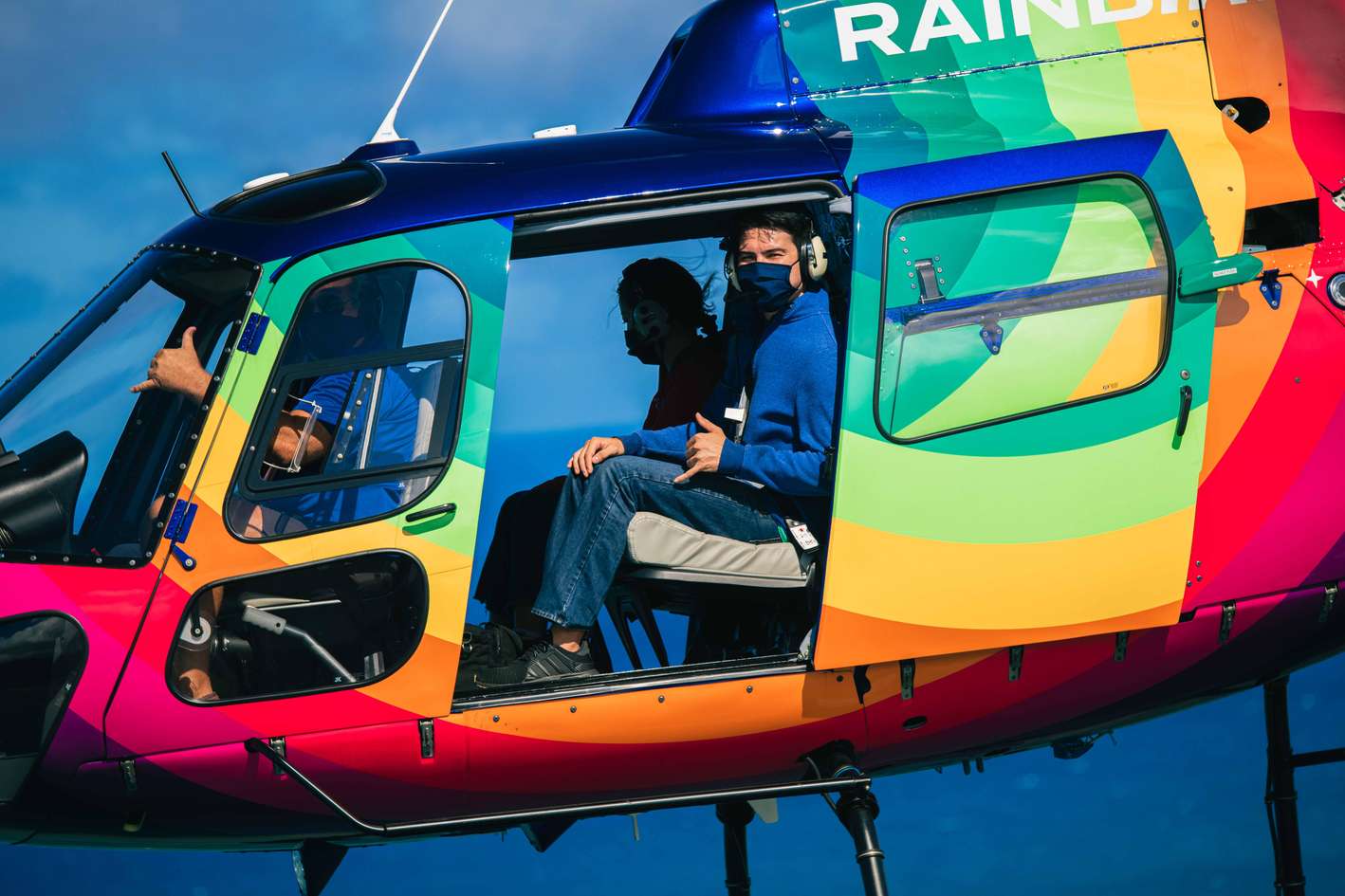
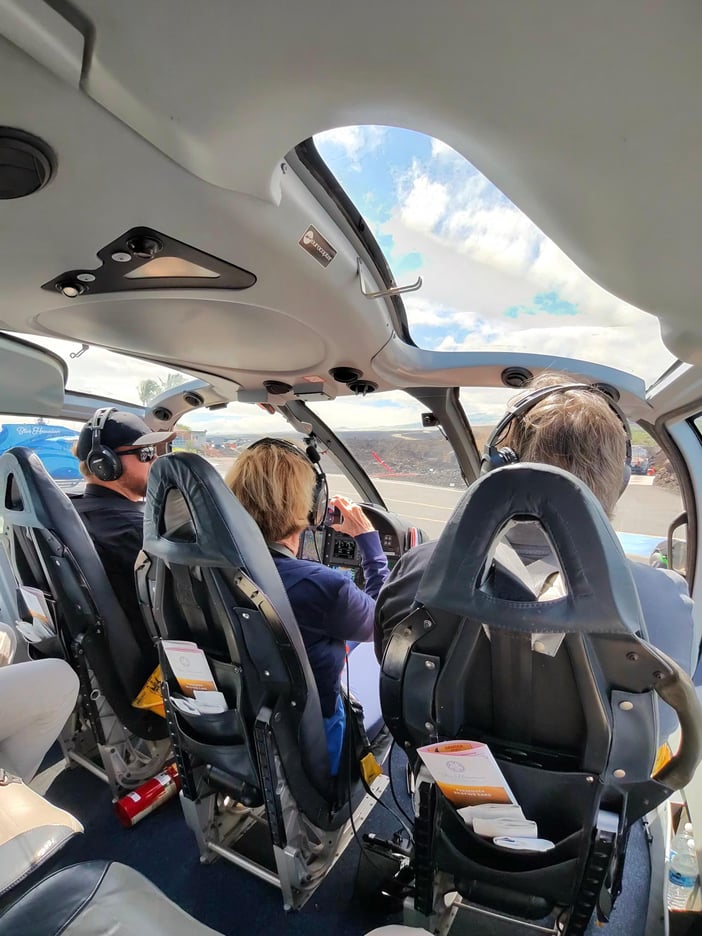
You cannot pick your seat. Operators assign seats by weight to balance the aircraft, as federal rules require, so a couple or family is not guaranteed to sit together. Most tour helicopters seat four to six passengers, and everyone wears a headset.
Lava
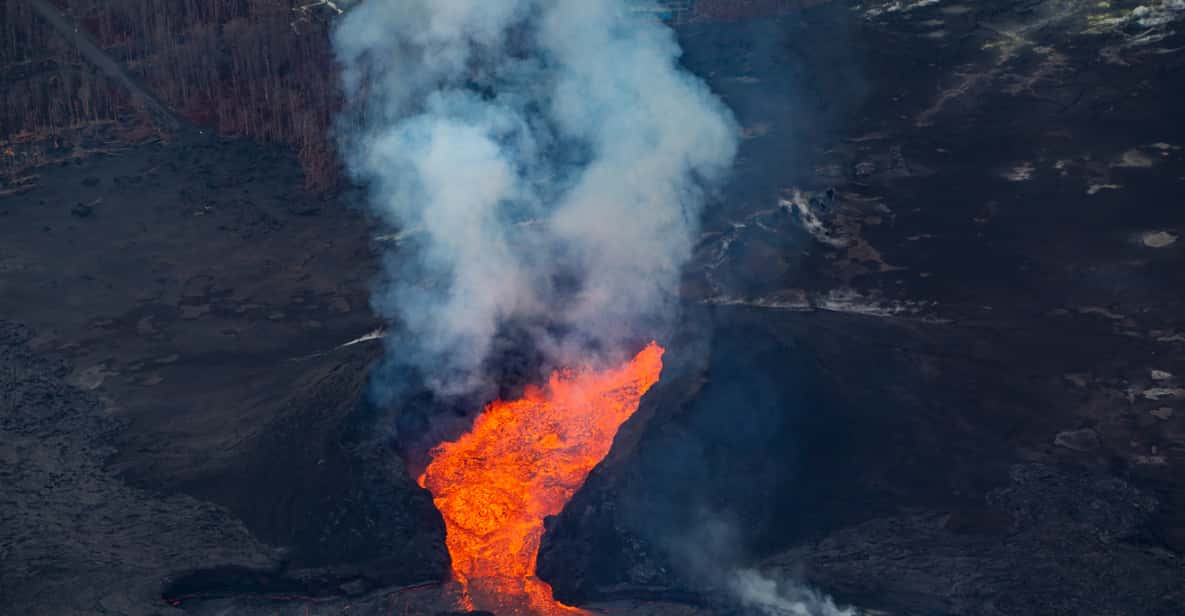
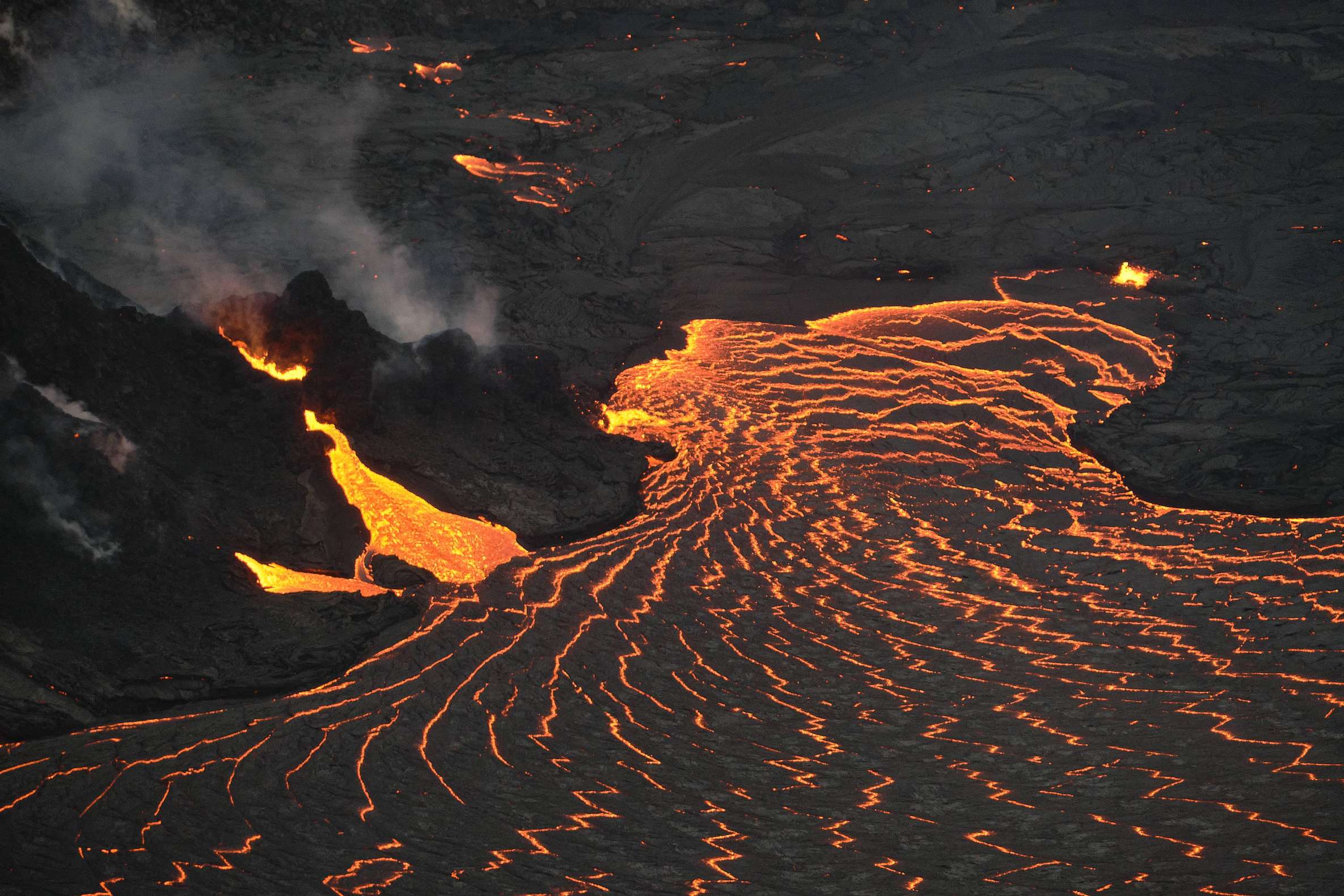
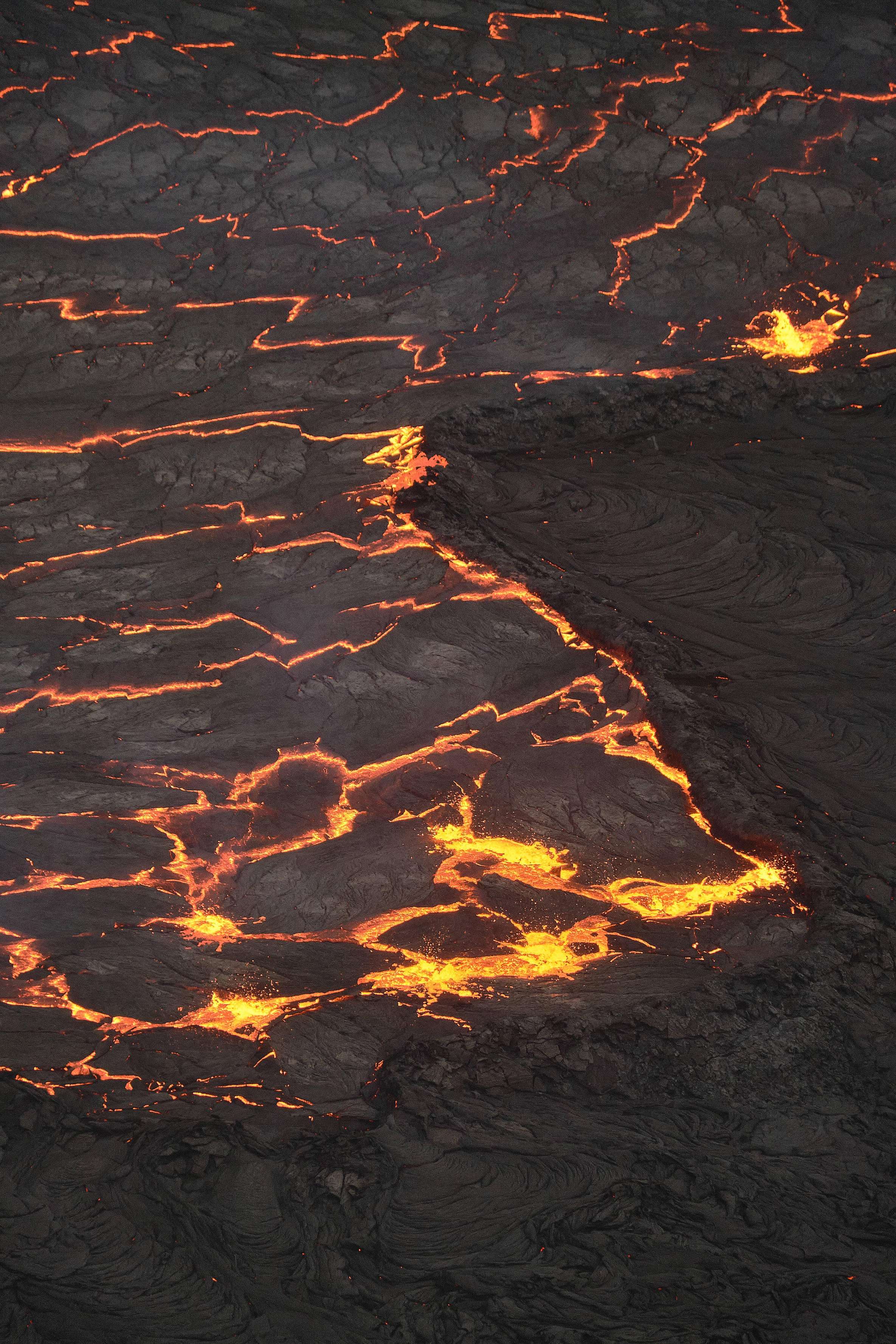
Molten red lava appears only during an eruption, and Kilauea erupts in brief, unpredictable windows. Between eruptions you will see steaming vents, craters and old hardened flows. Check the USGS Hawaiian Volcano Observatory webcams the day before to see what the summit is doing right now.
Motion sickness
The flight itself is smooth, so many travelers who get carsick have no trouble in the air. What can catch you out is the repeated banking and circling over a caldera. Ginger chews or a non-drowsy remedy taken before boarding help, and a front seat gives you a wider horizon.
Tipping
Tipping your pilot when you land is customary but optional, and a flat amount per couple or per solo passenger is the usual approach rather than a percentage of the fare. Tips left at the desk generally go to the ground crew as well.
02
BookingHow far ahead, and what happens if plans change
1
Cancellation
Operators cancel, delay or reroute rather than fly into rain, low cloud or vog. If weather grounds your flight, most tours offer a full refund or a rescheduled date at no penalty. Booking early in your trip leaves room to rebook if the first day turns gray.
03
Before you goPapers, health, what to bring
4
Health limitsCan stop the day
Tell the operator about conditions that can rule a flight out. Scuba diving within 24 hours of takeoff means no boarding, because cabin pressure raises the risk of decompression sickness. Pregnant travelers, people with vertigo, claustrophobia or an active cold or flu should check the tour's rules before booking.
Doors off
On doors-off flights, no loose items ride in the cabin. Phones and cameras need a wrist or neck strap, though one operator provides straps and cases. Hats, bags, selfie sticks and water bottles stay behind, long hair ties back tightly, and closed-toe shoes and a warm layer are required.
Clothing
Wear solid dark colors such as black or navy. It is a recommendation, not a rule: bright clothes reflect in the windows and show up as glare in your photos. Cabins are climate controlled, so skip the heavy jacket on a doors-on flight.
Kids
On standard doors-on flights, infants under 2 ride as lap children held by an adult, while children 2 and older take their own full-fare seat. Doors-off flights set age minimums: one operator requires children to be at least 12 to sit beside an open door. Rules vary by tour.
04
On the dayWhere to be, when, and how you get there
3
Flight path
During an eruption, a temporary flight restriction keeps aircraft two nautical miles from Halemaʻumaʻu crater, below 5,000 feet. The park's air-tour routes also avoid flying directly over the Kilauea summit. Expect close views of the crater, rift zones and lava fields from a permitted distance.
Check-in
Arrive well before takeoff: one Hilo operator asks passengers to show up a full hour early, and a Waikoloa departure checks in 60 minutes ahead. You will be weighed and given a safety briefing, and late arrivals can lose their seat with no refund.
Park time
Hilo departures spend about 50 to 55 minutes over Hawaii Volcanoes National Park and nearby volcanic terrain on a short out-and-back route. Kona departures circle the same landmarks for roughly 45 to 50 minutes, folded into a longer cross-island flight.
Hawaii volcano flight guide, from booking to landing
Kilauea puts on a show from the air that no trail can match. What it costs, where to fly from and how to prepare for a day the weather can rewrite: those decisions decide whether the flight delivers.
Hilo· 19.72° N, 155.04° W
If you only remember three things
1
Book a morning slot between 8 and 11 am, when the air is calmest and the skies over Kilauea are most often clear.
2
Check the USGS Hawaiian Volcano Observatory livestream the morning you fly; red lava is never guaranteed.
3
Check in 45 to 60 minutes before takeoff; arrive late and you can lose your seat with no refund.
Is a Hawaii volcano flight worth the money?
The drive around Kilauea's summit shows you steam and hardened flows at eye level, and it is good.
From the air it becomes something else: the whole caldera at your feet, the rift zones running off like seams, and the black lava fields of lower Puna spreading across land no road reaches. That is what the money buys, and only a helicopter buys it.
The honest caveat comes the same day. When Kilauea sits quiet, some visitors find long stretches of cooled lava repetitive, and the green Kohala valleys and Hamakua waterfalls upstage the craters. The flight stays worth it if you want the island's whole story: lava fields, coastline, rainforest and valleys in one sweep.
Already flown on Kauai or Maui? This one adds something they cannot. The Big Island is the only Hawaiian island where volcanic lava can be seen from the air at all.
An airplane tour costs roughly half as much and gives wide views, but it flies higher and cannot hover beside a crater or a waterfall.
What people wrongly assume
MythEvery volcano flight guarantees molten lava
Reality
Kilauea erupts in short windows; plenty of flights see steam vents, vast craters and hardened old flows instead.
MythAny island's helicopter tour is interchangeable
Reality
Only the Big Island shows volcanic lava from the air; Kauai is about sea cliffs and green valleys.
MythA small-plane tour is the same thing, cheaper
Reality
Planes fly higher and cannot hover near craters or waterfalls, so they never get as close.
Go for the landscape, and treat glowing lava as a bonus when it happens.
Tour for this
From Oahu: Big Island Volcano Adventure & Helicopter4.3★ (43) · 15.5 hours · Free cancellation
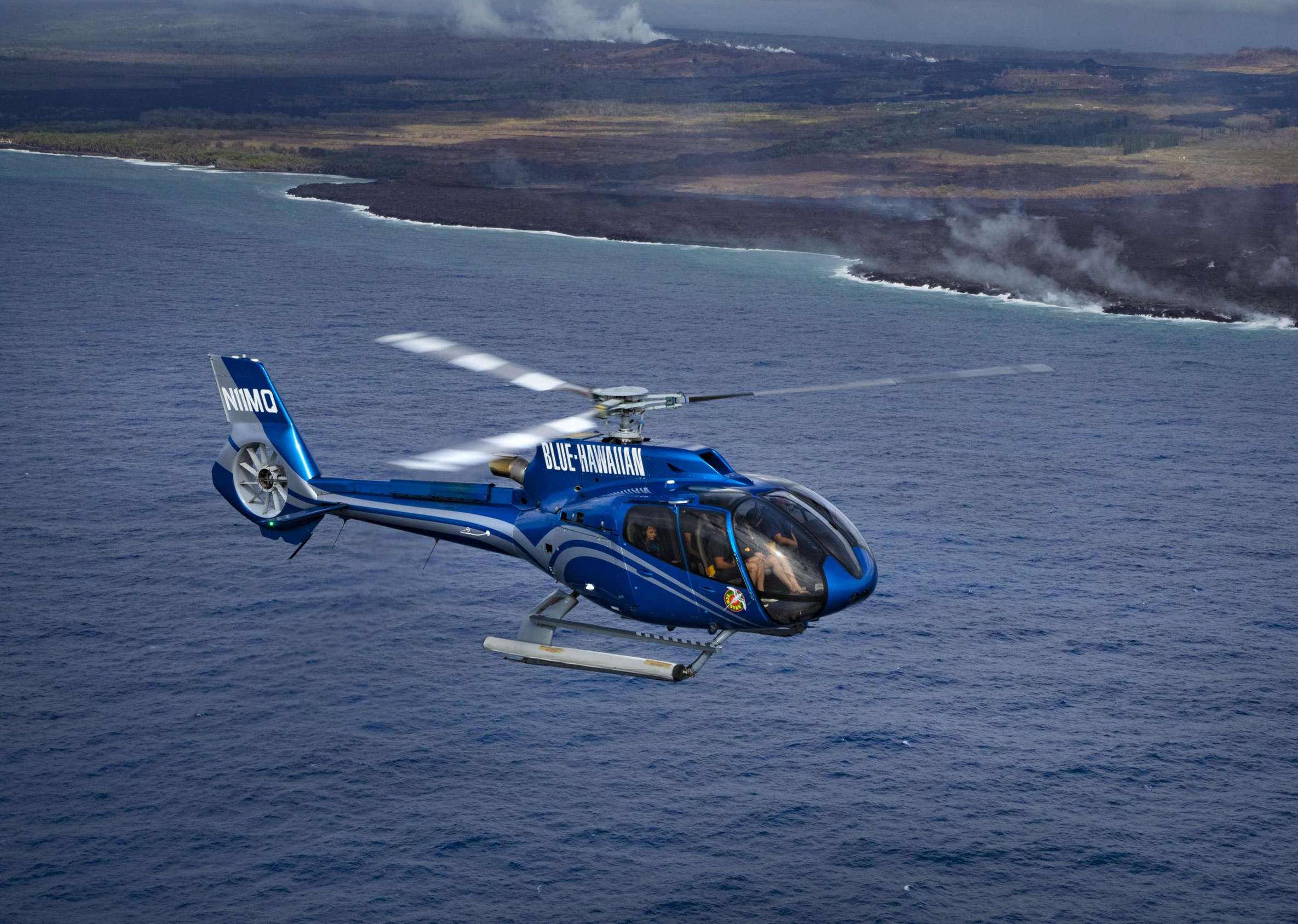
Hilo sits about 30 miles from Hawaii Volcanoes National Park, and the flight plan shows it. A Hilo departure runs about 50 to 55 minutes and spends nearly all its airtime over the volcanic terrain, in a quick out-and-back that focuses on Kilauea and small waterfalls before returning the same way.
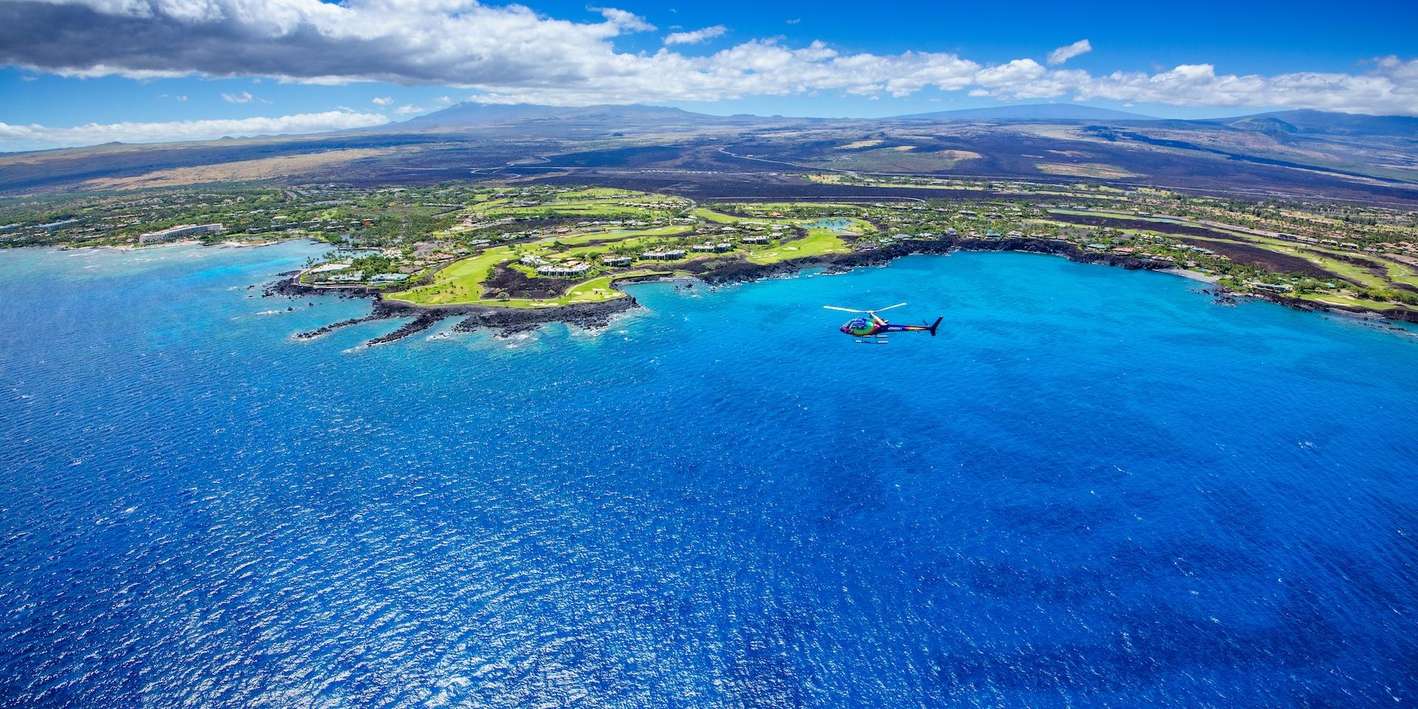
From Kona the helicopter has to cross the island first. The flight runs about an hour and 45 minutes overall, with roughly 45 to 50 minutes of it circling the park landmarks and the rest spent over rainforest, valleys and coastline.
That transit is also the appeal: Kona flights cost roughly double but cover far more of the island, including the deep Kohala valleys and Hamakua sea cliffs a short Hilo loop never touches.
Money in words: flying from Hilo is significantly cheaper and shorter, while Kona saves you a 1.5 to 2.5 hour drive each way across Saddle Road.
The trade-off on the east side is weather. Hilo tours meet rain and gray skies often enough that pilots sometimes cancel or reroute, so Kona stays the steadier bet for a smooth day.
For a direct hour over the caldera, the Hilo: Hawaii Volcanoes National Park Flight is the one built for exactly this: Kilauea's caldera, the Puʻu ʻŌʻō cone, and Mauna Kea and Mauna Loa standing in the distance.
Tour for this
Hilo: Hawaii Volcanoes National Park Flight4.2★ (272) · 1 hour · Free cancellation
What you actually see from a Hawaii volcano flight
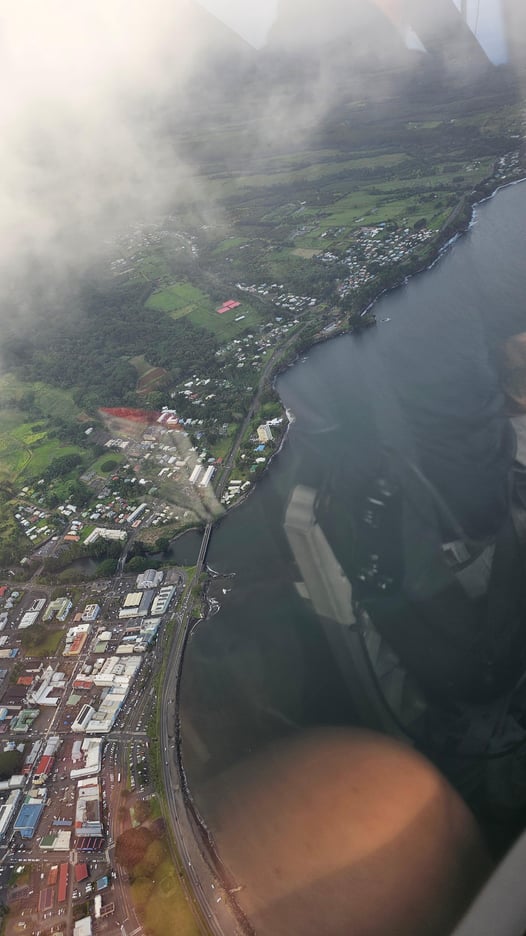
Out of the Hilo pad, the landscape changes inside of ten minutes.
Southwest first, toward lower Puna and the Kilauea vents, where the pilot will usually point out Halemaʻumaʻu, the crater whose floor sank about 500 feet during the 2018 collapse and more than doubled in width in a series of 62 collapse events between May and August of that year.
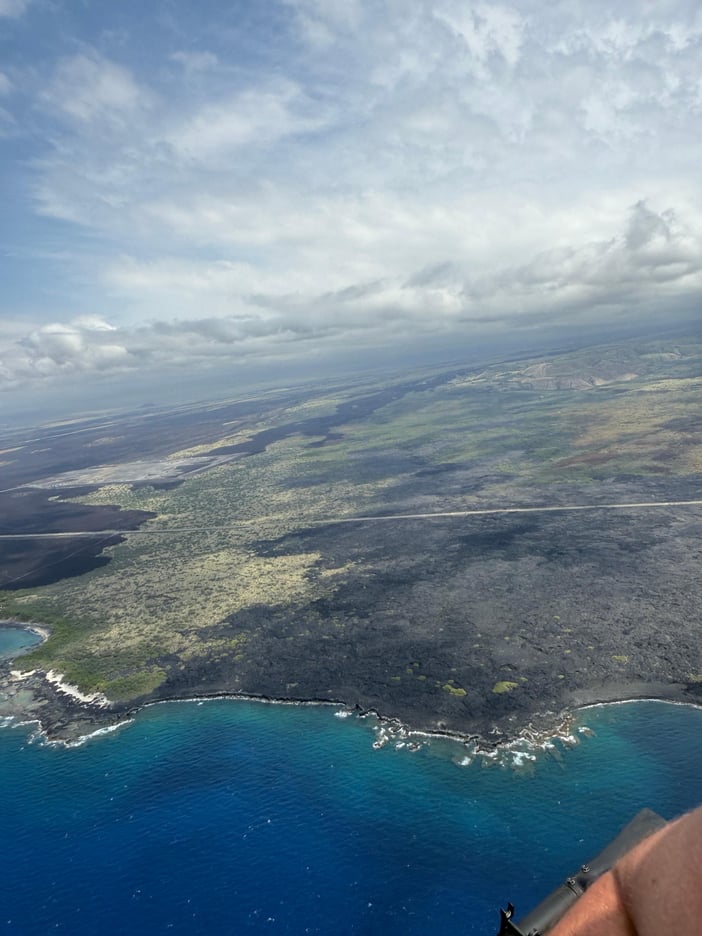
South of the caldera sits the Puʻu ʻŌʻō cone, source of a 35-year eruption that buried the town of Kalapana under tens of feet of lava in 1990 and added new land to the southeast coast where flows ran into the sea.
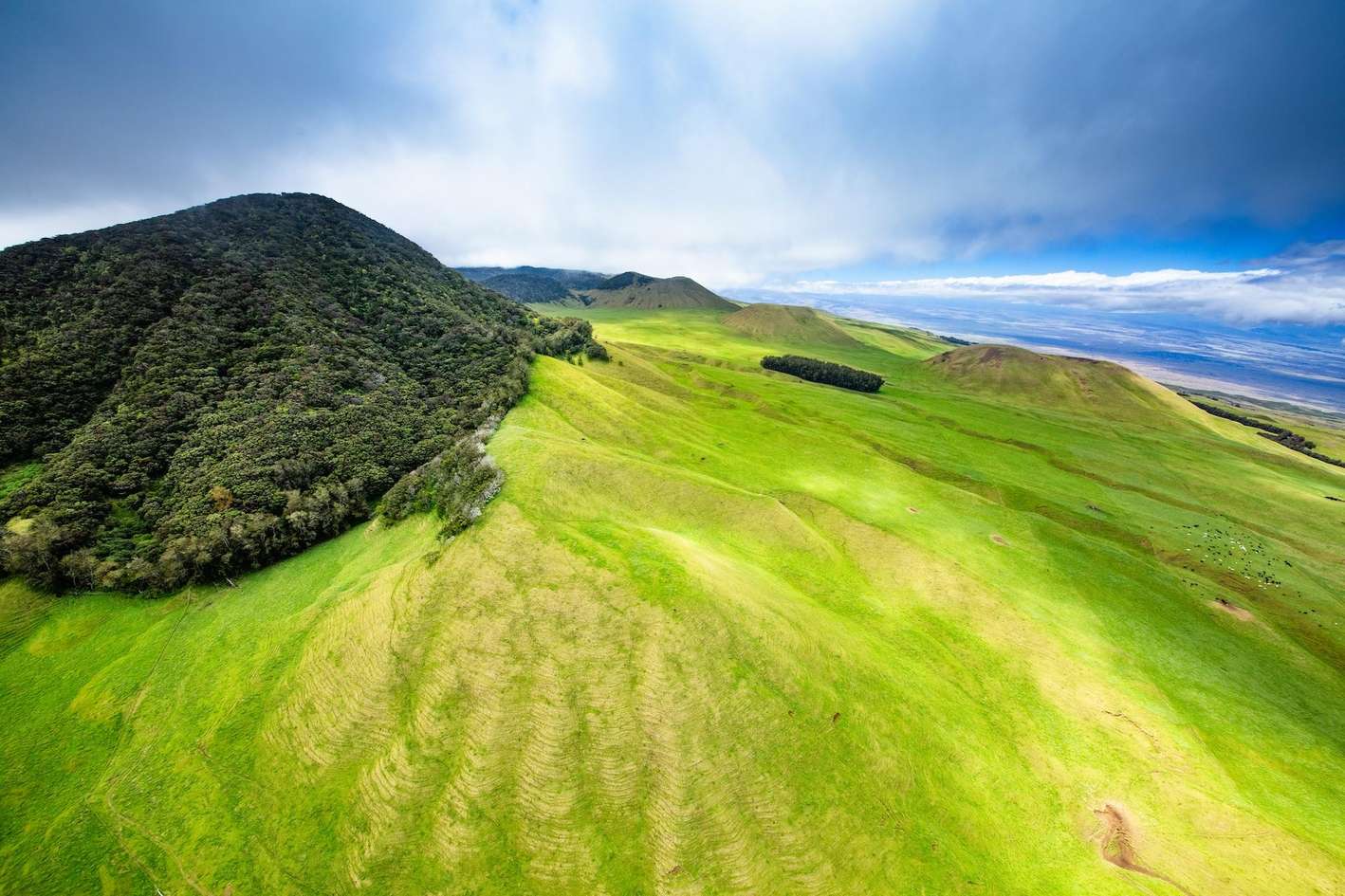
From above you read the whole story at once: dark flows over old green land, coastline pushed outward, jungle starting again at the edges.
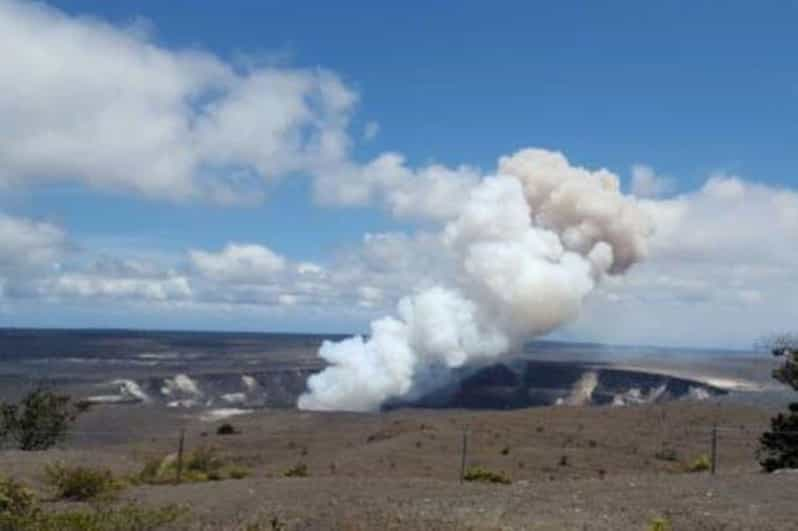
Even the steam tells you something. At Steaming Bluff, groundwater seeps down to rocks heated by magma deep underground and comes back up as vapor, which is why the vents keep puffing through quiet spells.
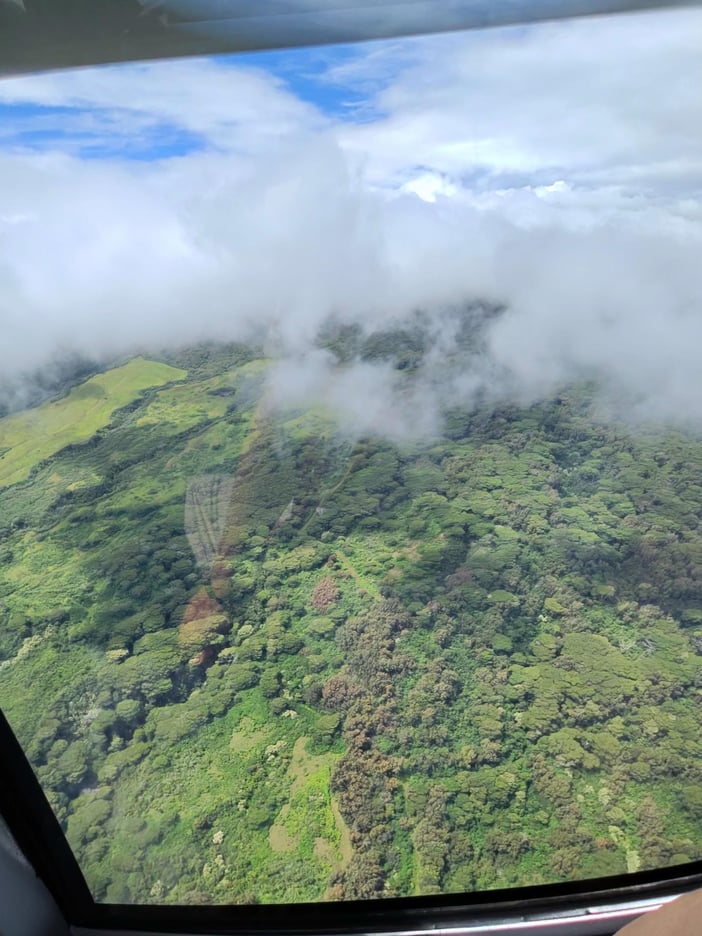
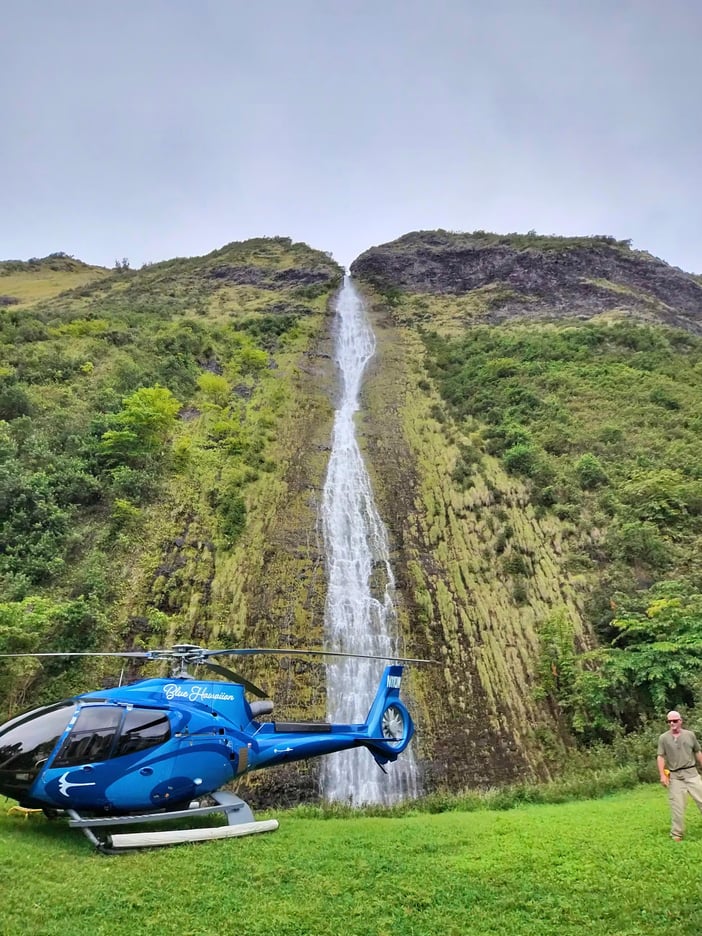
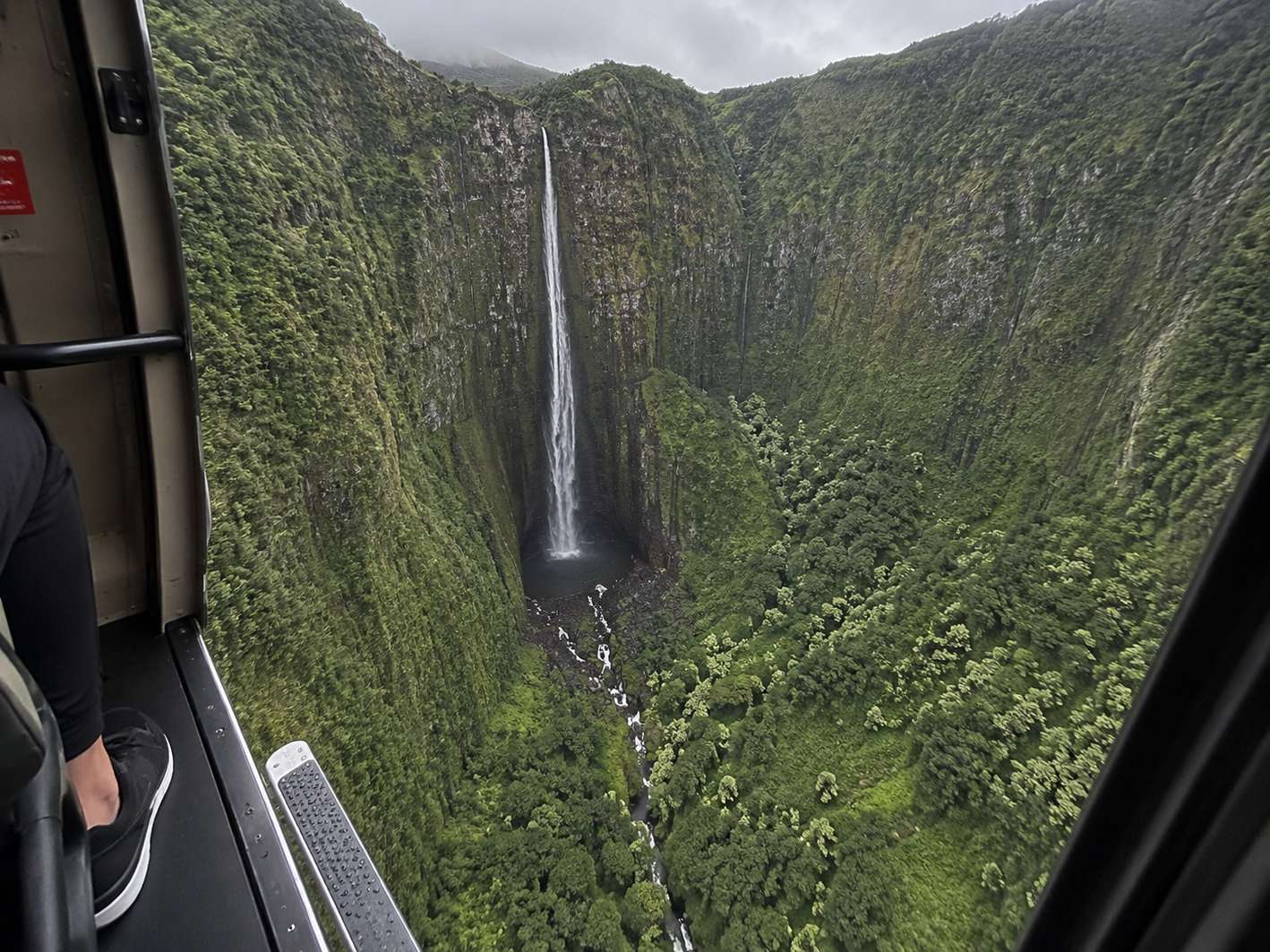
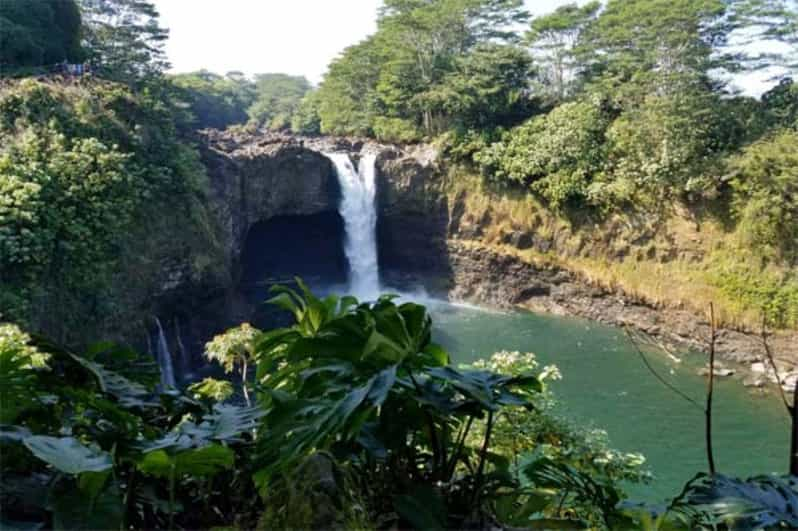
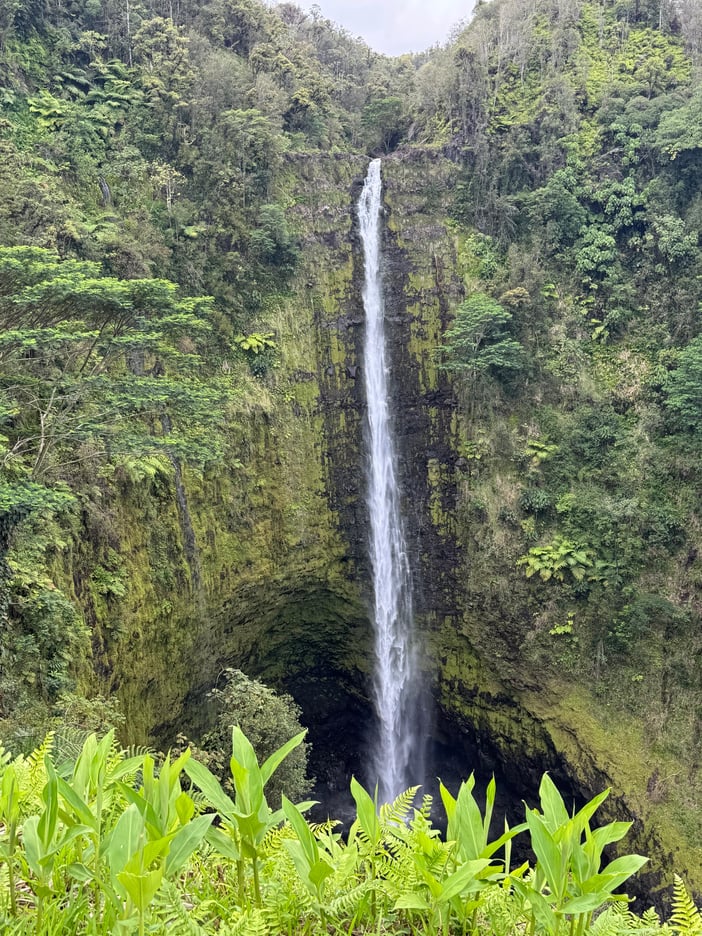
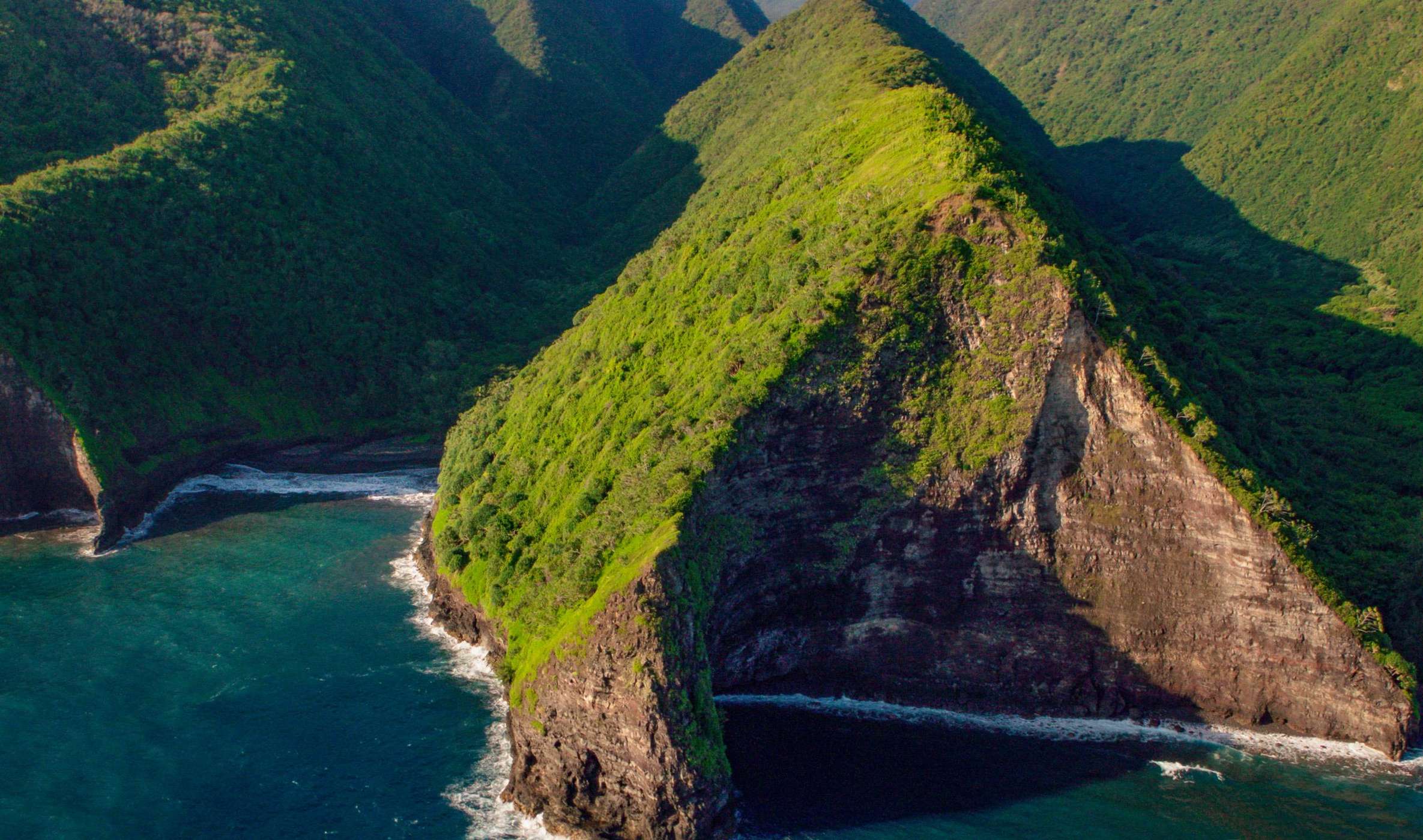
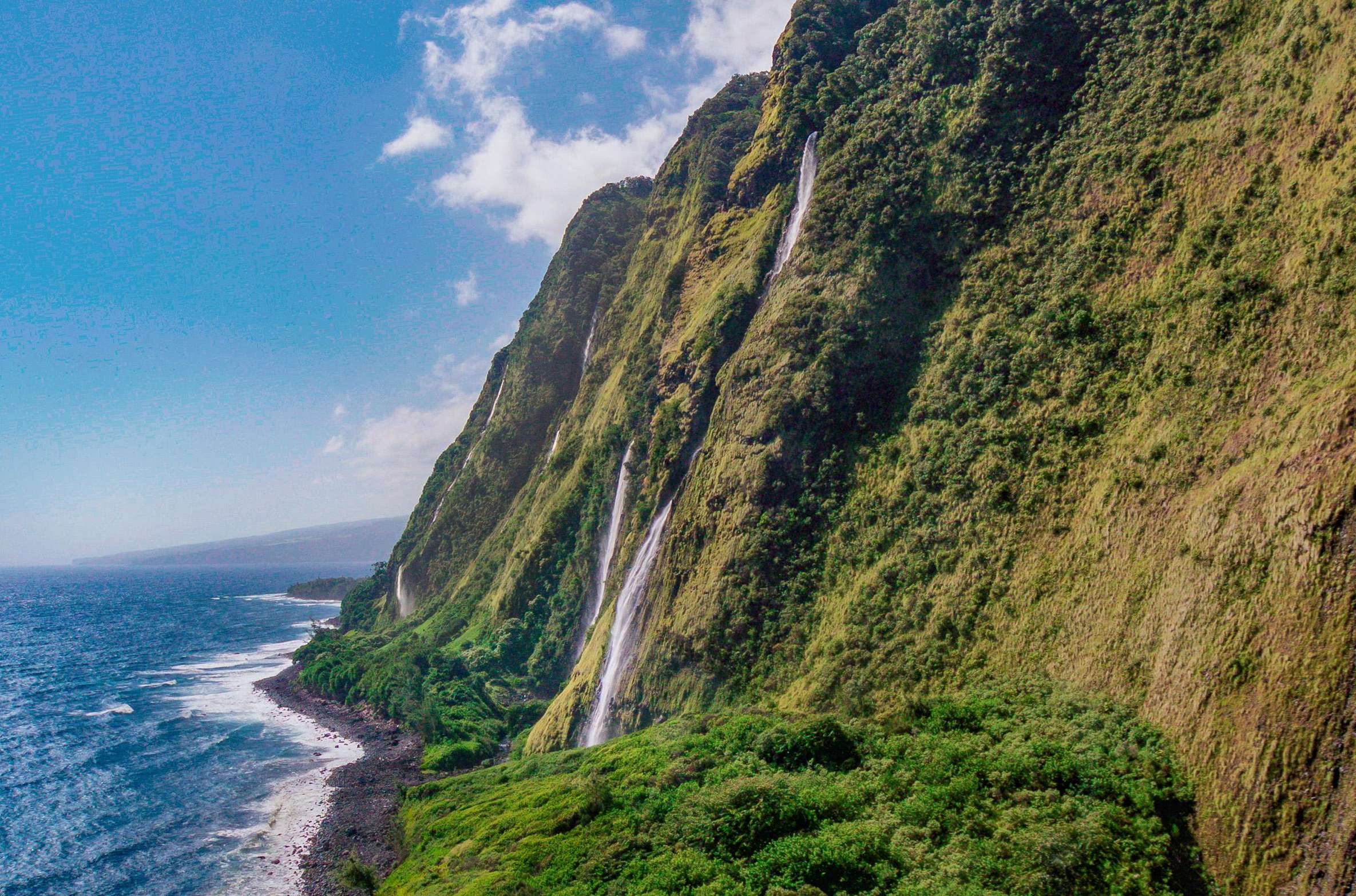
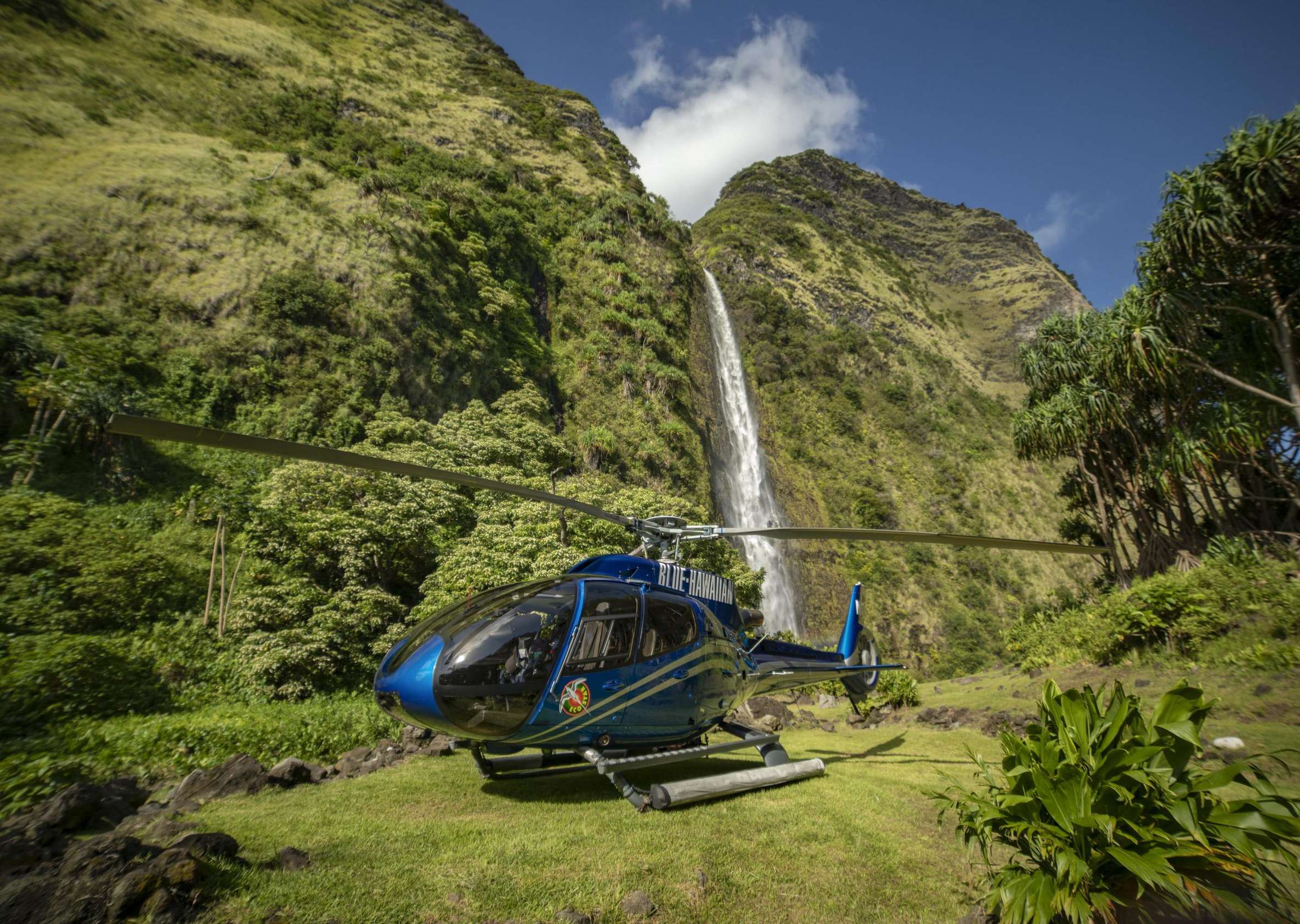
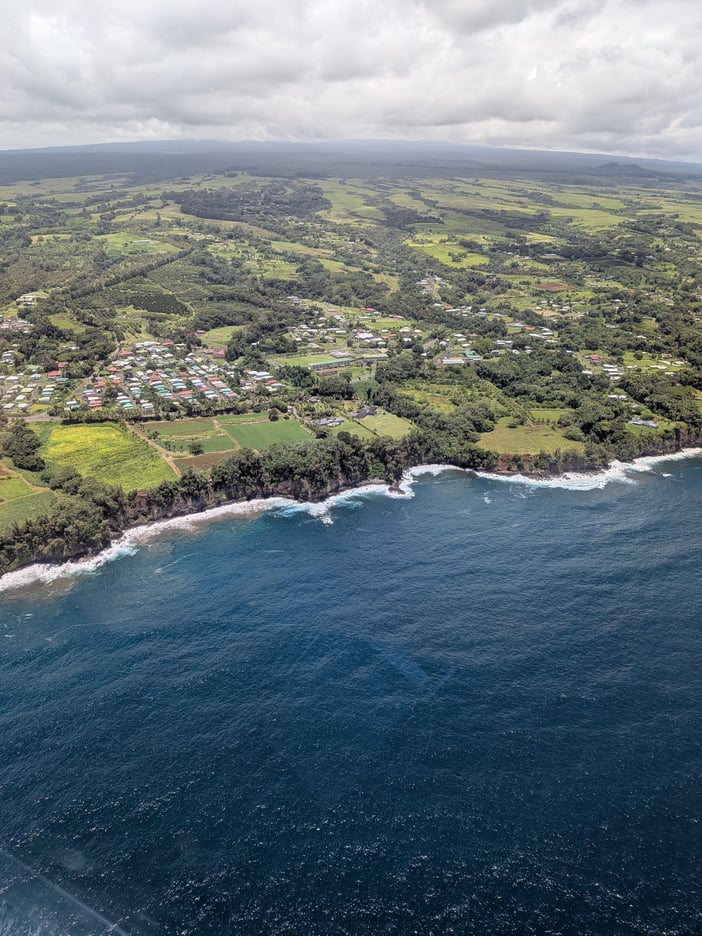
On the return leg the route turns northeast along the Hamakua Coast, where waterfalls drop into ravines and blue pools sit in the jungle.
How a volcano flight unfolds
1
Check-in
Weigh-in, seating assignment and safety briefing at the heliport
Plan on 45 to 60 minutes before takeoff
2
Climb out
The helicopter lifts from Hilo and turns toward the volcano
Volcanic terrain begins within minutes on the east side
3
Over the crater
The pilot circles Kilauea's vents and Halemaʻumaʻu
Park routes are not permitted to fly directly over the summit
4
Return leg
Northeast to the Hamakua waterfalls and jungle
Falls often run harder after passing showers
Read the timeline against your own day and it sets the pace: the volcano comes early and comes quickly, which is why even a one-hour flight feels full.
The features themselves can shift with conditions, so the pilot narrates what is in front of the aircraft that morning, and the stories cover lava you may not see.
Tour for this
Big Island: Volcano Adventure2.6★ (8) · 10.5 hours · Hotel pickup · Free cancellation
Nobody honest will promise you glowing lava. Kilauea erupts intermittently, in brief windows, and activity can shift within hours. On a quiet day the caldera still delivers: vast crater formations, steam vents fed by groundwater hitting hot rock, and hardened historical flows in shades of black and brown.
On an eruption day, temporary flight restrictions can close the airspace over the caldera, so helicopters keep their distance from directly above it.
So set your expectations the smart way. The USGS Hawaiian Volcano Observatory posts daily updates and livestreaming cameras of Kilauea's summit, and the park's eruption-viewing page points you to both.
Call your operator on the morning of the flight for real-time news on weather and surface activity. Check the night before too, then again on flight day, because the picture changes fast.
Two reassurances while you are at it. Flights during active eruptions stay high enough or positioned so that volcanic fumes and smell are not an issue inside the cabin.
And when clouds or vog block the volcano, pilots typically reroute toward older coastal lava flows and rainforest waterfalls, which often run more vigorously after a shower.
ImportantCheck the USGS Hawaiian Volcano Observatory livestream and call your operator the morning of the flight to learn what the volcano is actually doing before you commit your expectations.
Flight conditions and lava visibility can change within hours depending on volcanic gases, smoke and airspace limits, so the checked morning of, not weeks ahead, is when an expectation is worth committing to.
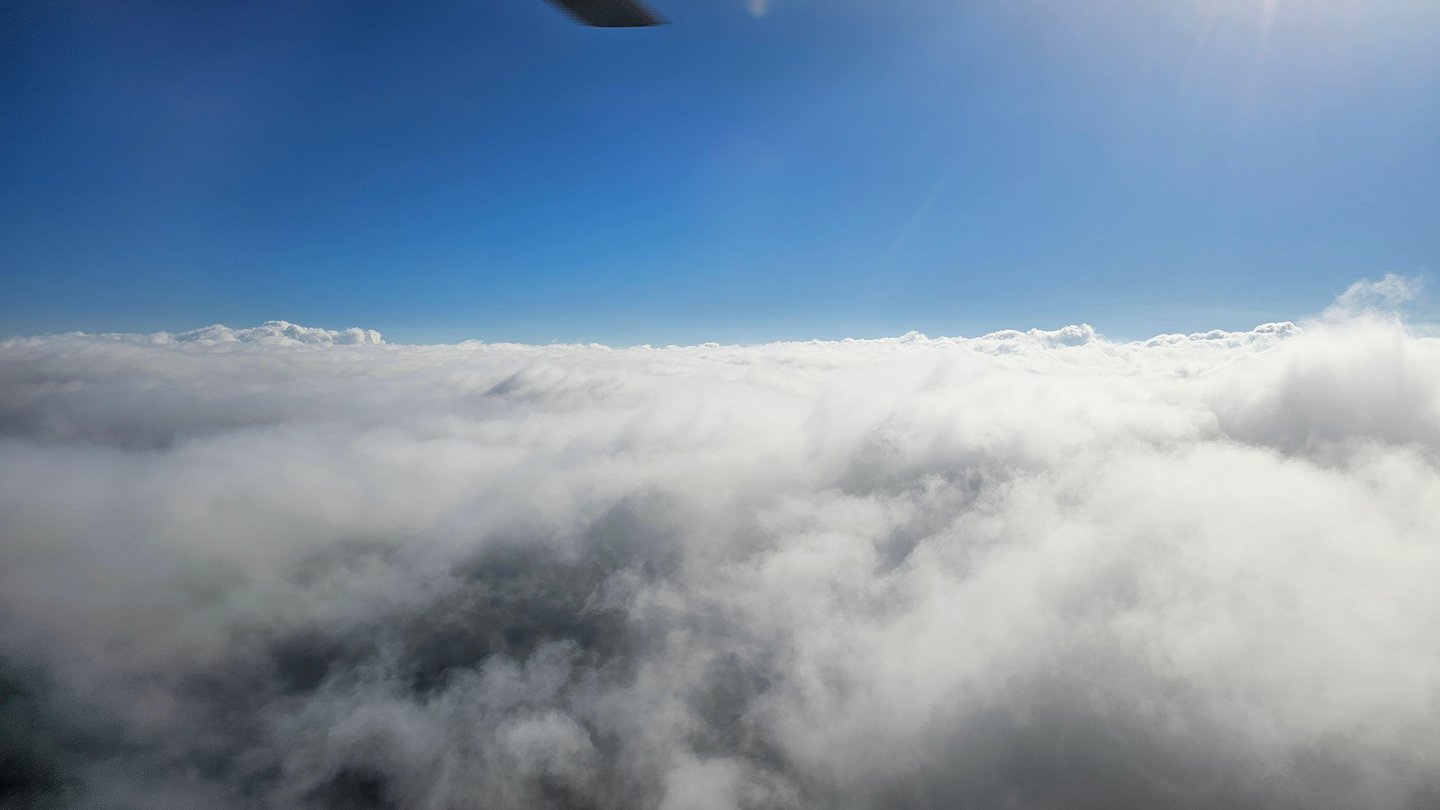
Morning wins on this island, and the reasons are physical. Trade winds, thermal turbulence and cumulus clouds build over the interior ridges from midday on, peaking in the middle of the afternoon.
Flights between roughly 8 and 11 am get the calmest air and the clearest skies over Kilauea and the Kohala Mountains, before daytime heating stirs everything up. Afternoon is a coin flip, with clouds a fair bet by early afternoon.
On the Hilo side, add rain to the calculation. The windward slopes carry cloud through the day, and early morning rain is common enough that some pilots treat late morning around 11 am as the sweet spot.
The high summits of Mauna Kea and Mauna Loa rise above the trade-wind inversion, so they are clearer than the slopes, and an early departure gives you the best chance at Mauna Loa's upper reaches before clouds form there.
Across the year, the east side stays wet in every season; the drier, less cloudy months cluster in winter, with January relatively open and February and March running up to about two-thirds cloud cover.
What that means for you is simple: pick the earliest slot you can, keep a buffer day, and treat any single forecast as a guess.
Hilo weather and flight visibility by month
March is cool, very wet, and cloudy, making clear views less dependable.
HighestMar to May216 to 259 mm
In betweenFeb, Jul, Oct to Dec165 to 203 mm
LowestJan, Jun, Aug to Sep117 to 152 mm
Darker months: higher, from 117 to 259 mm
Tap a month to read it.
January is relatively dry and less cloudy than many months, which can make it a clearer time to fly.
HighestDec to Jan13 to 15.4 days
In betweenFeb, Oct to Nov8 to 10.4 days
LowestMar to Sep3.6 to 7.4 days
Darker months: higher, from 3.6 to 15.4 days
Tap a month to read it.
December is mild with some dry days, though cloud and rain can still affect visibility.
HighestDec0.2 days
LowestJan to Nov0 days
Darker months: higher, from 0 to 0.2 days
Tap a month to read it.
September is warm and relatively sunny, but rain remains frequent.
HighestJul to Oct27 to 27.6 °C
In betweenMay to Jun, Nov25.6 to 26.3 °C
LowestDec to Apr24.6 to 25.5 °C
Darker months: higher, from 24.6 to 27.6 °C
Tap a month to read it.
August is warm and cloudy, with rain on most days on average.
HighestJun to Oct20.4 to 21.1 °C
In betweenApr to May, Nov19.3 to 19.9 °C
LowestDec to Mar18.4 to 19.1 °C
Darker months: higher, from 18.4 to 21.1 °C
Tap a month to read it.
No month on the Hilo side is reliably dry, so the departure hour matters more than the month you choose. A sunset slot is the one late-day exception worth naming, because as daylight fades the faint glow of an active vent can show through.
Three choices shape the flight: how long, what doors, which aircraft. Short focused flights out of Hilo run about 50 minutes to an hour and put most of their airtime over volcanic terrain.
Combination routes add the Kohala valleys, whose canyon walls rise 2,000 to 4,000 feet and rival anything the craters produce, and the all-island spectaculars out of Waikoloa spend nearly two hours linking rainforest, sea cliffs and lava fields.
Doors matter more than first-timers expect. A doors-off cabin gives photographers an unobstructed frame straight down, but it brings serious wind, temperatures 10 to 15 degrees cooler, and strict strap rules. Enclosed cabins stay climate-controlled and comfortable, with large viewing windows that suit nervous flyers.
Seating you cannot fight. Aircraft are balanced by weight, so the operator assigns every seat at check-in and nobody can reserve a window. Six-passenger touring helicopters have middle rear seats with partly blocked views, though pilots bank the aircraft so both sides see the craters.
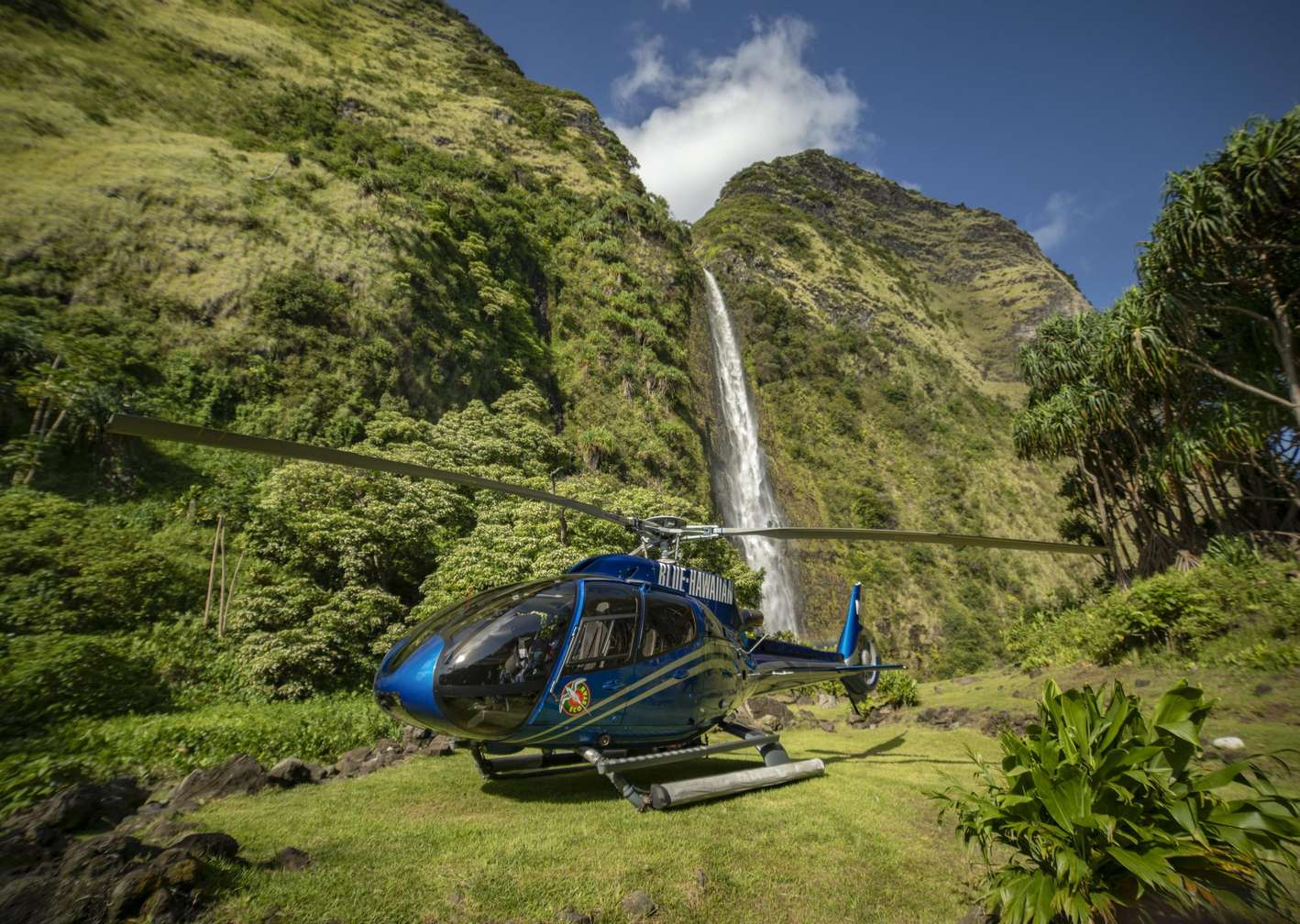
Four-seat aircraft like the Robinson R44 put everyone at a window, and EcoStar cabins use raised rear theater seating behind wraparound front glass.
How to choose a Hawaii volcano helicopter tour
Check
Why it matters
Our pick
Time actually over the volcano
Short Hilo flights spend most airtime over volcanic terrain; cross-island routes add scenic transit
A 1.5-hour flight from the Kona side crosses the island before reaching Kilauea
Doors on or off
Doors off means unobstructed photos but cold wind and strap rules; doors on means comfort
Both configurations are offered on the same tour, so you can pick at booking
Aircraft and seating
Six-seat cabins can leave someone in a middle seat; four-seat aircraft seat all at windows
Seats are assigned by weight at check-in, so no seat can be reserved
Departure base
Hilo is closest to the volcano; Kona adds island scenery but costs roughly double
Kona departure suits travelers staying on the west side
Kona-side volcano flights are listed anywhere from about an hour and a half to an hour 45 overall depending on the route.
The Big Island: Kilauea Volcano Eruption Heli Tour - Door On/Off runs the shorter of those, 1.5 hours from the Kona coast, and it is the one that lets you make the doors call yourself at booking.
Some travelers staying in Kona do the math and decide the cheaper Hilo flight is worth a drive.
Saddle Road, the Daniel K. Inouye Highway, crosses the island in about an hour and a half from Kailua-Kona, rising above 6,000 feet between Mauna Kea and Mauna Loa. That elevation is where the trouble lives: fog, rain and low clouds slow the road without warning.
Budget a full two hours, not the bare drive time, before your check-in. Check-in for a Hilo flight runs 45 minutes to an hour before takeoff, and late arrivals can lose the seat with no refund.
A morning departure means leaving the west side in the dark, which is exactly the kind of start people who have done it describe as stressful.
The alternatives are honest ones. Flying direct from Kona doubles the tour cost but removes the drive entirely. Flying or staying on the Hilo side the night before turns a tense morning into an easy one, and puts the national park, a 45-minute drive from Hilo, within reach afterward for the rest of the day.
Getting to a Hilo flight from the Kona side
Fly direct from KonaCosts roughly double but skips the cross-island drive
Easy
Drive Saddle Road to HiloAbout 1.5 to 2 hours, climbing above 6,000 feet where fog and rain can slow you down
Moderate
Stay or fly into Hilo the night beforeCosts a night but removes all morning stress and leaves the afternoon free for the park
Easy
For most west-side travelers the drive makes sense only with a rental car already in the plan and a midday slot; the earlier the departure, the more the night-before option earns its cost.
Driving yourself
Rent a car in HiloCompare cars from the rental companies in one search, then pick yours.
The inter-island hop is shorter than people expect: a nonstop commercial flight from Honolulu reaches the Big Island in about 45 to 60 minutes depending on the destination airport, with Hilo sitting at the longer end at roughly an hour.
That speed is what makes a one-day volcano trip possible without changing hotels, and one packaged day trip from Honolulu bundles round-trip airfare, ground touring and a 45-minute helicopter flight over the volcano into a single 15.5-hour day. The pacing is the part first-timers underestimate.
A day that starts before dawn and ends after dark works only when the helicopter segment lands early, leaving daylight for the ground touring that follows. Aiming for the earliest departure slot is what keeps the whole schedule honest. Pack like a day-tripper would.
Bring a government-issued ID or passport, which US citizens must show when departing Honolulu. For the version that handles all the logistics, the From Oahu: Big Island Volcano Adventure & Helicopter covers round-trip airfare, a full day of sightseeing, the 45-minute flight and transport to and from Hilo Airport.
Tour for this
Oahu to Big Island Volcano Helicopter and Sightseeing Tour5.0★ (1) · Valid 1 day · Hotel pickup · Free cancellation
Start with the numbers, because they hold up. Fatal air tour accidents in Hawaii average less than one per year across all islands, and a 2009 study found the crash rate fell 47 percent after Hawaii's 1994 air-tour rule took effect, dropping from 3.4 to 1.8 per 100,000 flight hours.
The statistical risk of injury on a commercial tour flight sits at or below the level of a daily commute on a mainland interstate.
The rules behind that are specific to Hawaii. Air tours follow dedicated federal air-tour regulations, generally stay at least 1,500 feet above the surface and away from people and property, and fly only at heights and speeds that allow a safe landing if engine power fails.
Before every flight the operator files a performance plan the pilot must follow, and when a route crosses open water, flotation gear comes along and passengers get briefed on water landings before departure.
And the question everyone actually asks: an engine failure does not mean a fall. Pilots train in autorotation, a glide technique that lands the helicopter safely without engine power. Operators also cancel, delay or reroute when bad weather moves in, which is why flights sometimes scrub at the last hour.
A traveler's note
Exciting adventure! Our pilot/guide described every place and its history. Unreal views, and we even saw the ocean's colors. Clouds blocked the volcano, but the coastline made it worth it. Thanks Justin!
That calm is the norm rather than the exception: helicopter flights are smooth enough that even first-time and nervous flyers come off the pad saying the briefing did the work before the wheels ever left the ground.
Tour for this
Big Island: Kilauea Volcano Eruption Heli Tour - Door On/Off4.4★ (5) · 1.5 hours · Free cancellation
Dark clothing comes first. Pilots ask for solid dark colors, black or navy, because bright fabrics reflect in the windows and show up as glare or silhouettes in photos. It is a recommendation more than a mandate, but on a doors-on flight it decides whether your photos come home clean.
Enclosed cabins stay climate-controlled and heavy jackets run too warm, but doors-off flights sit in wind that drops the feel of the air by 10 to 15 degrees, so long pants, a long-sleeved shirt and a windbreaker earn their place.
Long hair goes back in a tight tie, phones and cameras need wrist or neck straps on open-door flights, and hats, purses, selfie sticks, extra lenses and water bottles stay behind. Sunglasses and eyeglasses are fine; the headsets hold them against your head.
At check-in you will be weighed, because seat assignments exist to balance the aircraft. Children under 2 fly as lap children on doors-on flights, while open-door seating generally starts at 12.
Health matters too: pregnancy, vertigo, claustrophobia, a cold or flu, and an inability to sit upright all rule out certain flights. ::alert Before you book You scuba dived in the past 24 hours | Wait a full day before flying; lower cabin air pressure raises decompression risk and you can be denied boarding
One comfort note before the rotor turns: helicopter flights are generally smooth, and travelers who get carsick often feel nothing in the air.
If banking turns do bother you, take ginger or motion-sickness medicine before takeoff, when it works best, and mention it at check-in, since ground staff can sometimes steer you toward a forward seat with a clear horizon.
Tour for this
Waikoloa: Big Island Spectacular Helicopter Tour4.2★ (10) · 105 minutes - 2 hours · Free cancellation
Two clocks govern the booking. The first is the calendar: during peak summer and the December-to-January holidays, slots sell out 2 to 4 weeks ahead, and the prime morning departures often go 30 days to 6 weeks out.
The second is your itinerary: book the flight early in your vacation, so a weather cancellation leaves room to rebook. Flying early has a bonus, too. The island seen from above helps you decide what to go see by land afterward.
Weather can rewrite the day, and the rules about what happens next vary by operator more than travelers expect. Most reputable operators cancel, delay or reroute when low cloud and heavy rain move in, and a canceled flight earns a full refund or a rescheduled date.
A reroute is a different case: one operator gives no refund or discount when weather changes the route, the sights or the flight time, while another refunds in full if a rescheduled date does not work for you. Read the terms before you book.
Skip anything scheduled tightly after the flight, since departure times can slip. ::ifthen If the day changes Low clouds or rain cancel the flight | Most operators offer a full refund or a new date Weather forces a reroute away from the crater | One operator gives no refund or discount for a changed route or shorter flight time Weather pushes your tour to another day | One operator refunds in full if you cannot make the new time You miss your check-in window | The seat can be forfeited with no refund
Whichever operator you choose, the refund terms live on its own listing, and a two-minute read there beats a surprise at the pad.
The flight ends at the pad, and the best afternoon of your trip starts there.
From Hilo, Hawaii Volcanoes National Park is a 45-minute drive, and the ground experience is genuinely different from the air view: roadside craters, black sand beaches, paved zero-step lookouts straight off the parking lots, and the Kilauea Iki trail descending through rainforest onto a hardened lava lake.
People who do both agree the perspectives do not overlap, which is why doing both is worth the budget if it stretches.
Back in Hilo itself, the sights sit close together. Rainbow Falls drops 80 feet inside town, a mile and a half from downtown, and the Boiling Pots pool series on the Wailuku River lies two miles upriver, close enough to pair in a 45-minute visit.
Liliʻuokalani Gardens sits free on the bay, ʻAkaka Falls runs a paved 0.4-mile loop about 25 minutes north, and the farmers market opens at 7 am daily.
Waterfall country is at its most dramatic from November through March, when winter storms swell the Hamakua falls; summer keeps them steady and moderate on trade-wind showers alone.
One caution from people who have done it: leave generous time after a late afternoon along Crater Rim Drive, because driving and hiking times have a way of eating an evening flight.
Crater rim first while energy is high, then the closer sights as the light goes flat: that order turns one morning flight into a full, unhurried volcano day.
A Hawaii volcano helicopter flight earns its price when you fly it from Hilo for a focused hour, or from Kona when the wider island matters as much as the crater.
Go in knowing red lava is a bonus, not a promise, book a morning slot early in your trip, and give the afternoon to the park at ground level.
Go ifYou want to look into Kilauea's caldera, steam vents and rift zones that no road reachesYou are staying on the Hilo side or willing to make the cross-island driveYou want the Big Island's lava fields, coastline and green valleys in one sweep
Skip ifYou expect glowing molten lava on every flight and cannot enjoy craters and steam without itYou have recently scuba dived and cannot leave a 24-hour gap before flyingYou are pregnant, prone to vertigo or claustrophobia, or cannot sit upright for the flight
Our pick to book
Hilo: Hawaii Volcanoes National Park Flight4.2★ (272) · 1 hour · Free cancellation
Common questions about Hawaii volcano flights, answered
Short answers to the questions people ask before they book a flight over Kilauea.
Hilo2026
Today the caldera steamed under a clear morning sky. Book your flight early in your trip, so clouds cannot cancel it on your last day.
Can you see molten red lava on a Hawaii volcano helicopter tour?
Kilauea erupts in short episodes, so glowing lava is never guaranteed. When the surface is quiet, your flight may show steam vents, hardened flows, and the caldera itself. Check the USGS Hawaiian Volcano Observatory webcams on flight day to see what is active before you book.
Is a volcano helicopter tour still worth it when Kilauea is not erupting?
The Big Island is the only Hawaiian island where you can see volcanic lava from the air, but even between eruptions the flight crosses vast craters, black lava fields, rainforest, and waterfalls you cannot reach by car or on foot.
Some visitors in quiet spells say the Kohala valleys and waterfalls impress them more than the cooled craters.
Which departure base is better for a volcano tour, Hilo or Kailua-Kona?
Hilo sits right next to the volcano, so its flights are shorter and cost less, and they can spend most of the airtime over volcanic terrain. Kona flights cost roughly double but cover more of the island, including valleys and sea cliffs, and they save you the 1.5 to 2.5 hour cross-island drive to Hilo.
How much of a helicopter flight is actually spent over the volcano?
Flights from Hilo spend about 50 to 55 minutes circling Hawaii Volcanoes National Park and nearby volcanic terrain. Kona departures spend roughly 45 to 50 minutes over the park landmarks, but the rest of their longer route crosses the rest of the island.
How safe are helicopter tours over Hawaiian volcanoes?
Fatal air tour accidents in Hawaii average less than one a year, and Hawaii-specific rules brought the crash rate down 47 percent after 1994. Pilots fly only at heights and speeds that allow a safe landing after an engine failure, and they can glide down safely without engine power.
What happens if clouds, rain, or vog block the volcano on flight day?
Pilots reroute toward sights that the weather does allow, such as coastal lava flows and waterfalls, which often run stronger after a passing shower. When conditions ground the flight entirely, operators cancel and offer a full refund or a rescheduled seat.
Will I get airsick flying over craters and through valleys?
Helicopter flights are generally smooth, and many people prone to car or boat sickness feel fine in the air. If you are sensitive, take ginger chews or motion sickness medicine before takeoff, keep your eyes on the horizon, and ask at check-in whether a front seat is possible.
What time of day gives the best chance of clear views over Kilauea?
A morning departure between 8 and 11 am gives you the smoothest air and the clearest skies over the summit and Kohala valleys. Clouds build over the slopes in the afternoon, though they can hide the summit at any hour.
Is a Hawaii volcano helicopter tour better than walking the crater trails in Hawaii Volcanoes National Park?
They show you different things. The park's paved lookouts and rim trails put you at ground level next to the caldera, while the flight reveals lava flows, vents, and roadless terrain that are hard to place in context from a trail. Most people are glad they did both.
Can I take a Hawaii volcano helicopter ride as a day trip from Oahu?
Yes. Full-day tours run from Honolulu to Hilo with round-trip inter-island airfare and a helicopter flight over the volcano included, so you can see the lava zones without changing hotels.
Why can't my family pick our own seats or sit together?
Operators assign seating by passenger weight to balance the aircraft, under FAA rules, so no one chooses a seat and parties are not guaranteed to sit together. Weigh-in happens at check-in, which is one reason you arrive well before takeoff.
Can my young children come along on the flight?
On standard doors-on flights, infants under 2 fly free as lap children, and children 2 and older need their own seat. Doors-off flights are different: operators require passengers to be at least 7 or 12 years old, and a child must be 12 to sit beside an open door.
Hawaii volcano helicopter tours - where to go next
Fly from Hilo straight to the Kilauea caldera and Hawaii Volcanoes National Park on this one-hour Hawaii volcano helicopter ride, with free cancellation up to 24 hours before departure.


 Your best match