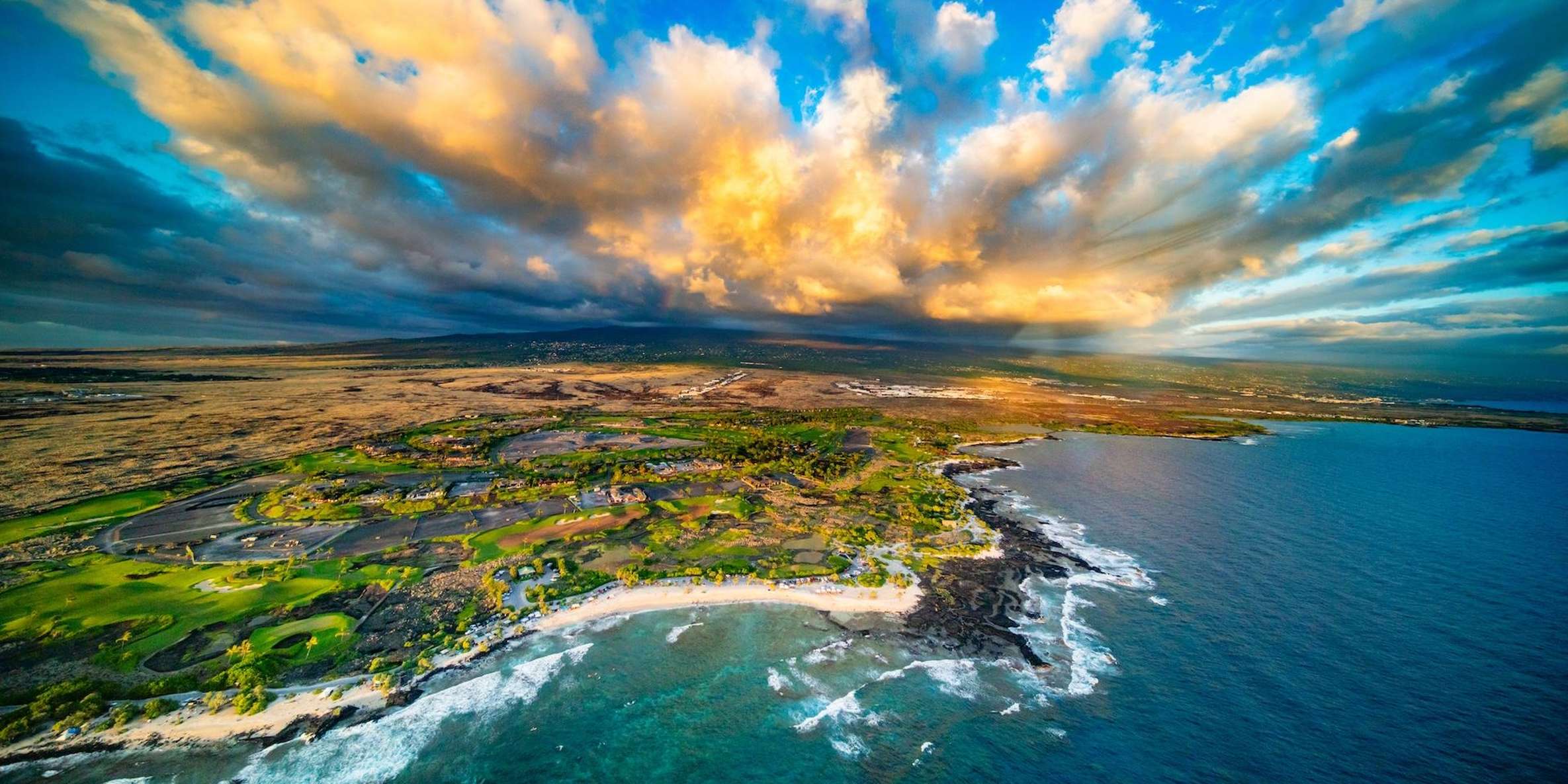
Helicopter Tours from Kona Airport Departure Bases and Flight Terminals
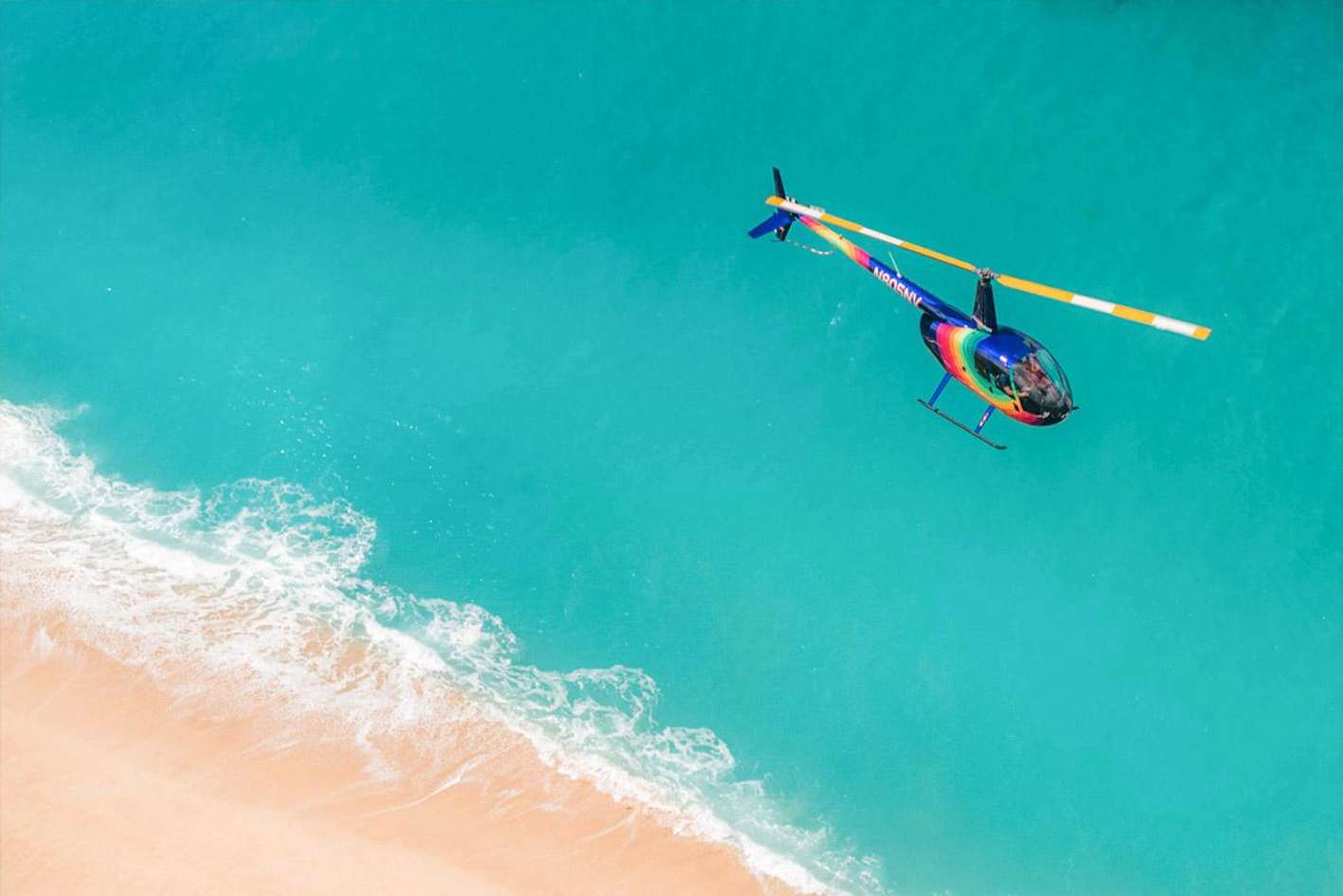
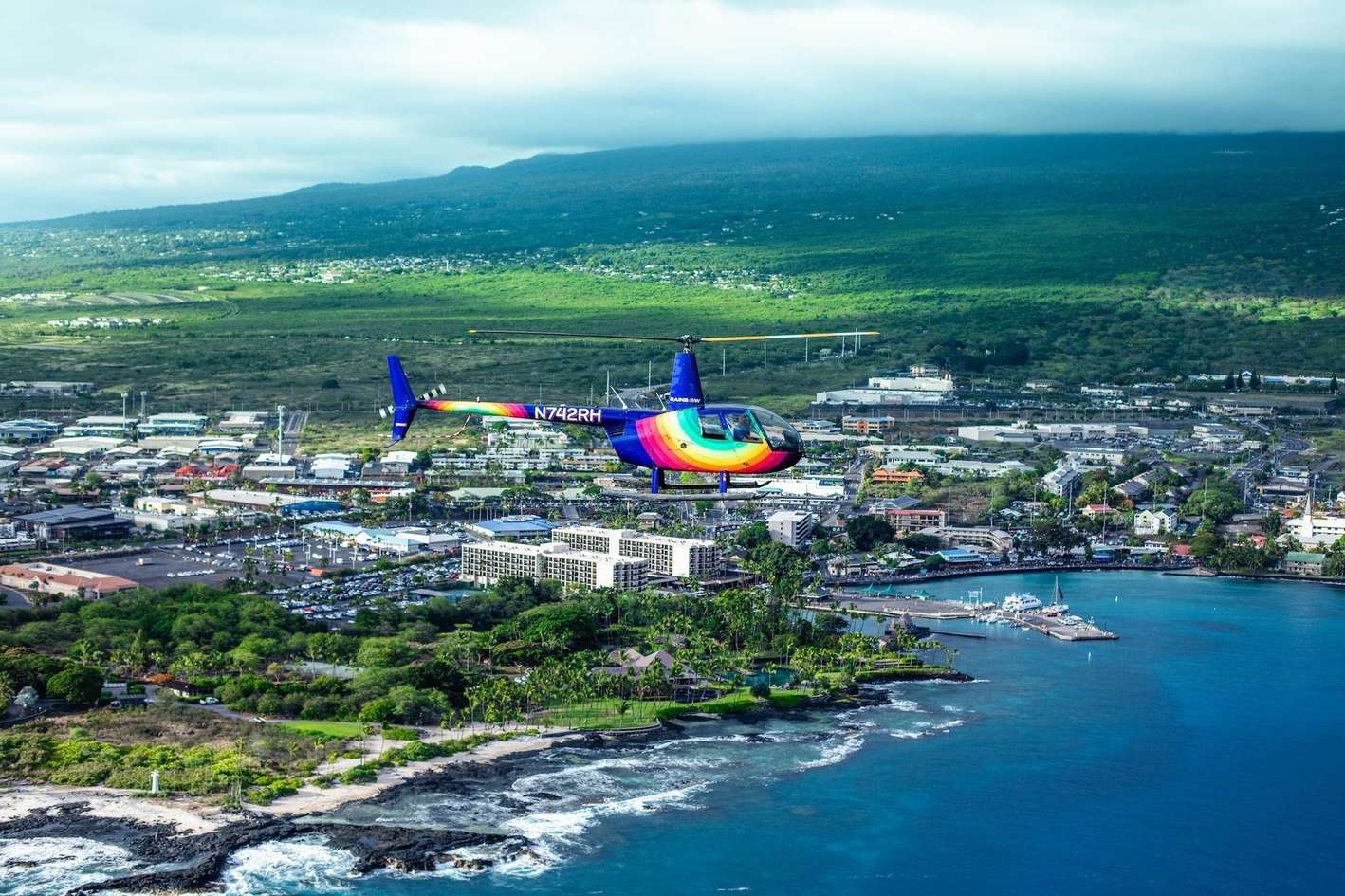
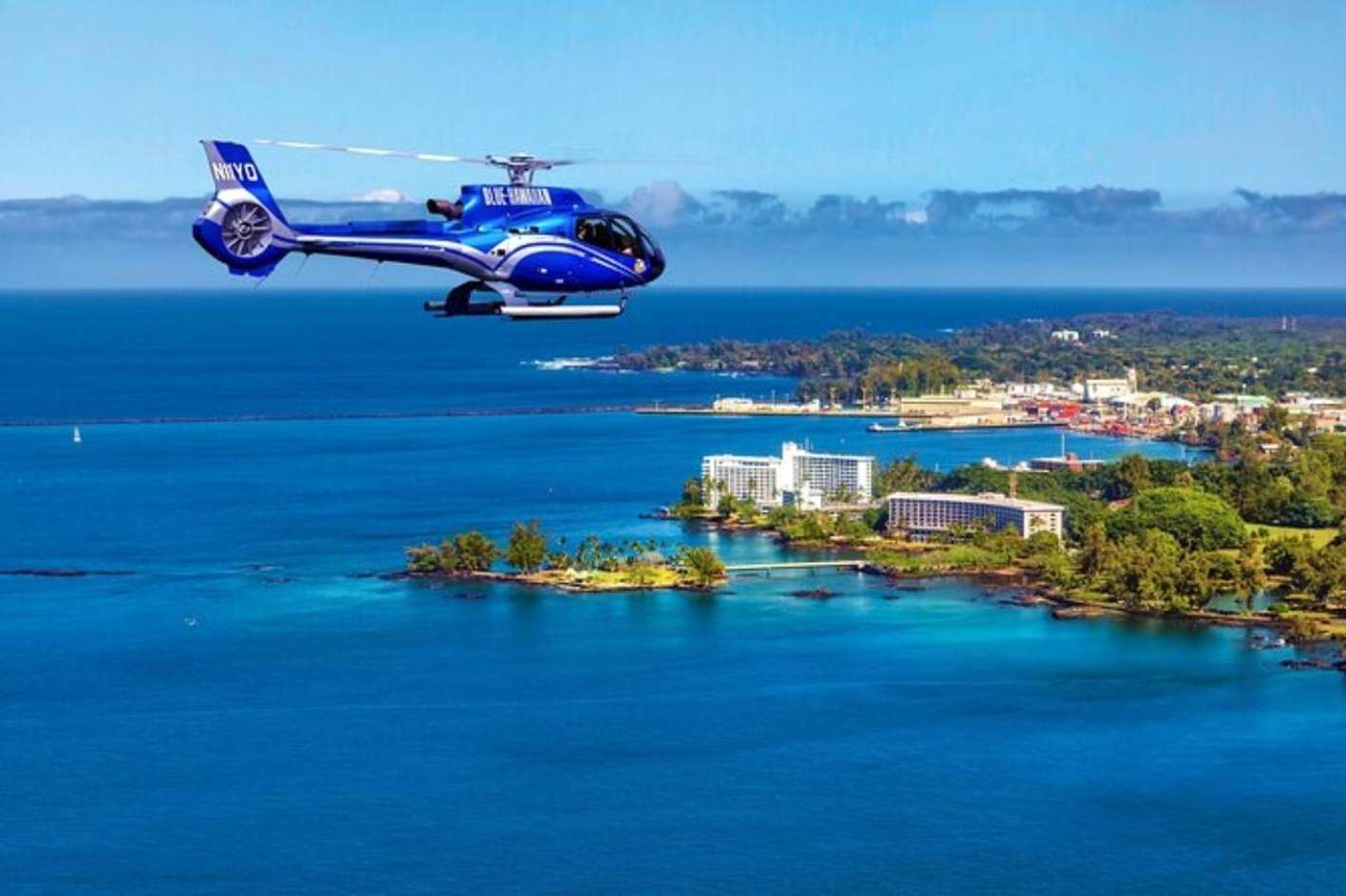
Skip the cross-island drive and lift off right from Kona Airport. Fly doors-on or doors-off over Kailua Bay, Hualalai and the Kohala valleys, with pilots who bring the island's landscapes and history to life. Book an early-morning slot and see what no road can show you.
4.5★average rating371traveler reviews100%free cancellation25countries travelers came from
Helicopter tour Kona airport - which flight fits
Flights from Kona Airport come in three shapes: short coastal loops, a mid-length loop that adds Hualalai volcano, and long routes that cross to Kohala valleys or Kilauea. The one thing that decides between them is airtime. Thirty minutes covers the Kona coast, an hour or more gets you volcanoes and waterfalls.
DocumentsBring a government-issued photo ID for airport screening; international visitors need a passport, and from May 7, 2025 domestic travelers need a REAL ID-compliant form of ID.
DivingWait a full 24 hours after scuba diving before your flight, or you can be refused at the pad.
Doors offYour seat may or may not sit next to the open door, and seating is assigned by weight and balance, so you cannot pick your own.
Check-inArrive about an hour before takeoff for weigh-in and the safety briefing; late arrivals can lose the seat with no refund.
Booking aheadIn peak summer and the December to January holidays, morning slots sell out two to four weeks ahead, so book early in your trip to keep rescheduling room.
TimingAim for a morning departure, roughly 8 to 11 am, when air over Kona and the Kohala ridges is calmest and skies clearest.
ClothingWear dark solid colors so your clothes stay out of window photos, and bring closed-toe shoes plus a light jacket for doors-off flights.
WeatherIf low clouds or vog close a route, pilots reroute or the operator reschedules you, with a full refund if the flight is canceled outright.
KidsEvery passenger from 24 months old takes a full-fare seat, and infants up to 23 months ride on a lap.
accessYou cannot board a Kona Airport helicopter flight within 24 hours of scuba diving, because lower cabin air pressure raises the risk of decompression sickness.
Plan your dive at least a full day before takeoff, and if you have already booked, schedule the flight after the 24-hour window has passed rather than the other way around.
Pick the right Kona Airport helicopter tour for you
Cheapest flight
30 minutes·English
Kailua-Kona: Scenic Coastal Helicopter Tour, Doors On or Off
The shortest loop at 30 minutes, with doors on or off at no extra charge.
Free cancellation30-minute helicopter tour around Kailua-KonaLive guided tour with commentary
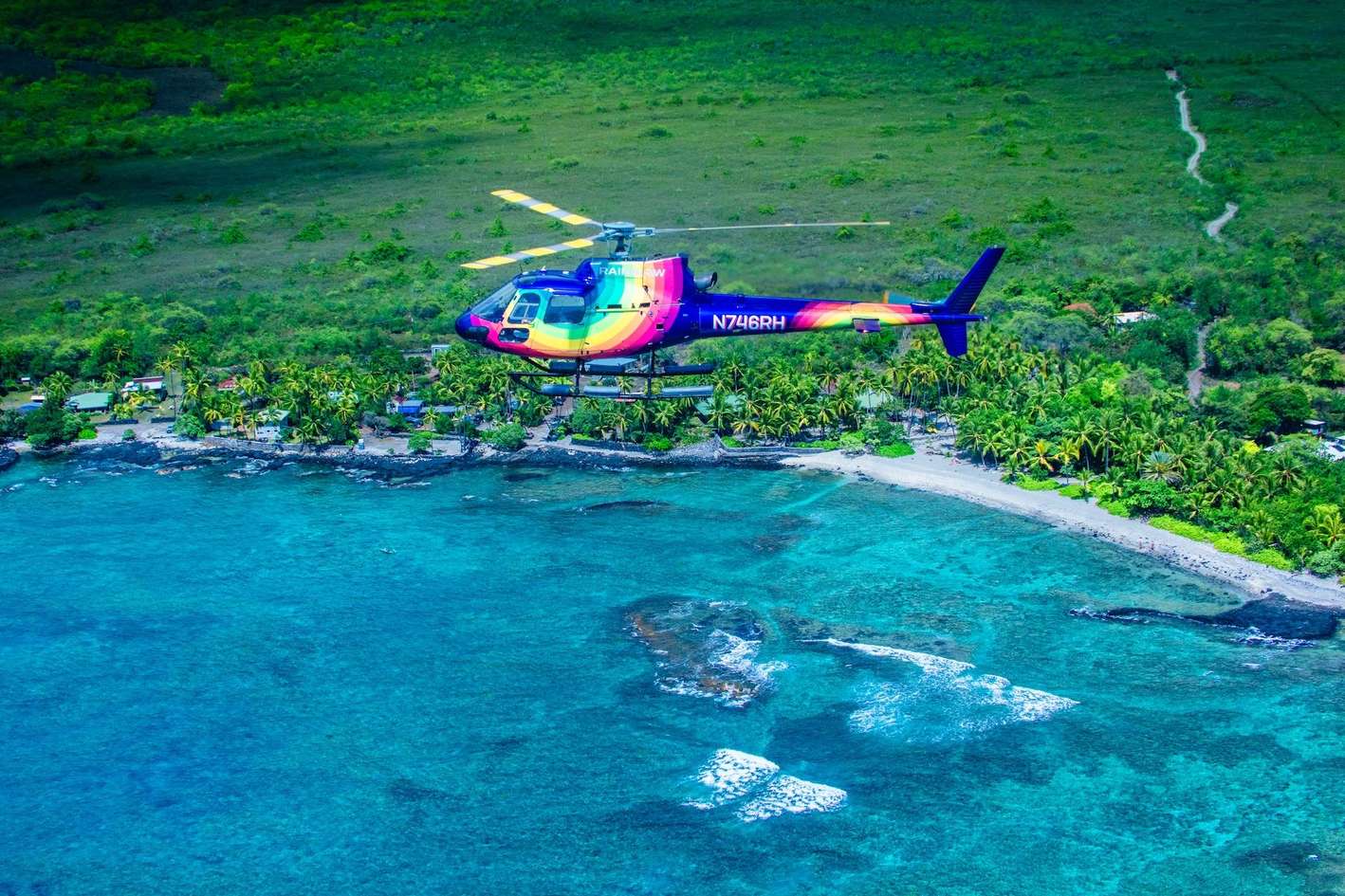
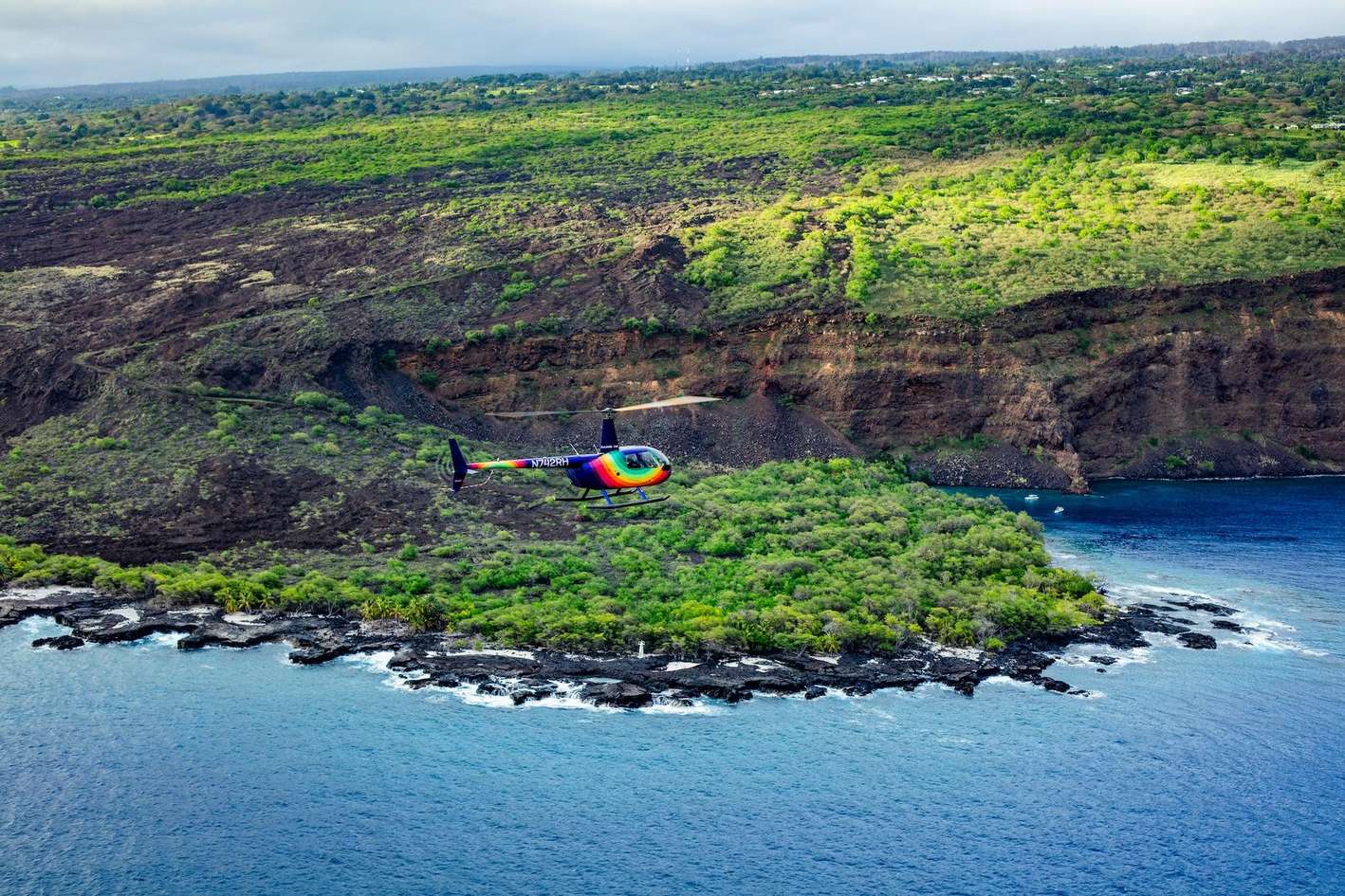
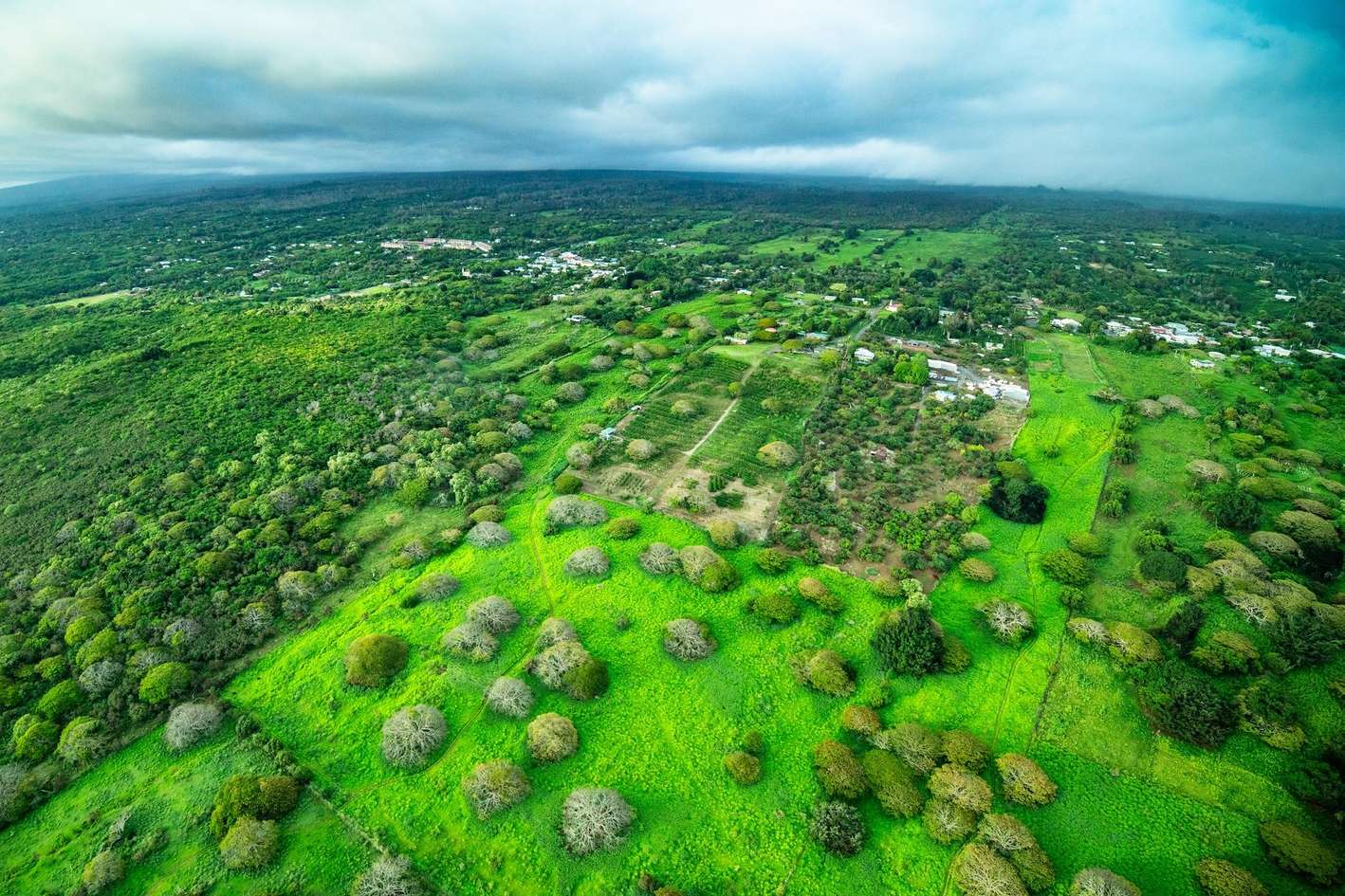
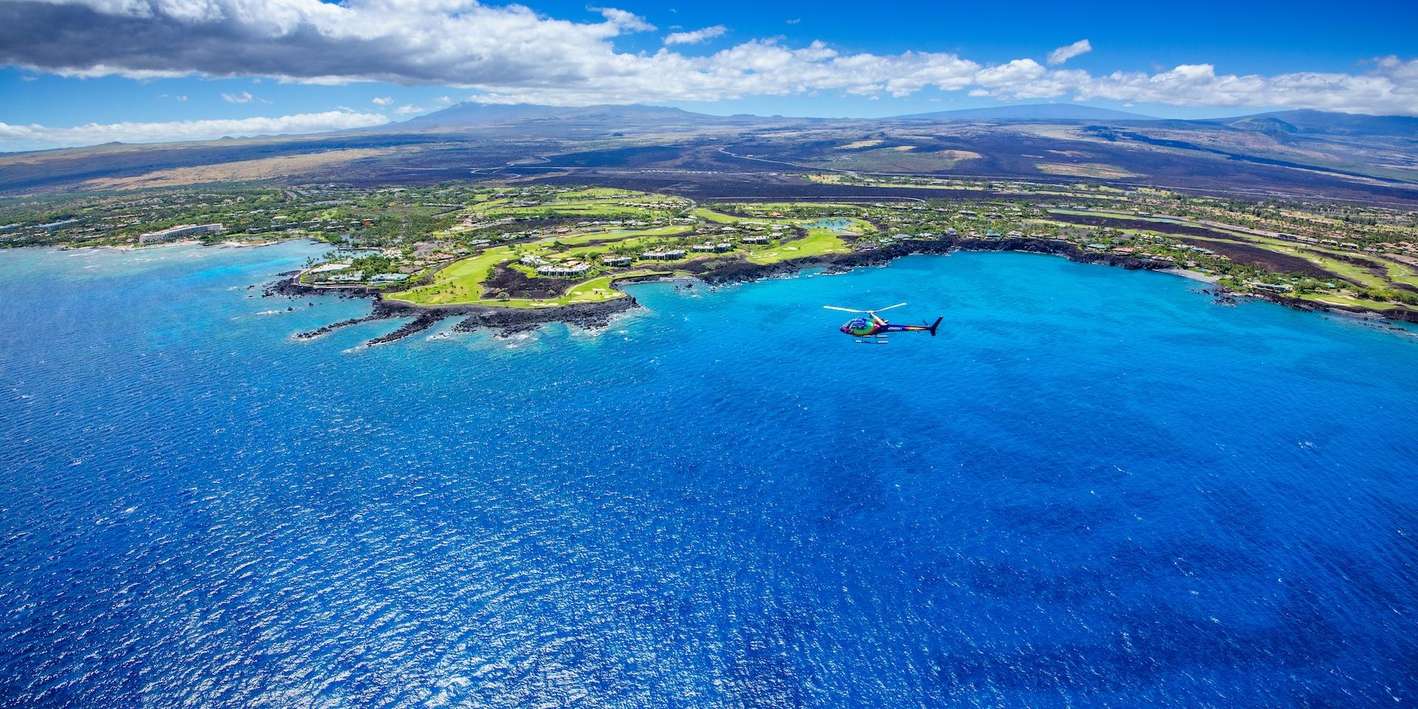
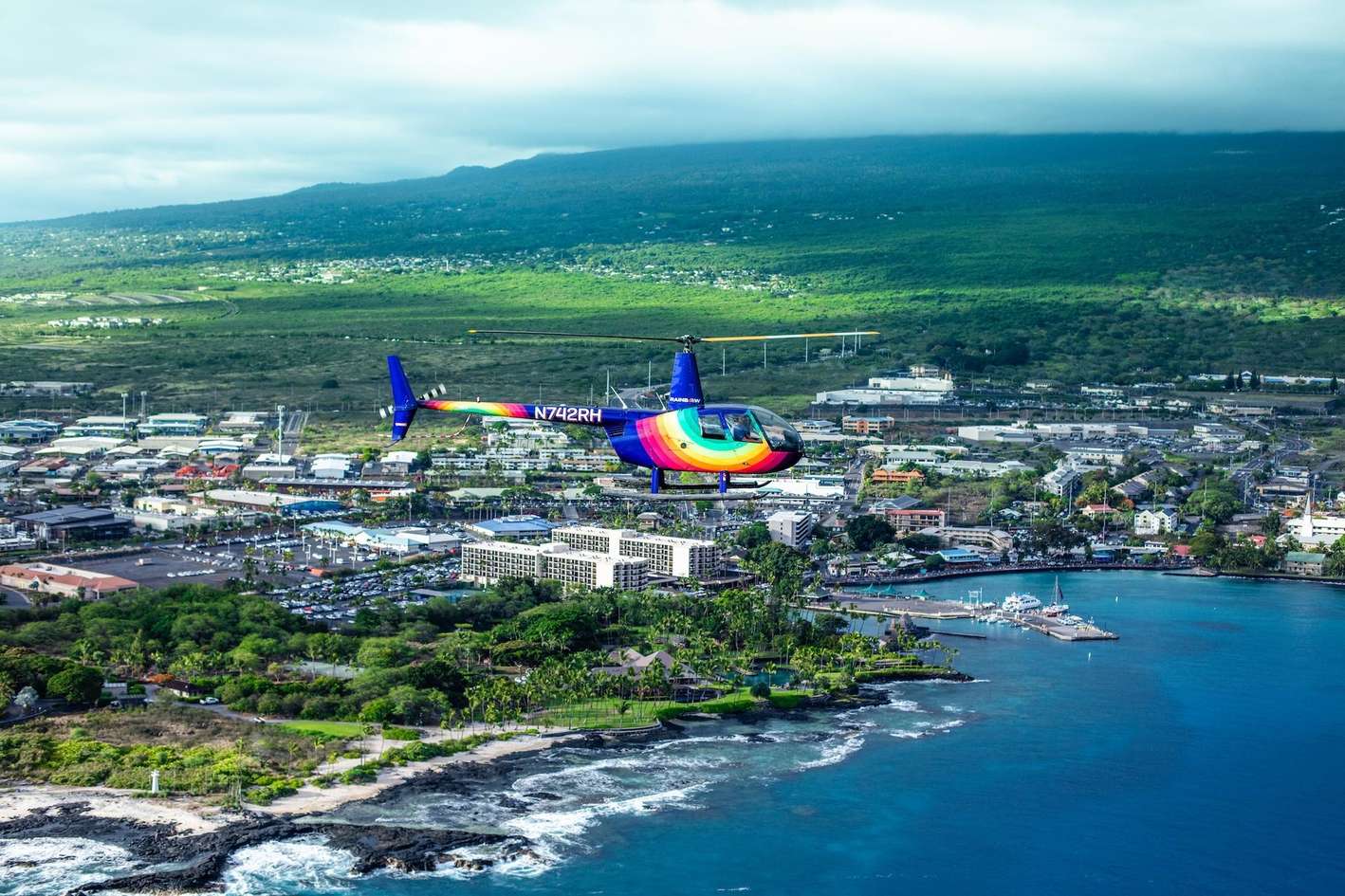
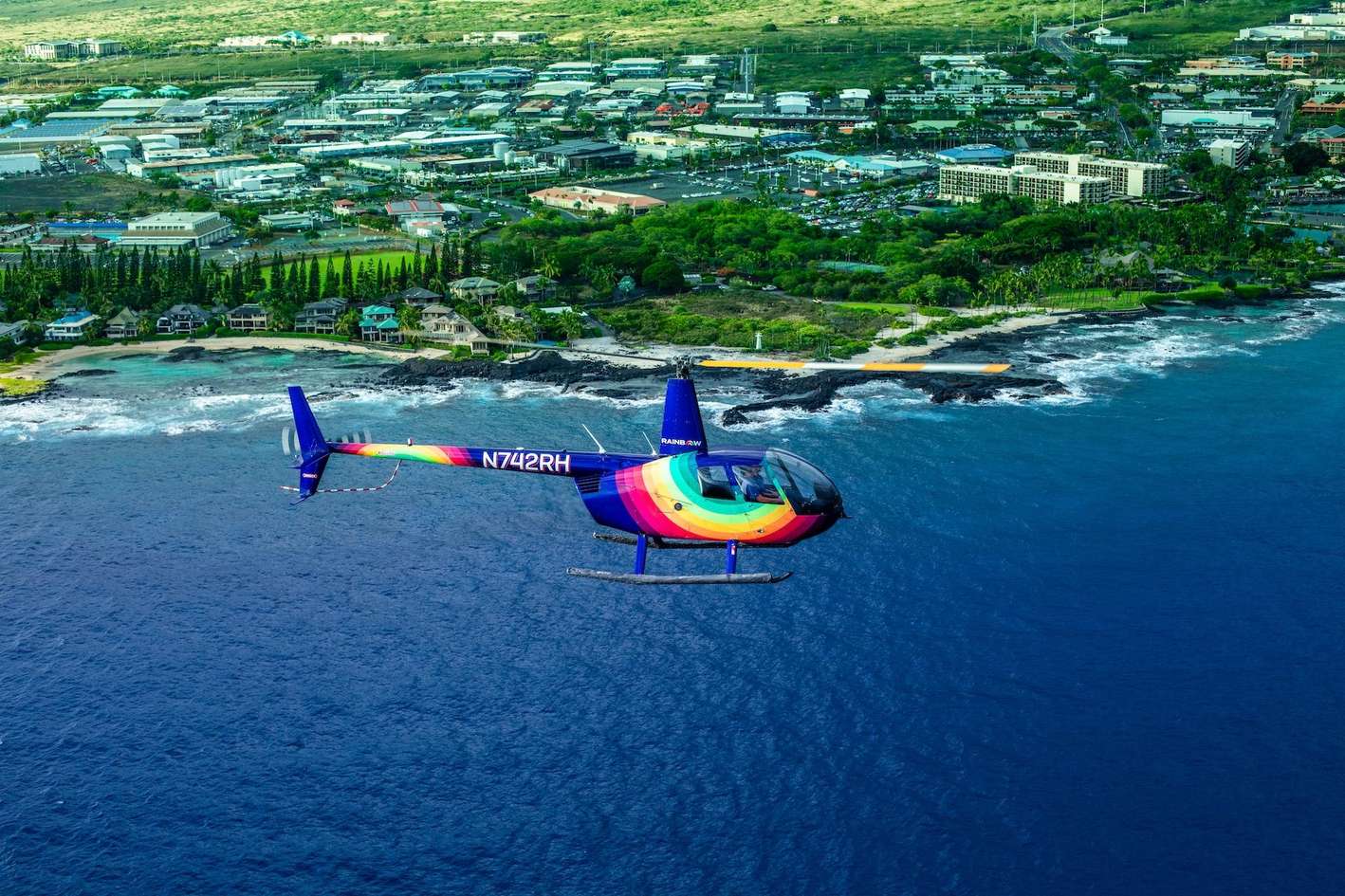
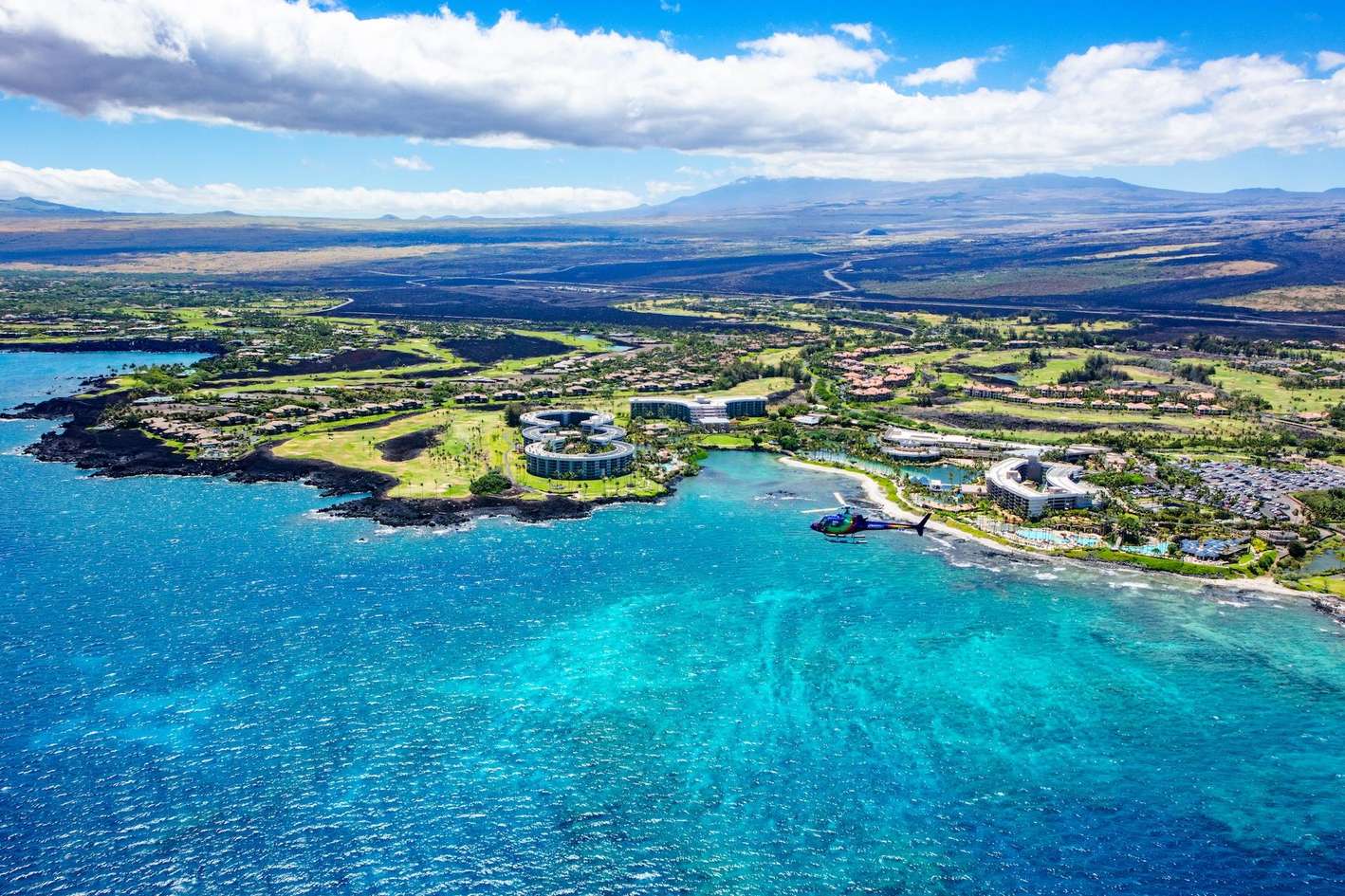
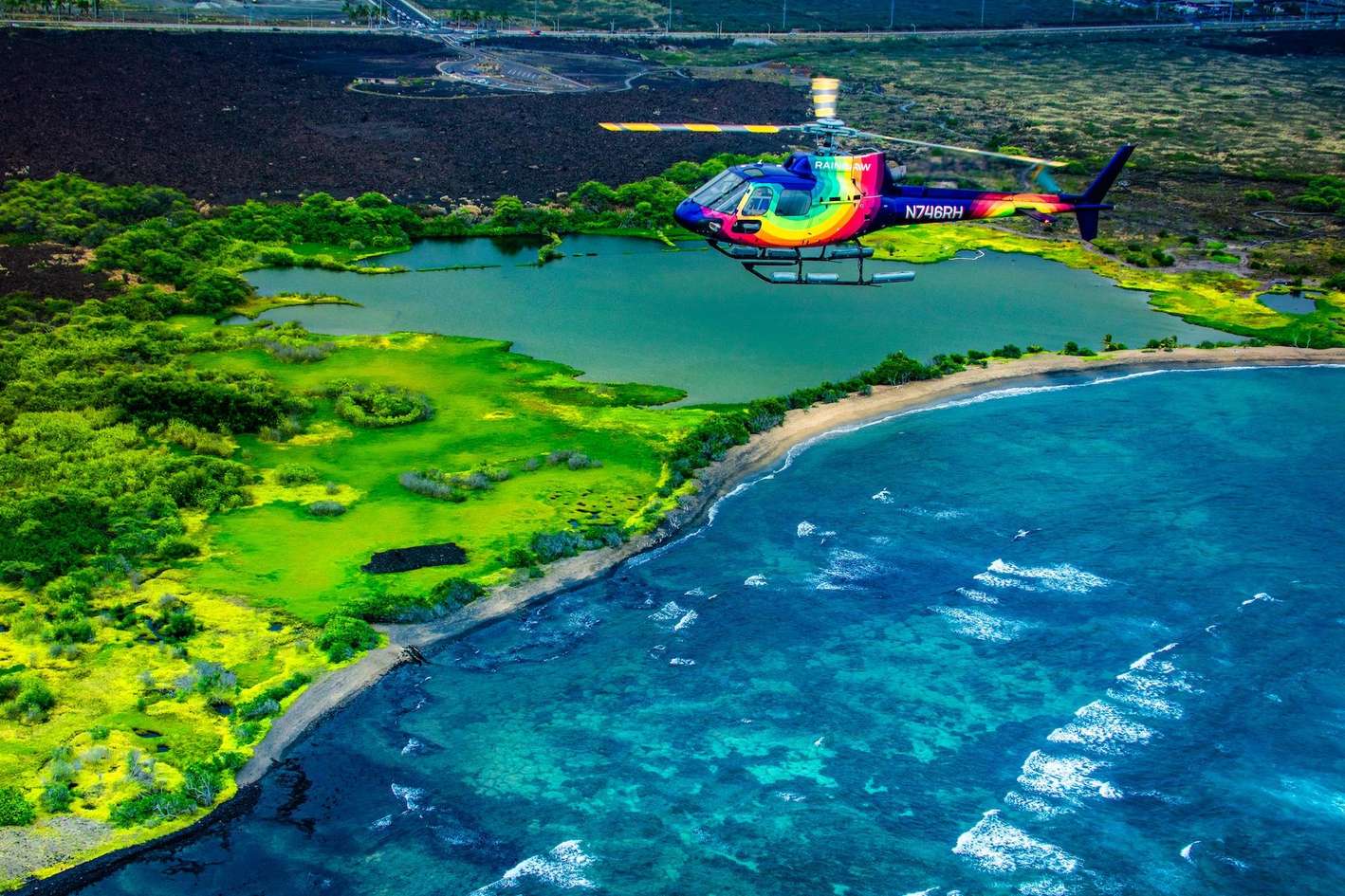
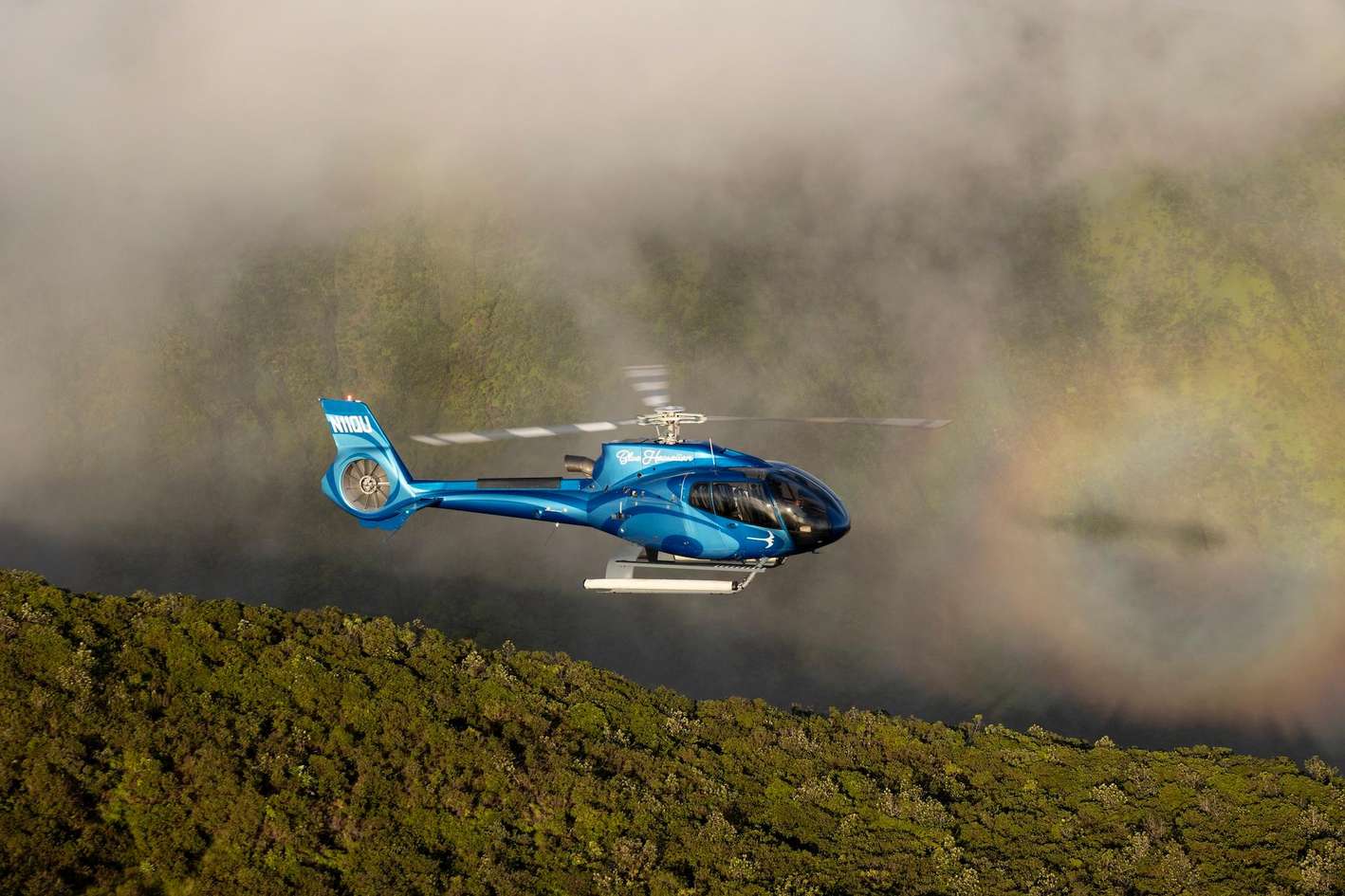
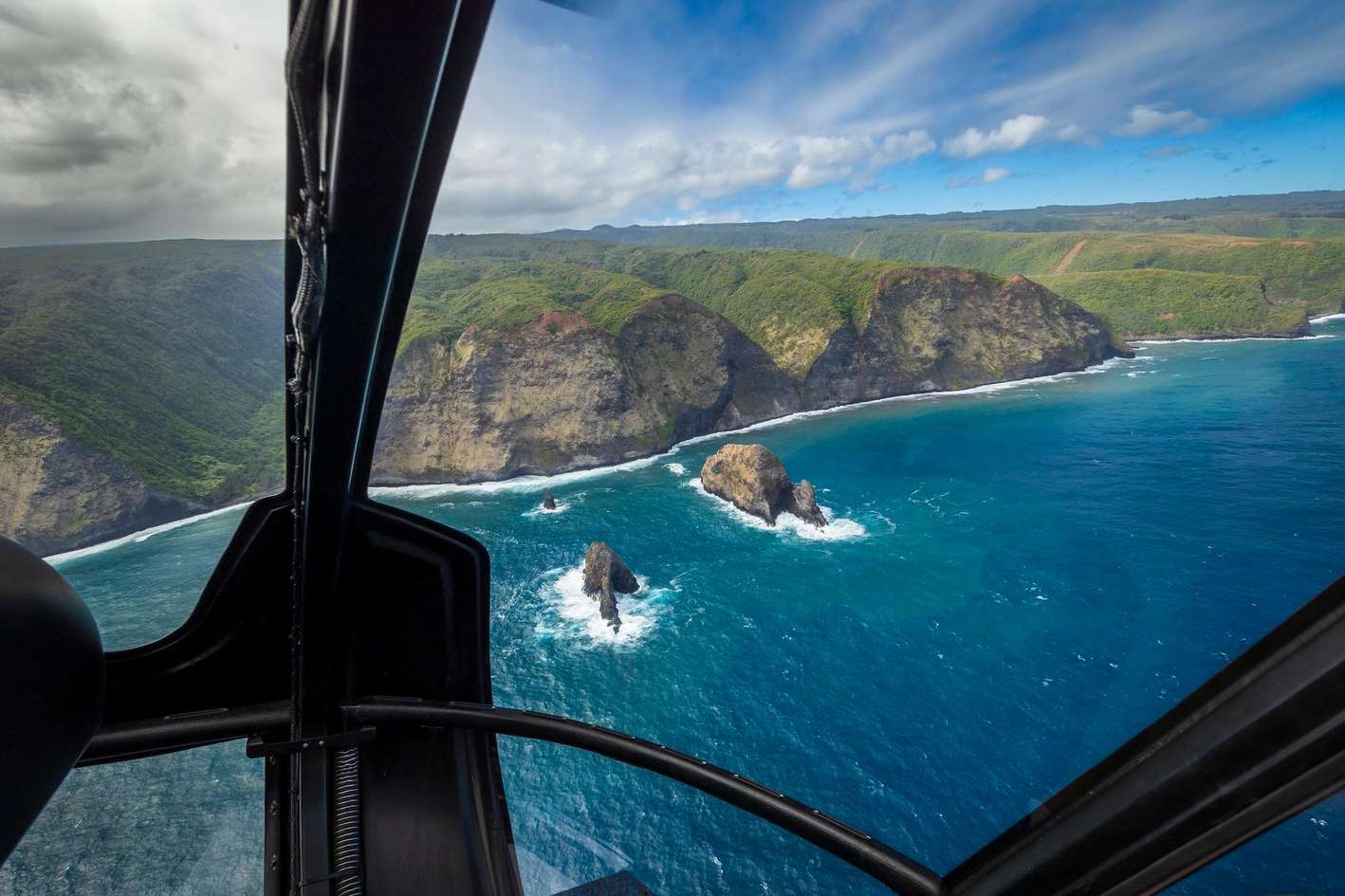
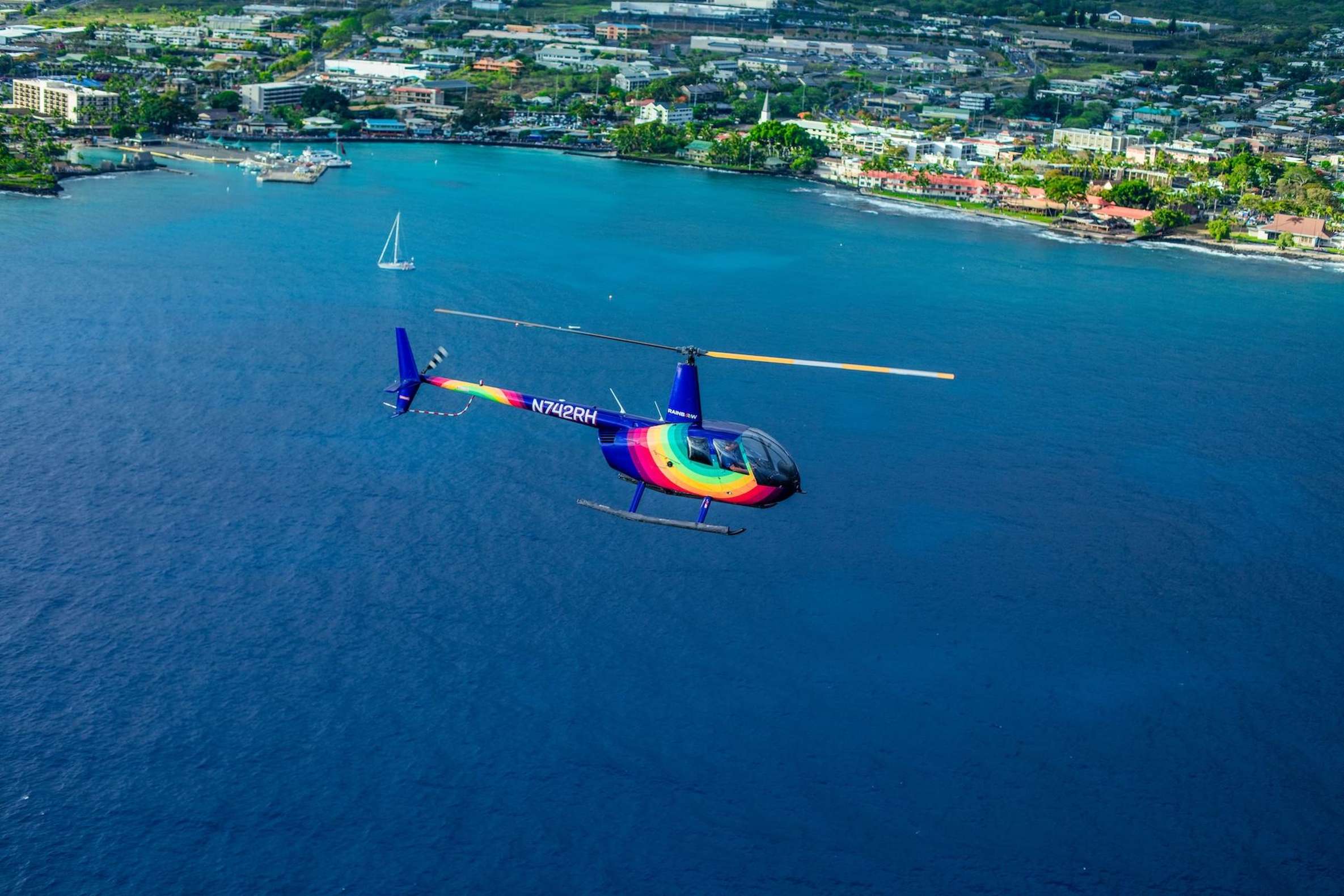
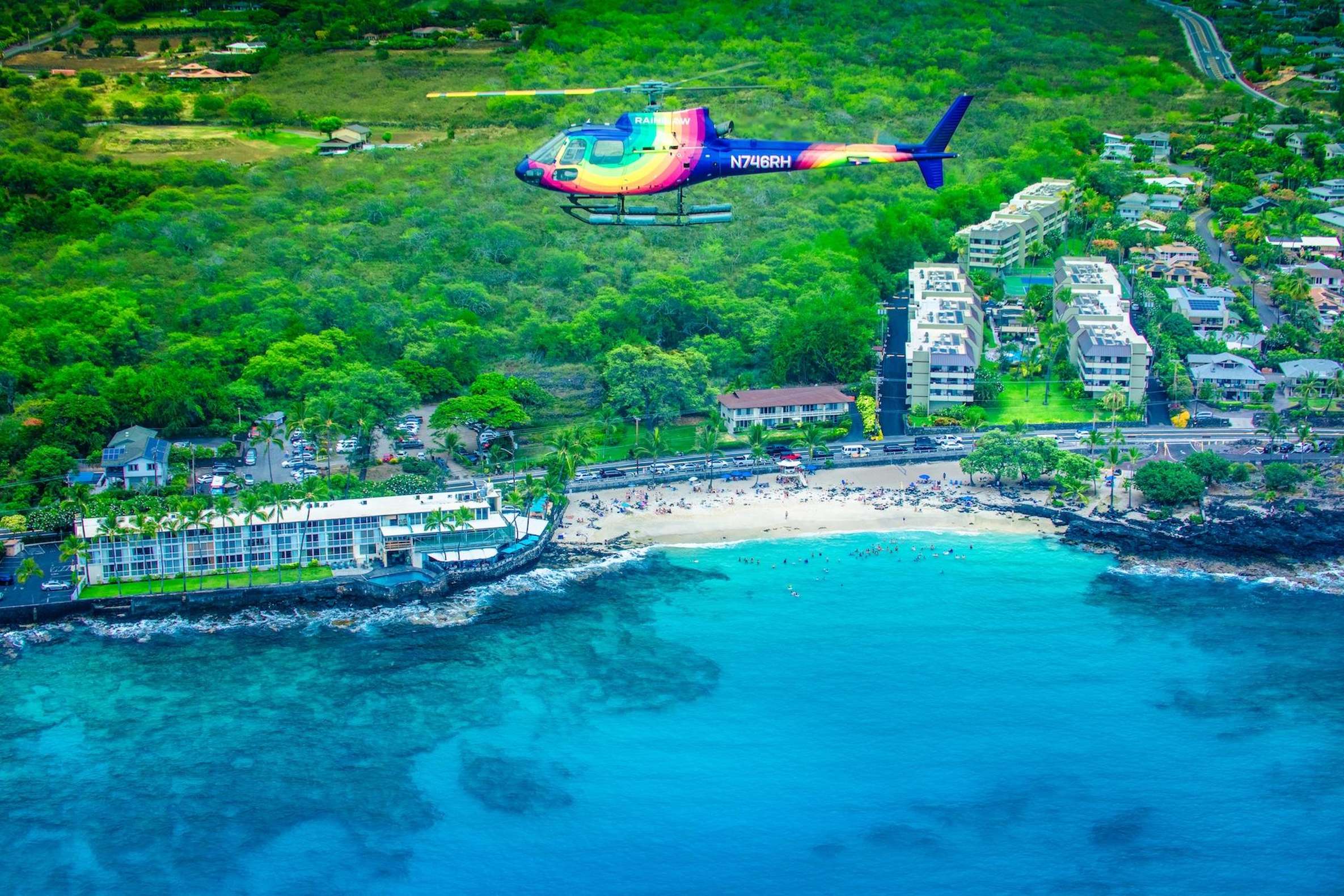
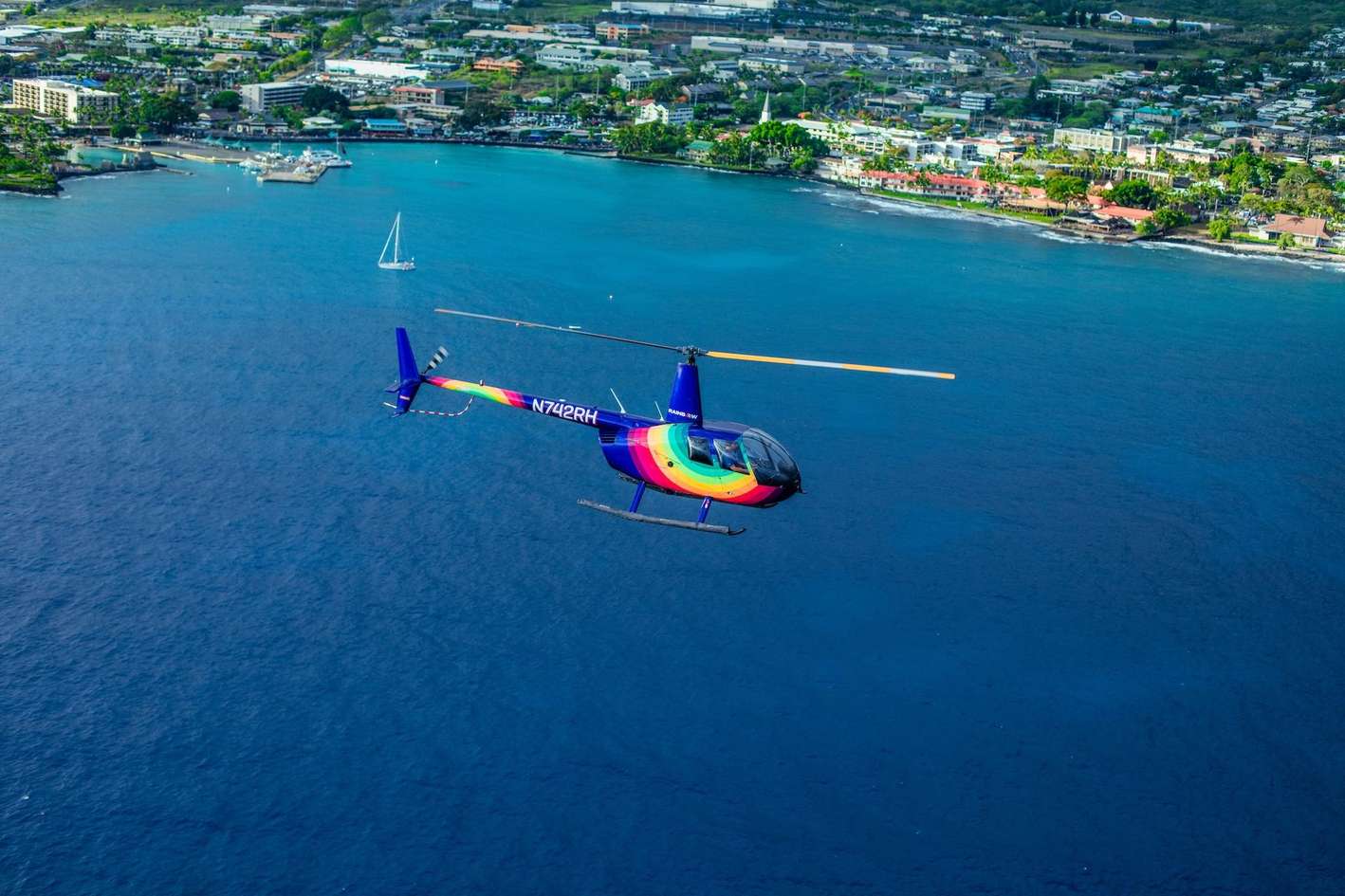
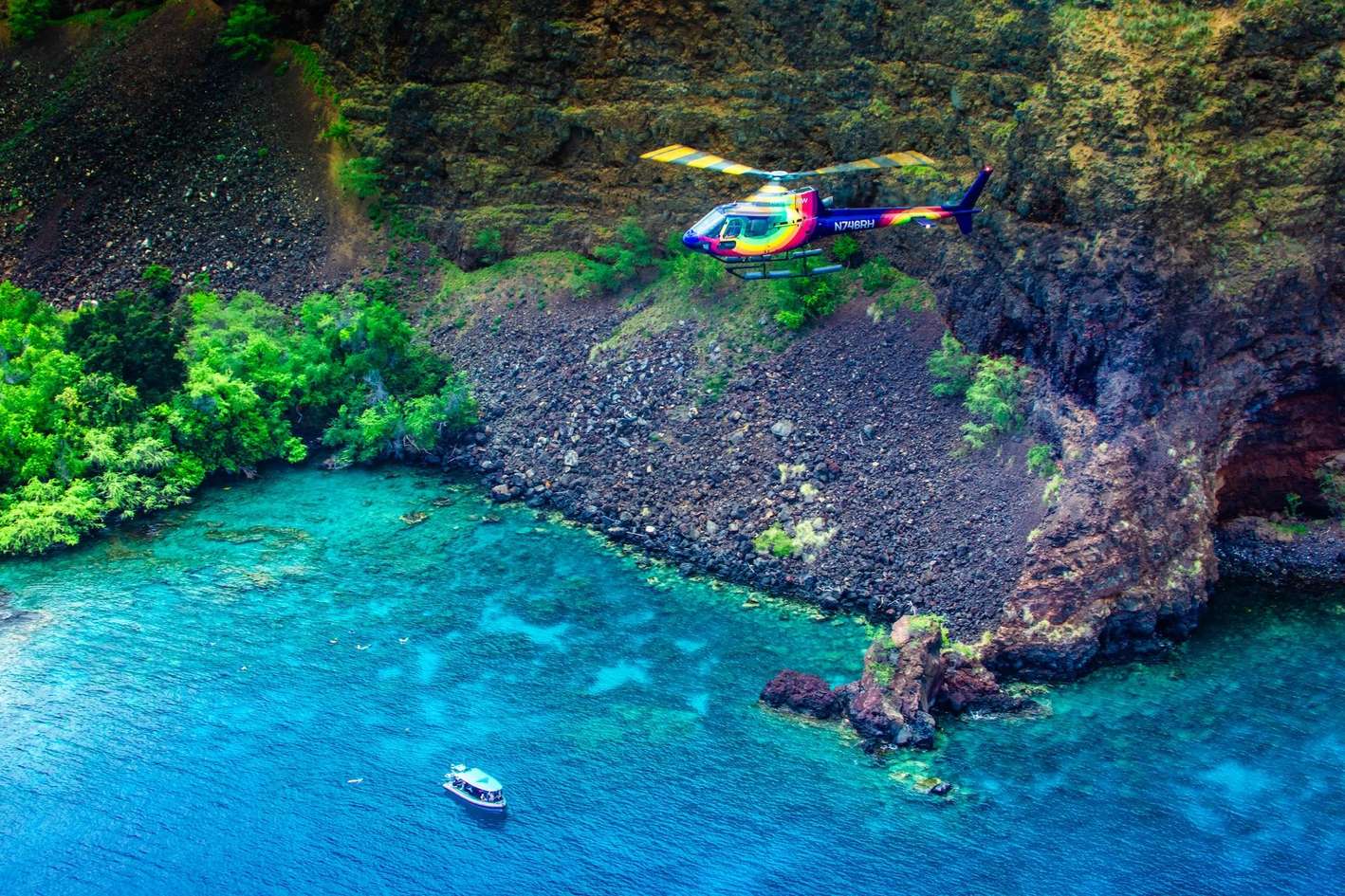
From the terminal near Kailua-Kona, you board for a sweep over Kailua Bay, the Kaloko Fish Ponds, the coffee farms and the sea cliffs of the Kohala Coast, with doors-on or doors-off cabins on most routes.
Shorter loops run 30 to 60 minutes; longer flights push on toward the valleys and waterfalls of the north. It suits anyone staying on the west side who wants big scenery without a cross-island drive.
A Hilo departure puts you over Kilauea in minutes, with crater walls, vents and steam below after a flight of roughly 50 to 55 minutes.
From Kona Airport, the same volcano takes a crossing of about 1 hour 45 minutes in total airtime, so the tour trades proximity for coastline, valleys and sea cliffs along the way. Choose Hilo for a crater-focused flight; choose Kona Airport if your base is on the west side.
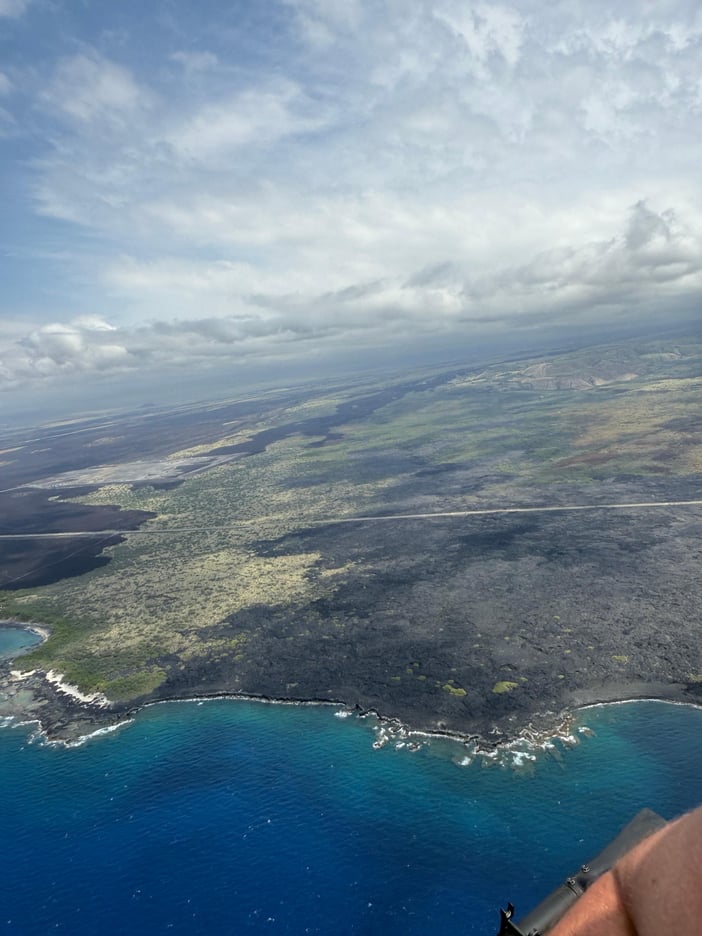
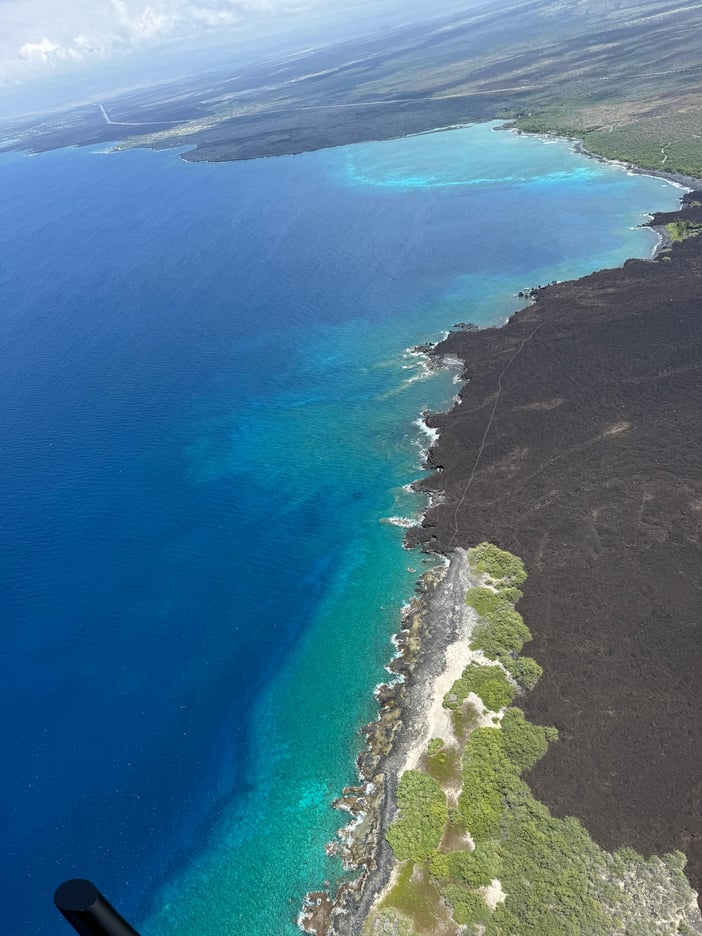
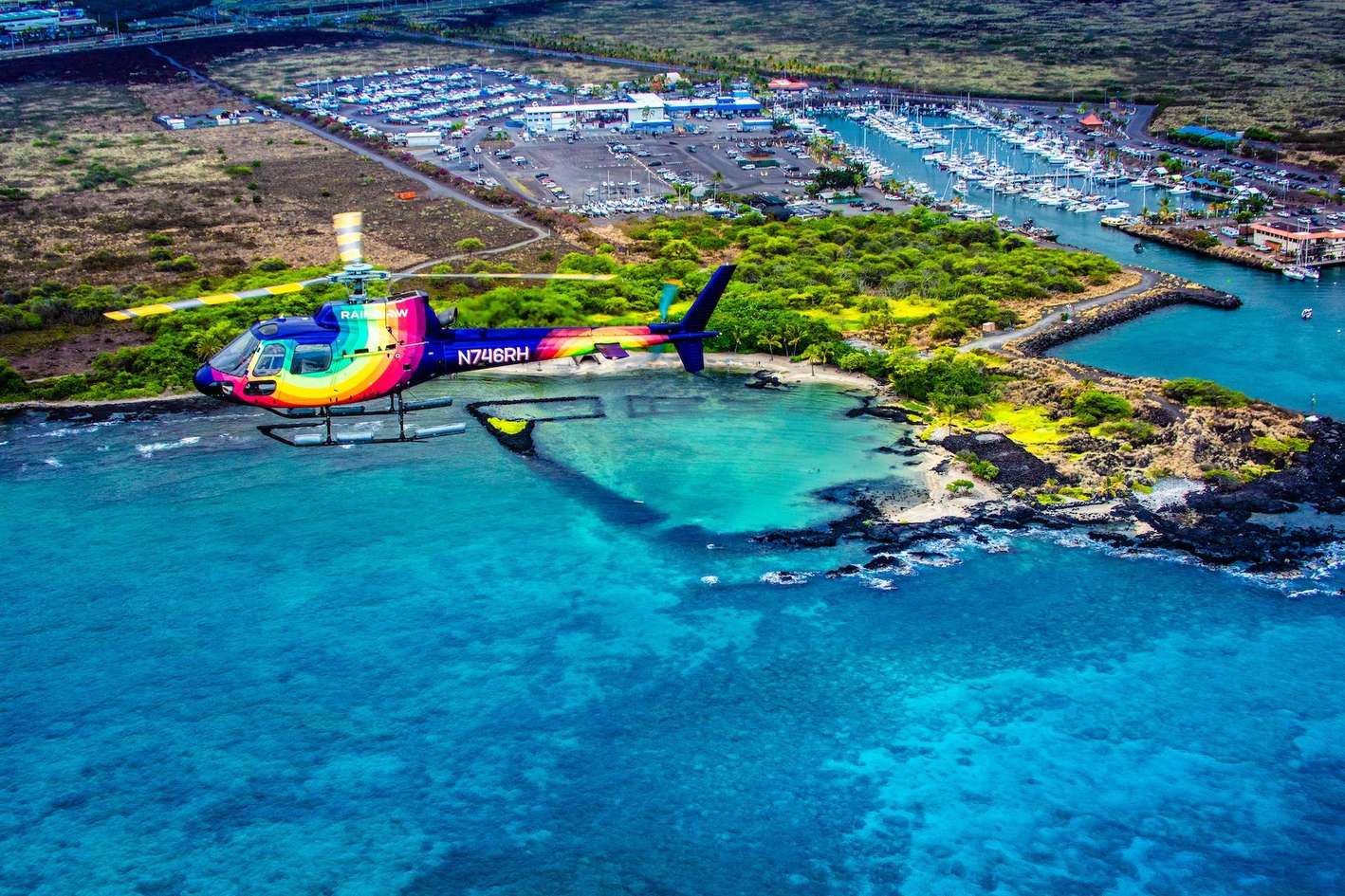
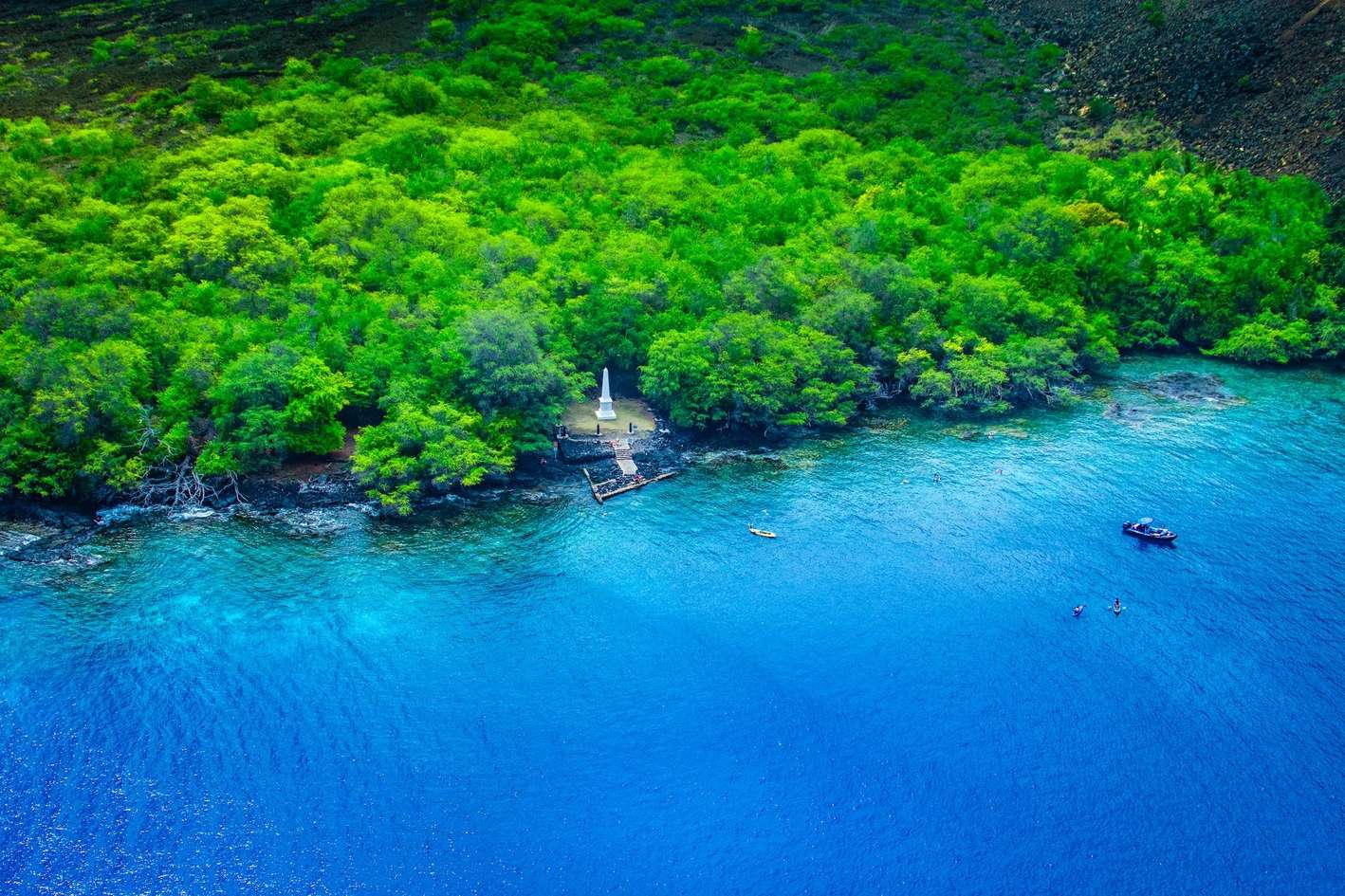
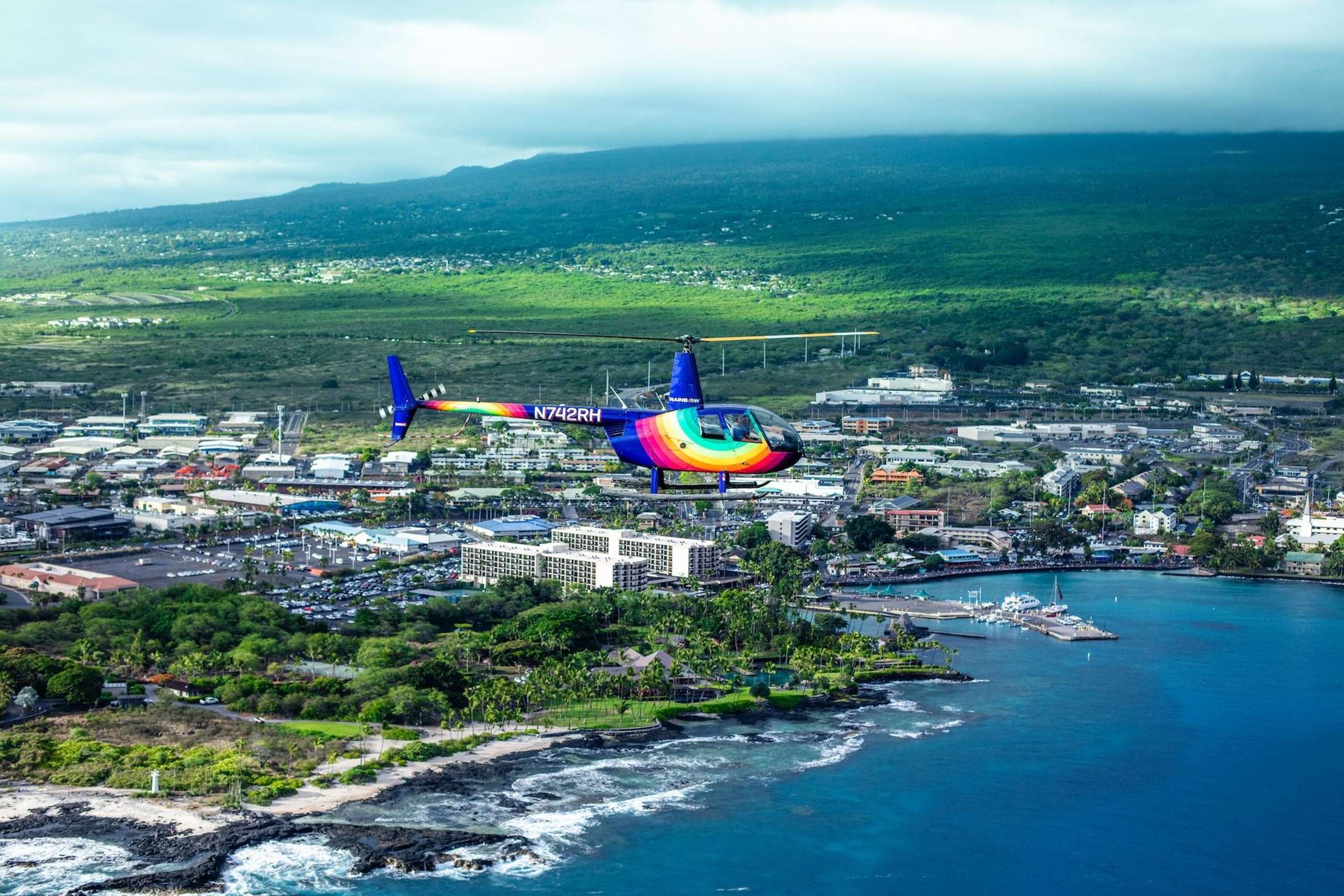
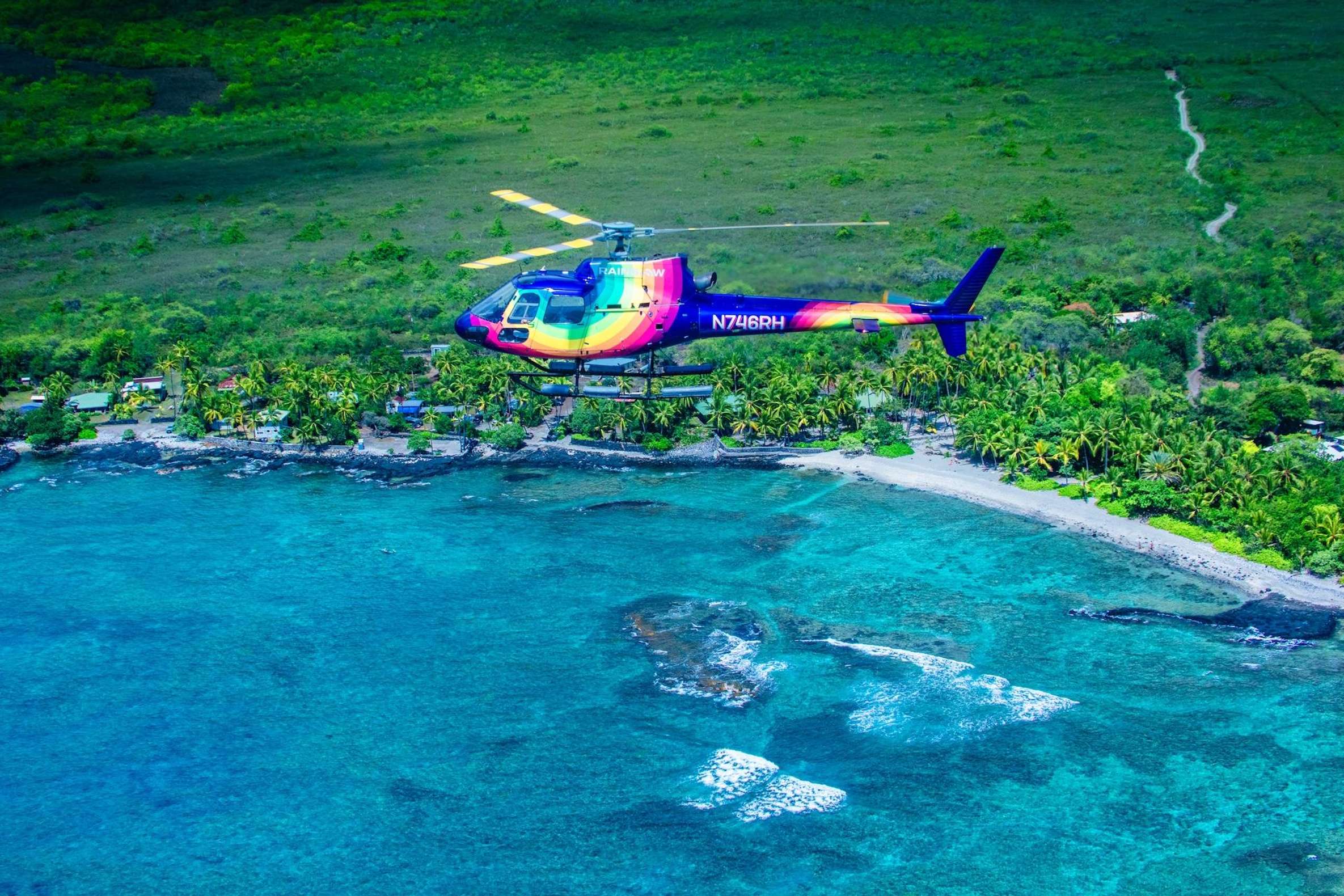
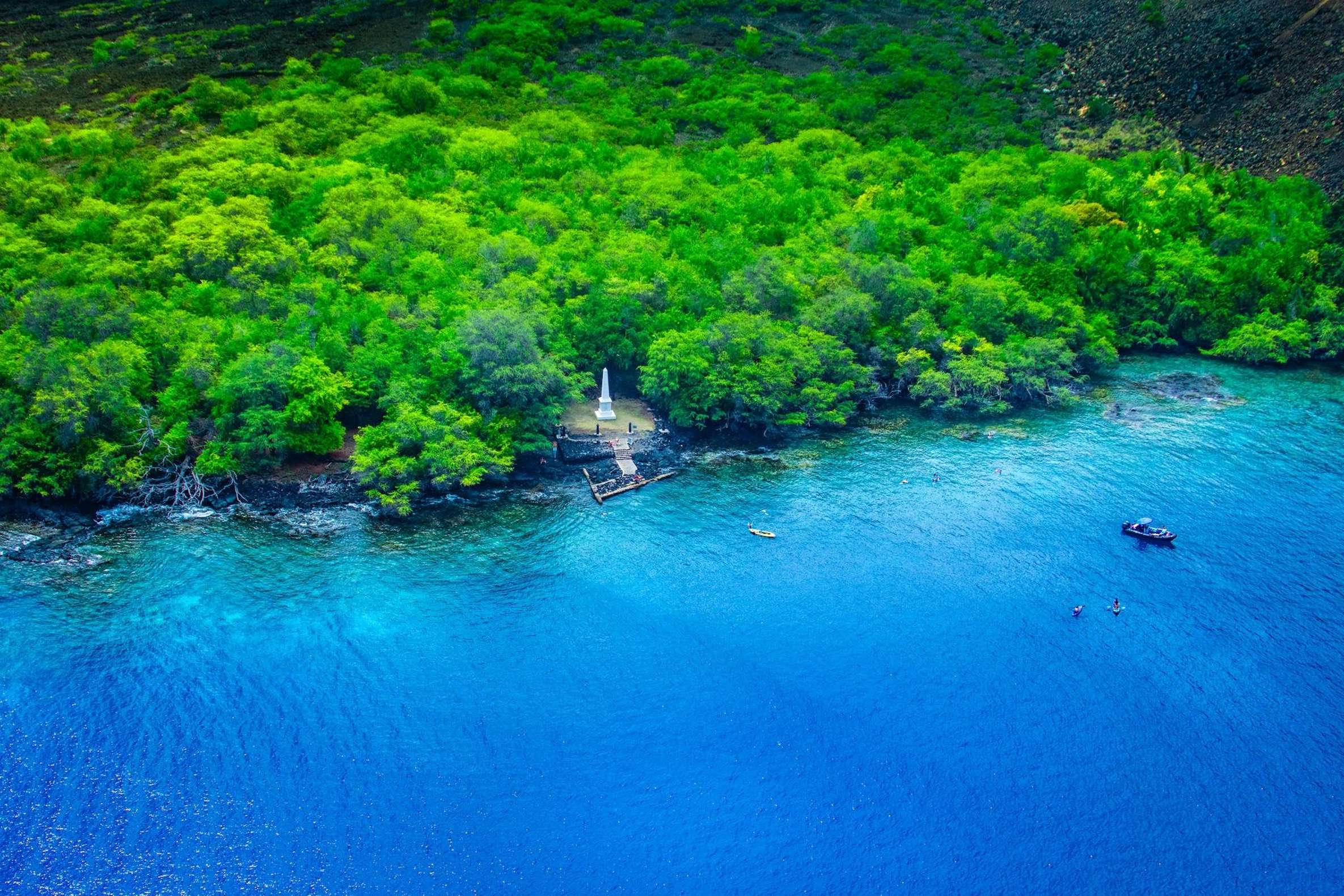
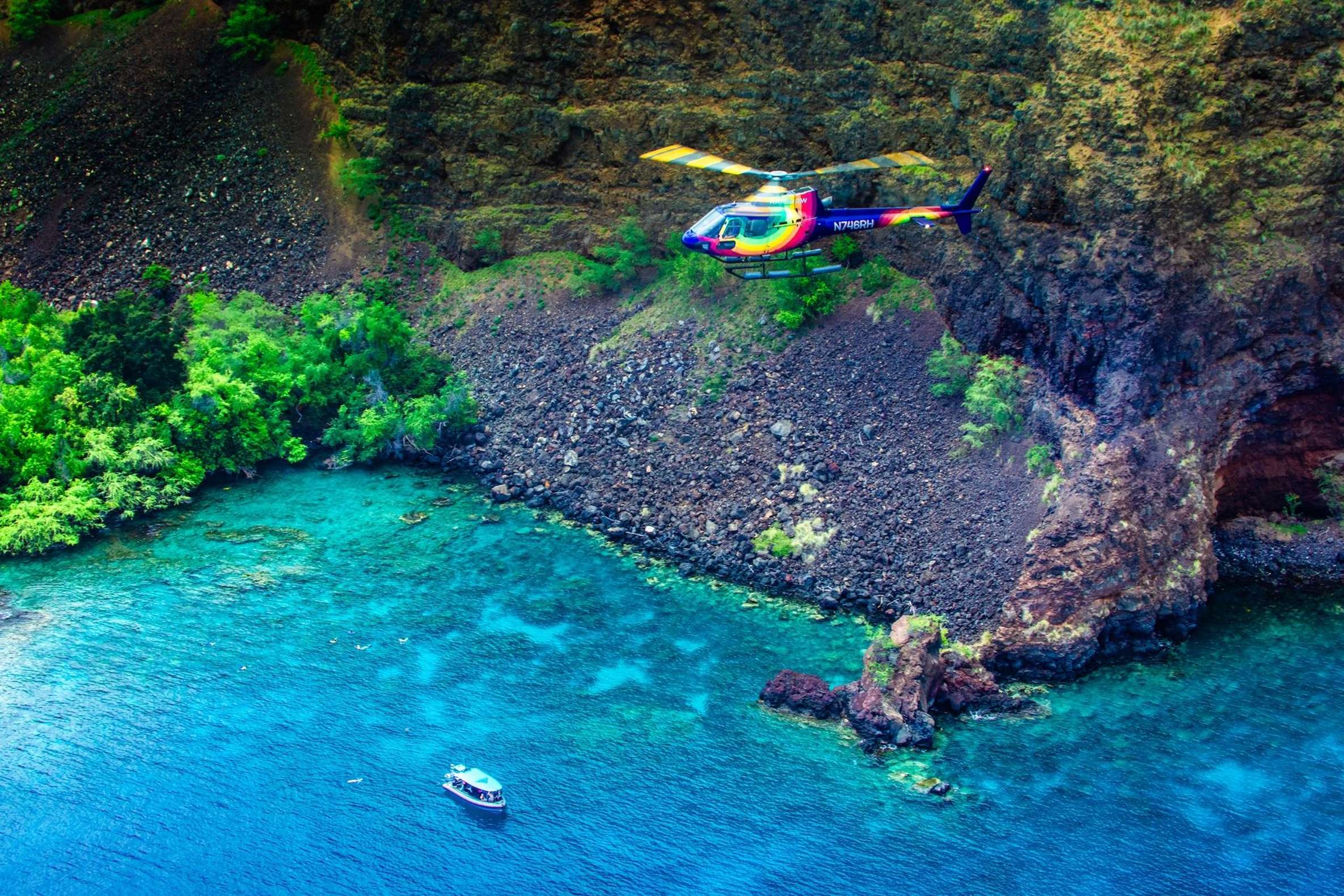
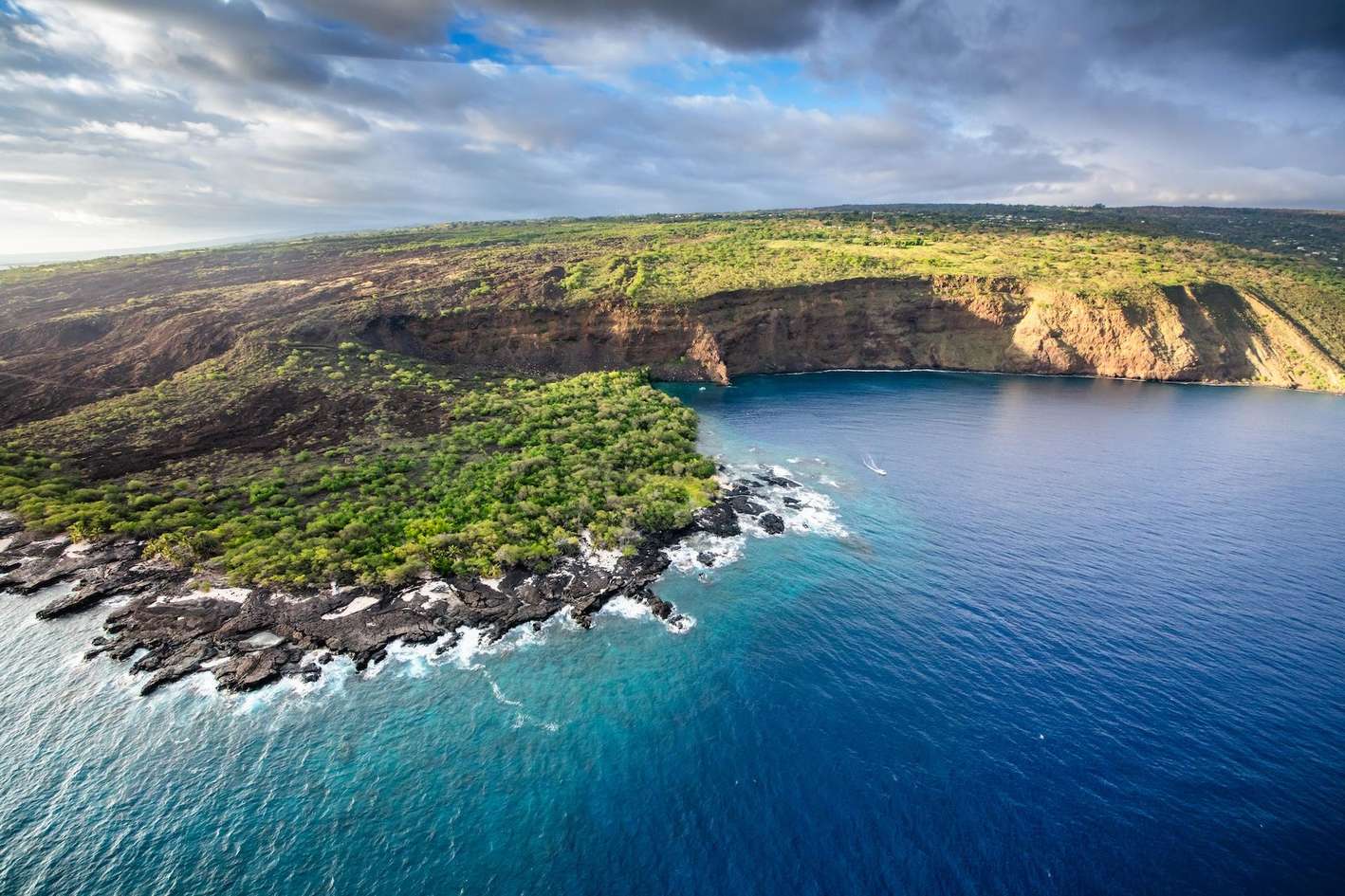
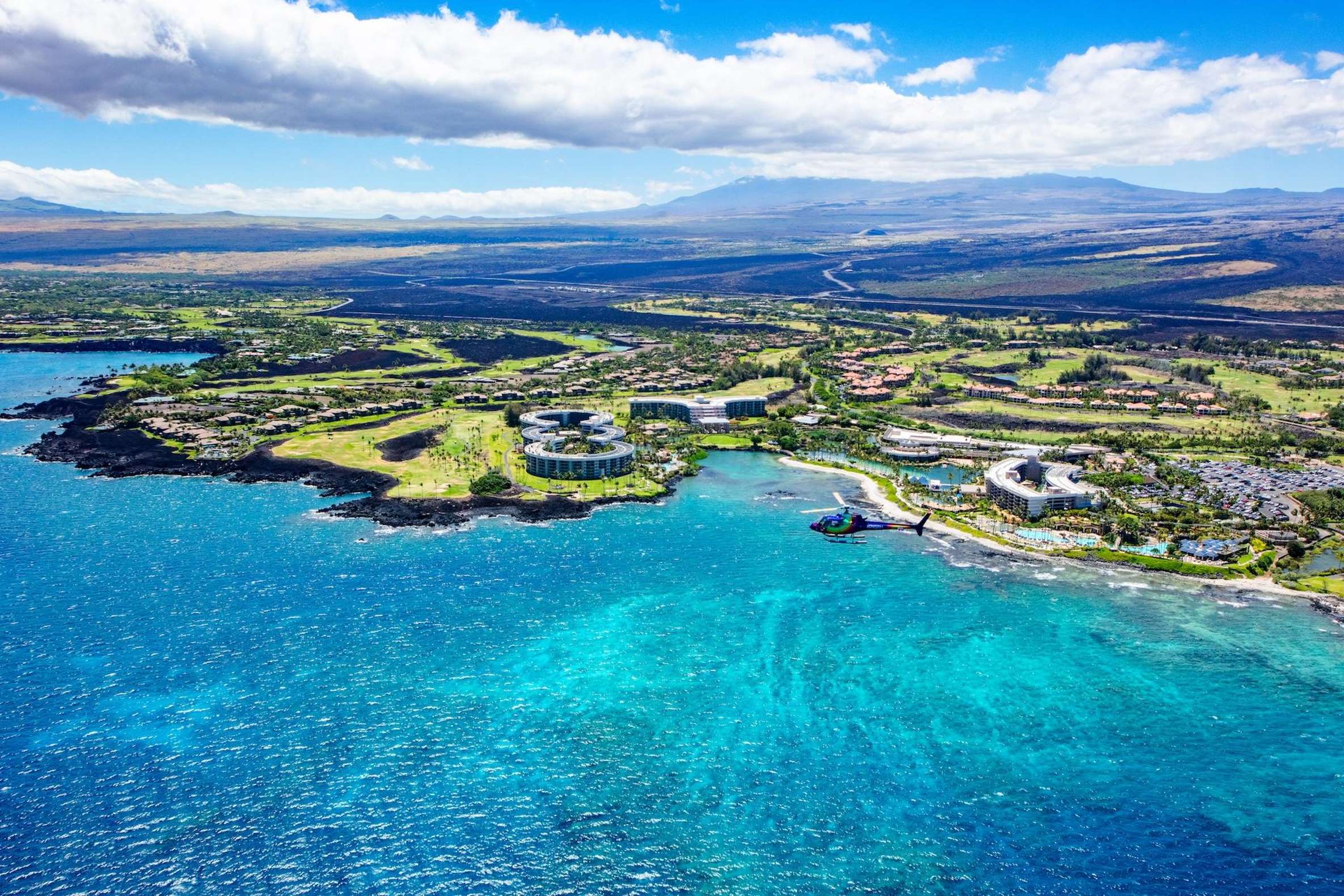
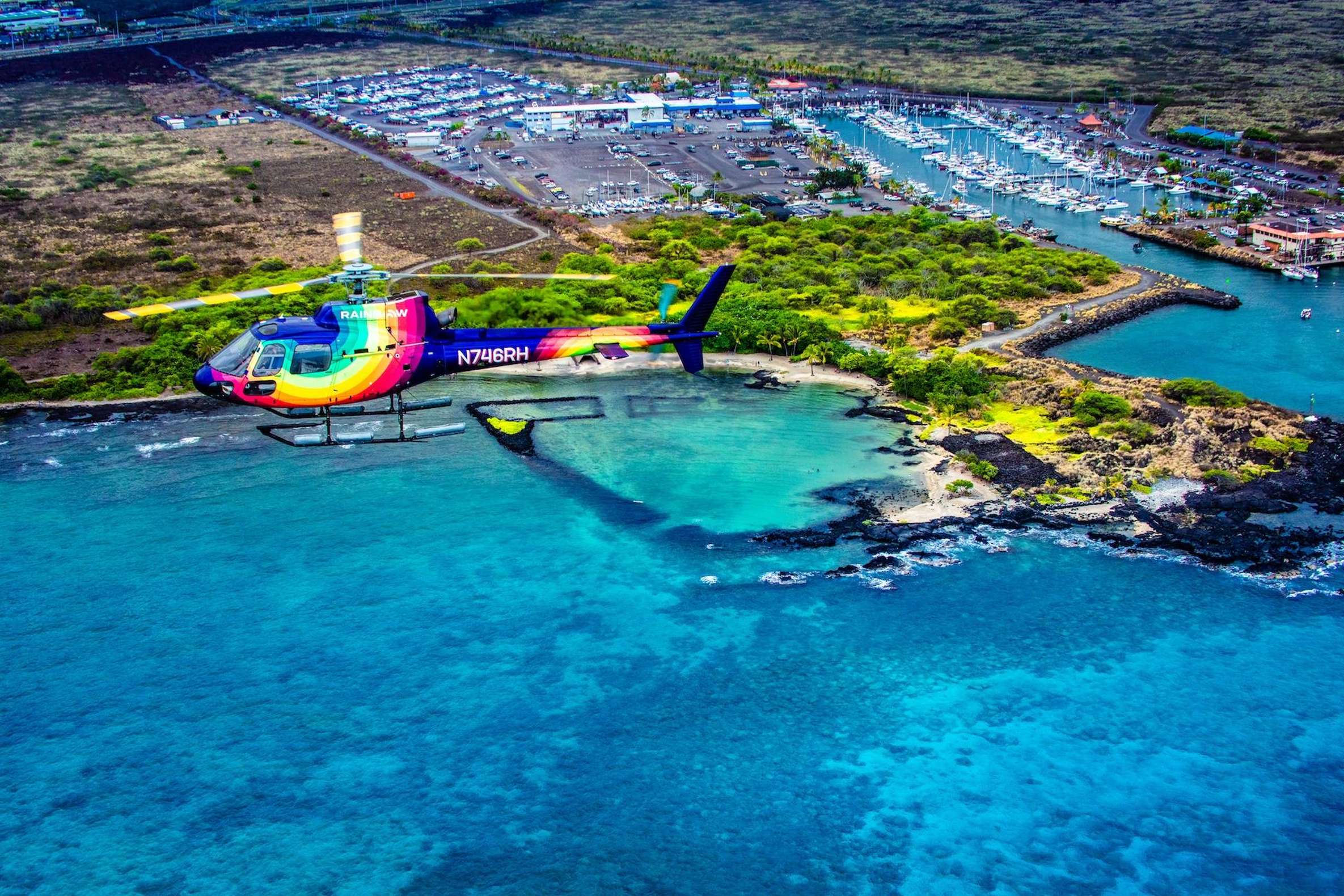
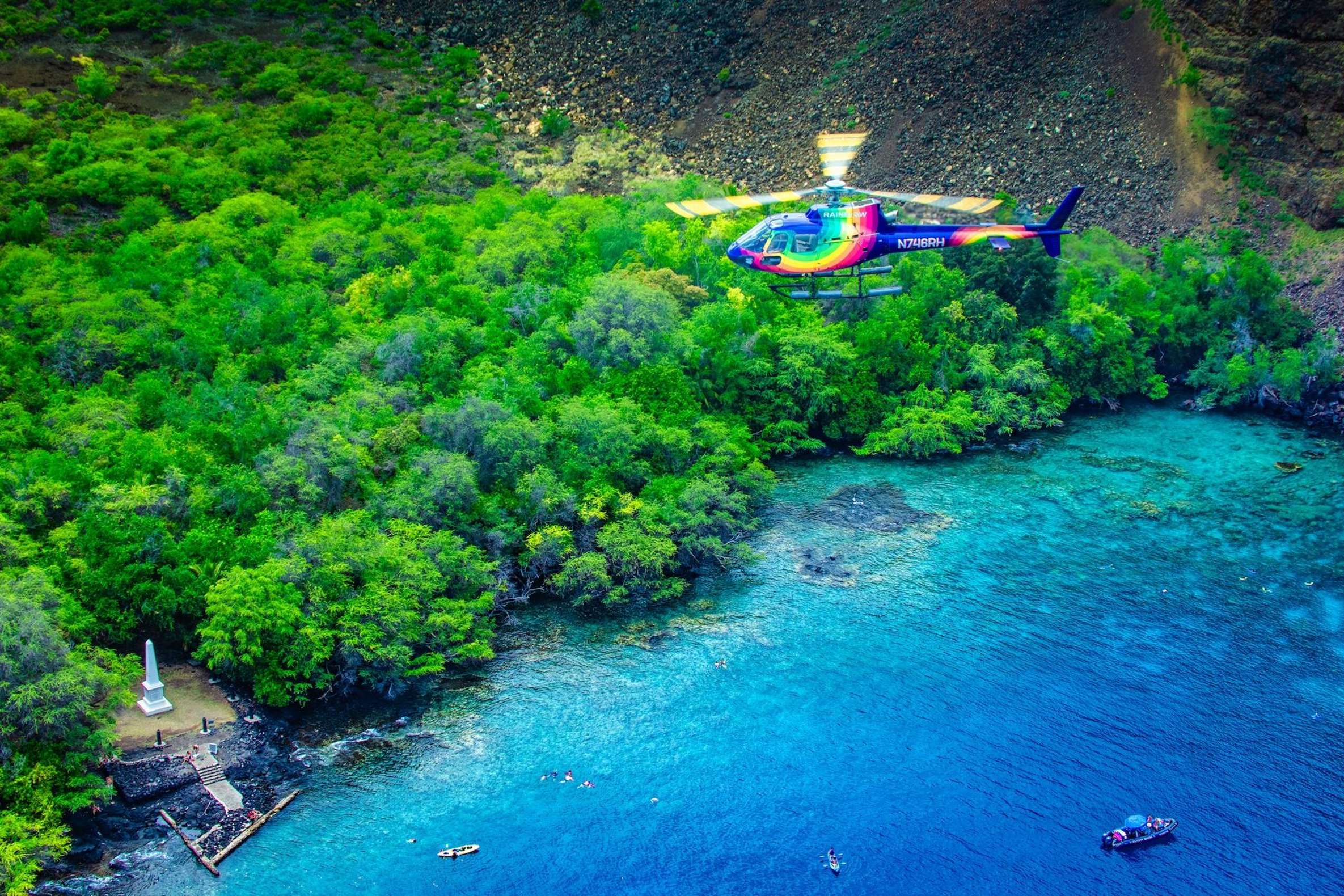
The route south first. A one-hour flight out of Kona Airport follows the shoreline over Kailua Bay and Magic Sands Beach, crosses the coffee farms on the green slopes above Ali'i Drive, and circles Kealakekua Bay, where the Captain Cook Monument stands and the marine preserve holds its clear water.
Beyond the bay comes Pu'uhonua O Hōnaunau, the sacred Place of Refuge.
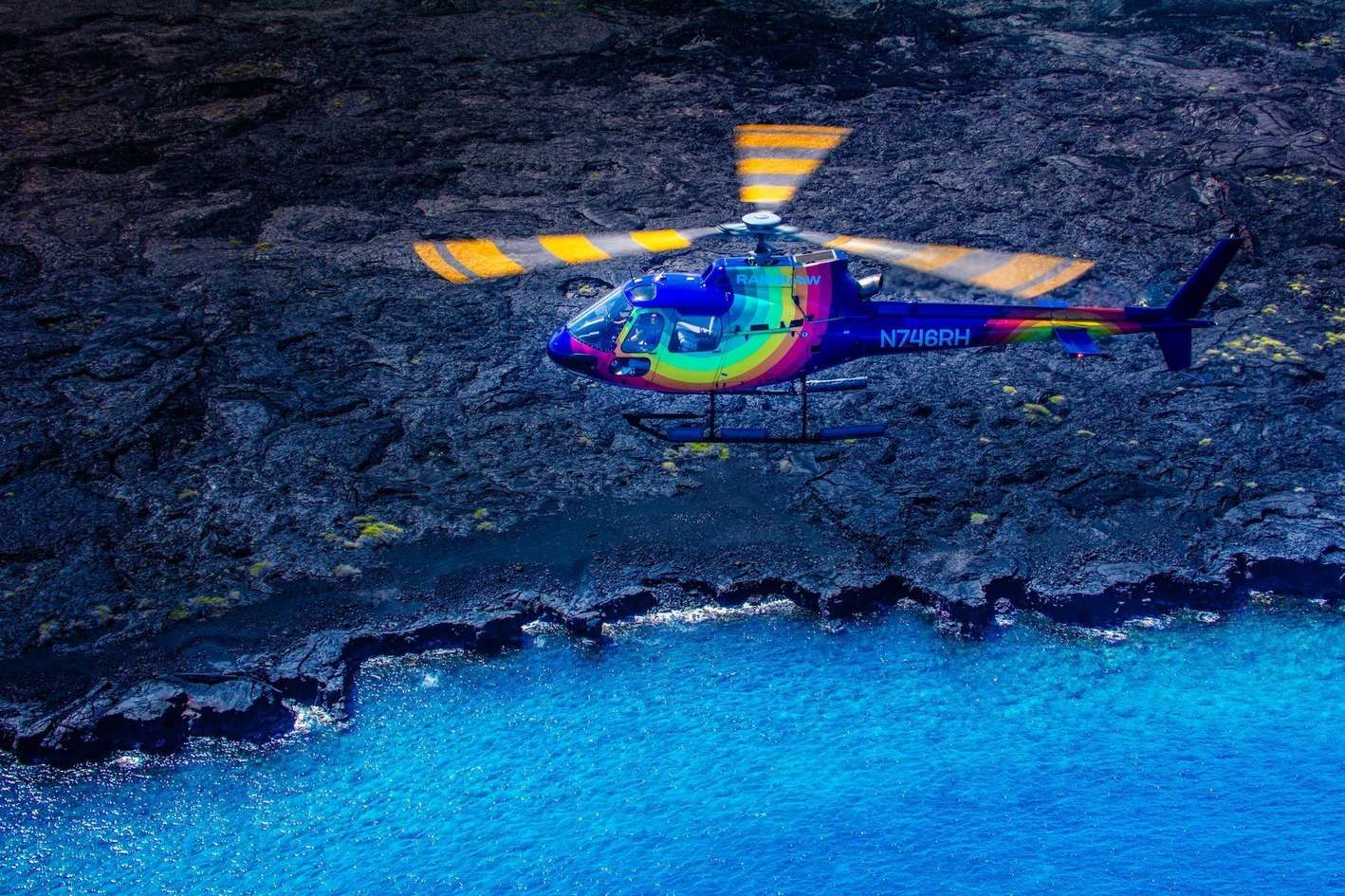
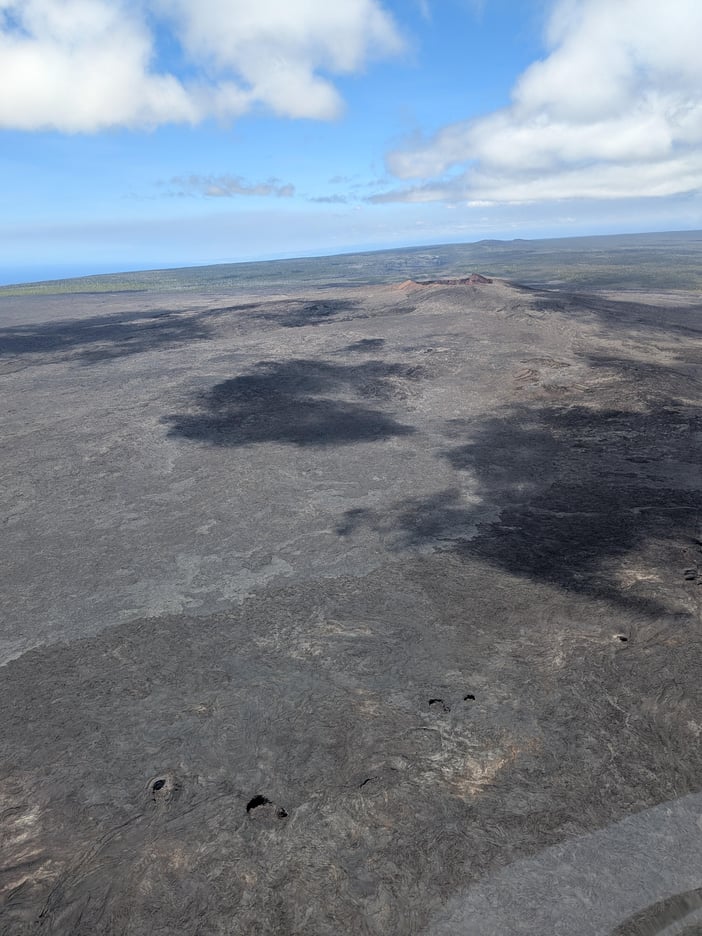
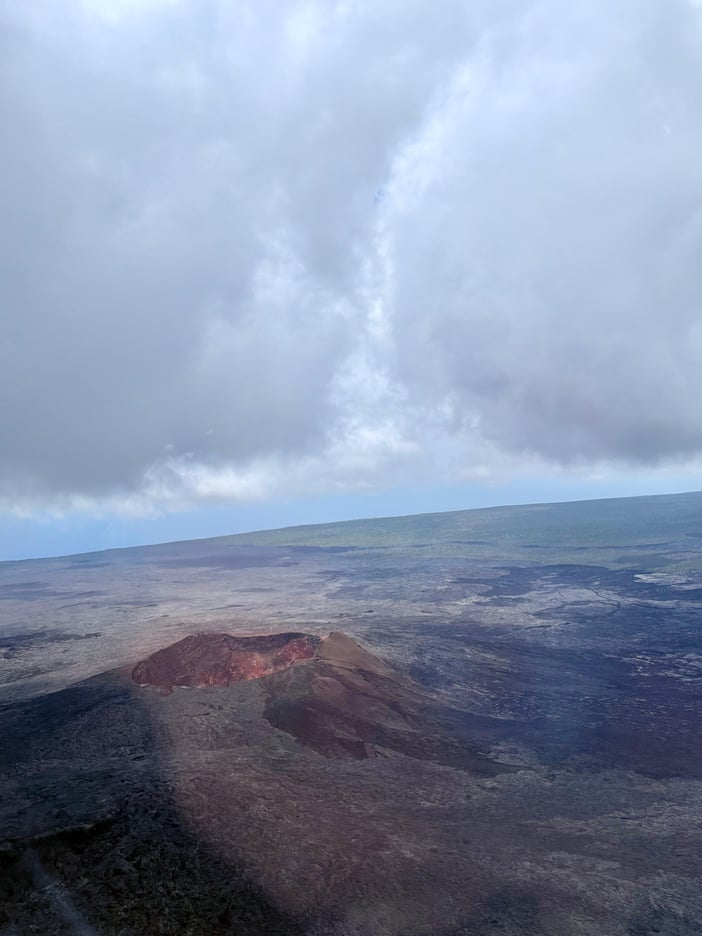
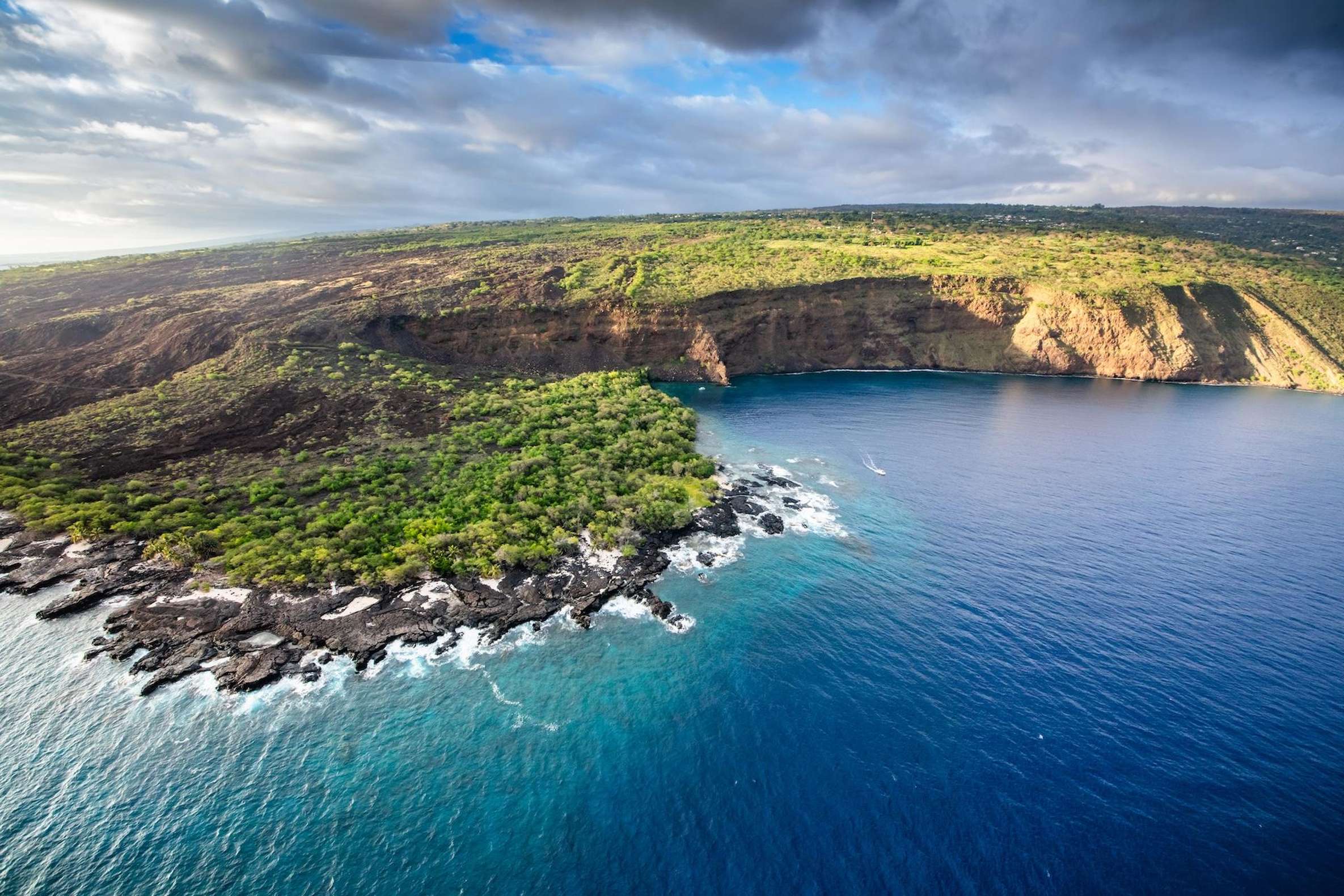
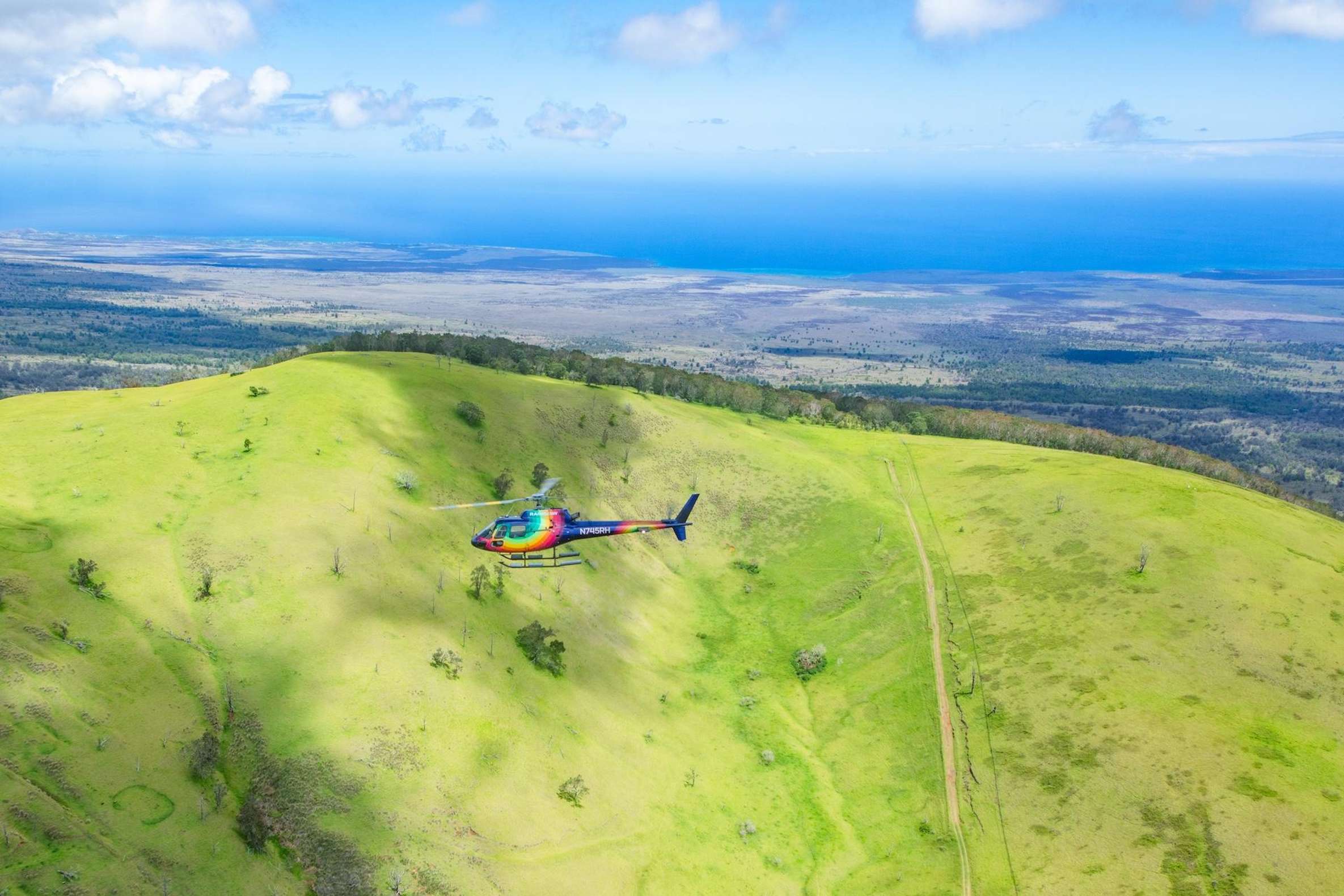
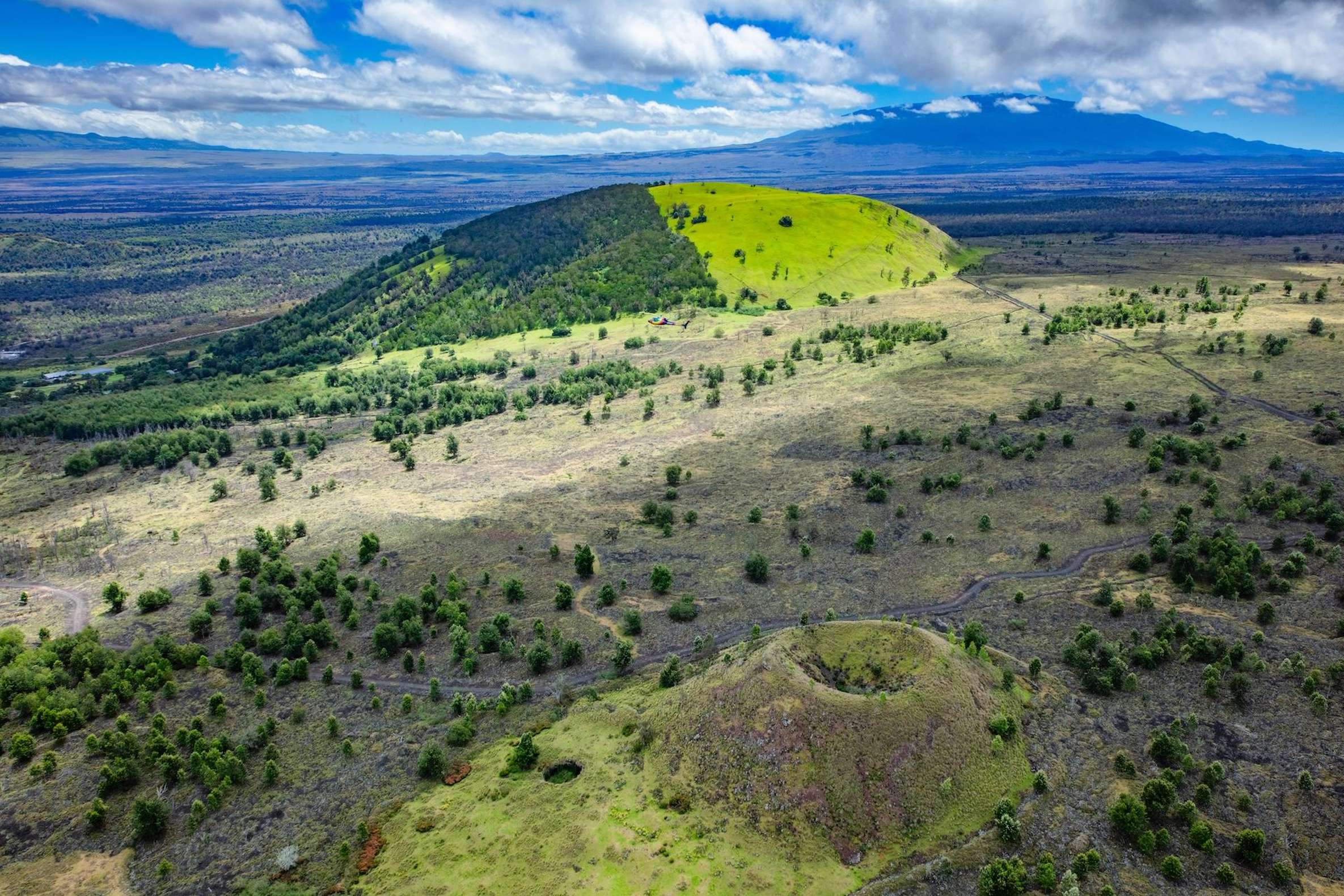
Then the flight climbs. Ka'ūpūlehu Crater and the Hualalai volcano take the middle of the hour, followed by the rugged lava country of the Pu'u Wa'awa'a Forest Reserve.
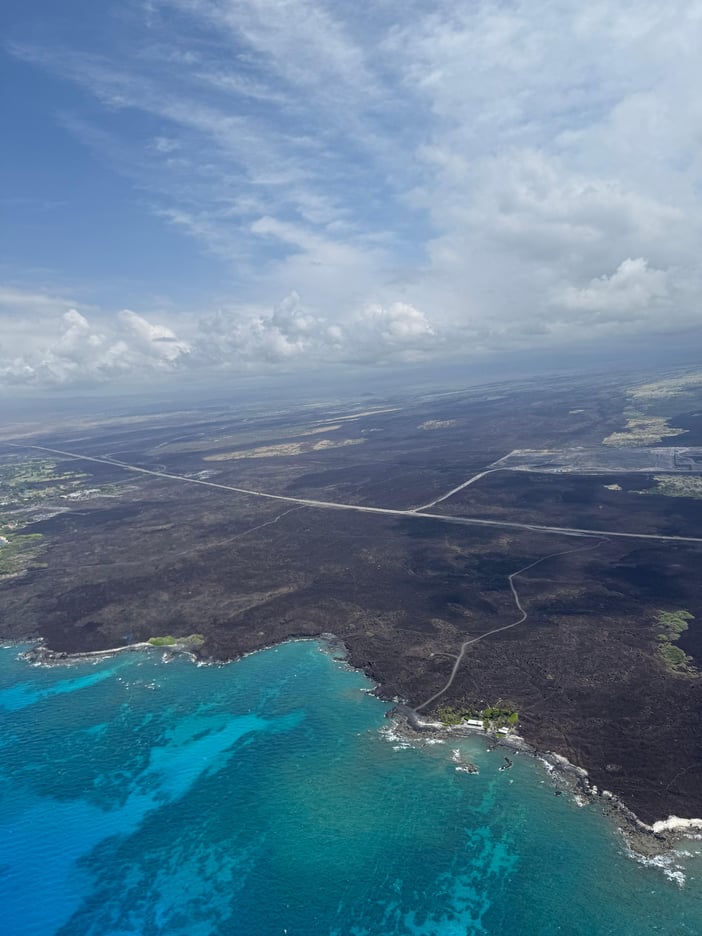
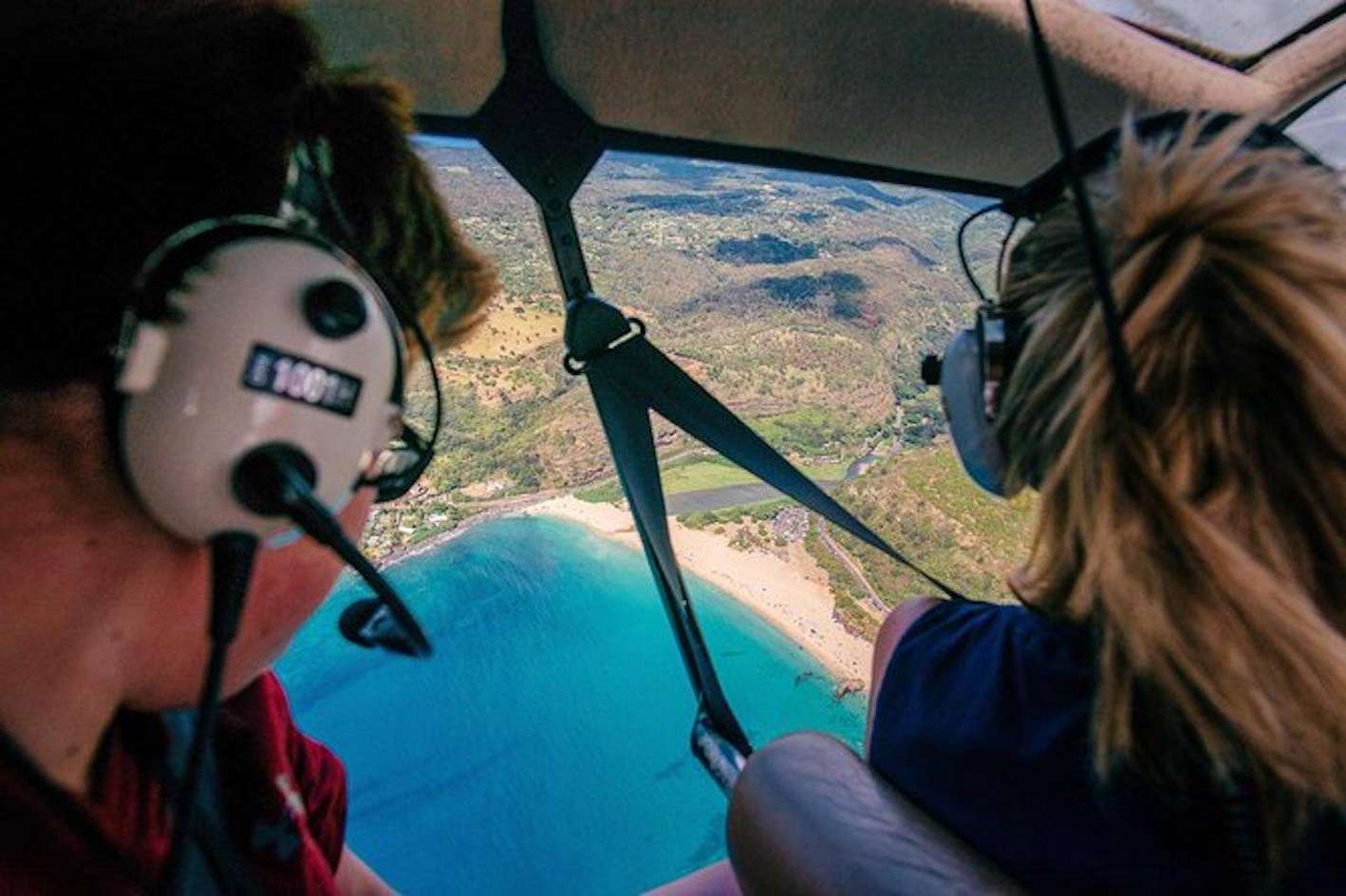
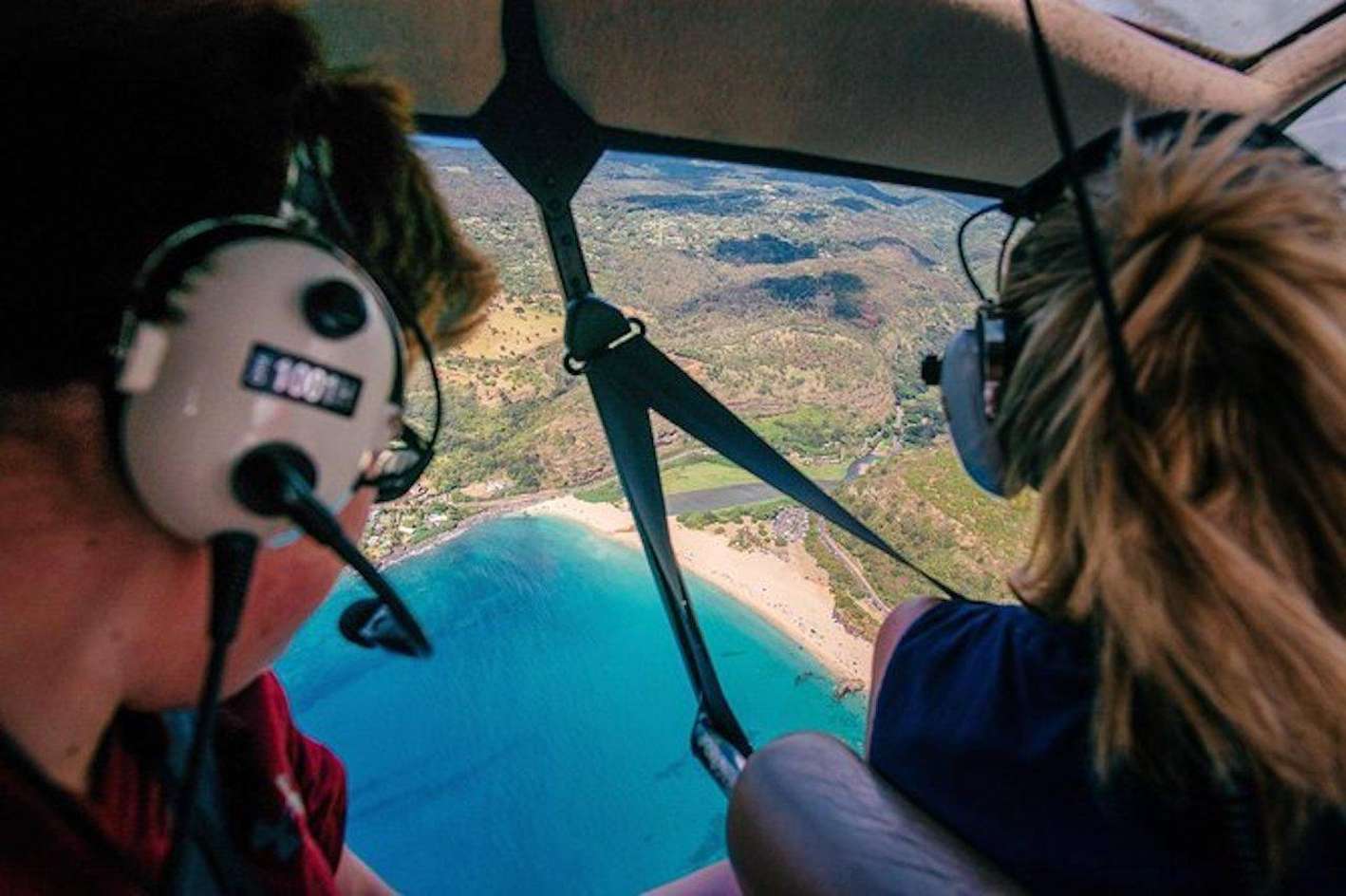
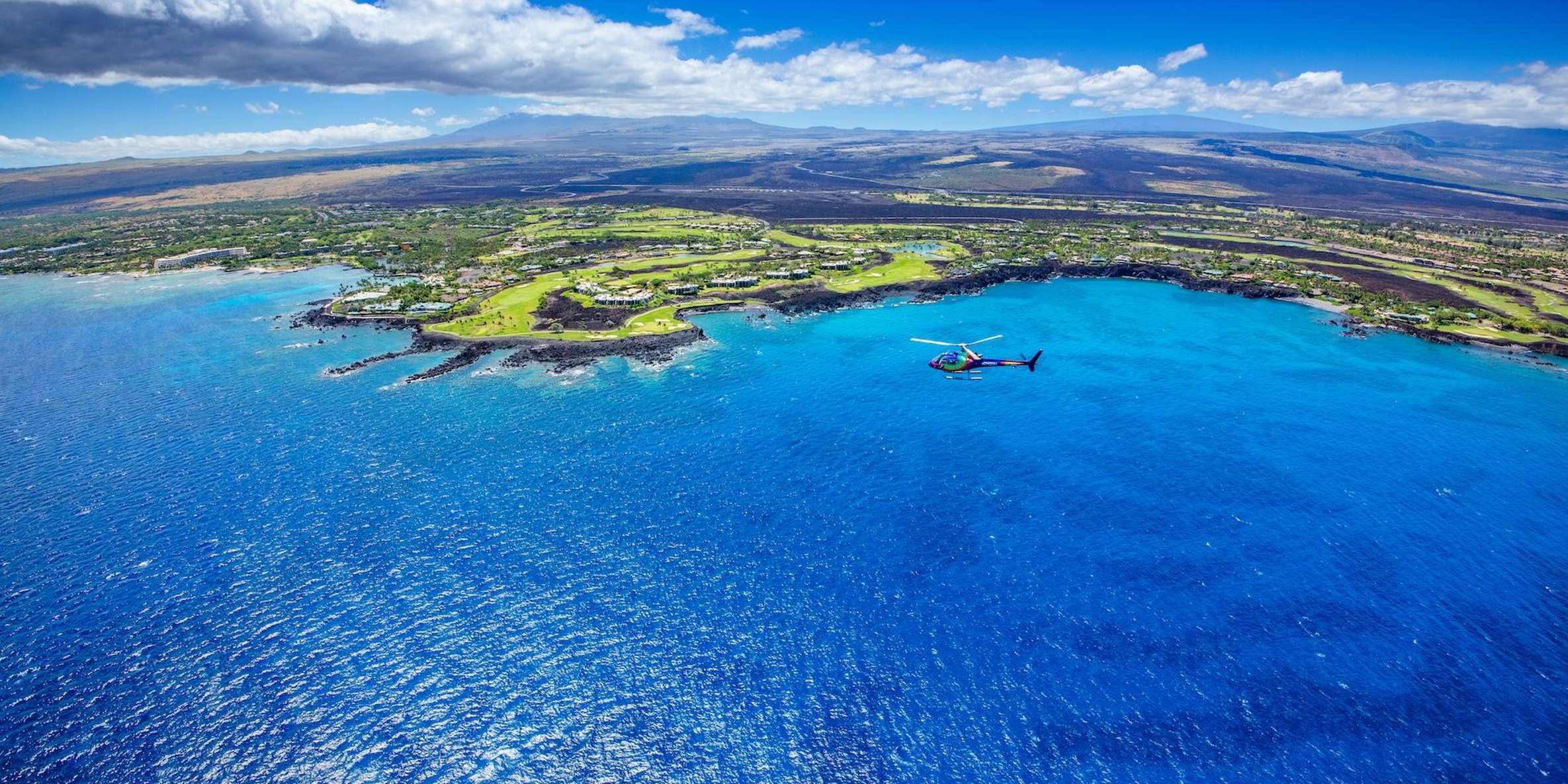
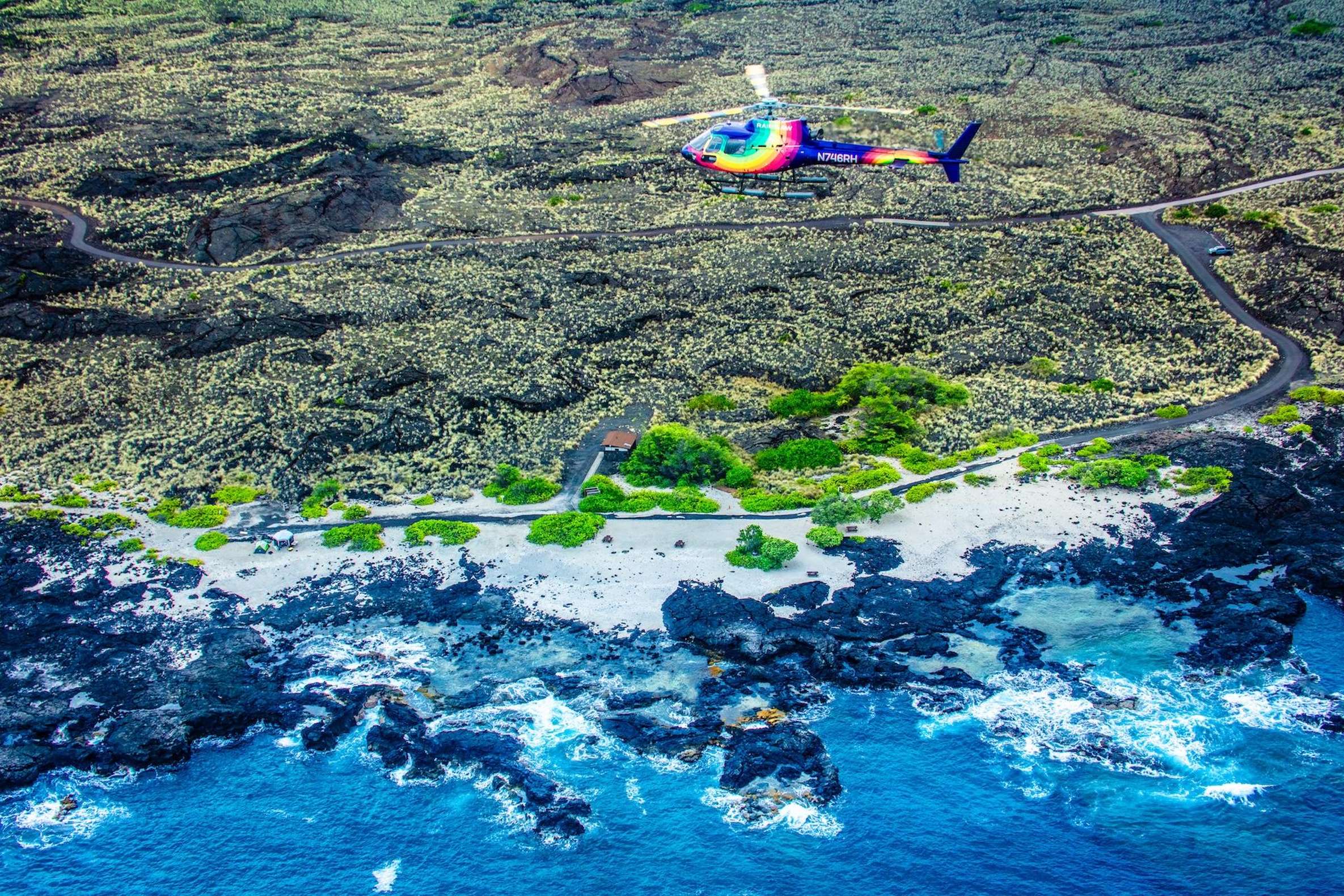
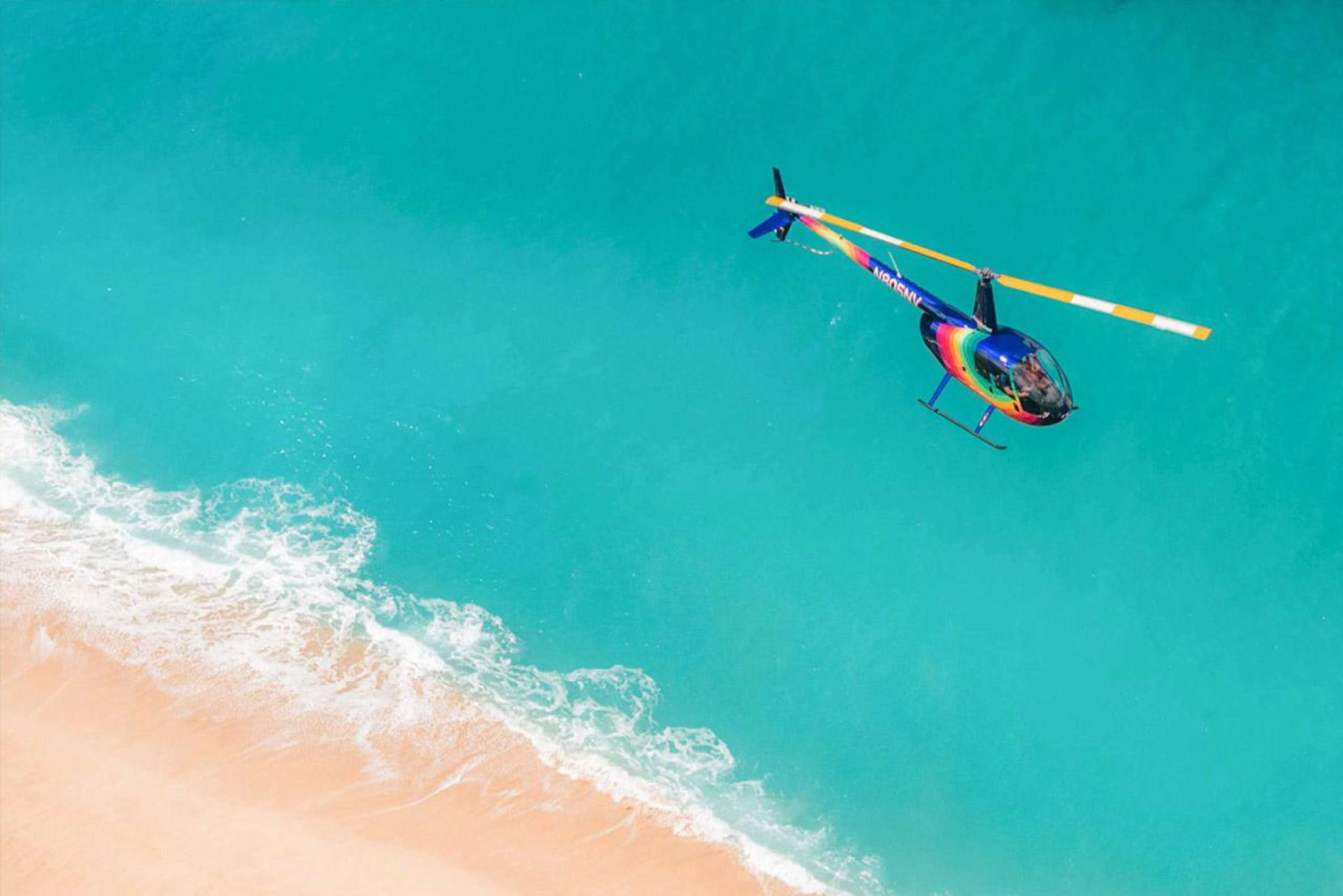
On the way back north the coast opens up: Kiholo Bay, Makalawena's white sand, Anaehoomalu Bay. Every stop below is a place you see from the air, with live commentary through your headset throughout.
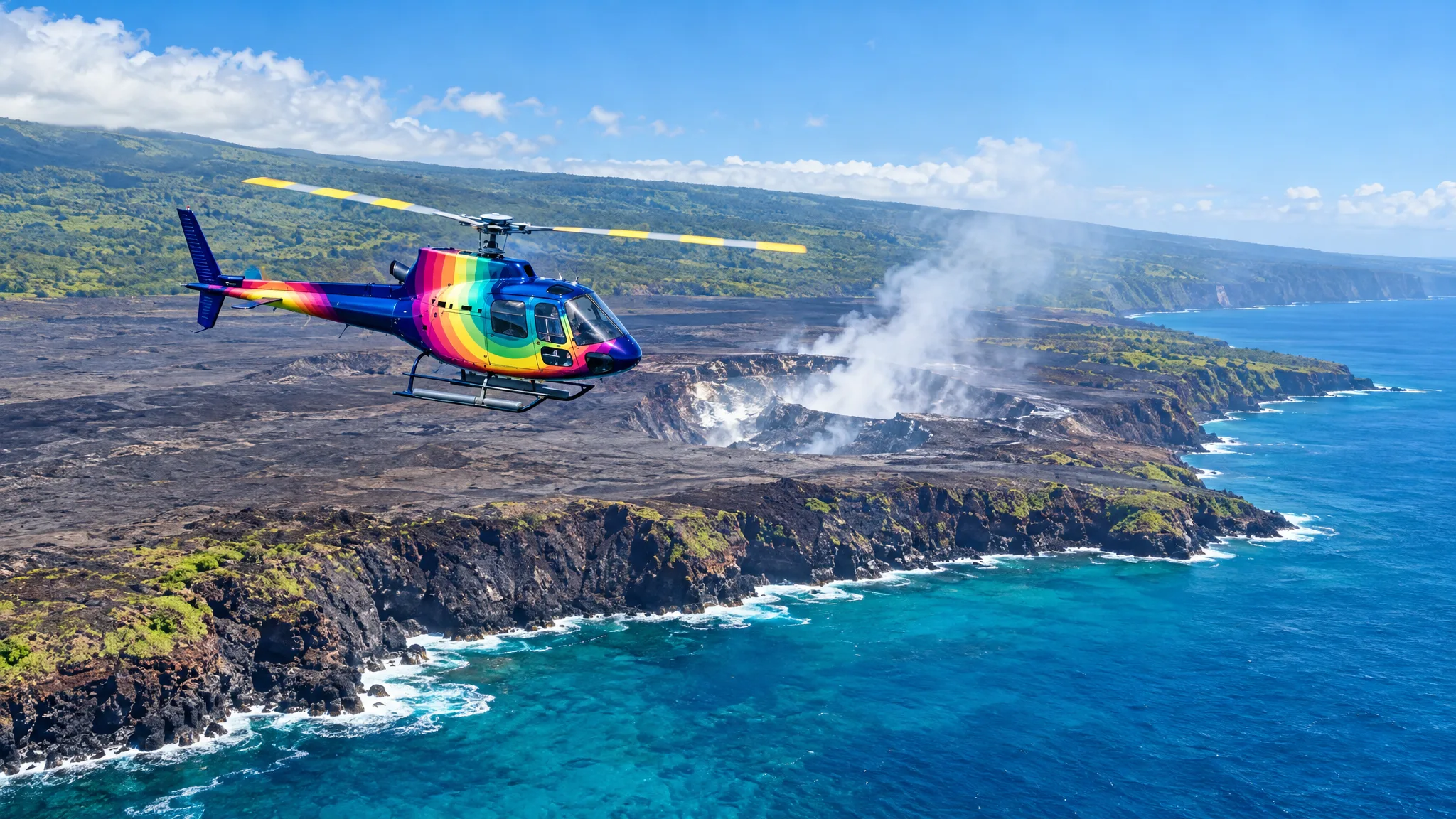
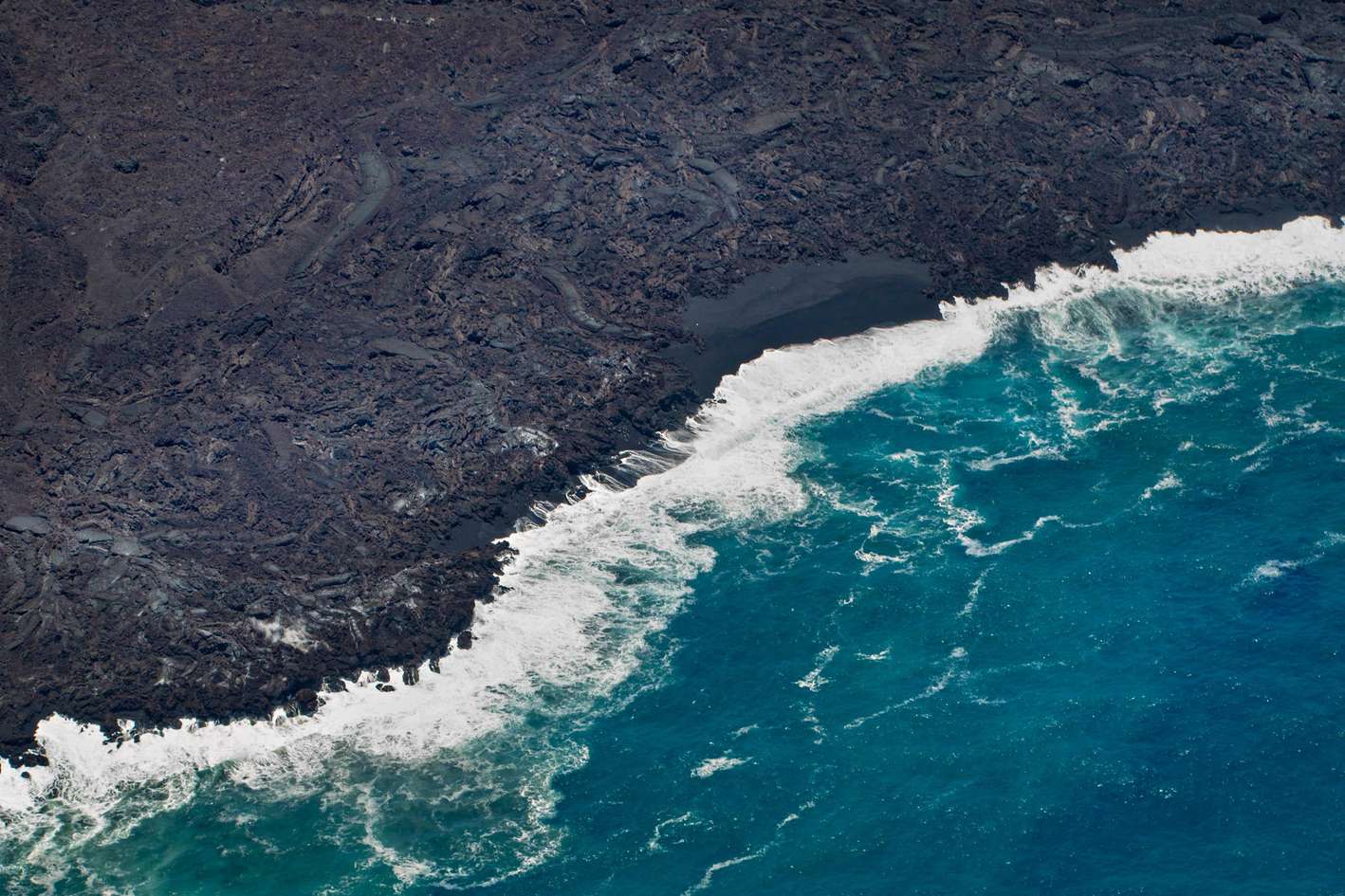
Meeting pointRainbow HelicoptersThe heliport sits in the aviation area of Kona International Airport, south of the main terminals. Plan to arrive an hour before takeoff for check-in and the safety briefing.2Kailua-KonaThe helicopter lifts off over the town and its shoreline, giving you an aerial view of the Kailua-Kona coast right from the start of the flight.3Kaloko-Honokōhau National Historical ParkYou fly over the ancient Kaloko Fish Ponds here, an example of traditional Hawaiian aquaculture that reads clearly from above.From this tour4Kailua BayThe bay's clear water and reef come into view as the helicopter sweeps along the coast south of town.From this tour5Ali‘i DriveYou follow the coastal road from the air, watching shops and restaurants drop away below before the landscape turns green.From this tour6Magic Sands Beach ParkThe small white-sand beach shows below, a quick visual marker on the run south along the shoreline.From this tour7Coffee plantationRows of Kona coffee farms stretch across the slopes above the coast, a green band between the shoreline and the higher country.From this tour8Kealakekua Bay State Historical ParkThe helicopter circles the marine preserve, where the water holds a clarity that stands out from the air.9Captain James Cook Monument, HawaiiThe white obelisk on the bay's shore marks where Captain Cook landed in 1779; your pilot points it out as you circle.From this tour10Pu'uhonua O Hōnaunau National Historical ParkA slow circle above the sacred Place of Refuge, the ground where Hawaiians who broke kapu once sought absolution.From this tour11Ka‘ūpūlehu CraterThe flight climbs from the coast to this crater, where the terrain turns to geological formations of dark rock.From this tour12Hualālai, Island of HawaiiThe volcano's slopes fill the view as the helicopter works its way up above the Kona coast, the centerpiece of the hour.From this tour13Pu'u Wa'awa'a Forest ReserveRugged molten rock gives way to a reserve of native plants and animals on the volcano's northern flank.From this tour14Anaehoomalu BayThe wide bay and its fishpond come up on the northern turn, a stretch of resort coast seen from above.15Kiholo BayThe bay's turquoise water and lava shoreline pass below on the run back up the coast toward the airport.From this tour16Makalawena BeachWhite sand and clear shallows stand out against the lava coast here, one of the last sights before landing.From this tour
Where the other tours go
KohalaWai‘ilikahi Falls
Kailua-Kona: Kohala, Volcanoes and Waterfall Helicopter Tour
1-hour helicopter tour above the Big IslandDoors off or on (depending on the option selected)Live guided tour with commentaryStraps and cases for cell phonesParking
Not included
Tips (optional)Hotel pickup or drop-off
Kona Airport helicopter tour options compared
Green marks the lowest price. Each price says whether it is per person or per group.
Tour
Price
Duration
Pickup
Best for
Our pick
Kailua-Kona: Hualalai Volcano Doors On/Off Helicopter Tour
4.8★ (14)
from $640per person
1 hour
no
coast-plus-volcano in one hour: Hualalai climb and Kona sights for flyers who want the mountain, not just the shoreline
Most reviewers praise their pilot, who mixes smooth flying with stories about the island's history and geology.
Best surprise
Several flyers who felt nervous beforehand found the ride calmer than expected and loved whale sightings along the way.
Most common wish
A few travelers wished the flight went further inland so they could have seen more craters up close.
How to book a helicopter tour from Kona Airport
01
Pick your date and time
Choose a date near the start of your trip, not the last day. If weather forces a change, you have days left to reschedule. Morning slots give the calmest air over Kona.
Pro tipBook early in your stay so a weather cancellation still leaves room to fly another day
RecommendedAim for a morning departure before afternoon clouds build over Hualalai and the mountains
02
Choose your option
Decide between doors-on and doors-off, and shared or private. The same Hualalai volcano route runs one hour either way; a doors-off cabin gets windy and much cooler.
Common mistakeAssuming a doors-off seat sits right at the open door. Your seat may not be adjacent to it
RecommendedBring a jacket and closed-toe shoes for doors-off, and tie back long hair
03
Enter passenger details
Fill in accurate weights for everyone when booking. The operator balances the aircraft by weight, so these numbers decide who sits where and whether an extra seat applies.
Common mistakeGuessing weights. Underestimating causes problems at check-in
04
Confirm and save your voucher
Pay through the marketplace and a confirmation arrives by email with your voucher and the meeting point at the Kona aviation base. Check the cancellation window before you lock it in.
ImportantThe tours cancel free up to 2 days before the flight, so book ahead of that cut-off to stay protected
Pro tipChildren from 24 months old need a full-fare seat, so count toddlers as passengers when you book
05
Plan your check-in day
Arrive at the heliport an hour before takeoff for weigh-in and the safety briefing. Leave hats, bags, water bottles and selfie sticks behind; phones and cameras need a strap.
ImportantNo scuba diving in the 24 hours before your flight, or you cannot board
RecommendedPark at the base, it is included, and wear dark clothes so window reflections stay out of photos
What to know before you book a Kona Airport helicopter tour
Can stop the dayGood to knowGood news
01
ChoosingWhat it is, who it suits, when to go
6
Meeting point
The helicopter bases sit in the airport's general aviation area, south of the main passenger terminals, with parking included on every tour. Skip the airline terminal entirely and drive straight to the heliport your booking names.
Doors on or off
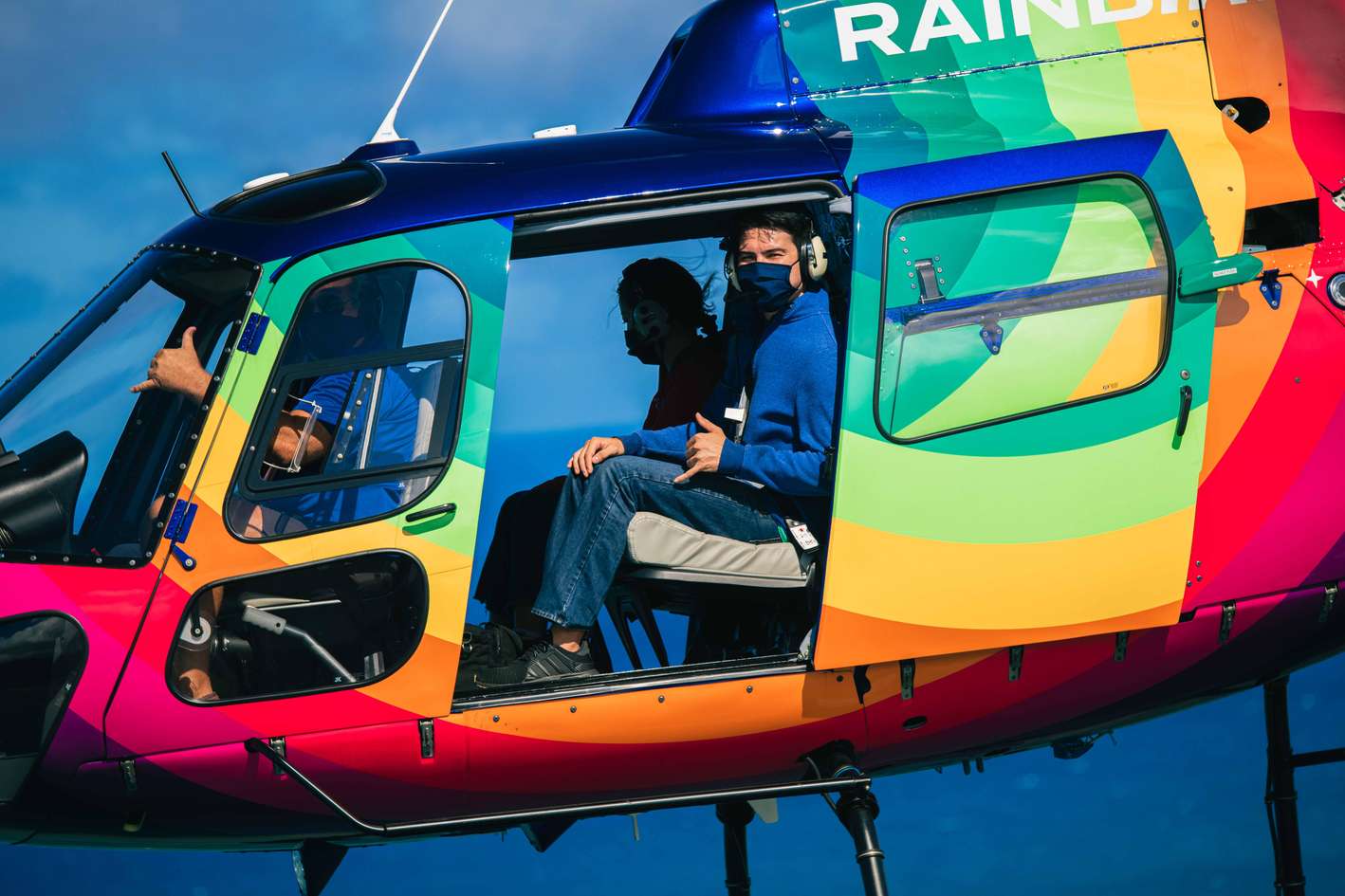
Several Kona tours let you pick between an enclosed, climate-controlled cabin and an open-air one when you book. On some flights the two configurations cost the same, so the choice is about comfort and photos, not money.
Seating
Your seat is assigned at check-in from passenger weights to keep the helicopter balanced under FAA rules. You cannot pick your own seat, and the operator cannot promise your whole group sits together.
Loose itemsCan stop the day
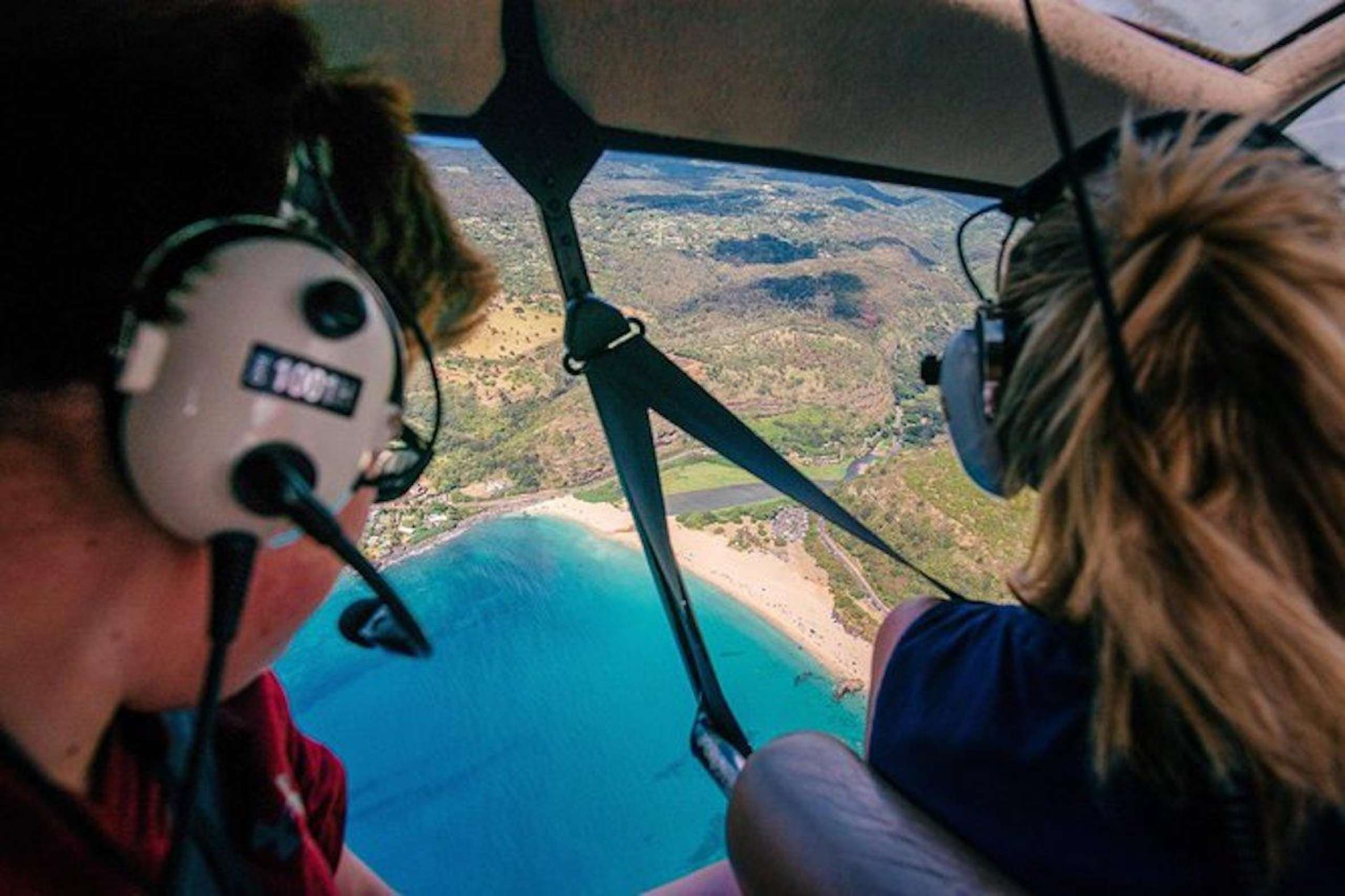
On doors-off flights nothing loose may enter the cabin: leave hats, purses, water bottles, selfie sticks and spare lenses behind or stowed. Phones and cameras need a wrist or neck strap, and the tour supplies straps and cases for cell phones.
Best time
Morning departures usually give the smoothest air and the clearest views before afternoon clouds build over Hualalai and the volcano slopes. On trade-wind days a later-morning slot can work better, since early showers sometimes come with the trade winds.
Tipping
Tipping the pilot is optional, not expected like a percentage on other tours. Many passengers leave a modest amount per couple on landing, and anything left at the desk is shared with the ground crew.
02
Before you goPapers, health, what to bring
4
DocumentsCan stop the day
Bring a government-issued photo ID if you are flying within the US, and a passport if you are not. Since May 7, 2025, domestic travelers need a REAL ID-compliant license or another accepted ID to pass airport security.
What to wear
Wear closed-toe shoes, long pants and a jacket, and tie back long hair. Solid dark colors photograph better on doors-on flights because light clothing reflects in the windows.
Health rules
You cannot fly if you have been scuba diving within 24 hours, and tours are not suited to people with vertigo, severe motion sickness or late pregnancy. Check the operator's rules before booking if a condition might apply.
Weather
Clouds, rain or vog can ground a flight or force a reroute, and operators will not push into bad weather. If a flight is canceled for weather you get a full refund or a chance to reschedule, so nothing is lost by booking ahead.
03
On the dayWhere to be, when, and how you get there
1
Check-in
Plan to arrive about an hour before takeoff. You get weighed at check-in and watch a safety briefing, so the pre-flight hour is part of the tour, not waiting you can skip.
Kona Airport helicopter tours - the full guide
The helicopter pads at Kona Airport sit on the general aviation side, minutes from your resort, and the island's best scenery starts at the end of the runway. Which flight, which cabin, which morning: those are the choices worth getting right.
Honalo· 19.72° N, 156.04° W
If you only remember three things
1
Book a morning slot between 8 and 11 am, before clouds build over Hualalai and the summits; peak-season mornings sell out 2 to 4 weeks ahead.
2
Arrive at the terminal a full 60 minutes before takeoff for weigh-in and the safety briefing.
3
No scuba diving within 24 hours of your flight, or you will be denied boarding.
Is a Kona Airport helicopter tour worth it
The map people search for before anything else: the helicopter terminals and check-in bases at Kona Airport sit on the general aviation side, south of the main passenger terminals and their access road. That placement is the whole argument for flying from here.
Kailua-Kona town is about 7 miles away, Kohala Coast resorts 20 to 30 minutes, and the cross-island drive to Hilo, 1.5 to 2.5 hours each way over fog, rockfalls and sudden rain, never enters your day.
Helicopter Terminals at Kona Airport
Helicopter departure terminalsKēahole
Terminal parkingPARKLINQ - Kona Seaside ShopsDiamond Parking駐車場Free parkingPARKLINQ - Kona CenterParklinq ParkingPARKLINQ - Kona Farmer's MarketParking lotPublic ParkingManta Adventures ParkingKaloko-Hanokohau National Historic Park parking lot
Nearby diningKiri ThaiSushi SamOcean Seafood Chinese RestaurantKona Chinese BBQQuinn's Almost by the SeaOriginal Thai CuisineHonu's on the BeachBig Kahuna Beach GrillKaʻū Coffee Roasters CafeKona Brewing Co.Seiji's SushiKings Coffee Company
What the money buys, a rental car cannot give you. Valleys, sea cliffs and black lava fields that no highway touches open up below you, and a helicopter can slow and hover where a plane flies past high overhead.
When Kilauea sits quiet, visitors often say the green Kohala valleys and waterfalls impress them more than the craters anyway.
First-timers on the Kona side tend to pick between two shapes of flight: a coastal loop that stays local, or a long cross-island run to the volcano. Both start from the same side of the island you slept on.
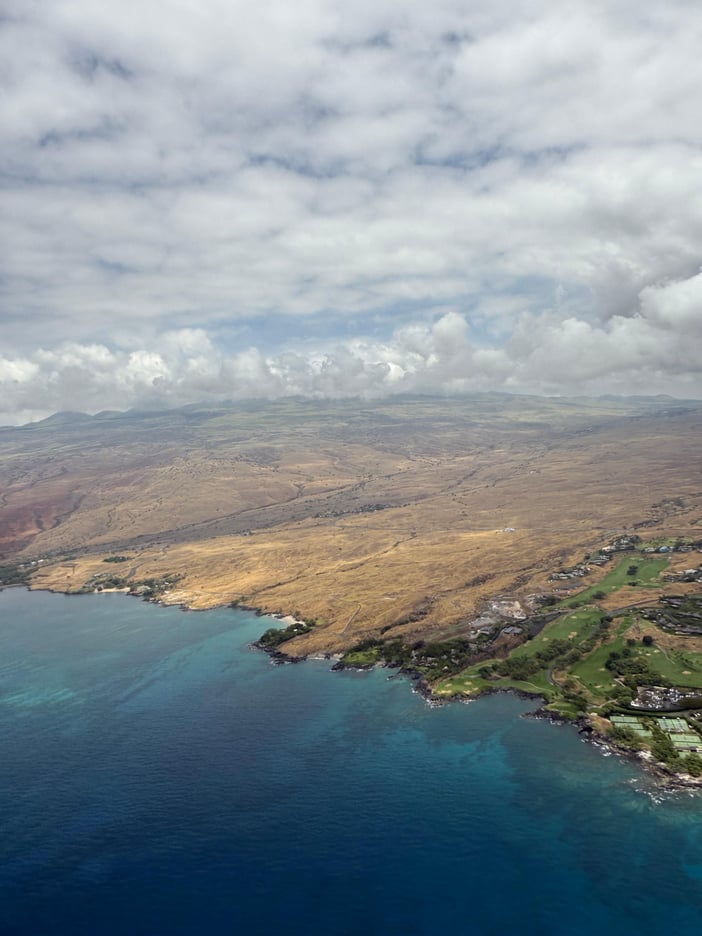
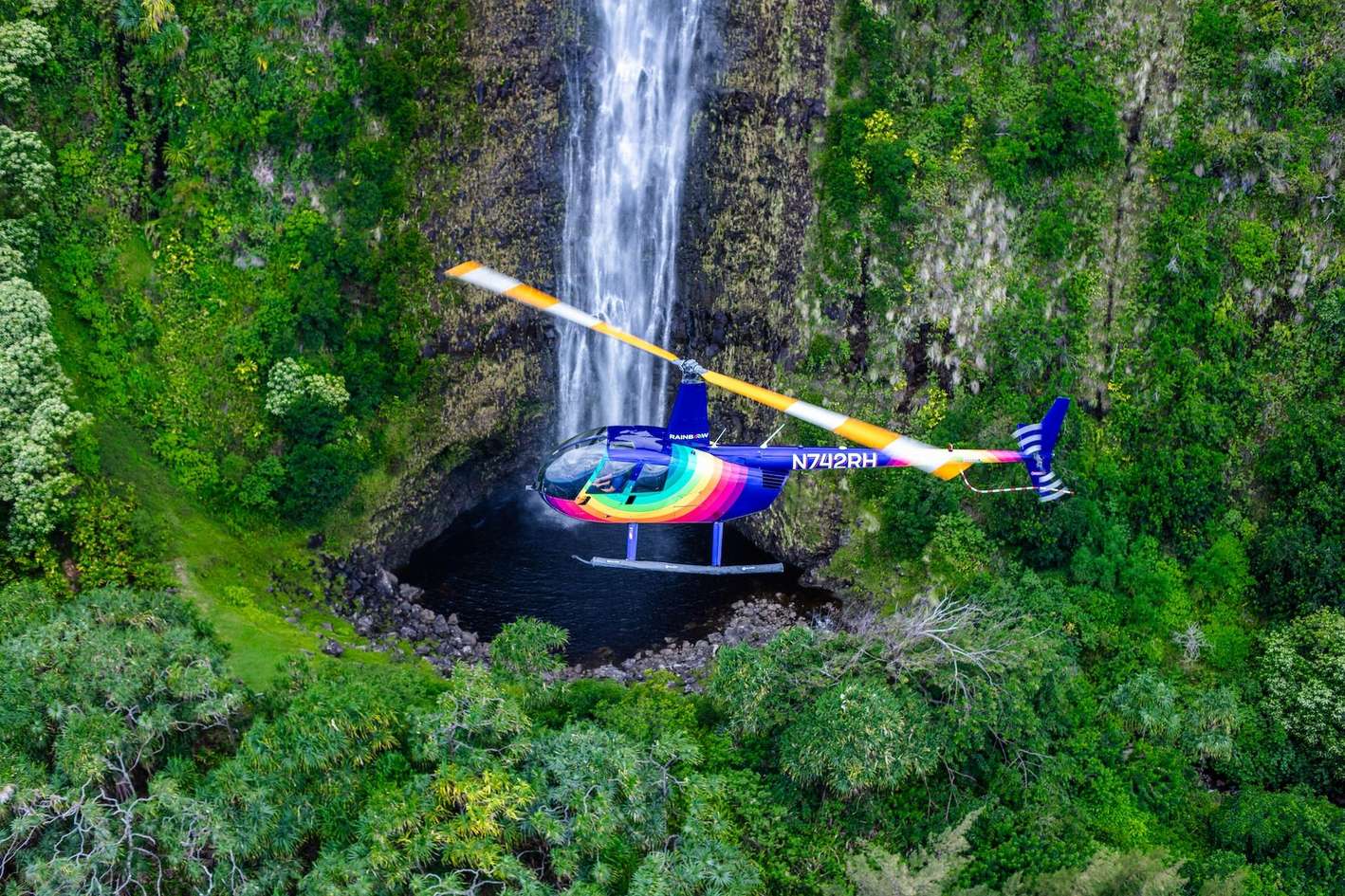
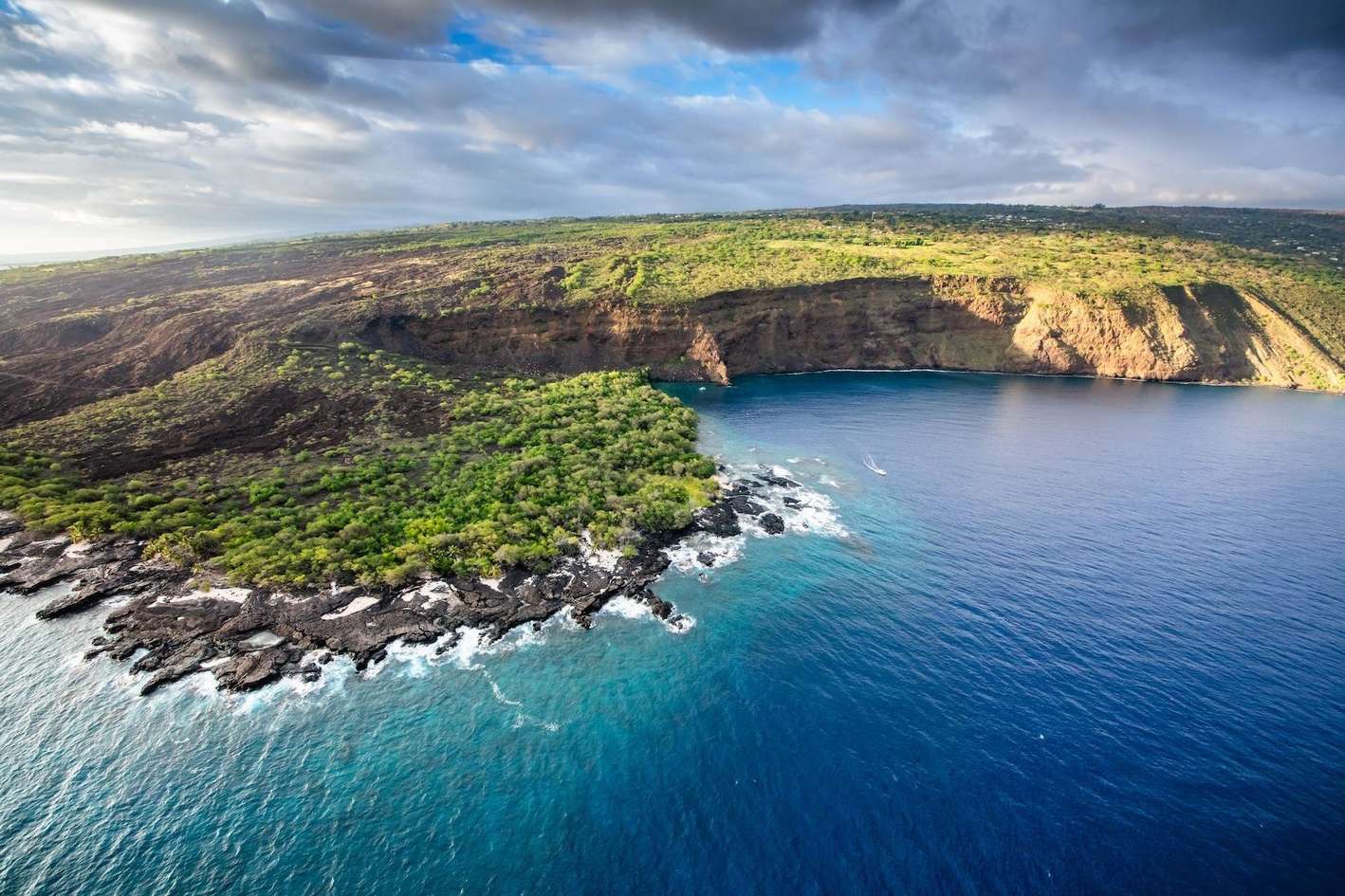
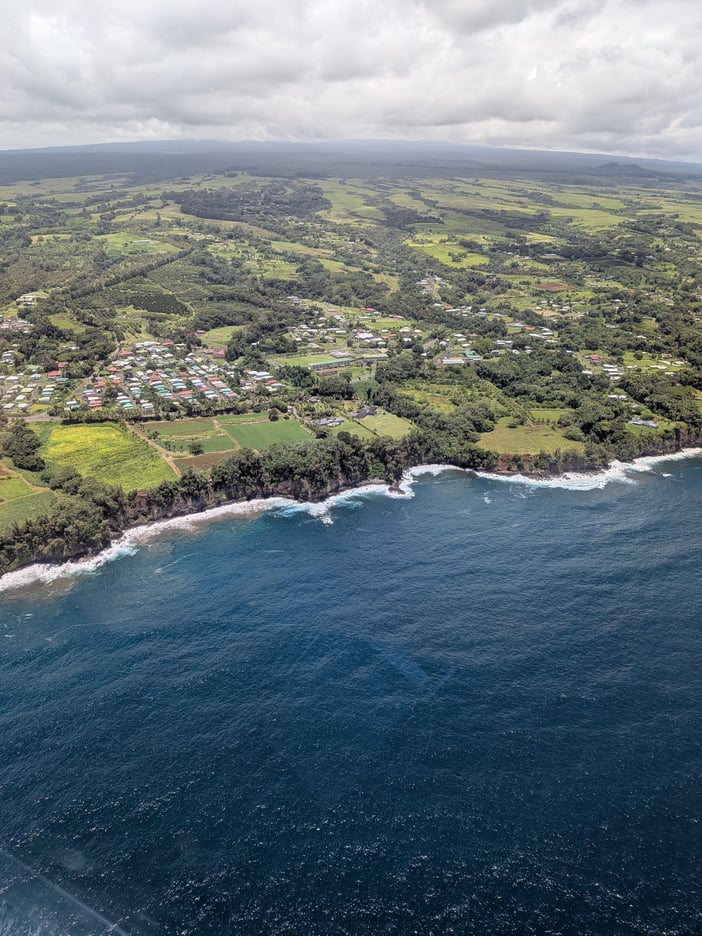
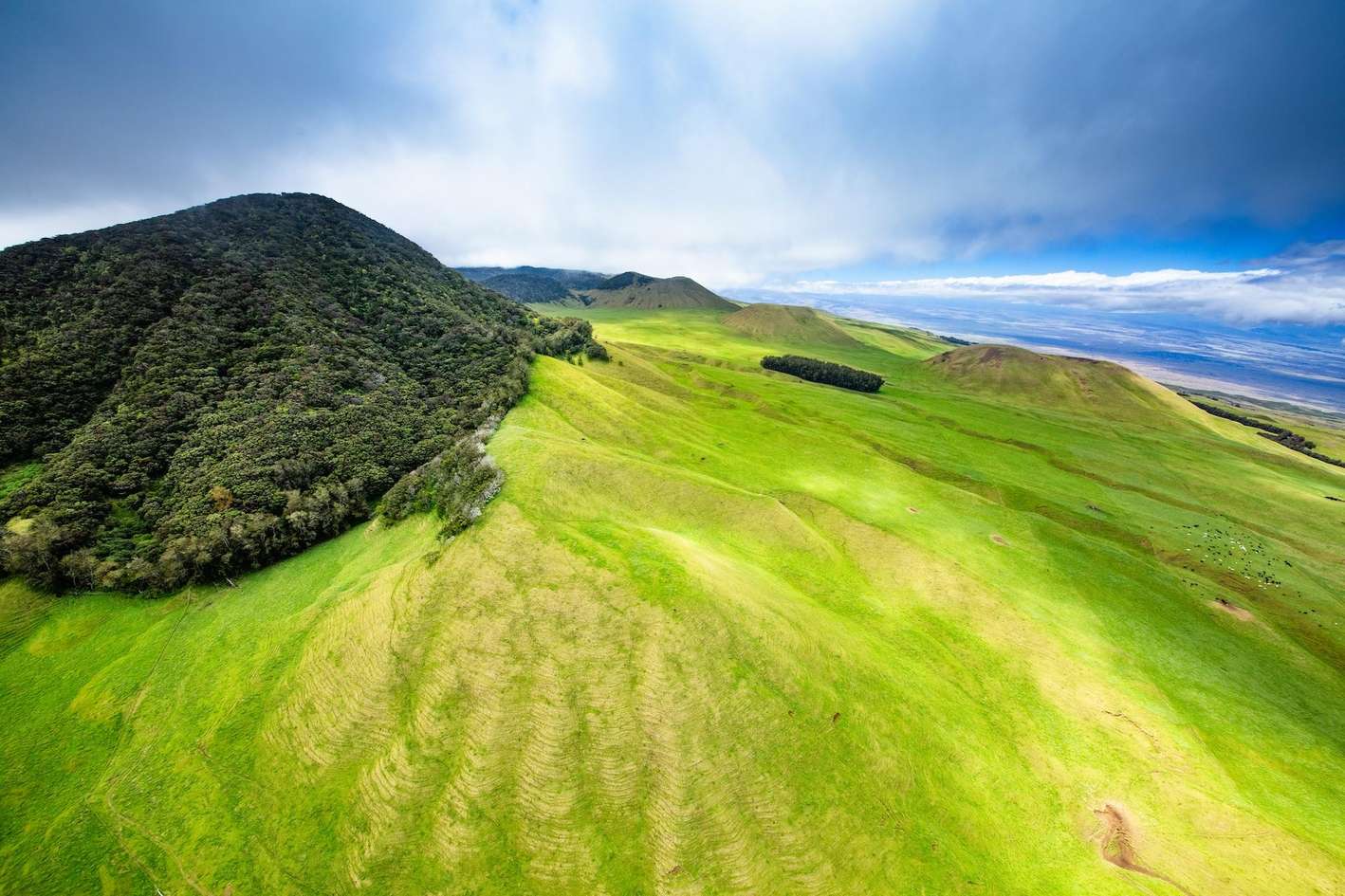
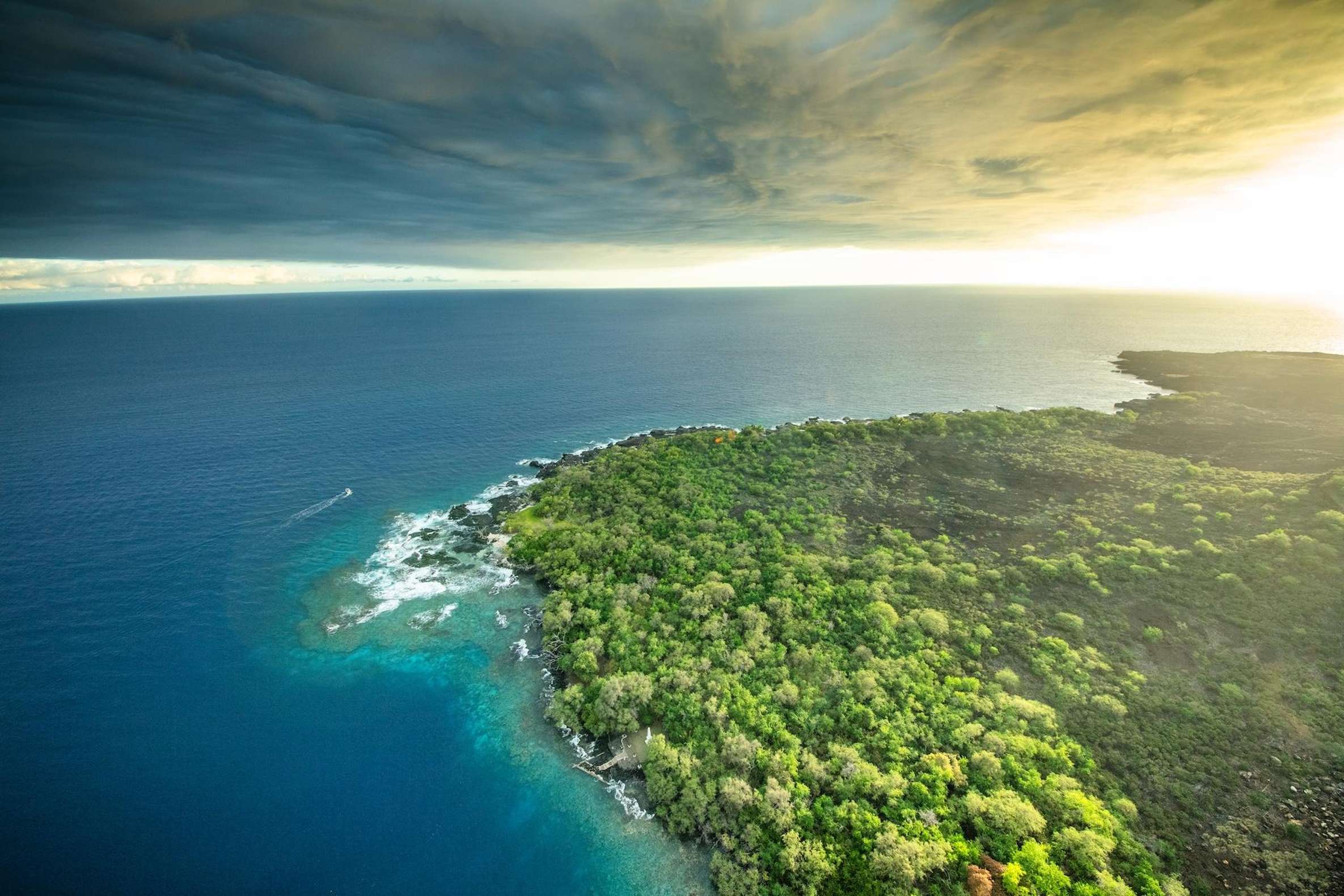
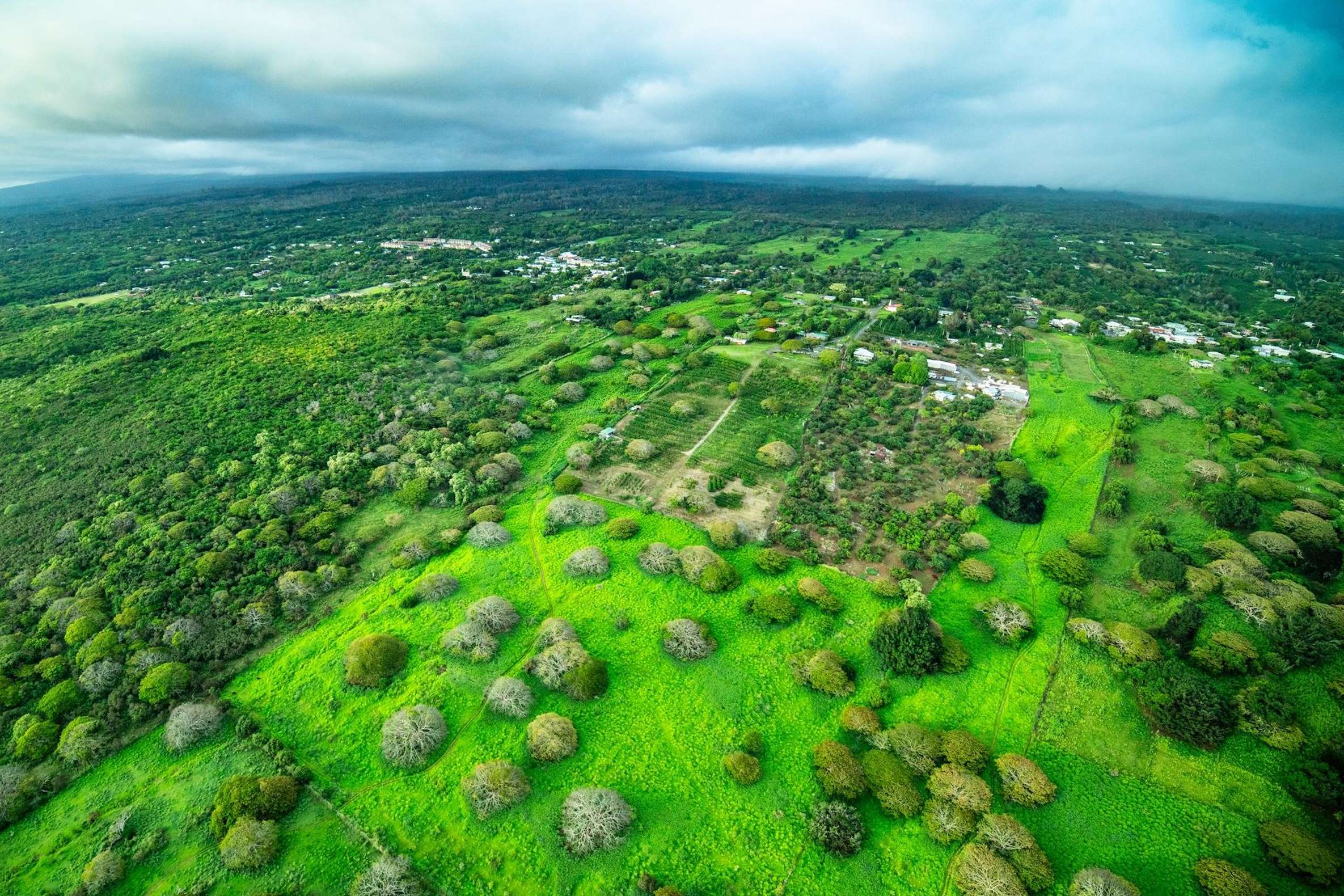
Takeoff happens over dry, golden Kona, and the change comes fast. Within one flight you cross from a semi-arid coastline into the wet rainforest belt of the Hamakua Coast, two distinct climate zones separated by an hour of air. Coffee farms and white sand coves give way to ridgelines that hold clouds all day.
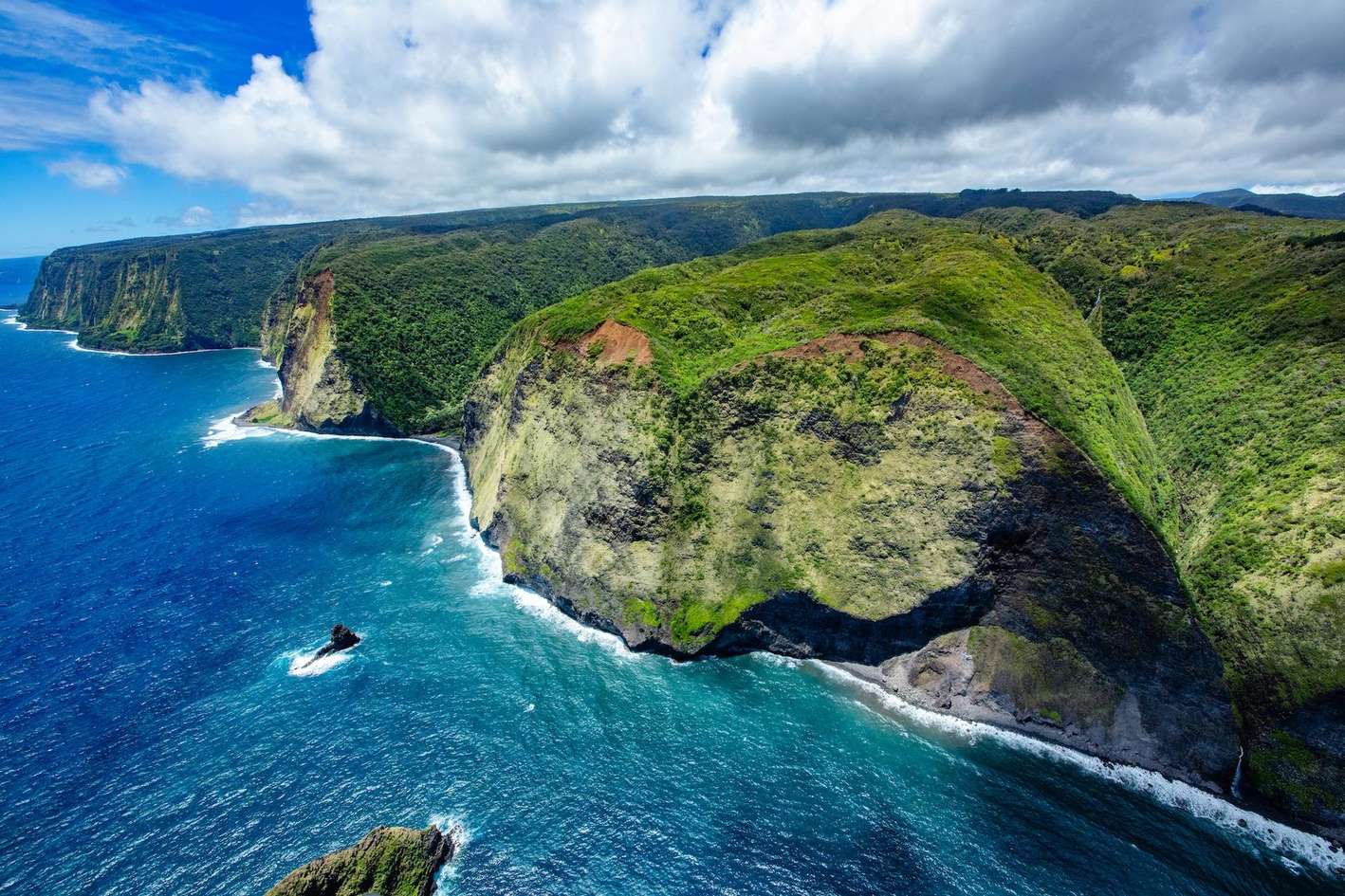
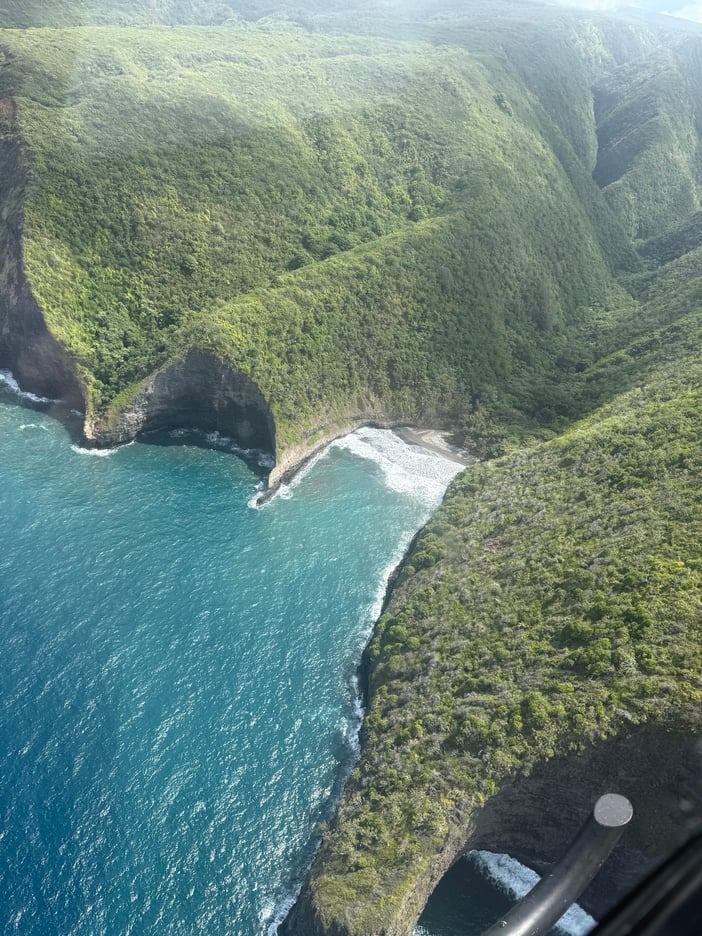
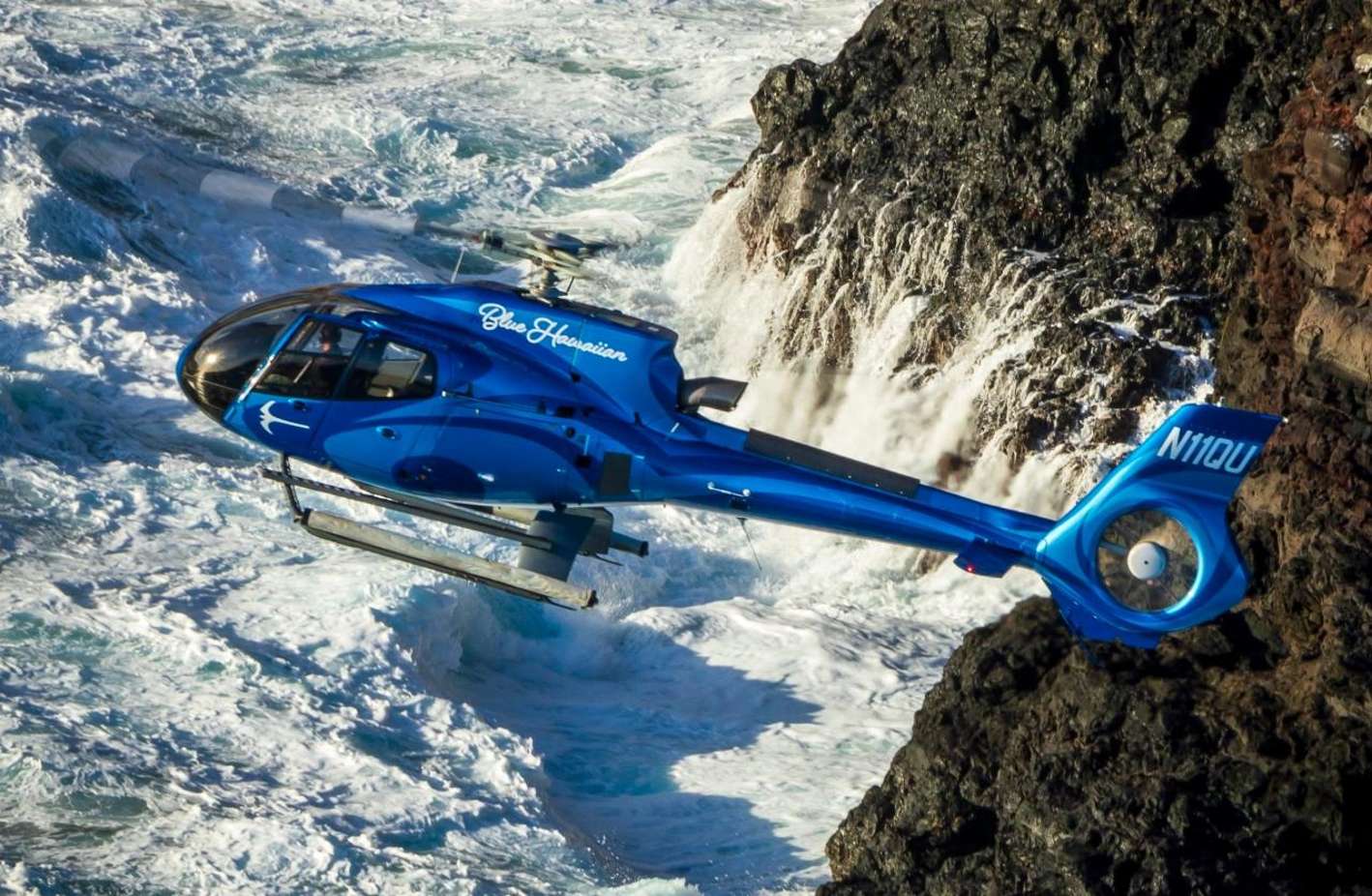
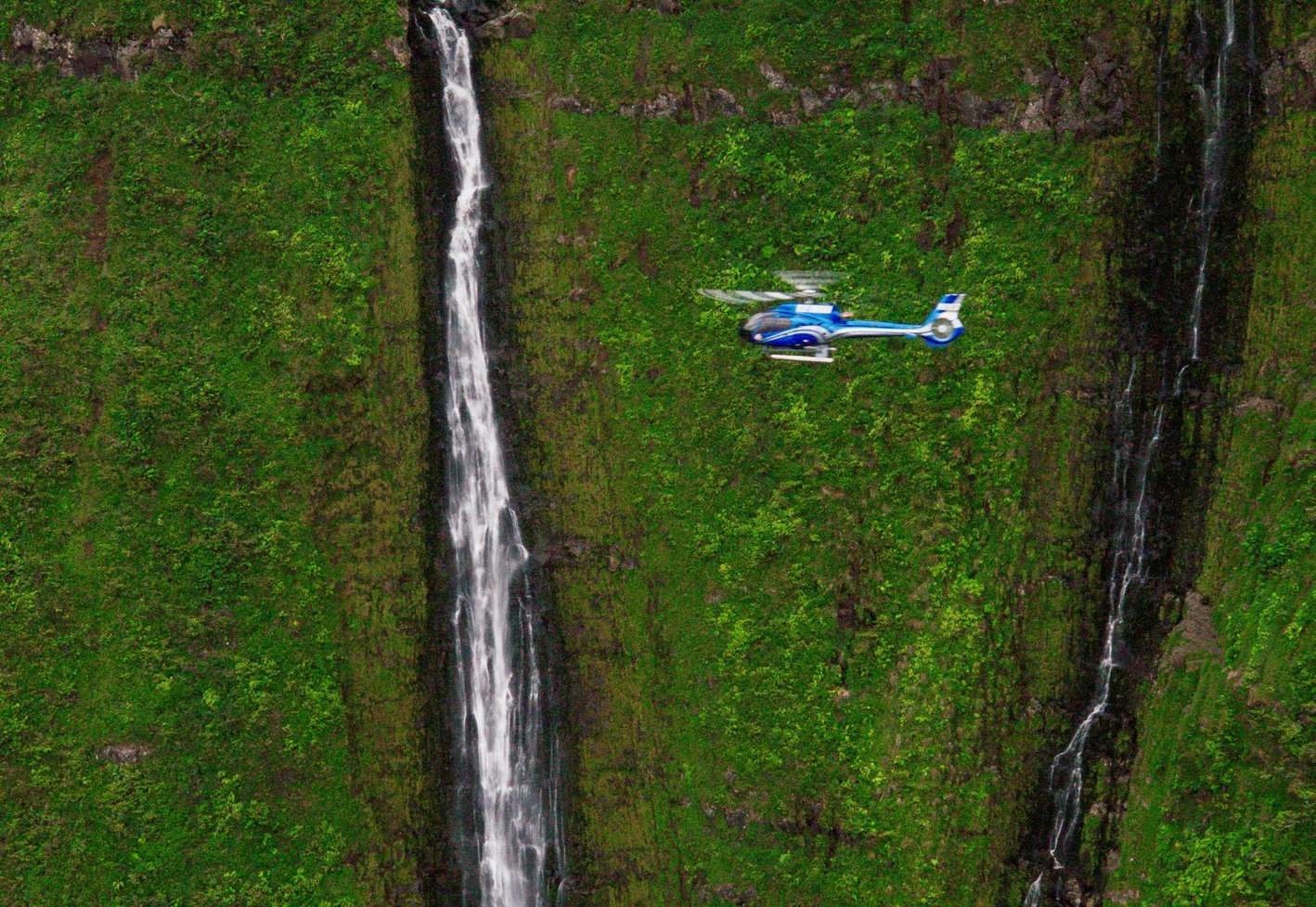
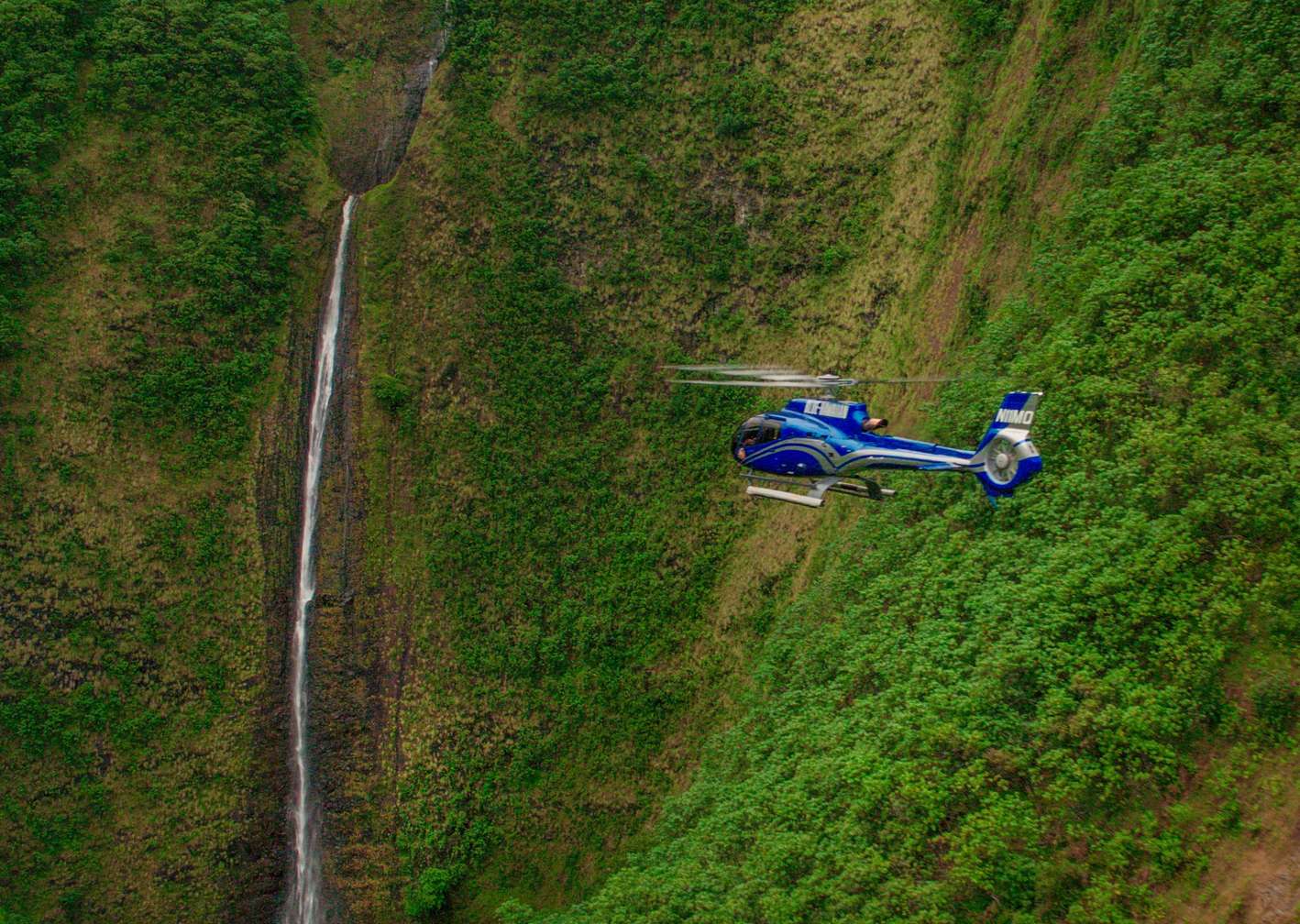
On the northern routes, the windward Kohala cliffs stand straight out of the surf, typically 400 to 1,500 feet of vertical rock. The scale is the thing: no coastal road shows you these faces.
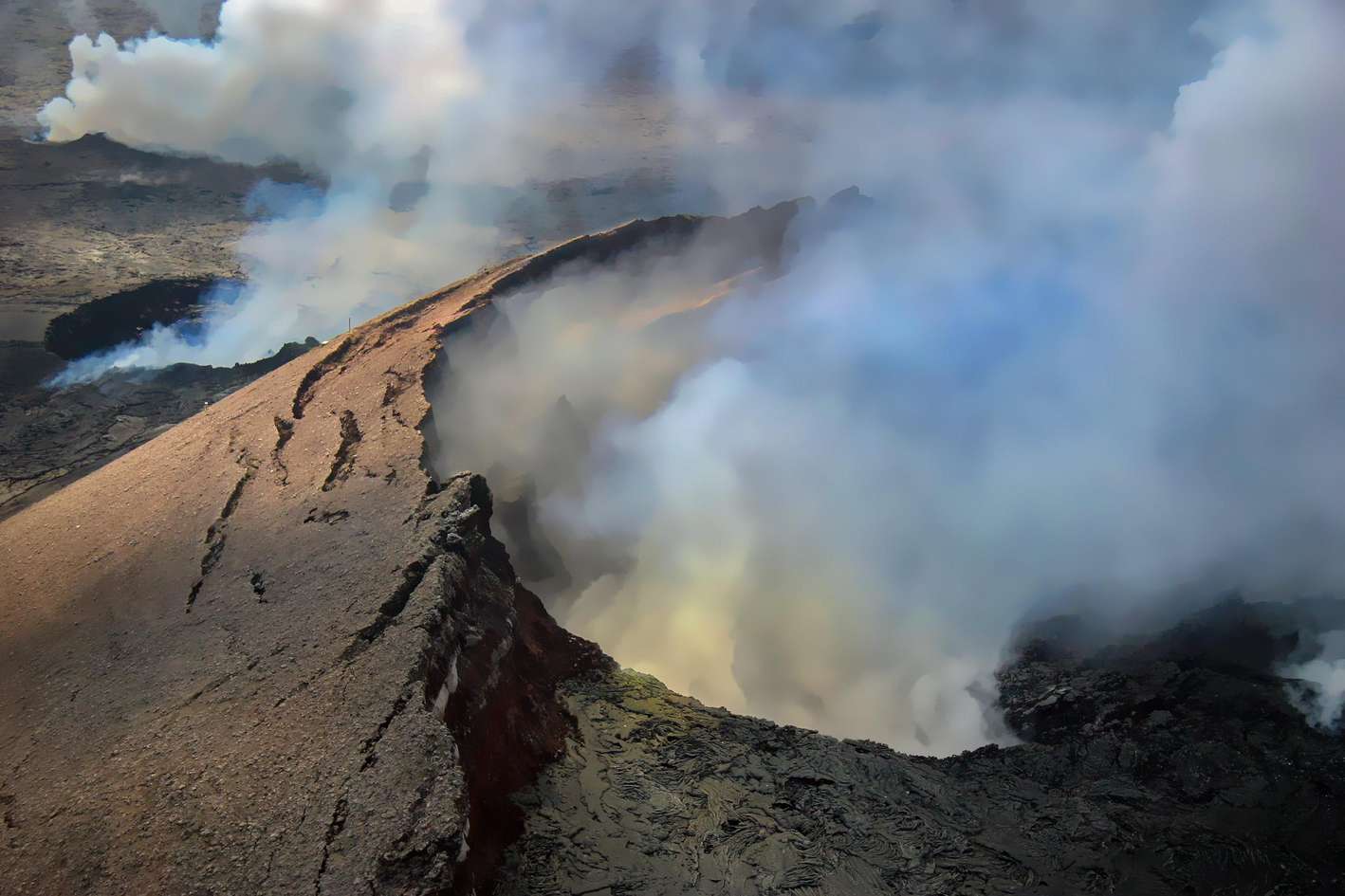
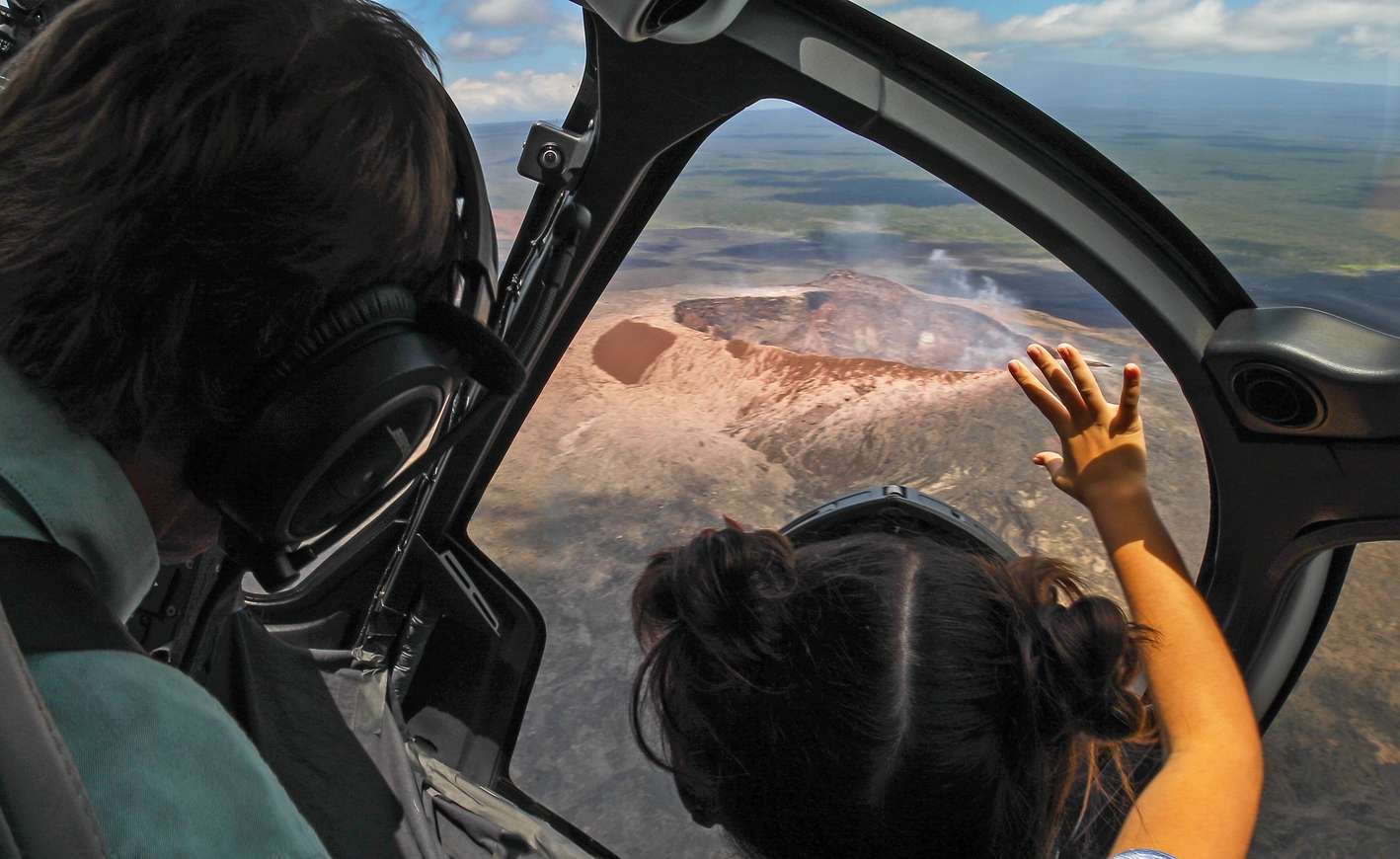
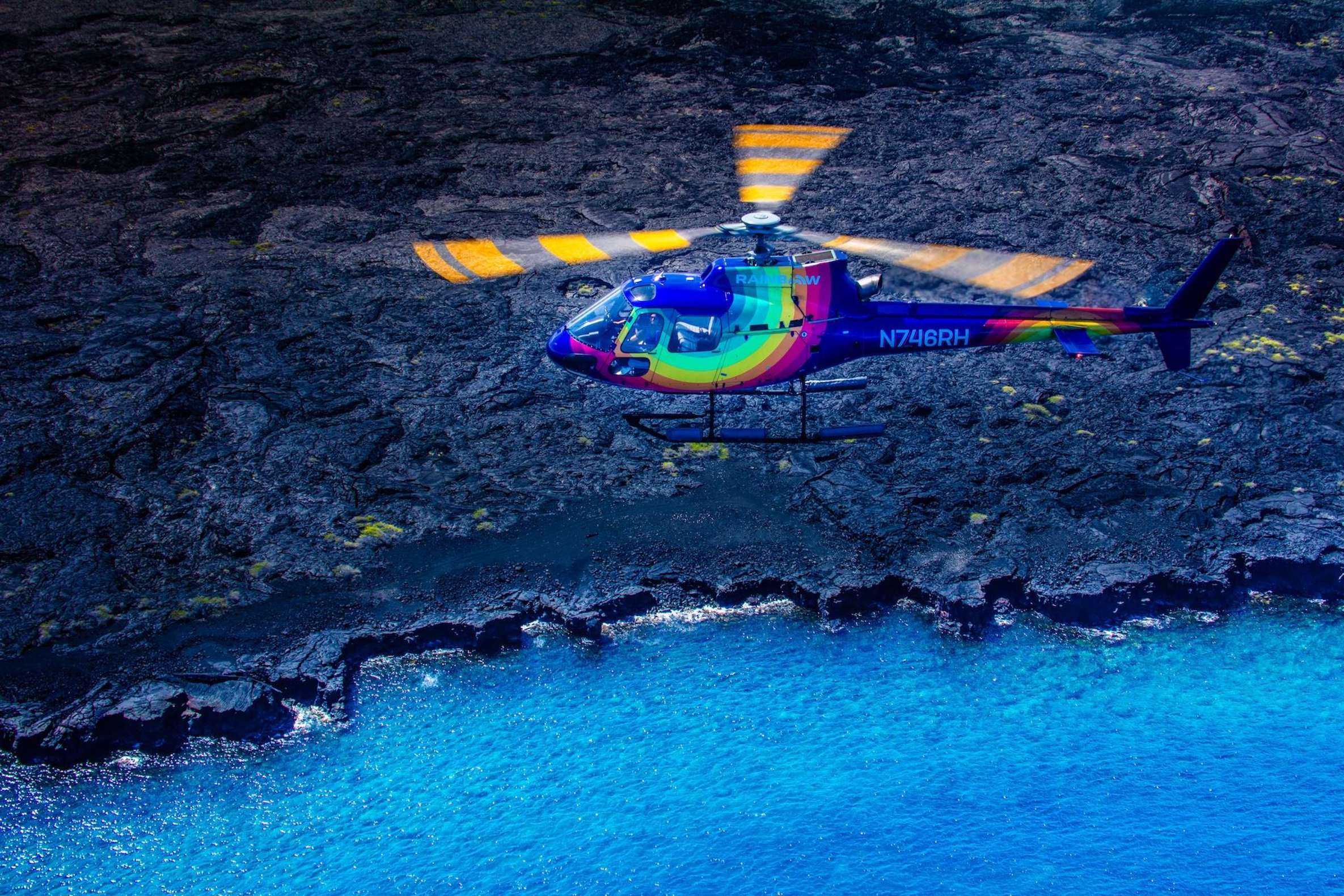
The long volcano runs climb toward Mauna Loa and, on clear days, the summit of Mauna Kea. Circling Kilauea's caldera from the Kona side, pilots point out the crater walls, the vent complex on the north and west rim, fissures, old lava channels and sulfur staining across the floor.
Some of that terrain cooled decades ago and some of it steams. From the air, the difference is easy to read.
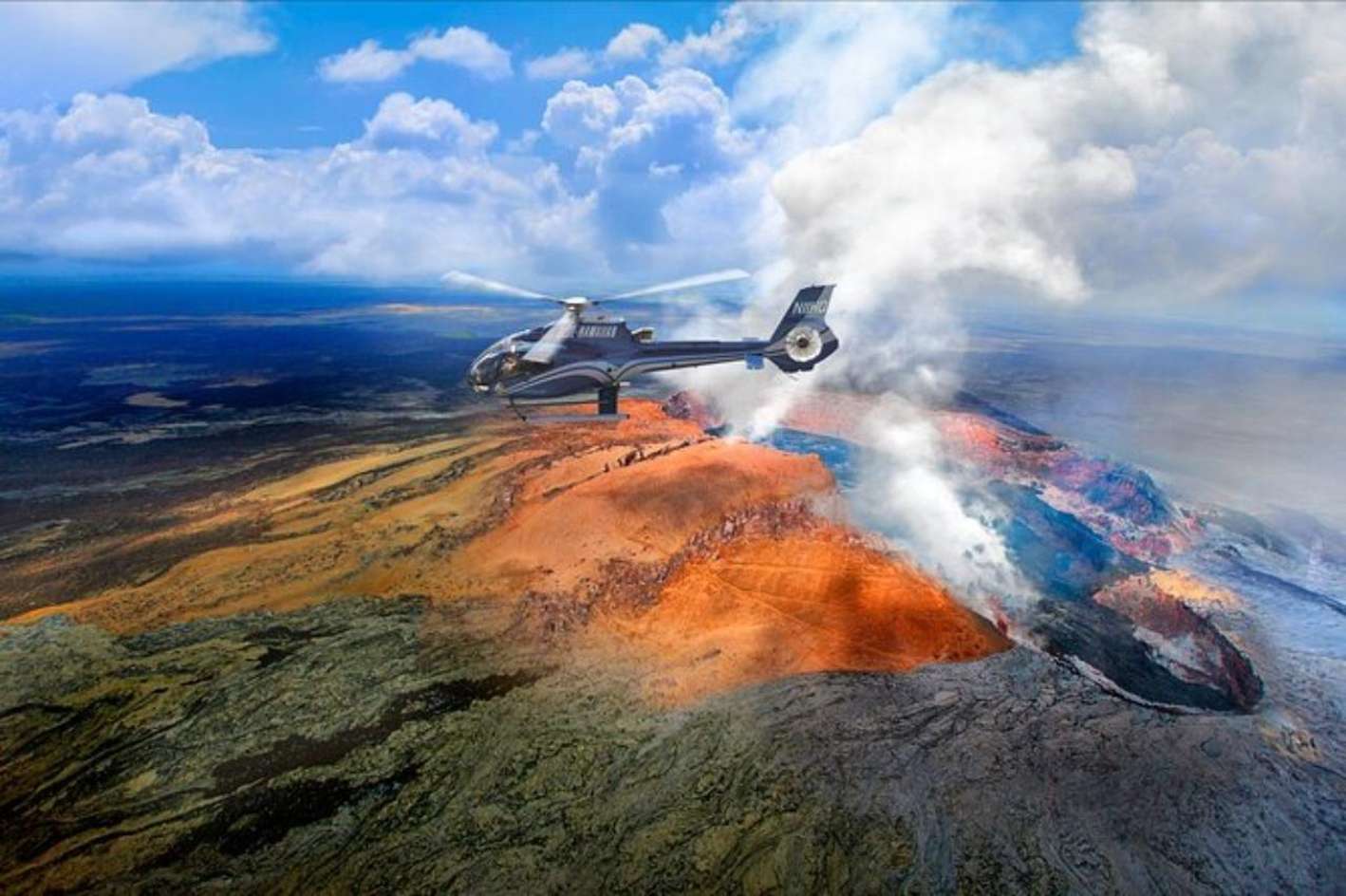
The photos sold at booking show molten red rock. The reality: Kilauea erupts in brief, intermittent windows, so flowing lava is never guaranteed and often absent.
Without an eruption you still see steam vents, the vast crater formations and hardened flows from past eruptions, which many travelers find dramatic in their own right. And the Big Island remains the only Hawaiian island where lava of any kind is visible from the air.
Two things shape a Kona booking specifically. A volcano tour from here runs about 1 hour 45 minutes of airtime against 50 to 55 minutes from Hilo, because much of the Kona flight is the crossing itself.
And during an eruption, temporary flight restrictions can close the airspace over the caldera entirely, with authorized routes kept off the summit.
People who fly often give the same advice: check windward weather and current volcanic activity the morning of the flight, because the Hilo side can cloud over completely.
If the crater is your only reason to fly, the shorter flights from Hilo put you over it in minutes; that is the honest alternative for crater-focused travelers.
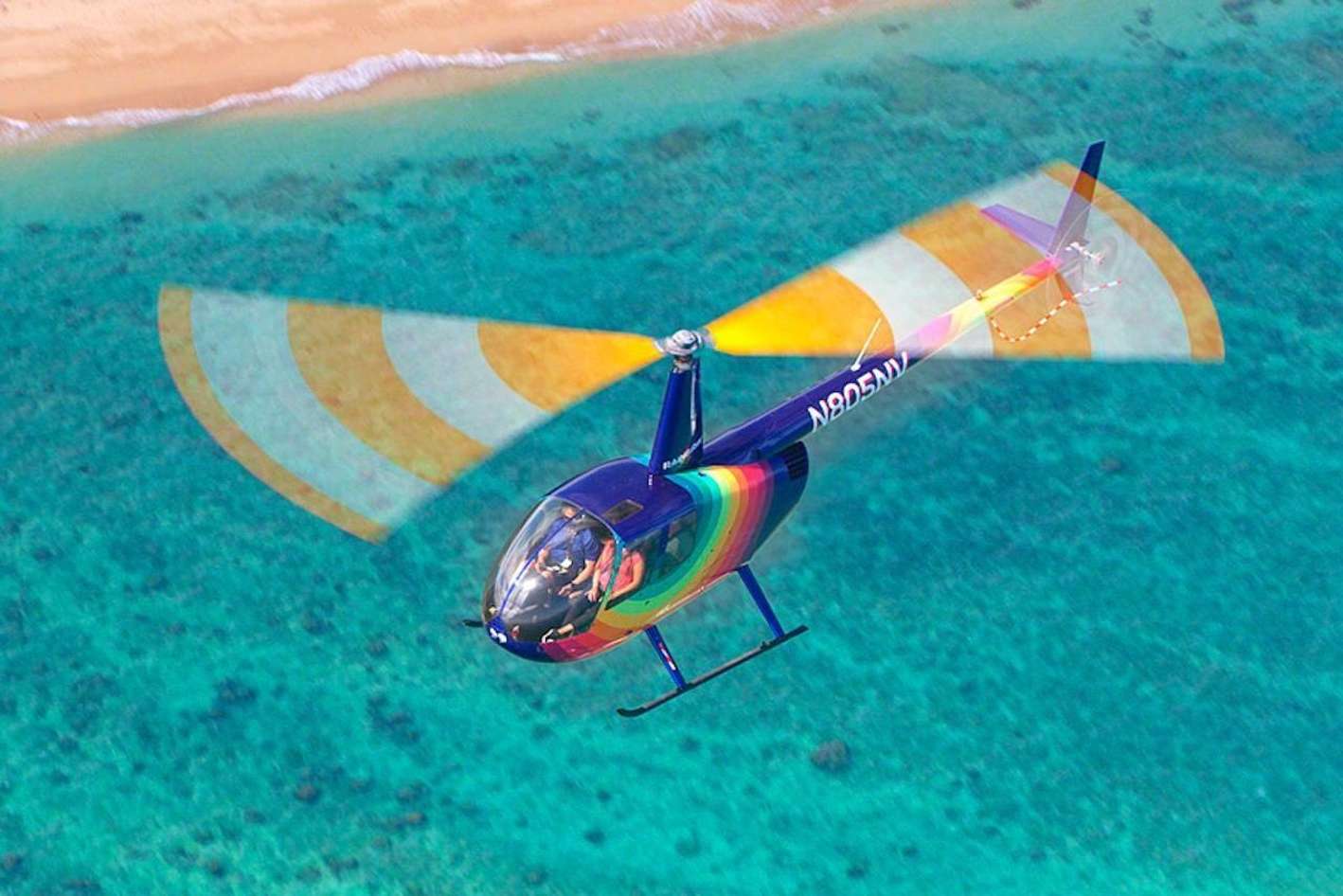
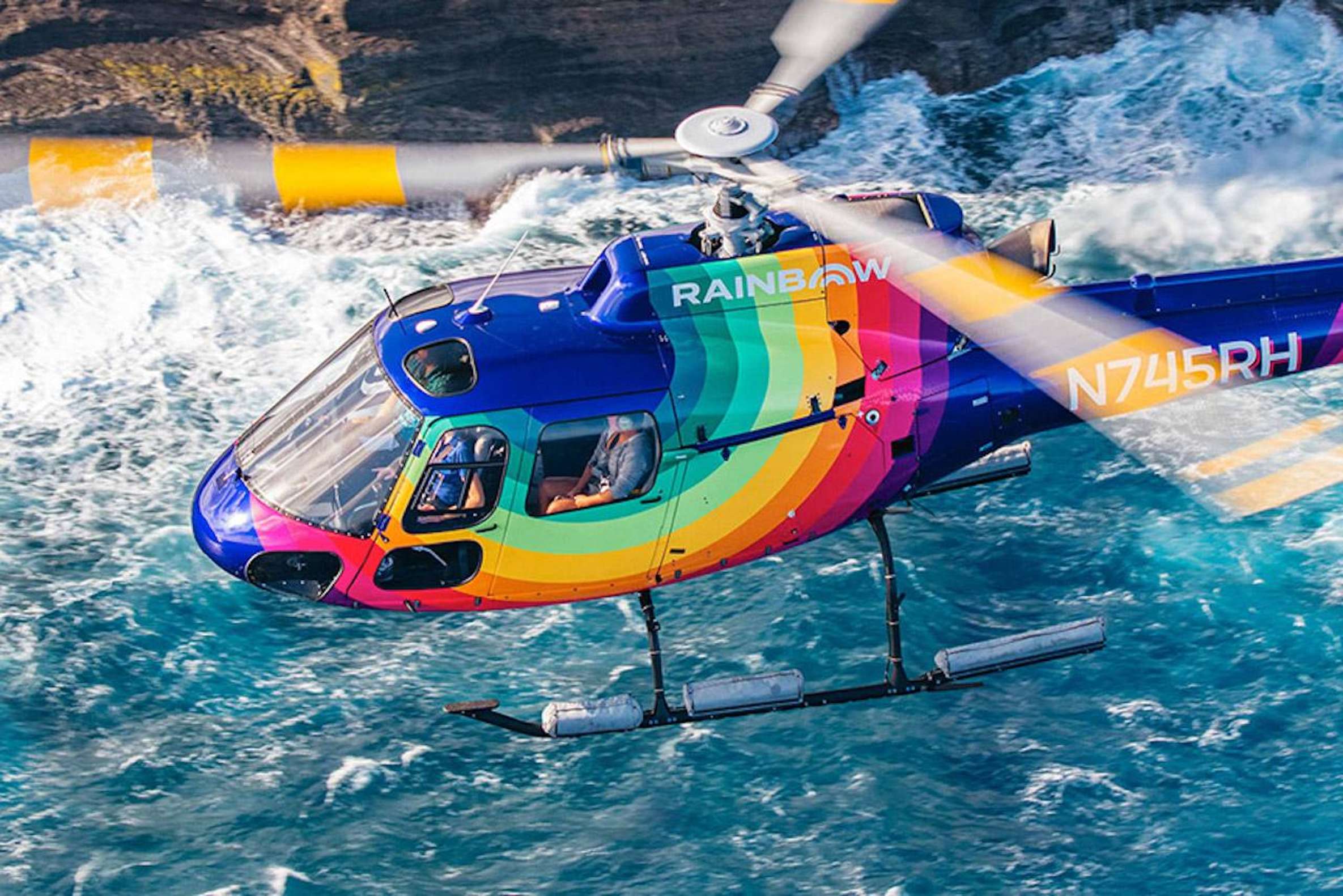
The booking screen asks one question before anything else: a climate-controlled cabin with windows, or an open doorway with the wind in your face. Both leave from the same Kona pads, often the same aircraft type.
Doors off changes how you dress and who can fly. In-flight temperatures run 10 to 15 degrees cooler than the ground, and the rushing wind adds a real chill over the Kohala valleys, so long pants, a long-sleeved shirt and a windproof layer are the working kit.
Loose garments that flap stay home. Cameras and phones must be tethered to you with a wrist or neck strap. For young children, doors-on is the realistic pick, with a comfortable, enclosed cabin and headsets that protect small ears.
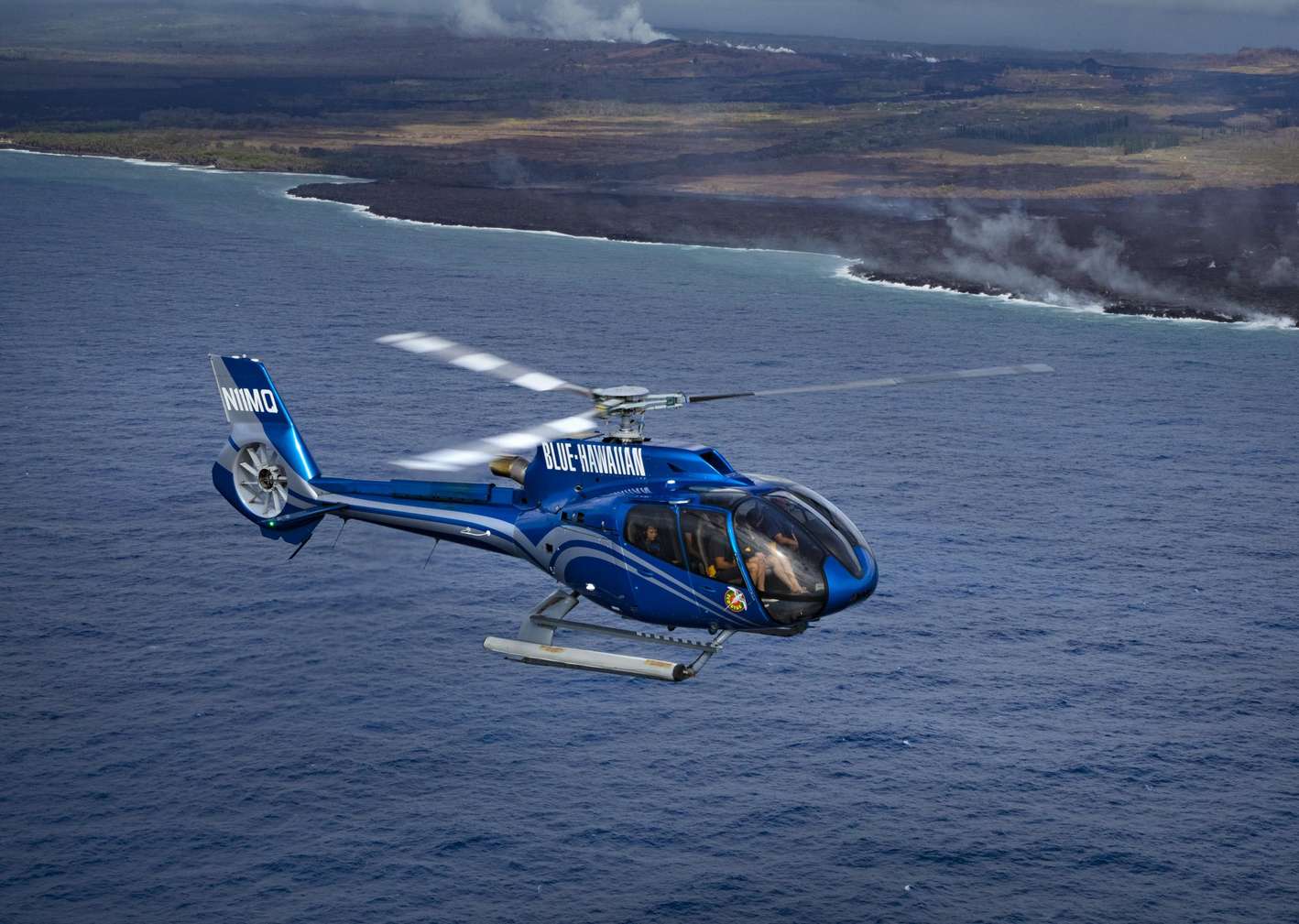
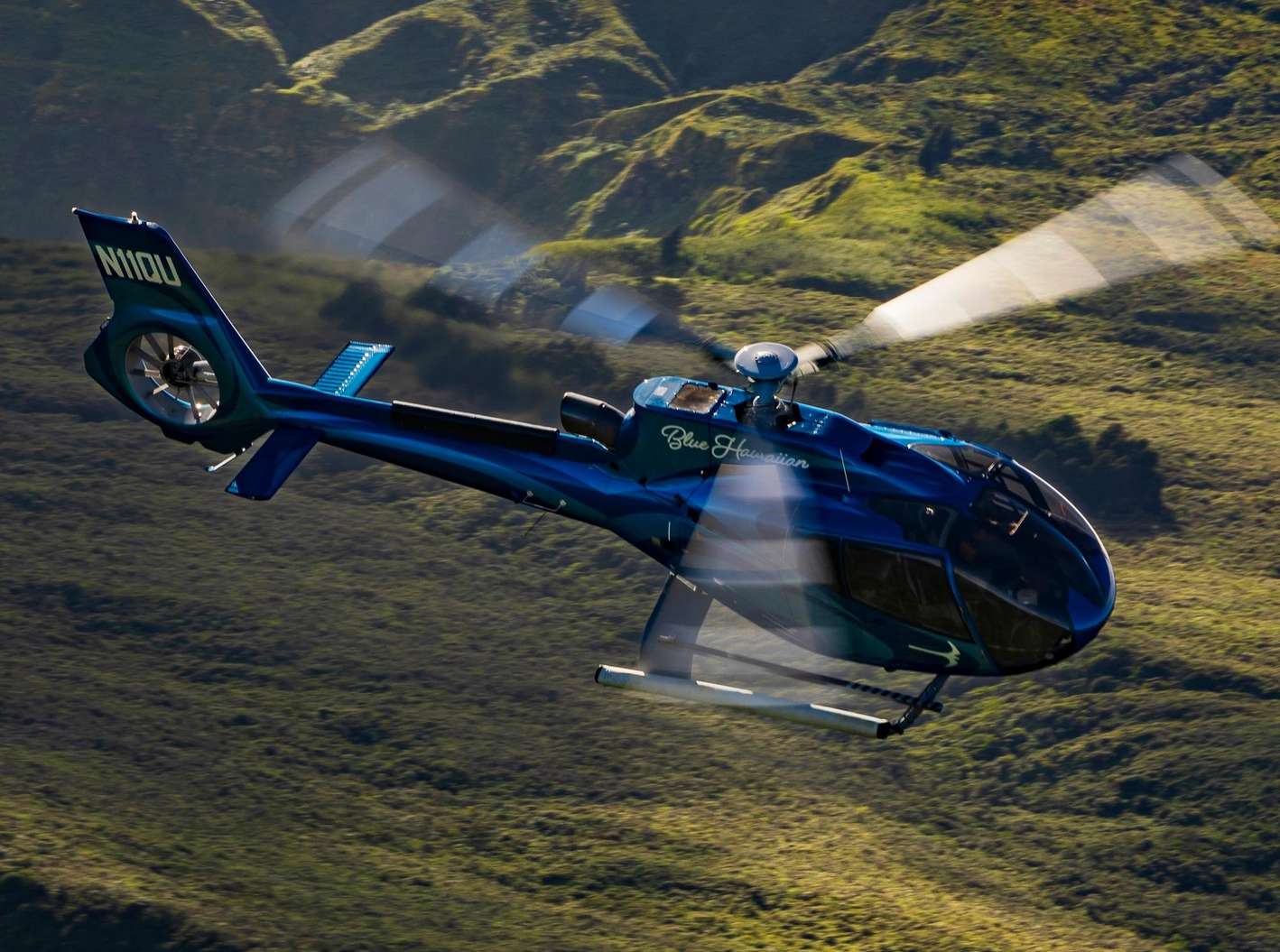
One route out of Kailua-Kona makes the choice simple: the Kailua-Kona: Hualalai Volcano Doors On/Off Helicopter Tour runs an hour over the coast and the volcano, with both configurations offered.
Three lengths cover most Kona bookings. A coast-only loop logs about 30 minutes over Kailua Bay and the shoreline. Routes that include Hualalai and Ka'upulehu Crater run 45 to 60 minutes.
The full northern run, valleys, waterfalls and volcano country, is the 1.5-hour Kohala volcano-and-waterfalls flight, the most ground covered in one booking; the separate Kona-to-Kilauea crossing tour is the one that runs about 1 hour 45 minutes.
The cross-island option deserves a clear look. Driving to Hilo saves money and airtime because the heliport there sits minutes from the crater.
But the drive from Kona runs about 90 minutes each way, and people who cross the island purely to save on the flight sometimes arrive to a cancellation: sudden weather shifts or an unfilled passenger minimum can strand the whole plan.
If you stay in Waikoloa or Kailua-Kona, a longer flight from Kona gives you the valleys, the Hamakua sea cliffs and the volcano in one booking, without betting the day on a highway.
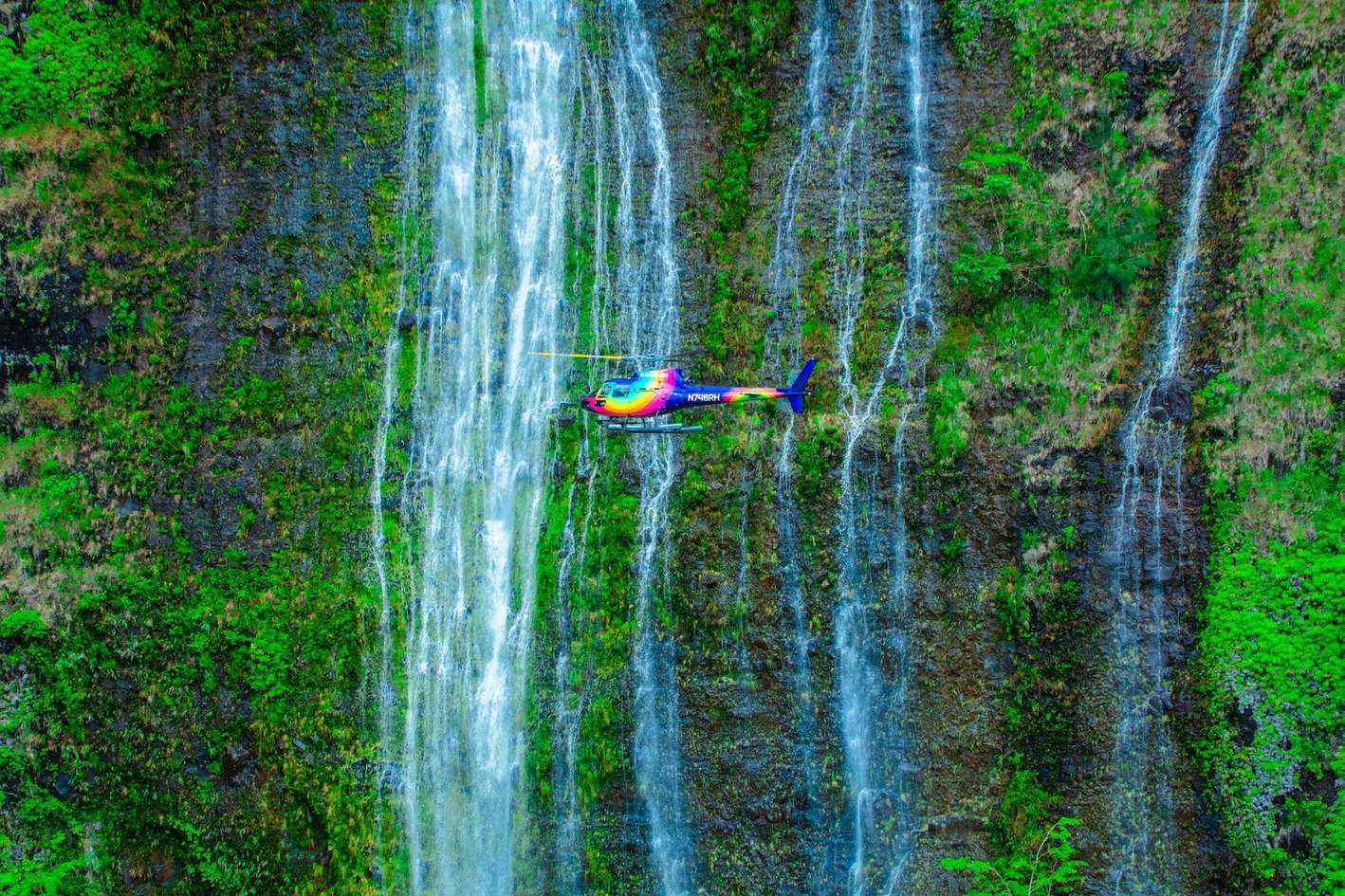
For the full sweep, the Kailua-Kona: Kohala, Volcanoes and Waterfall Helicopter Tour is the long version of that argument: 1.5 hours from the Kona coast to Mauna Loa, Hualalai, Mauna Kea and the Kohala valleys.
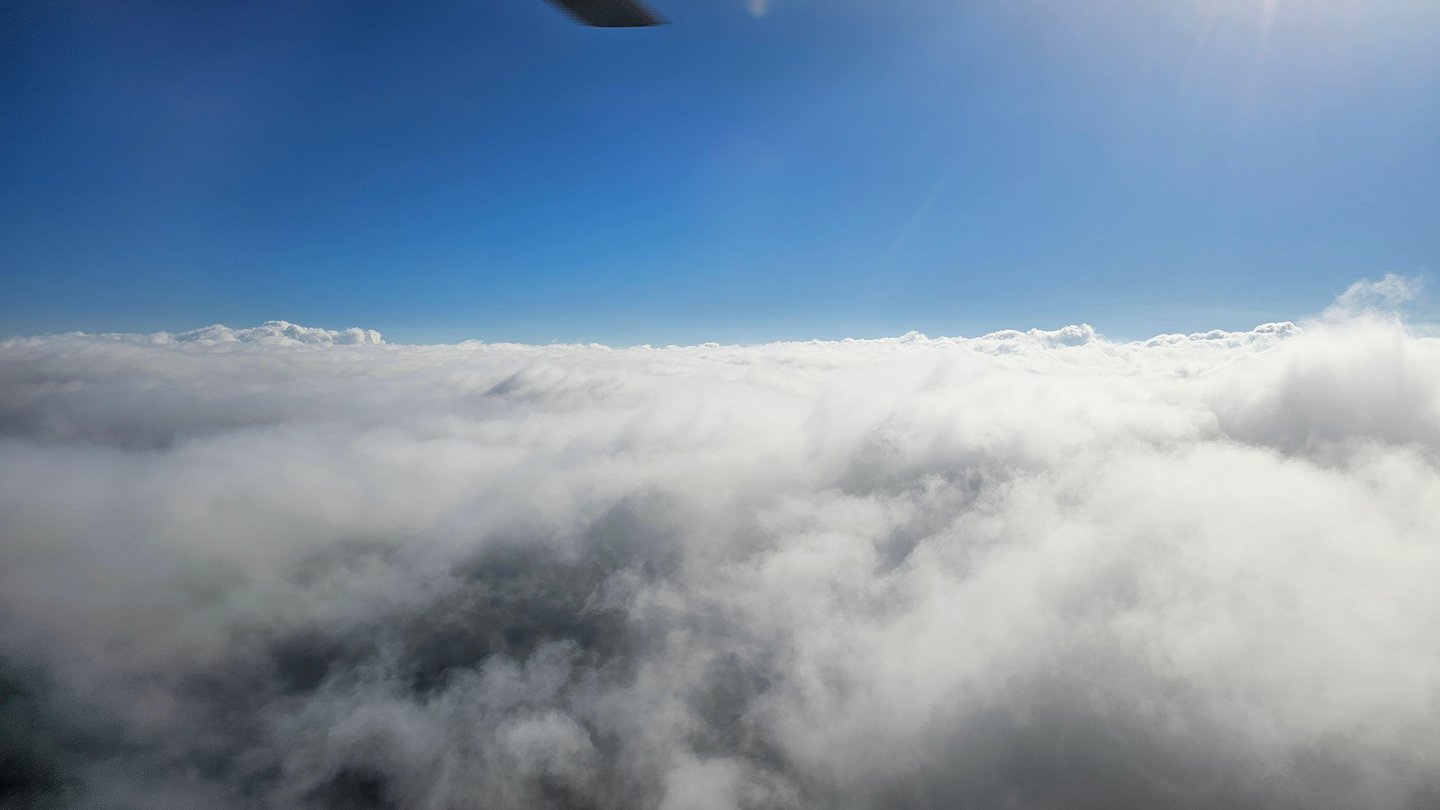
Morning owns this island. Departures between 8 am and 11 am give the smoothest air and clearest skies over the Kona coast, the Kohala ridges and the volcanic summits, before daytime heating pulls clouds up Hualalai's slopes and builds heavy showers over the interior.
On the cloudiest pattern, a helicopter that flew to Ka'upulehu Crater at nine might be stuck along the coastline at two.
Put the flight early in your vacation so weather has room to reschedule a cancellation. A flight booked for your final morning may simply be lost. Trade-wind days complicate the rule slightly, since they can bring early showers, but the morning window still wins most days.
How busy it gets, month by month
September: 5 out of 5 for how busy it gets.
HighestAug to Oct
In betweenMar to May, Jul, Nov
LowestJun, Dec to Feb
Darker: a higher how busy it gets score, out of 5
Tap a month to read it.
Two practical habits from people who fly here regularly: call the operator on the morning of the flight for real-time weather and lava-path updates, and think twice before locking a rigid volcano reservation far ahead, because the volcano slopes can sit under complete cloud.
In June through August and the December holidays, prime morning slots often sell out a month or more ahead. Winter also feeds the Hamakua waterfalls hardest, November through March.
Tour for this
Big Island: Volcano Adventure2.6★ (8) · 10.5 hours · Hotel pickup · Free cancellation
The drive is the easy part of the day. Kohala Coast resorts sit roughly 20 to 30 minutes from the airport, and from Waikoloa Beach Resort itself, the far end of the corridor, it runs about 40 minutes.
From Mauna Lani it is closer to an hour and a half. Compare that with the cross-island run to Hilo, about an hour longer from Waikoloa over Saddle Road, and the Kona choice makes itself.
The terminals sit south of the main passenger buildings on the general aviation side. Plan to arrive a full 60 minutes before takeoff: check-in includes weighing every passenger for the aircraft's balance calculations, then the safety briefing. Missing that window risks missing the flight.
Build the morning around the hour. Grab coffee at Pine Tree Café or Patricio's Taqueria minutes from the airport, and remember the flight itself lands you back by midday with the whole coast ahead of you.
Compared with any Hilo plan, this is the version of the day where nothing can go wrong on the road.
Driving yourself
Rent a car in Kailua KonaCompare cars from the rental companies in one search, then pick yours.
Operators assign every seat from FAA weight-and-balance calculations, which is why couples cannot always sit together and why check-in starts with a weigh-in. The aircraft itself shapes what you get.
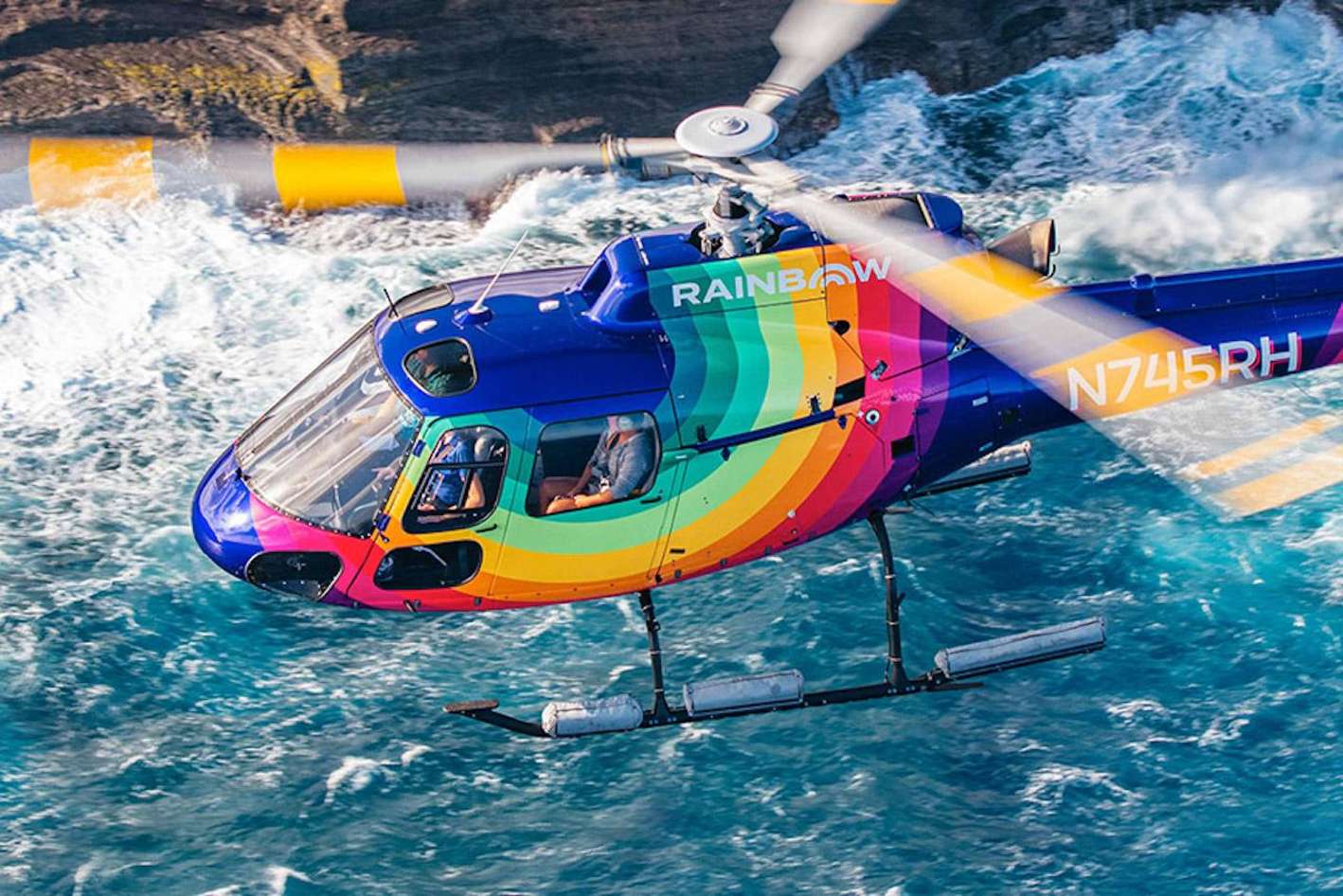
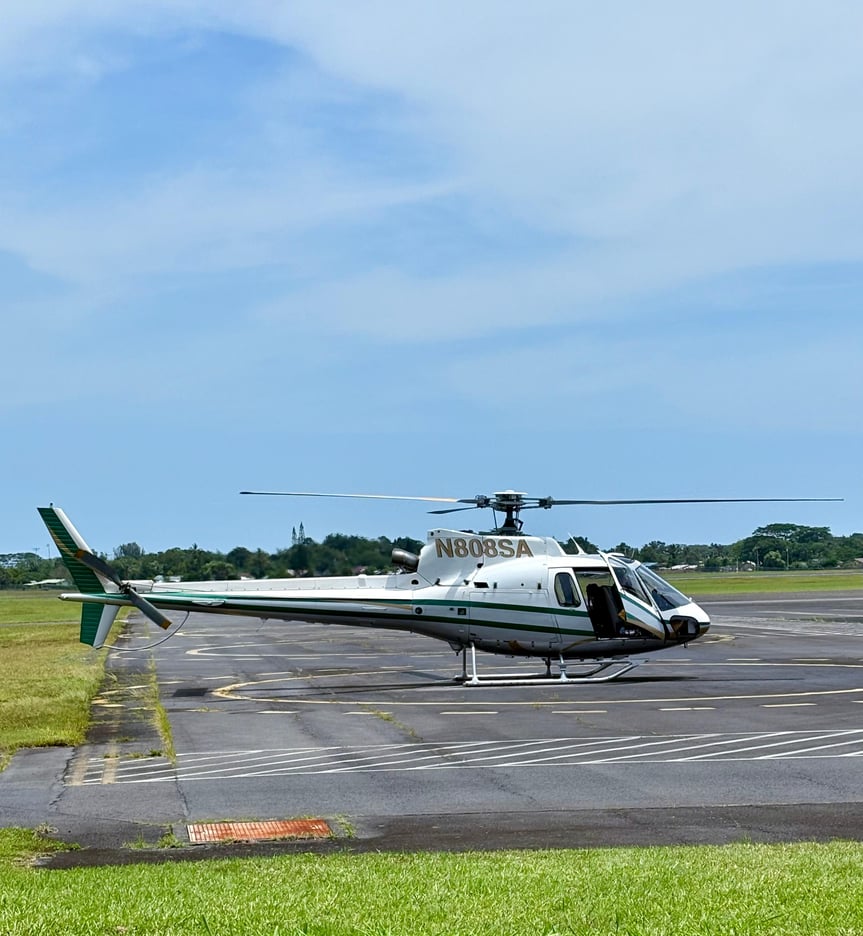
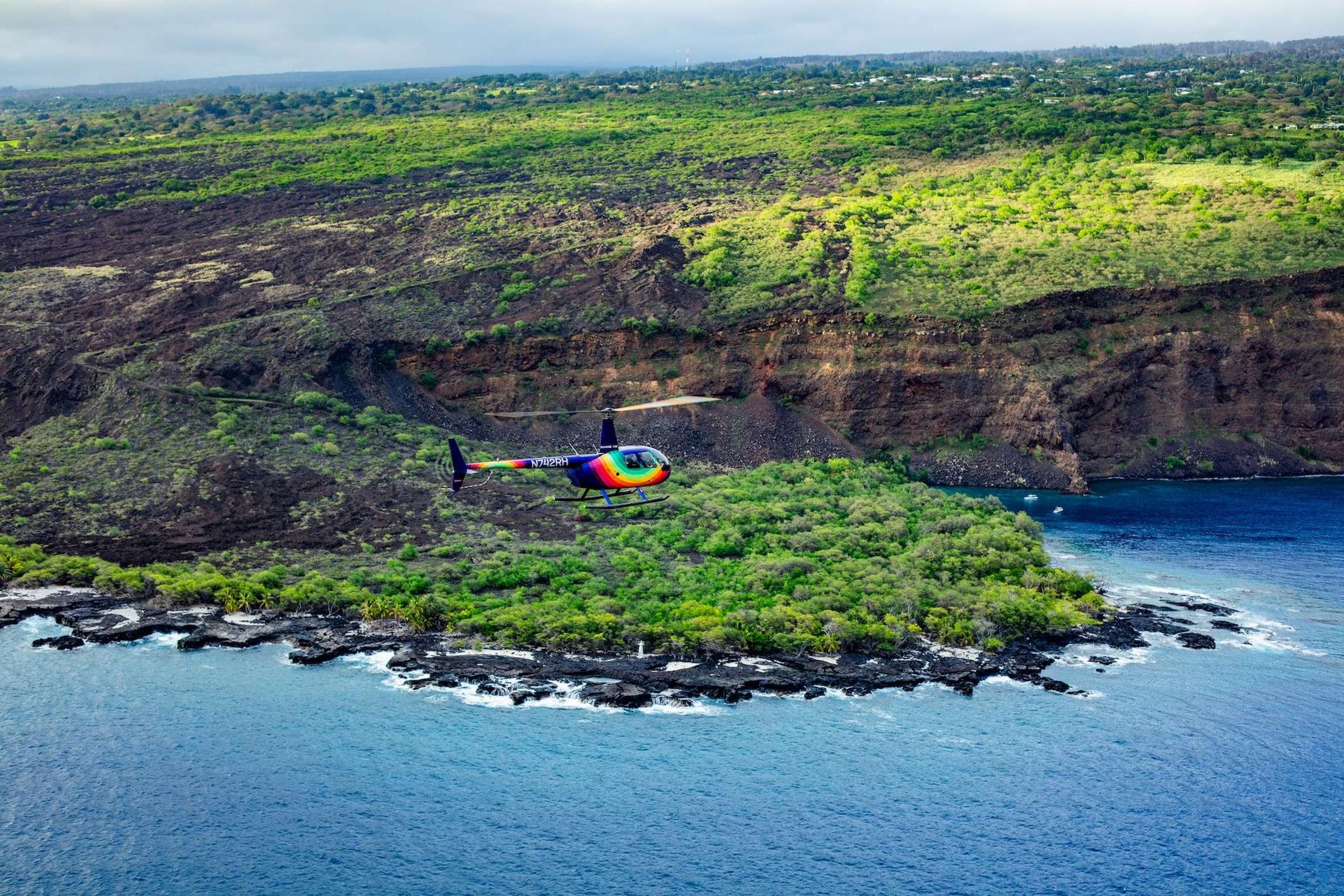
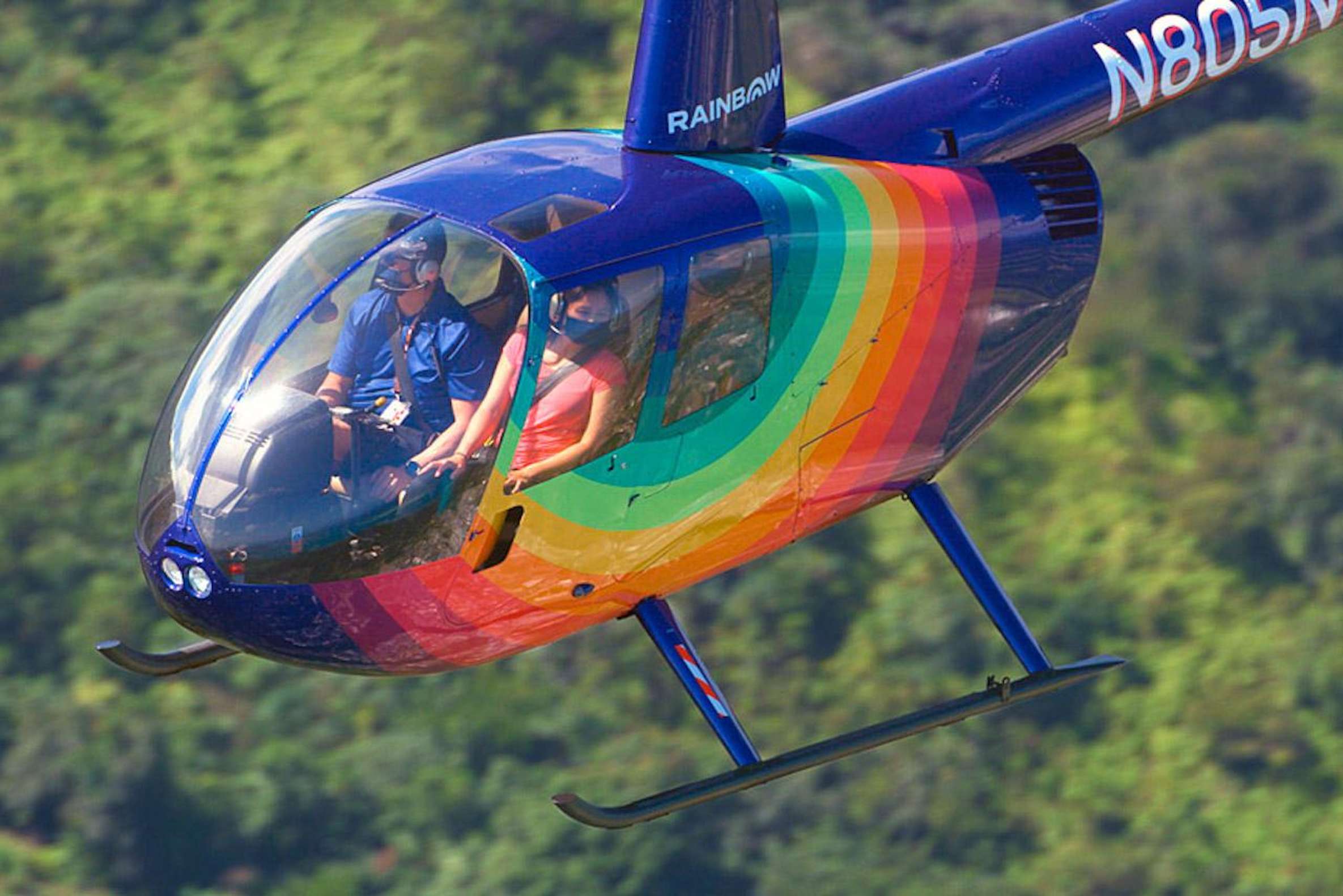
Smaller four-seat helicopters give every passenger an open view with no middle seat; larger six-passenger ships have middle rear seats where views can be partly blocked, and seat requests are never guaranteed. A few conditions end the plan before it starts, and diving is the one that catches people:
Vertigo, claustrophobia, pregnancy, a cold or flu, or being unable to sit upright for the flight also rule certain tours out.
Travelers with mobility limitations can arrange boarding help at Kona Airport in advance, since aircraft there board from ground level using portable stairs; contact the operator before the day, so the help is ready at the pad.
Tour for this
Waikoloa: Big Island Spectacular Helicopter Tour4.2★ (10) · 105 minutes - 2 hours · Free cancellation
The night before, the suitcase sorts itself by one question: doors on or off. Doors-on cabins are climate-controlled, so casual clothing is comfortable and a heavy jacket is too warm.
Wear solid dark colors, black, navy or charcoal, because light clothing reflects in the glass and shows up as glare in your photos. Dark clothing is only advice, and everyone who takes photos wishes they had followed it.
Doors off is colder than people expect, 10 to 15 degrees below ground temperature before the wind: long pants, a long-sleeved shirt and a windproof layer over everything, plus closed-toe shoes. Tie long hair back tightly, because rotor wash turns loose hair into a photography problem and worse.
The other half of packing is subtraction. On open-door departures from Kona, no loose items fly at all: purses, hats, scarves, water bottles, selfie sticks and spare camera lenses stay behind or get stowed.
Phones and cameras ride strapped to you, and the operator supplies specialized straps and cases. Sunglasses are fine; headsets hold them against your head, though an eyewear strap is a small comfort on rough air.
Tour for this
Big Island: Kilauea Volcano Eruption Heli Tour - Door On/Off4.4★ (5) · 1.5 hours · Free cancellation
The straight numbers first: fatal air tour accidents in Hawaii average fewer than one per year across very high daily flight volumes, and the injury risk on a commercial tour compares with, or sits below, a daily interstate commute. After Hawaii's 1994 rule tightening, a study found the crash rate fell nearly by half.
The rules behind those numbers are specific to these flights. Tour helicopters generally stay at least 1,500 feet above the surface, fly only at heights and speeds that allow a safe landing after engine failure, and carry a performance plan the pilot must follow before every departure.
Single-engine ships crossing open water carry flotation gear, and pilots brief passengers on water procedures before those segments. Pilots also train autorotation, the glide technique that brings a helicopter down under control without engine power; helicopters do not simply fall.
A traveler's note
Fantastic, marvelous, magical. The whole crew helped me create the most special moment for my (now) fiancée. A memory that will last forever. Thank you all!
At the pad, the ground crew walks you through the machine's danger zones before boarding: stay clear of the tail, crouch low under the main rotor, and mind the upslope side on a hill. Choose an established operator; experienced flyers call that the one real safety decision, and the cheapest listing is rarely it.
Low clouds close in and the flight pads sit quiet. Operators handle it the same way every time: they delay, they reroute, they cancel in heavy rain, gusty wind or gray ceilings, and passing showers over the Hamakua Coast usually do not stop a flight at all.
If weather cancels your flight outright, you get a reschedule or a full refund, no penalty. If the operator moves the tour to another day and that day does not work for you, the full amount comes back.
The edge case matters: a flight that does fly but diverts around weather, or loses a point of interest or airtime, generally earns no refund or discount from some operators. That is why the buffer-days advice in the timing chapter matters more than any promise.
When the wheels touch down after a good flight, the custom is simple: a tip for the pilot on landing, and ground crew share whatever is left at the desk. People who fly here often keep it easy and round up for a couple.
Book the flight for morning and the day opens up, because everything worth doing sits within 15 minutes of the terminal.
Harbor House at Honokohau Harbor is roughly 3 miles south, a five-minute drive, and does a solid post-flight lunch. Kua Bay and its white sand sit about 15 minutes north for a swim after you land.
Closer still, the Kona Salt Farm is 8 minutes away and Big Island Abalone about 5, both working stops that fit between landing and lunch. Kailua-Kona town itself is a 15-minute drive when you want shops, a seawall walk or a late afternoon beer with the sunset behind Hualalai.
The rhythm people settle into: early check-in 60 minutes before takeoff, an hour in the air, wheels down before noon, and the afternoon spent at the beach instead of on a highway. That is the whole case for flying from Kona Airport, made by the day itself.
If you sleep on the Kona or Kohala coast, a helicopter tour from Kona Airport buys you the roadless island without a cross-island drive. Book the right length for your day, doors-on with kids, doors-off for the full wind, and take a morning slot early in your trip with buffer days behind it.
The volcano may be quiet, and you will still fly craters, valleys, cliffs and waterfalls no road reaches. That is the flight.
Go ifYou want Kohala valleys, sea cliffs and volcano country without a 1.5- to 2.5-hour drive each way to Hilo.You can take a morning slot between 8 and 11 am early in your vacation.You want a doors-on cabin the whole family can share.
Skip ifYou have scuba dived in the last 24 hours, or plan to dive the morning of the flight.The glowing crater is your only goal and you cannot spare the 1 hour 45 minutes of airtime a Kona volcano run takes.You are traveling with children under about 12 and want doors-off seats beside an open doorway.
Straight answers on routes, check-in, doors-off rules and what the weather does to a Kona departure.
Honalo2026
Wish you were up here: Kohala cliffs, steam vents and green valleys in one hour. Book the morning slot, before the clouds build.
Which helicopter tours depart from Kona Airport?
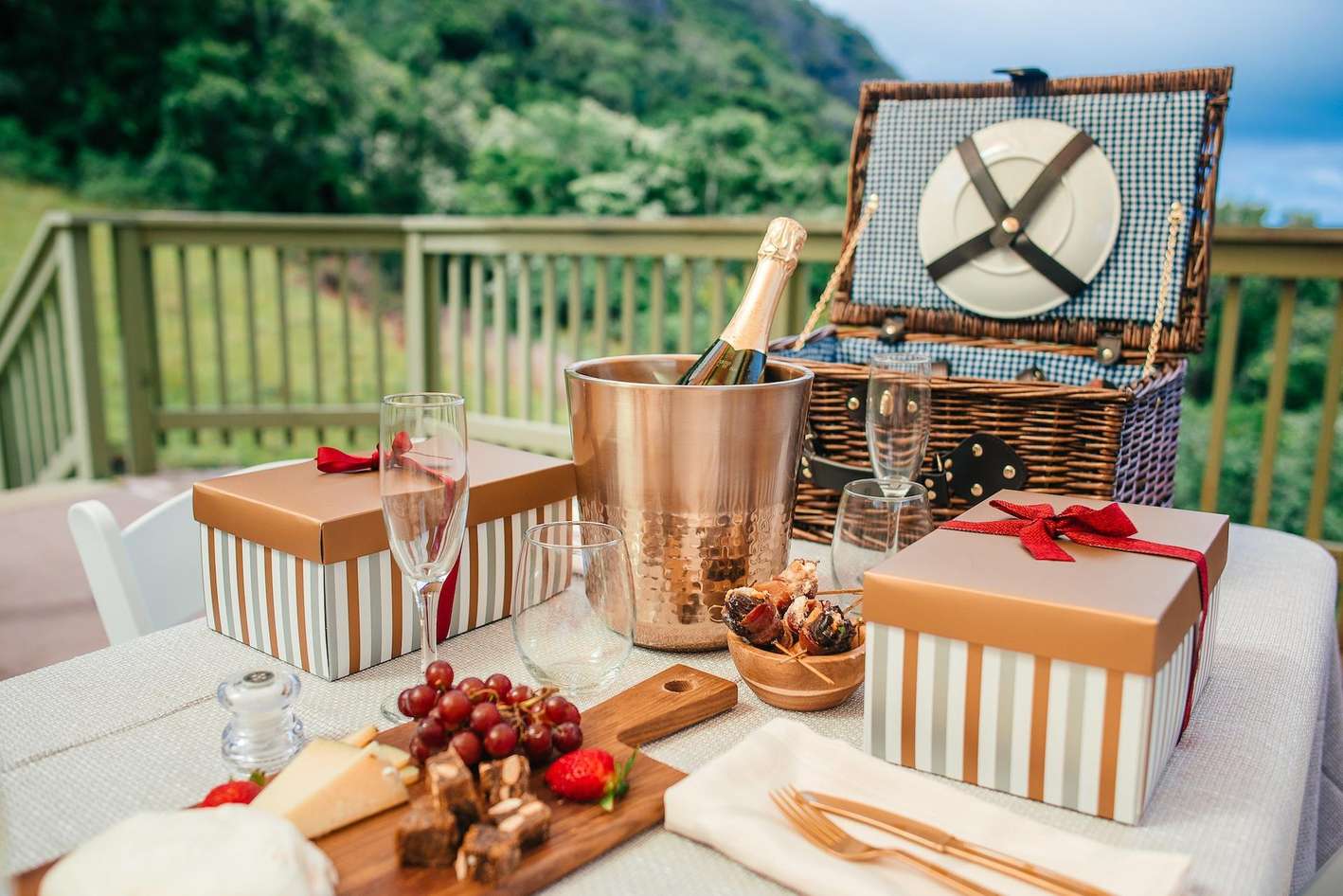
Six tours on this page take off from the Kona side, ranging from a 30-minute coastal loop over Kailua Bay to a 2.5-hour private flight with a champagne landing. Longer routes add Hualalai, Mauna Loa and the Kohala valleys.
Can a helicopter tour from Kona Airport reach Kilauea Volcano?
Yes. The crossing takes time, so plan on a flight of 1 hour 45 minutes or more to cover Kilauea from Kona. The shorter Kona tours stay over the coast and Hualalai.
Will I see flowing lava on a Kona Airport helicopter tour?
Only when Kilauea is in an active eruptive phase, and even then surface lava shows on some flights and hides on others. When the volcano is quiet, you will see craters, steam vents and old hardened flows instead.
Is a Kona helicopter tour worth it if the volcano is quiet?
A quiet Kilauea still shows a vast caldera, vents and rift zones. Longer Kona flights also cover the Kohala valleys and Hamakua sea cliffs, terrain no road reaches. If flowing lava is the only thing you want, a Hilo departure gets you to the crater in minutes.
Kona Airport or Waikoloa Heliport: which departure should I pick?
Waikoloa Heliport sits closest to the Kohala Coast resorts, about a half hour from Kona Airport by road. Kona Airport suits you if you are based in Kailua-Kona or near the airport itself.
How early should I arrive at the Kona heliport?
Arrive 60 minutes before your scheduled takeoff. Check-in includes weighing every passenger so the aircraft can be balanced, followed by a safety briefing before you board.
What should I wear on a doors-off flight from Kona?
Long pants, a warm zip-up jacket and closed-toe shoes, with long hair tied back. Air at altitude runs 10 to 15 degrees cooler, and the open door adds wind chill. Dark, solid-colored clothing also keeps reflections out of window photos on doors-on flights.
Are there weight or age rules for doors-off seats?
On Kona doors-off flights, passengers need a minimum weight of 80 lbs in the smaller Robinson R44 and 100 lbs in the Airbus AStar. Everyone aged 24 months and up takes a full-fare seat, and guests weighing 250 lbs or more need a weight and balance adjustment.
How safe are helicopter tours in Hawaii?
Fatal air tour accidents average less than one a year across all the islands, and a 2009 study found Hawaii's crash rate fell by half after its 1994 safety rule. Pilots fly only where a safe landing would be possible after an engine failure, and they reroute or cancel when conditions turn poor.
What happens if weather cancels my Kona flight?
Operators delay, reroute or cancel when low clouds, rain or vog block the route. If the flight is canceled, you get a full refund or the chance to reschedule, which is one reason to book the flight early in your stay.
What time of day is best for a helicopter tour from Kona?
Aim for a morning slot between 8 and 11 am. Winds stay calm and skies clear before afternoon clouds build over Hualalai and the island's slopes. On trade-wind days an early shower can pass, so a later morning departure works then.
Can passengers with limited mobility board at Kona Airport?
Yes. Aircraft board from ground level with portable stairs, and a boarding lift can be arranged through the operator. Contact your tour operator in advance so the help is waiting when you arrive.