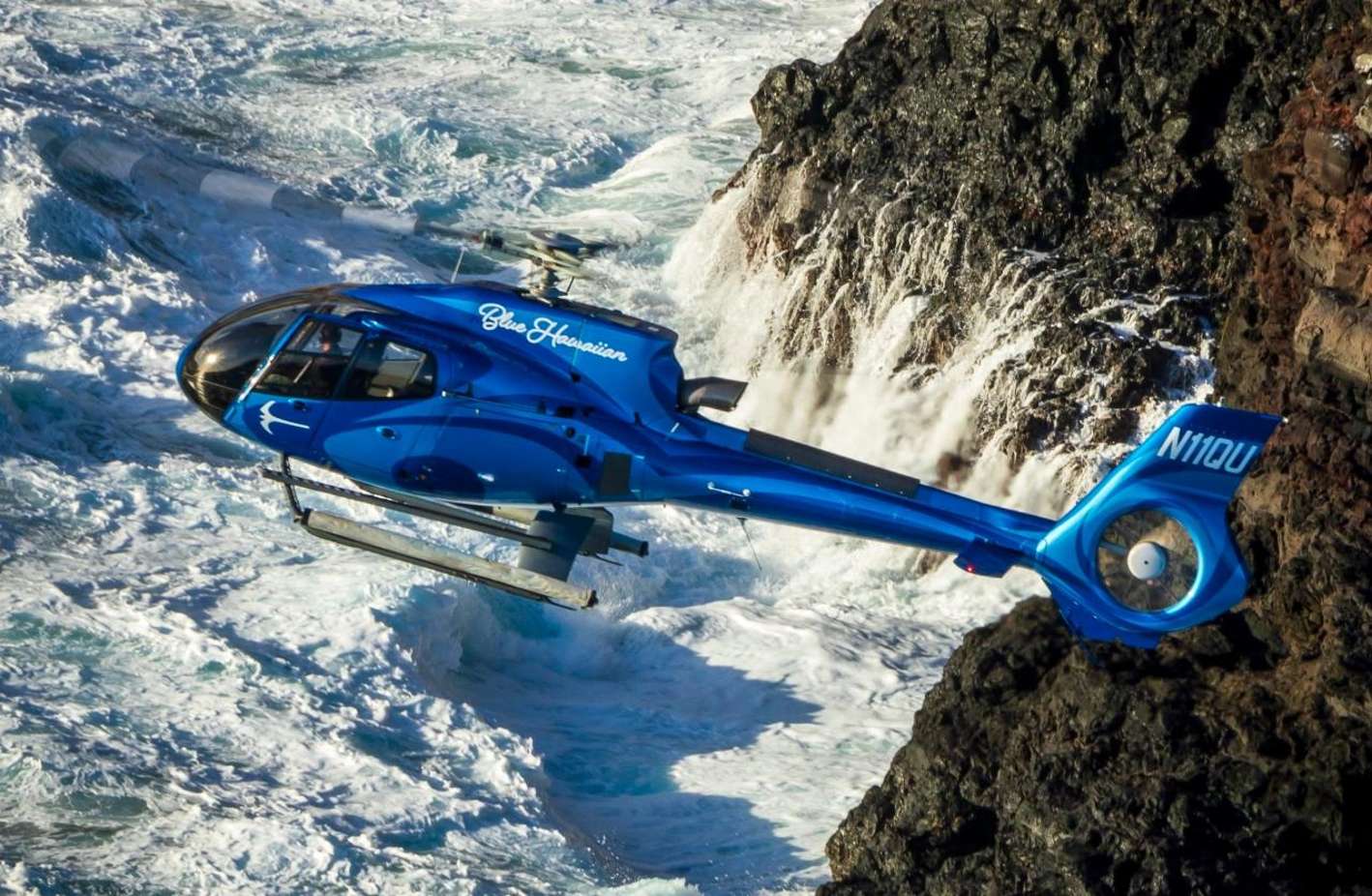
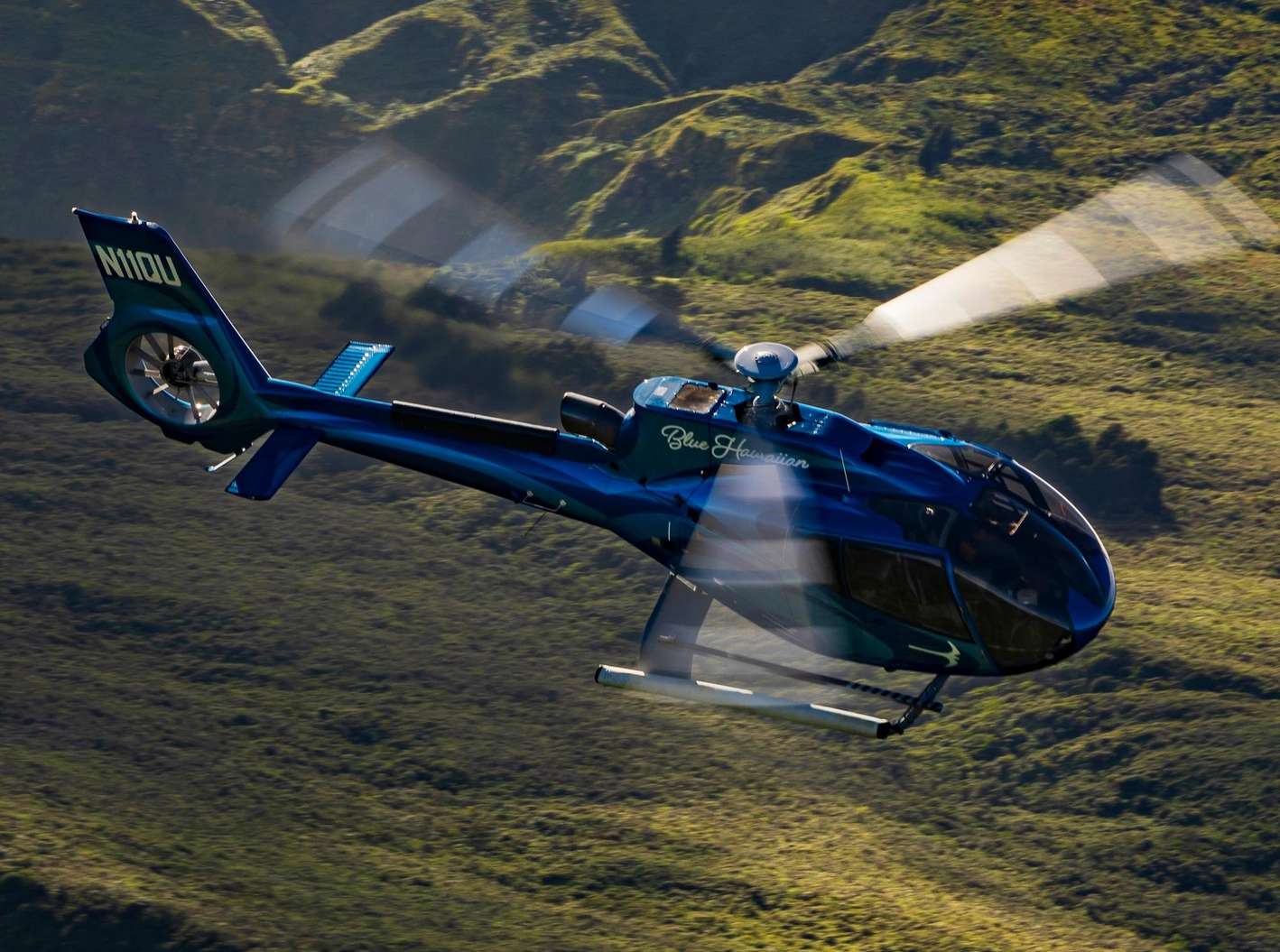
Big Island Waterfall Helicopter Tours Kohala Valleys and Hamakua Coast Views
Book a Big Island waterfall helicopter tour that flies deep into the Kohala valleys, not just along the coast. Pilots certified as Hawaii tour guides hover inside 2,500-foot wall canyons and show you cascades no road or trail can reach. Pick your departure and lock in a morning seat.
"The tour was incredible. Our pilot was super friendly and explained a lot along the way. I'd book it again anytime, nothing compares to an experience like this."
4.5★average rating342traveler reviews100%free cancellation25countries travelers came from
Your first helicopter tour over the Big Island's waterfalls, sorted
Waterfall flights here come in two shapes. A short valley run from Waikoloa or Hilo keeps you over the green Kohala country for under an hour, while a full-island flight adds volcanic craters and more time in the air. The choice comes down to what you flew here for: falls alone, or the whole island in one go.
BookingPeak summer and the December to January holidays sell out weeks ahead, and prime morning slots go first.
TimingBook a flight early in your trip so a weather cancellation leaves days to reschedule.
WeatherPassing showers rarely stop a flight, but low cloud can close a valley, and operators cancel or reroute on the day, then offer a reschedule or a full refund.
DivingSkip scuba for 24 hours before your flight or you cannot board.
Check-inPlan to arrive 45 minutes to an hour before departure, and late arrivals may lose their seat.
ClothingWear solid dark colors so your clothes do not reflect in the window photos, and closed-toe shoes.
InfantsBabies up to 23 months ride on a lap at no charge; older children need a full-fare seat.
Which Big Island waterfall helicopter tour fits you?
Answer a few quick questions and the best matching flight comes up, with two more that also fit.
What a helicopter ride over the Big Island's waterfalls shows you
about 1 h
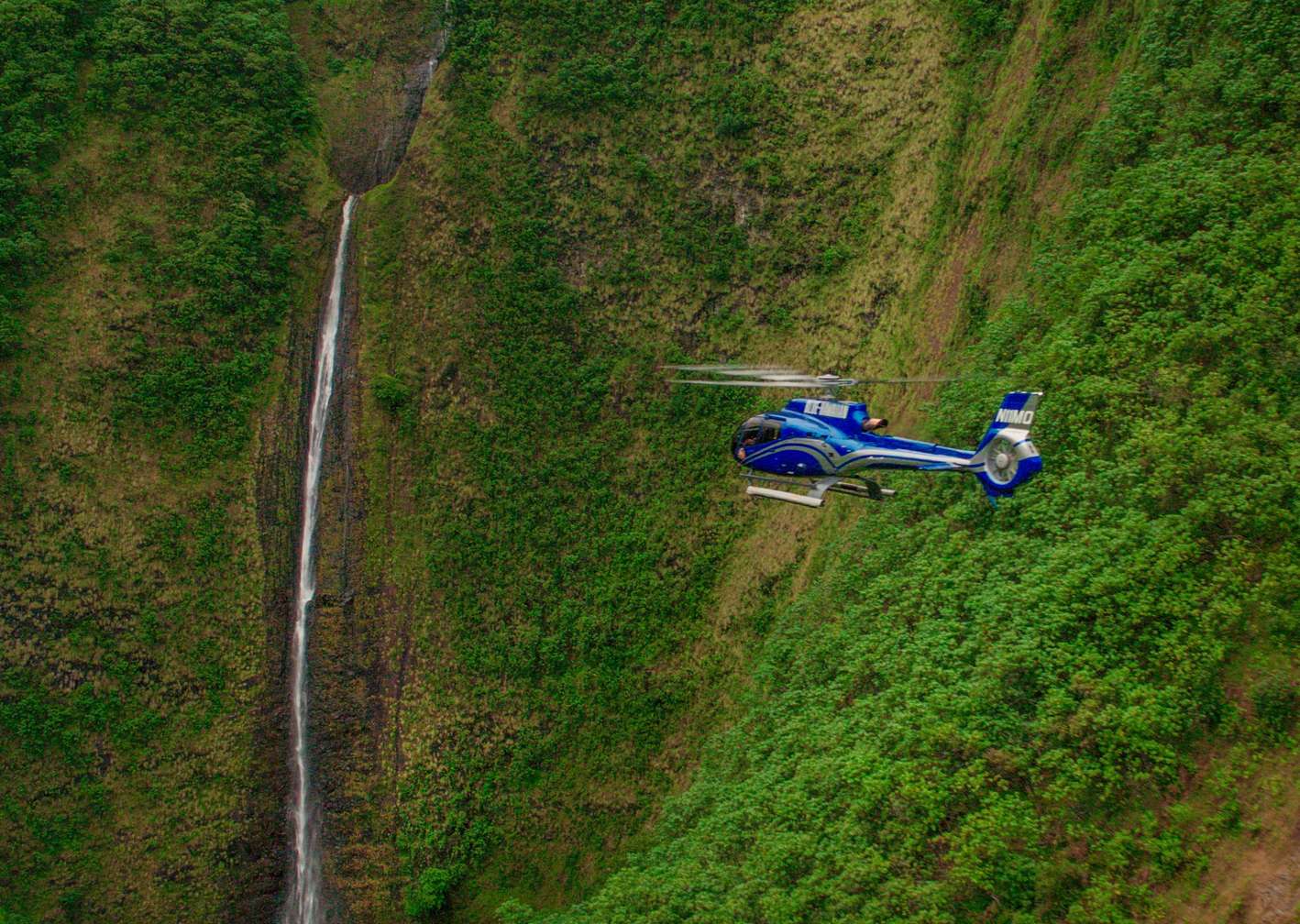
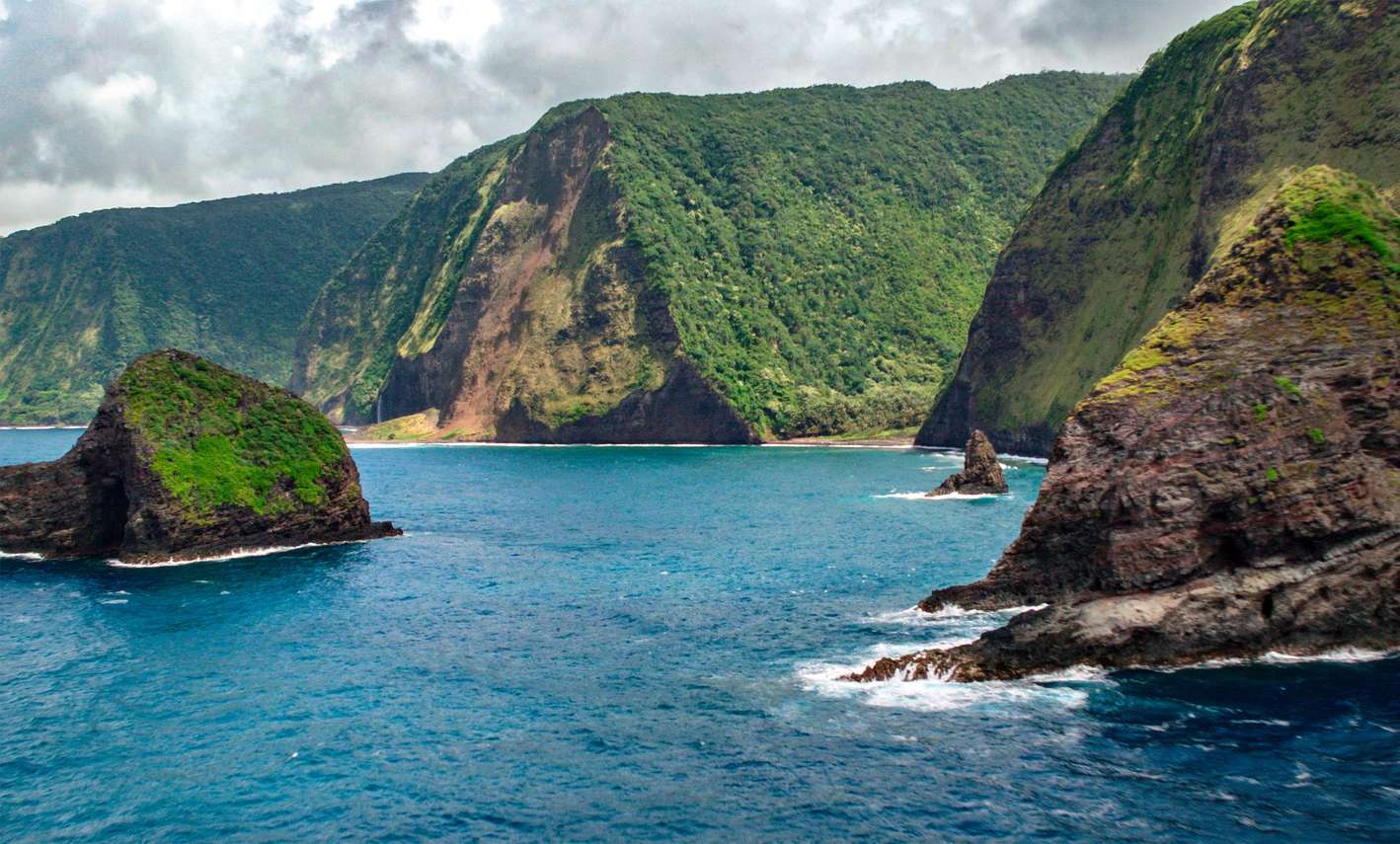
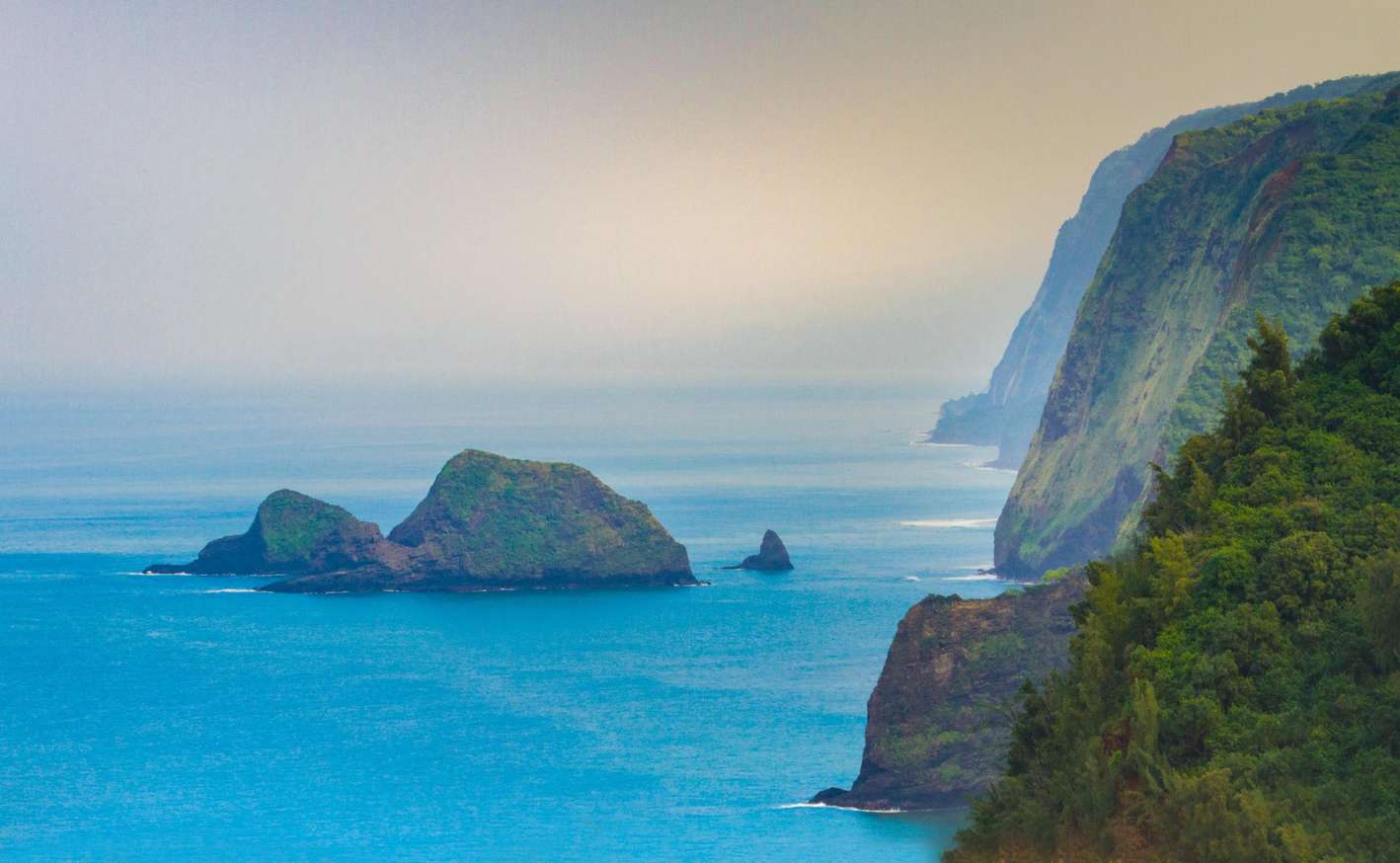
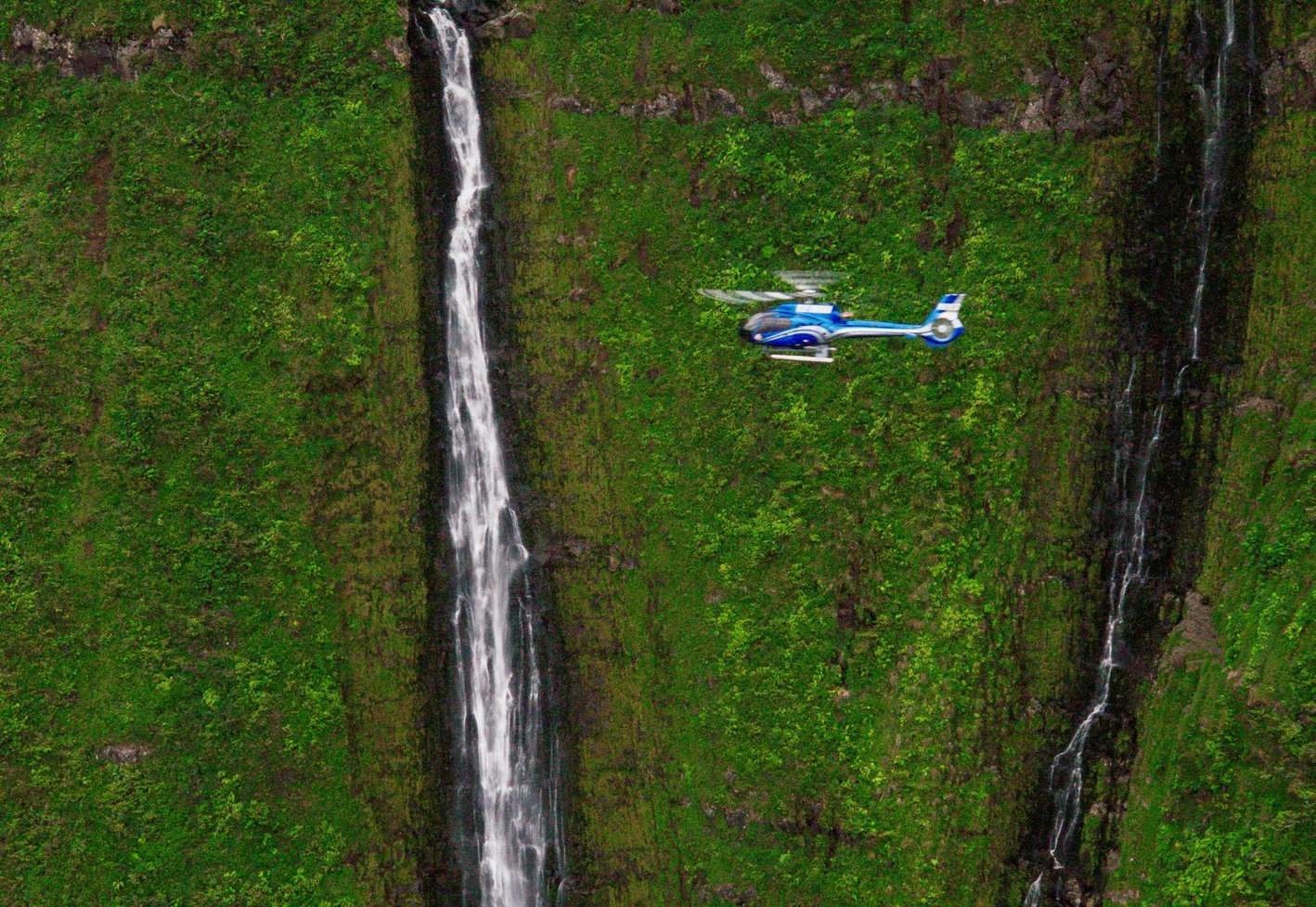
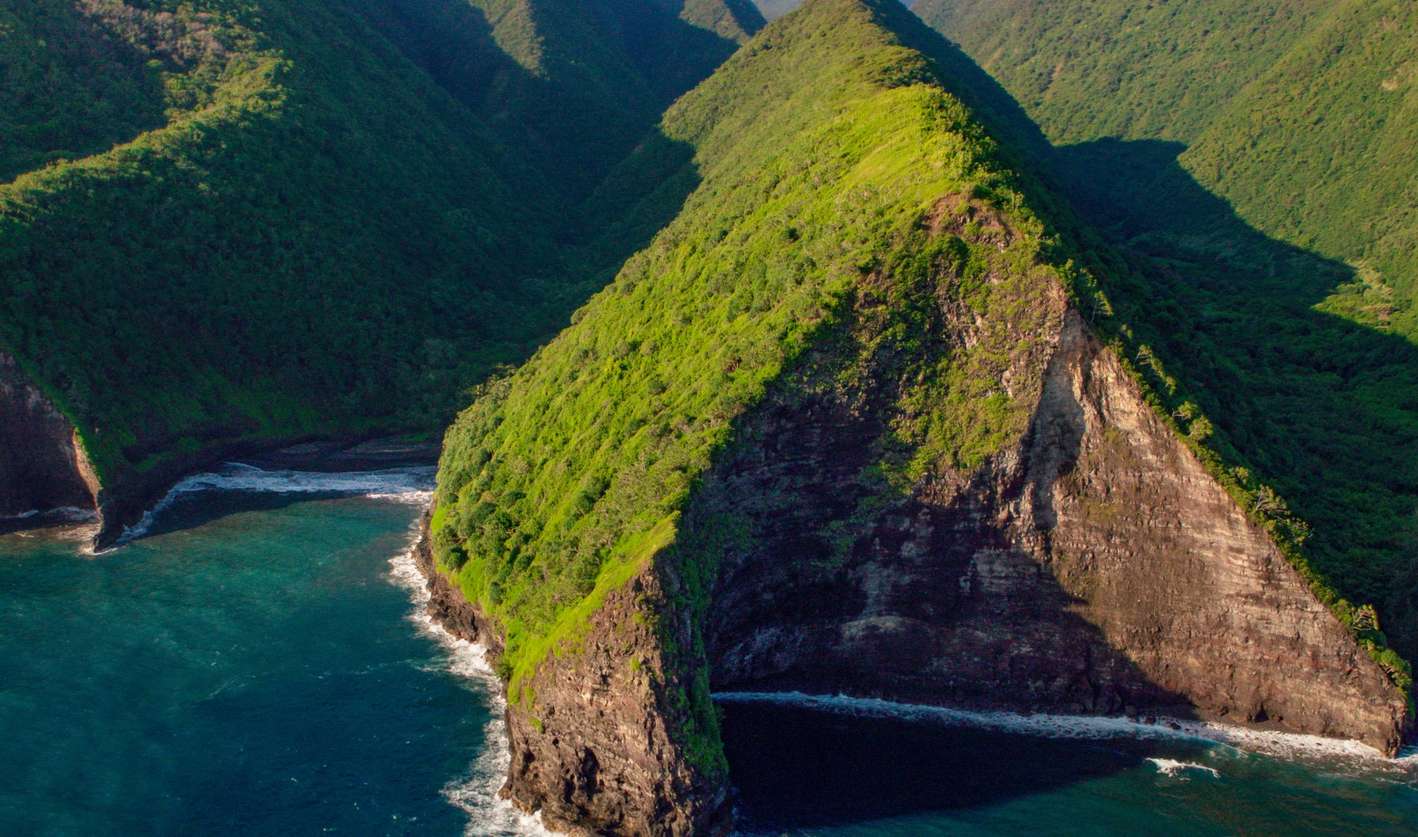
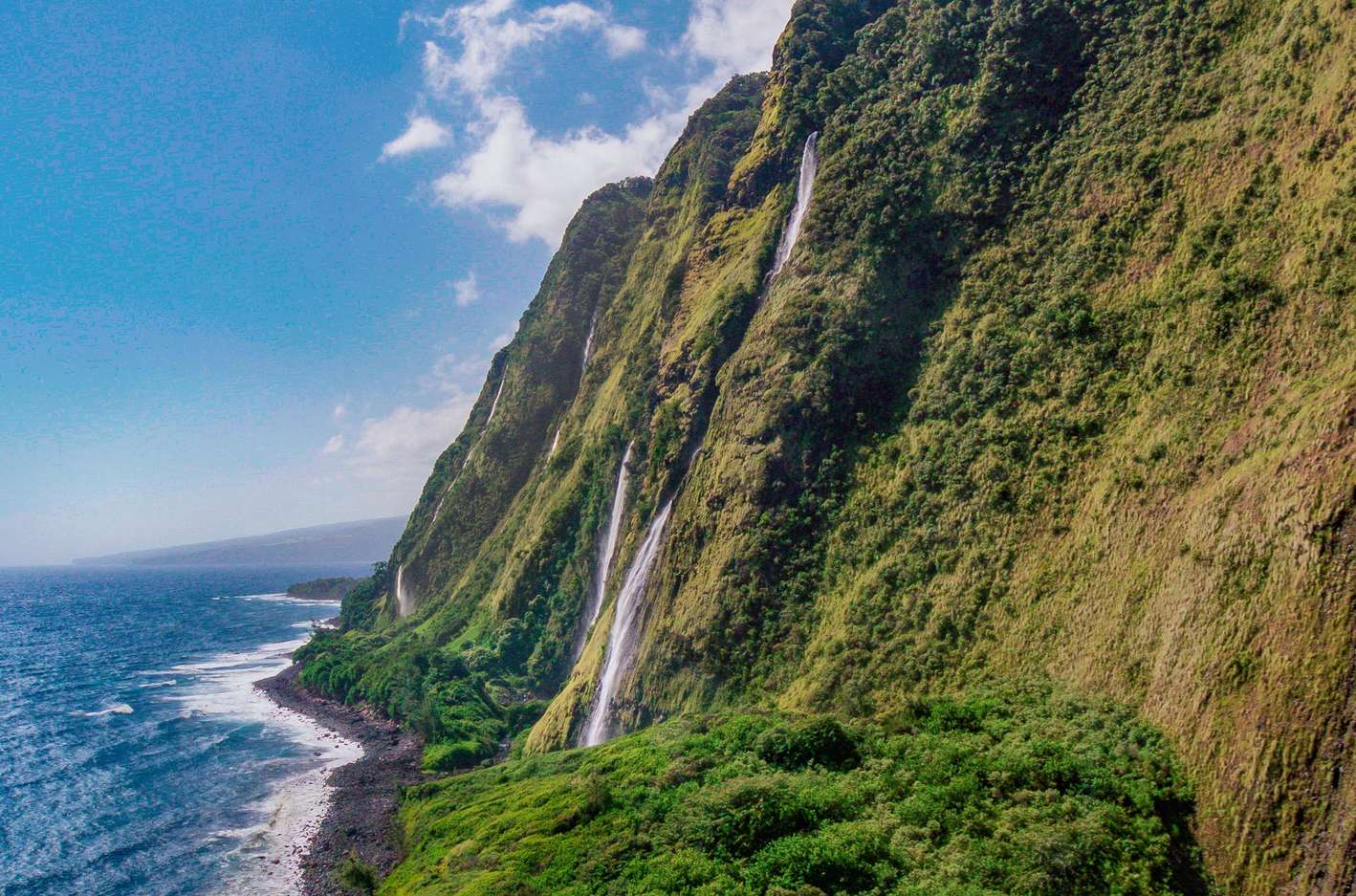
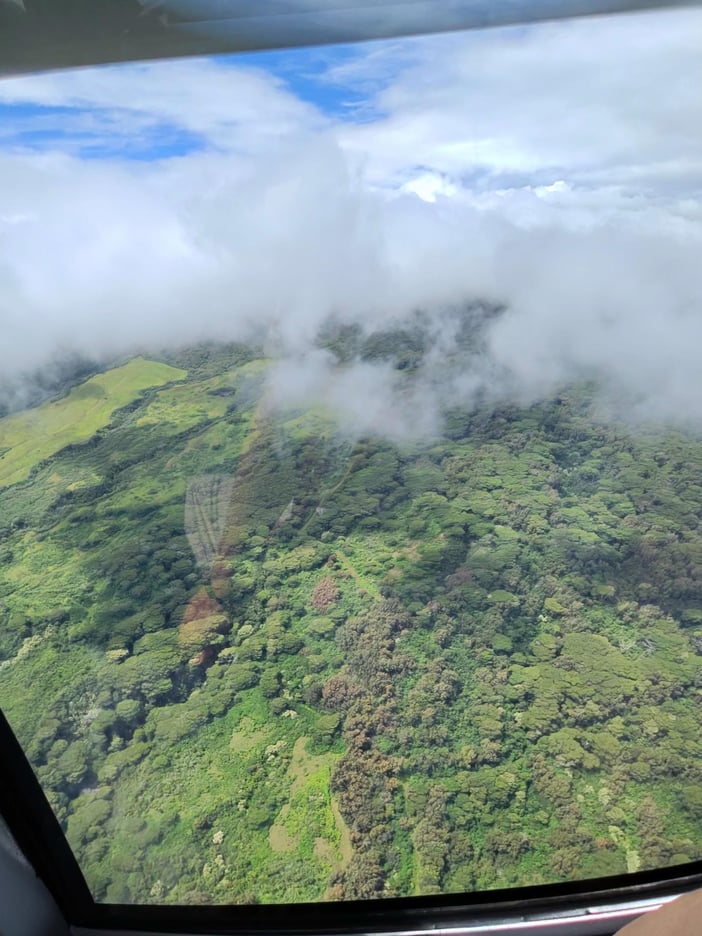
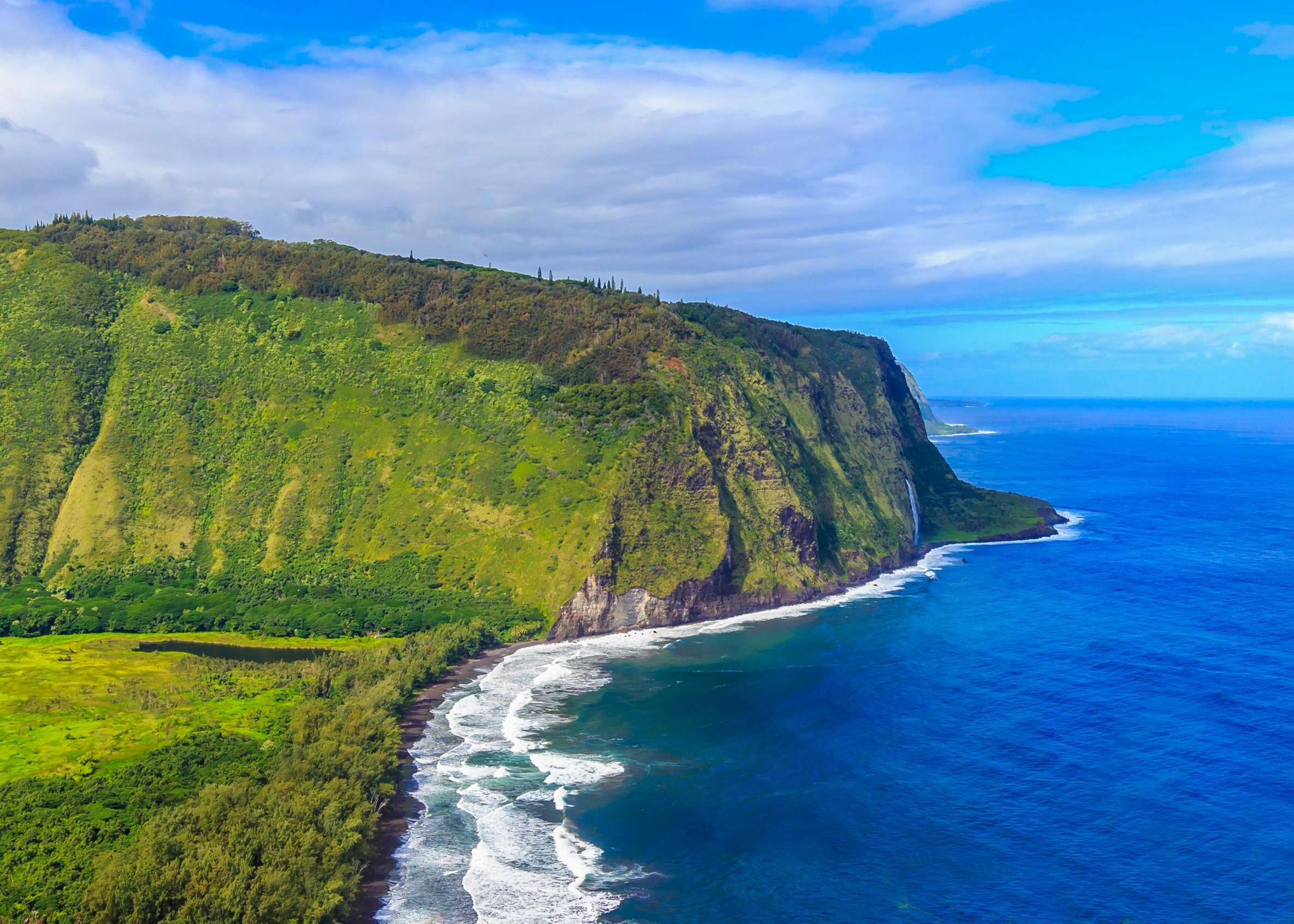
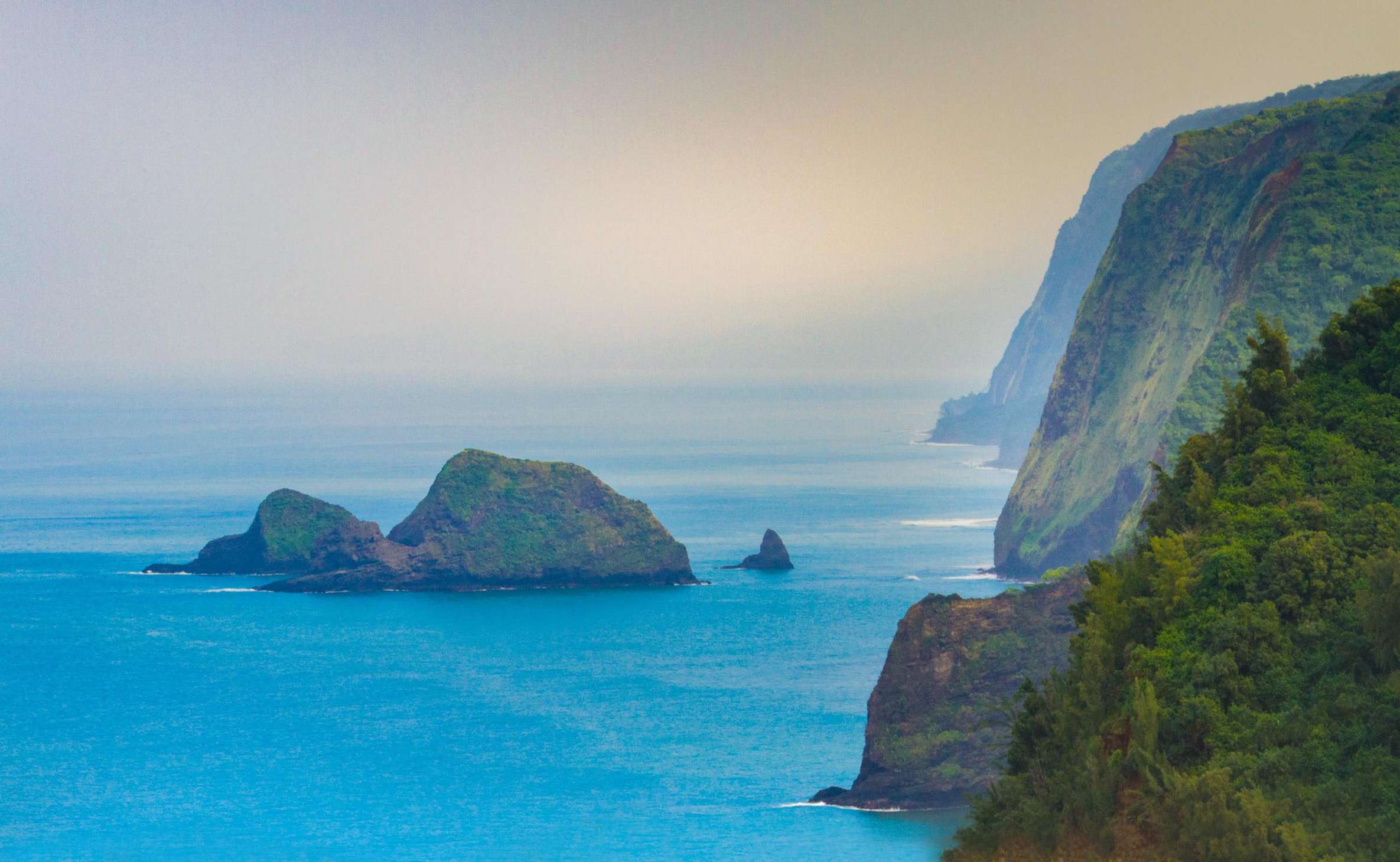
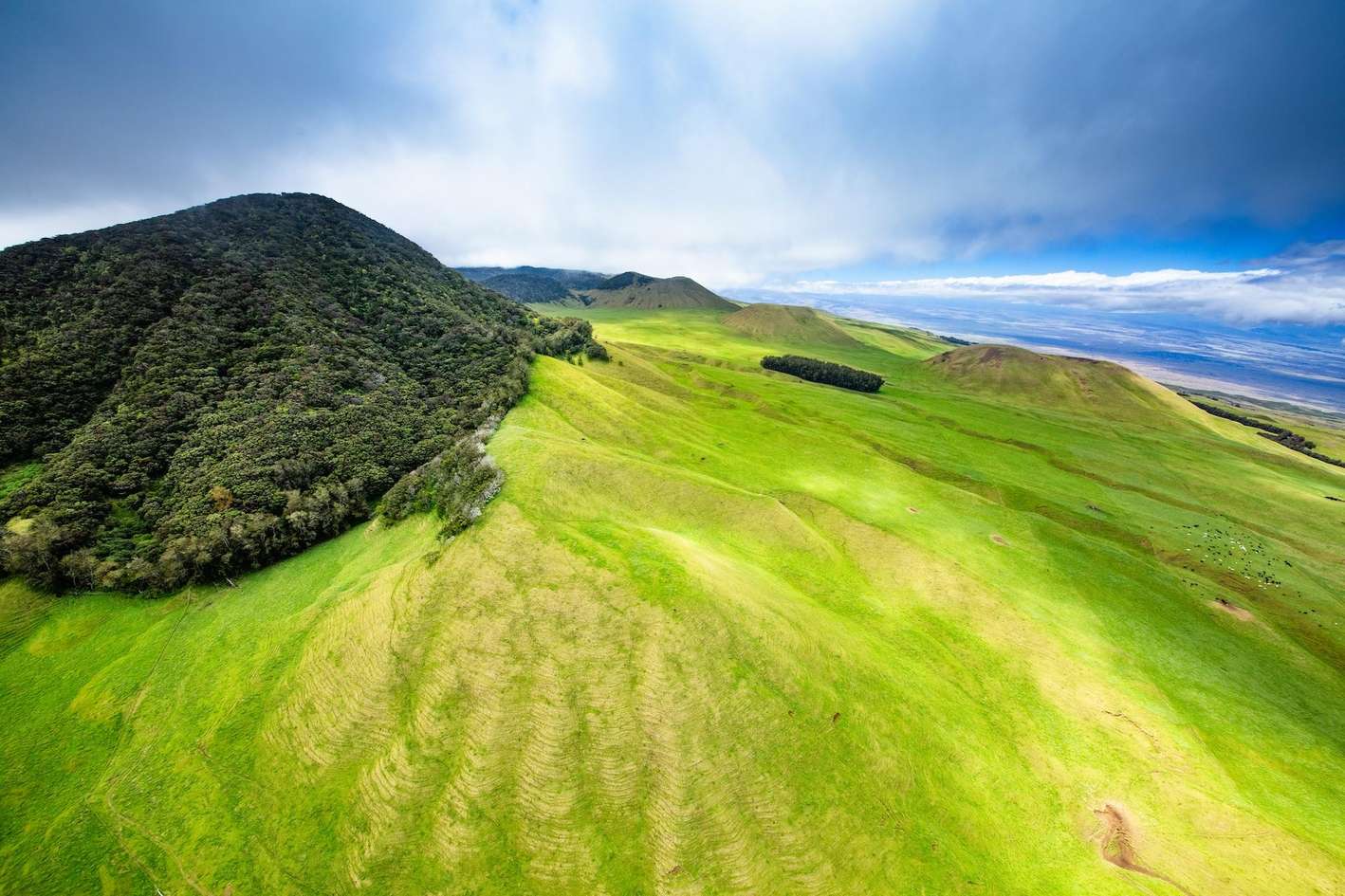
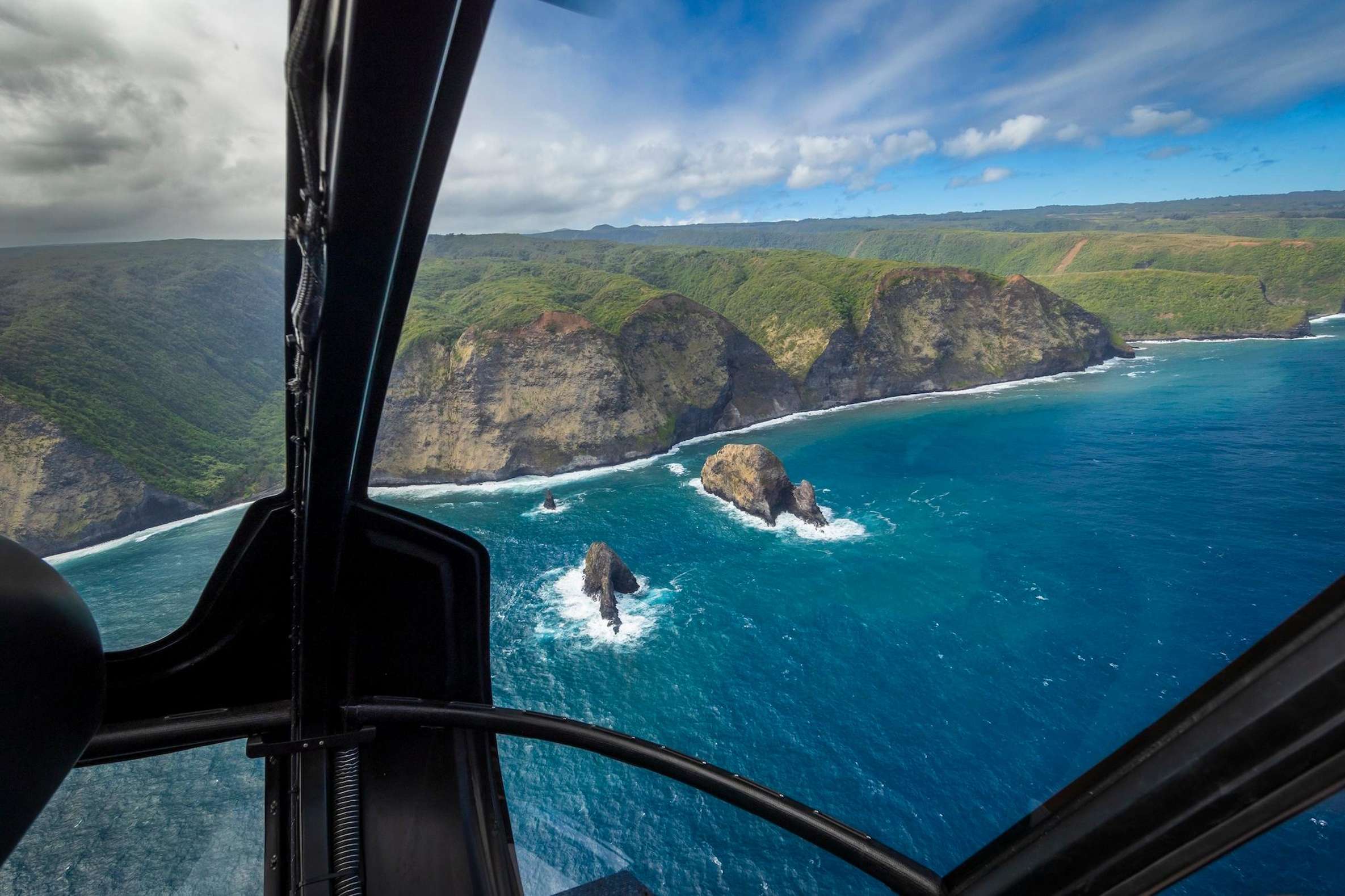
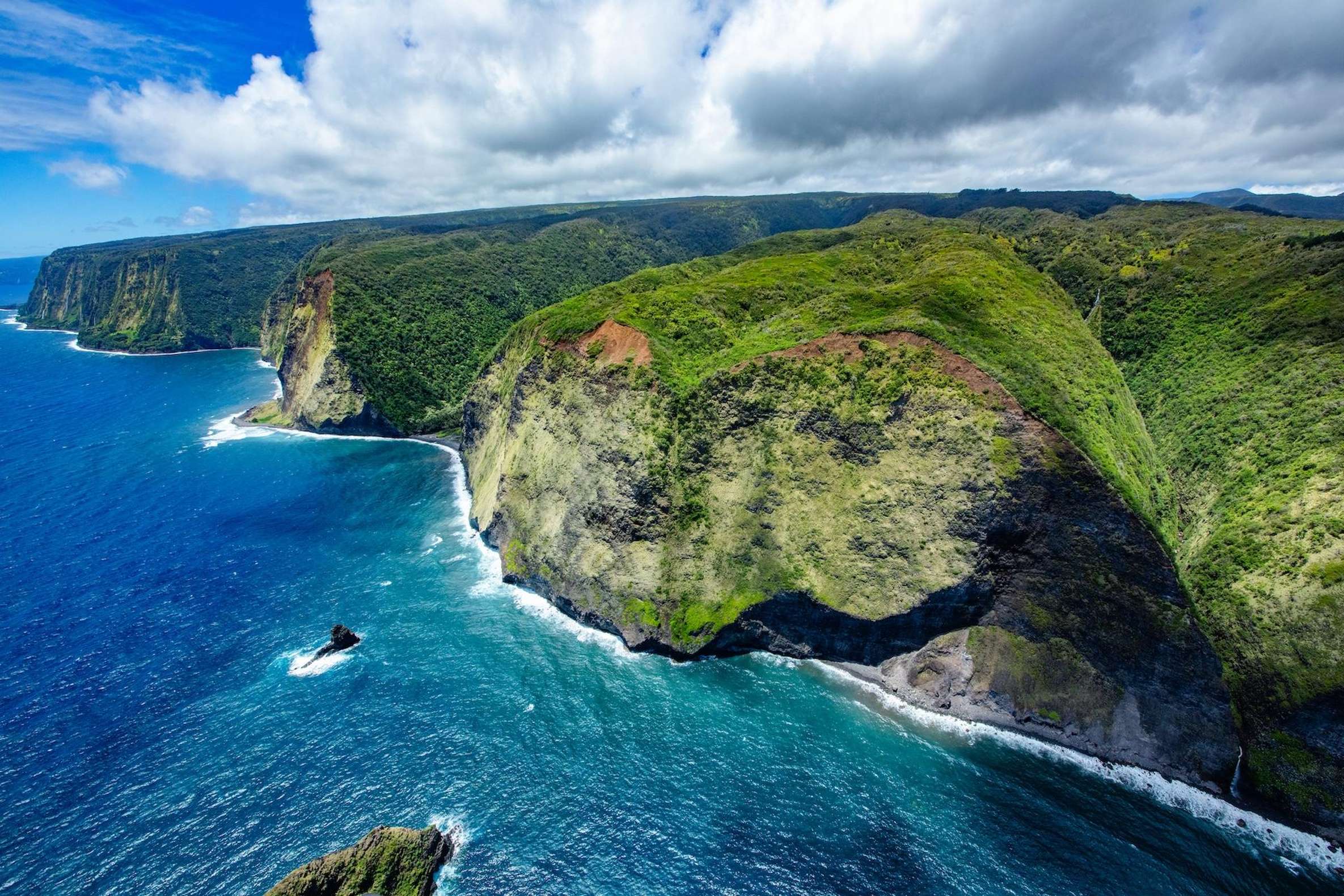
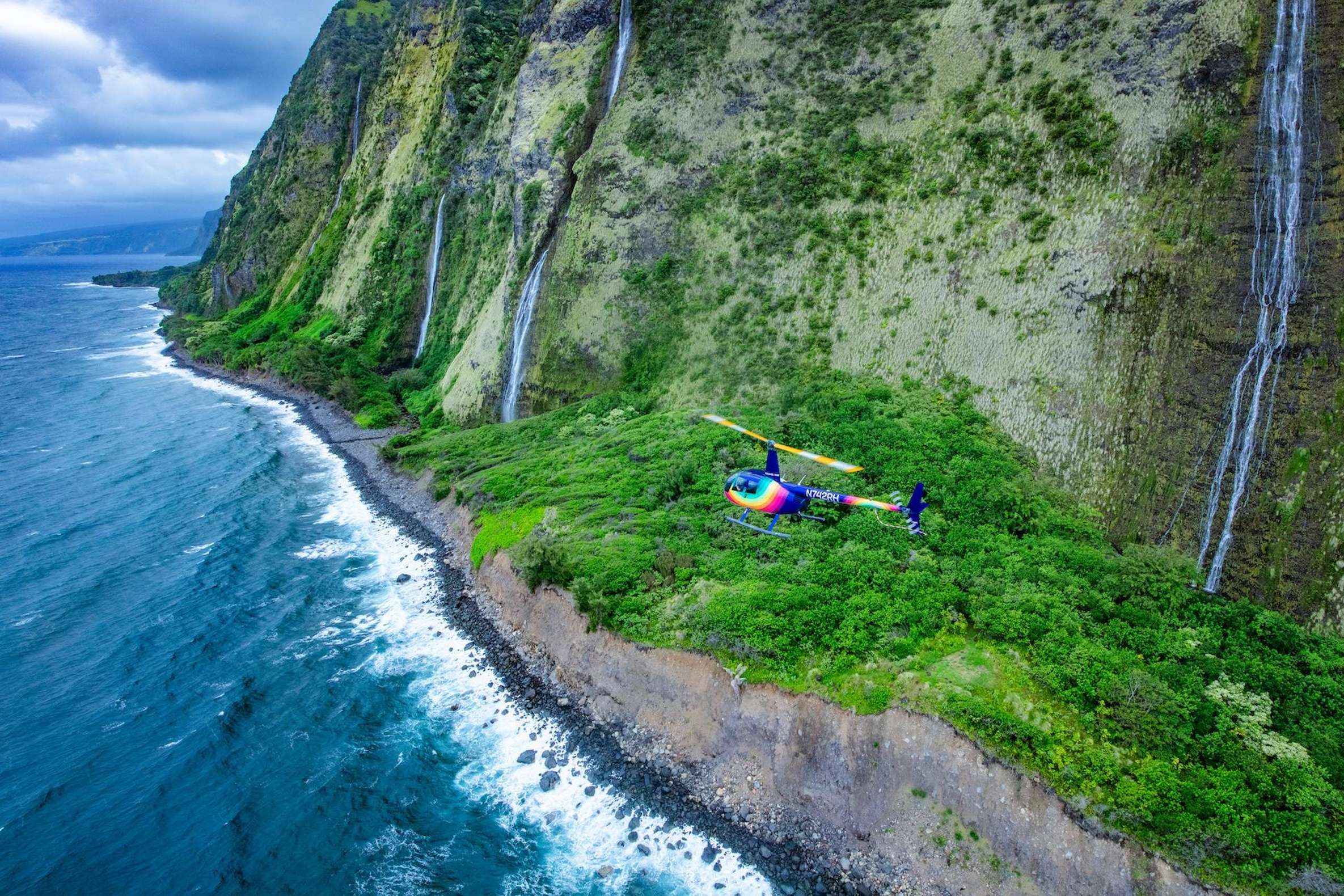
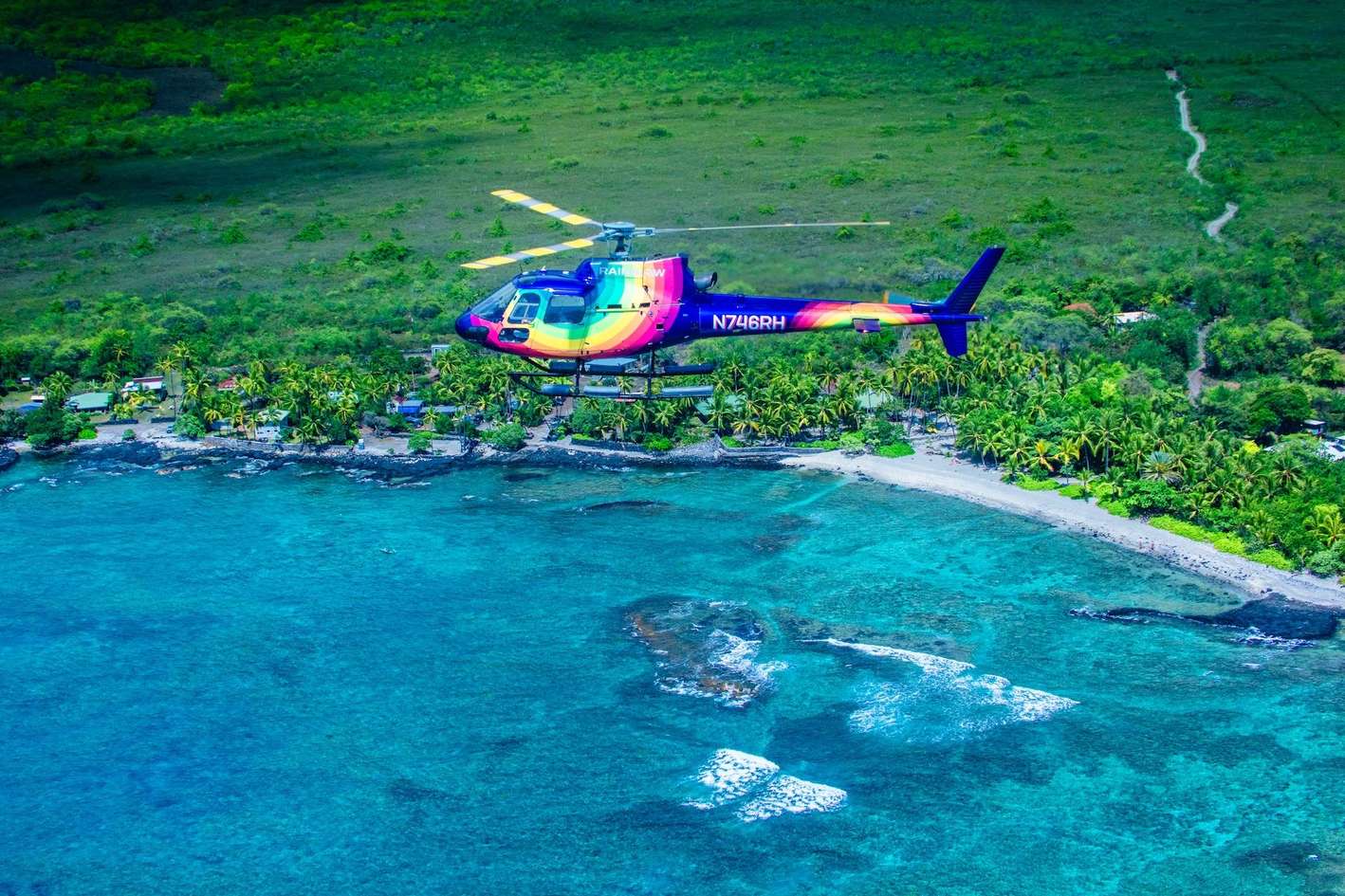
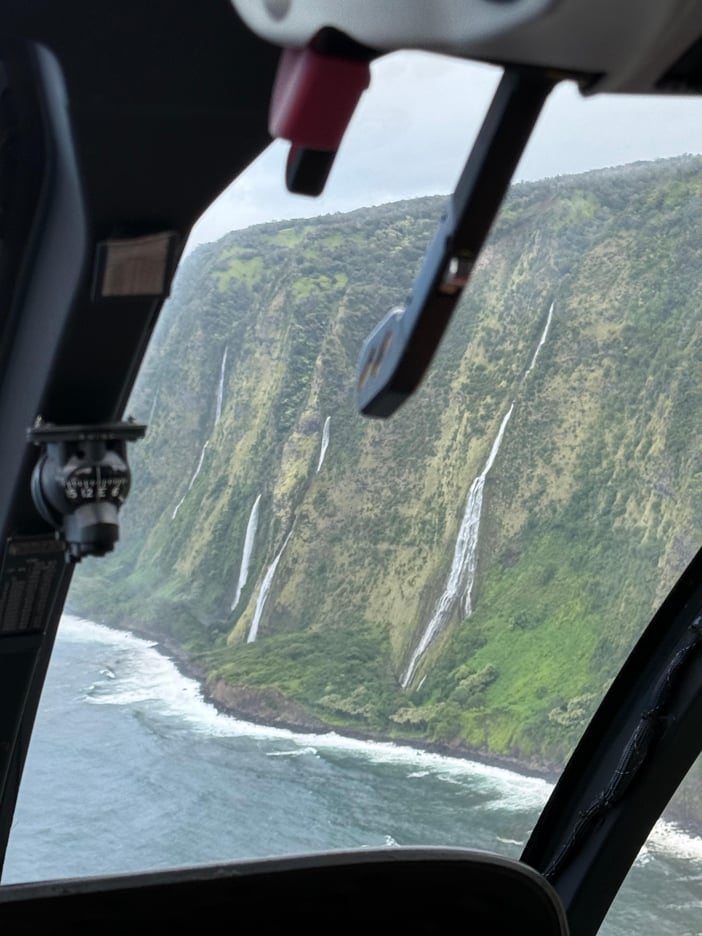
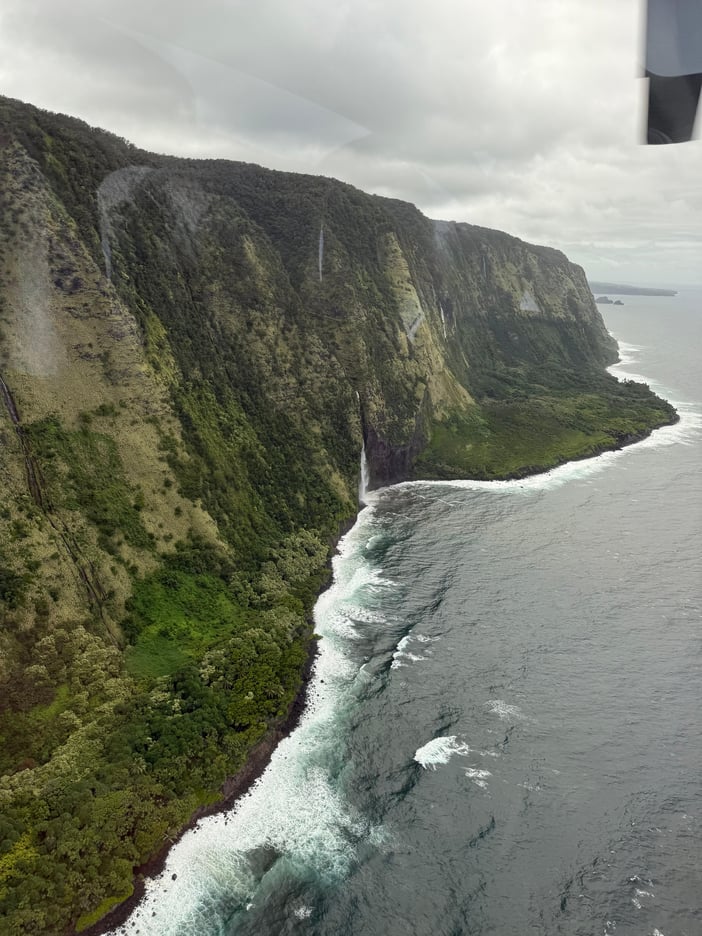
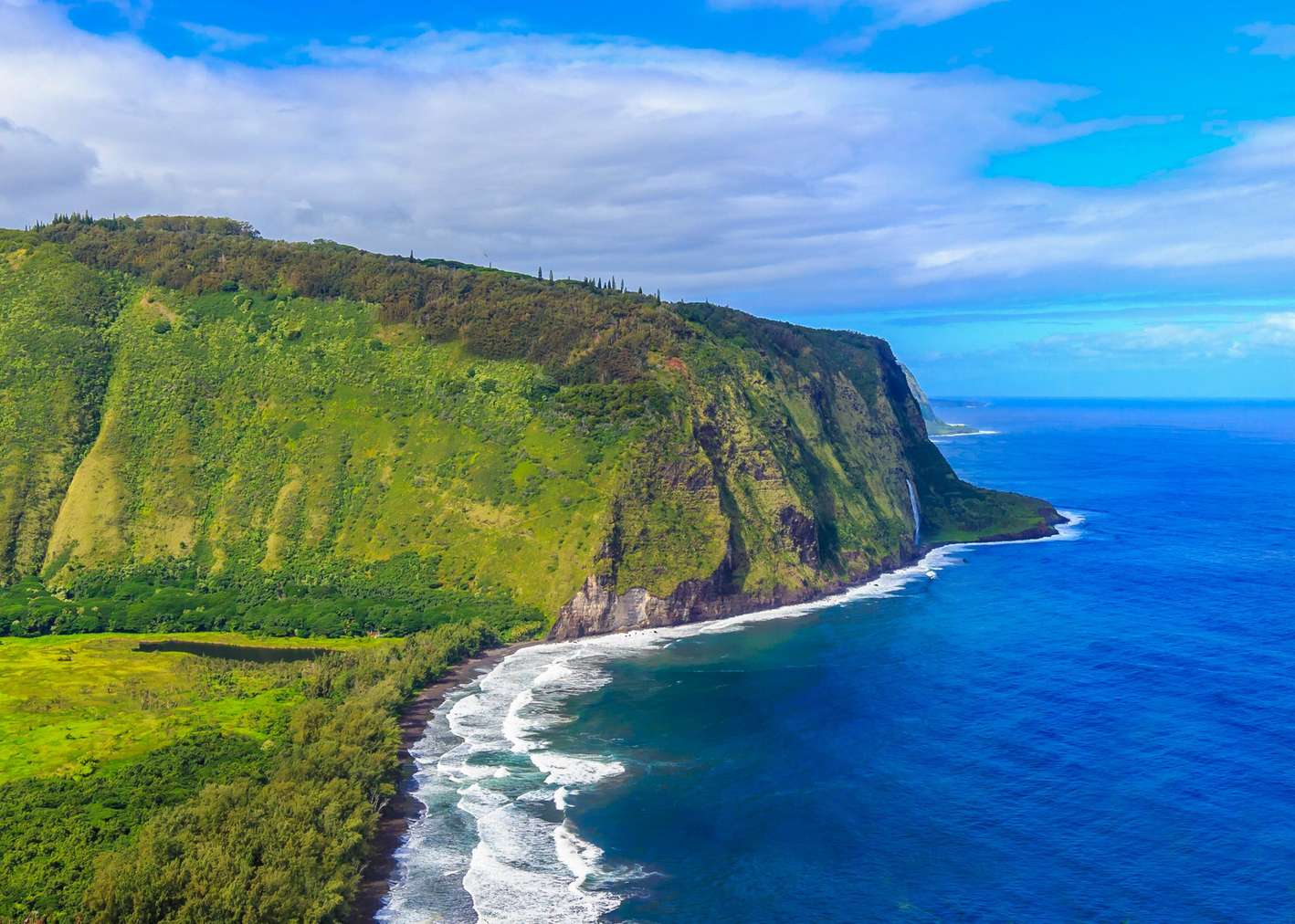
Waterfalls come first on this flight. Minutes after leaving Waikoloa, the sea cliffs of Waipiʻo Valley rise ahead, and past them the North Shore opens into the Kohala Mountains, where water drops thousands of feet down green valley walls.
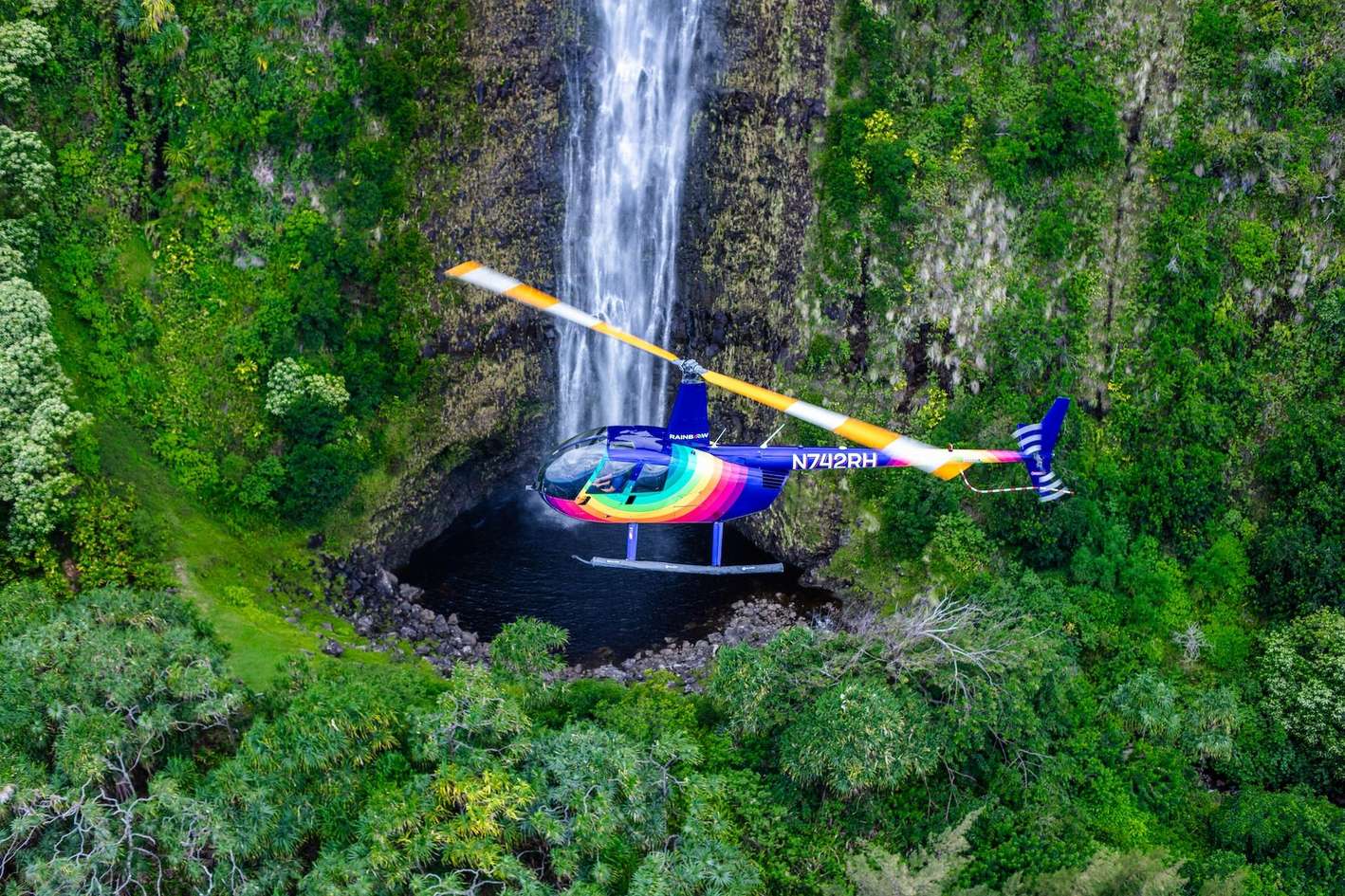
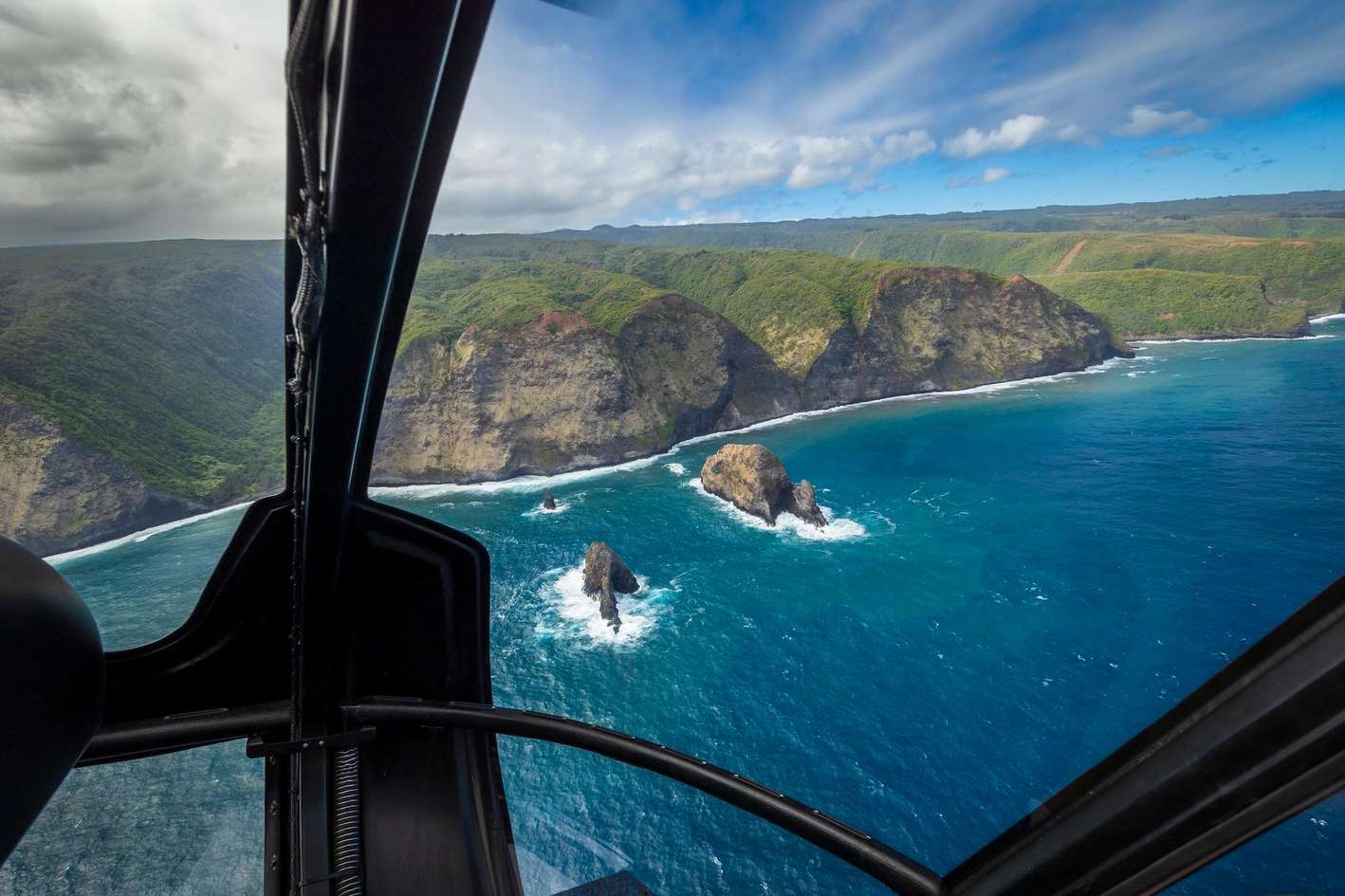
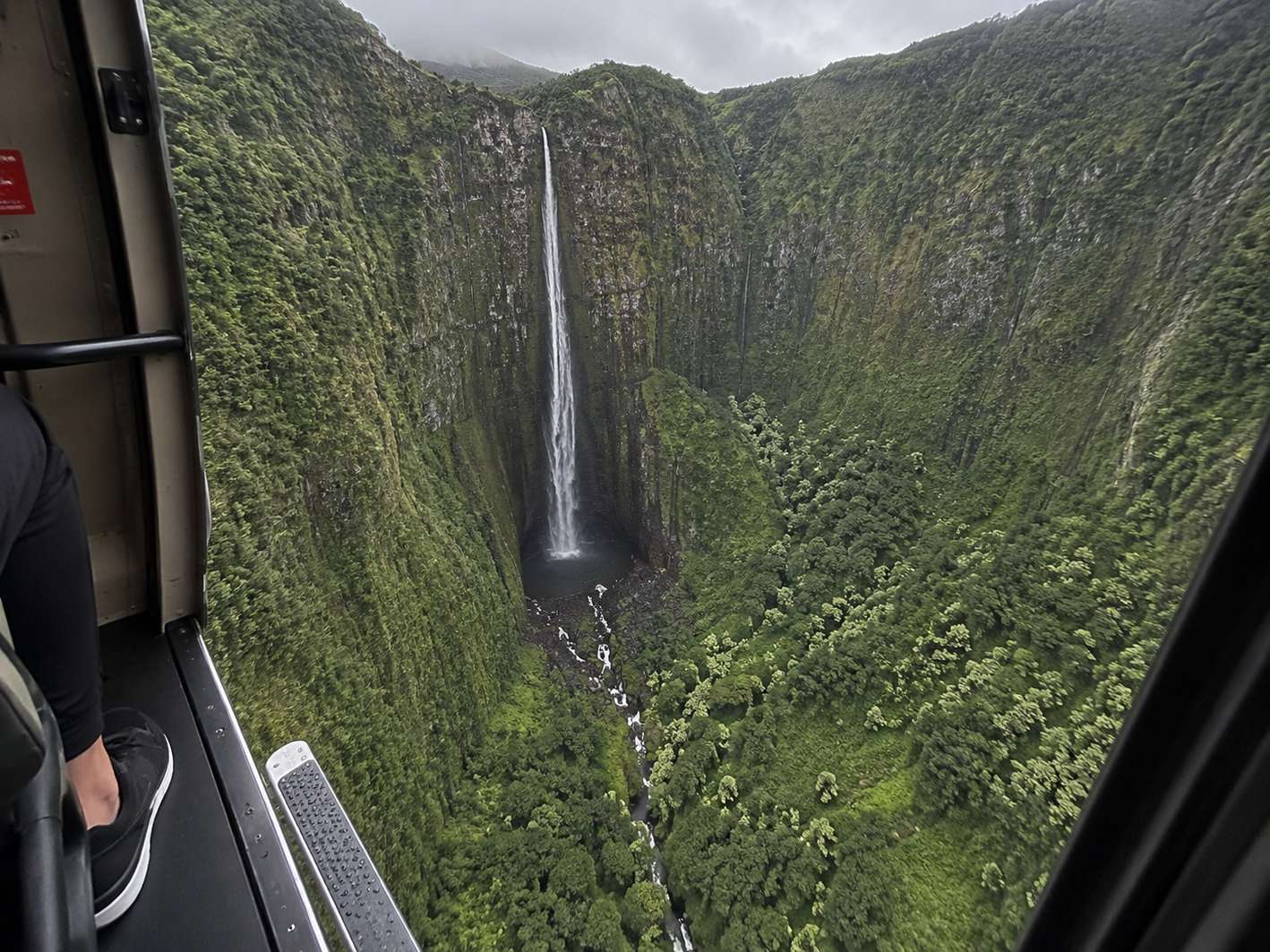
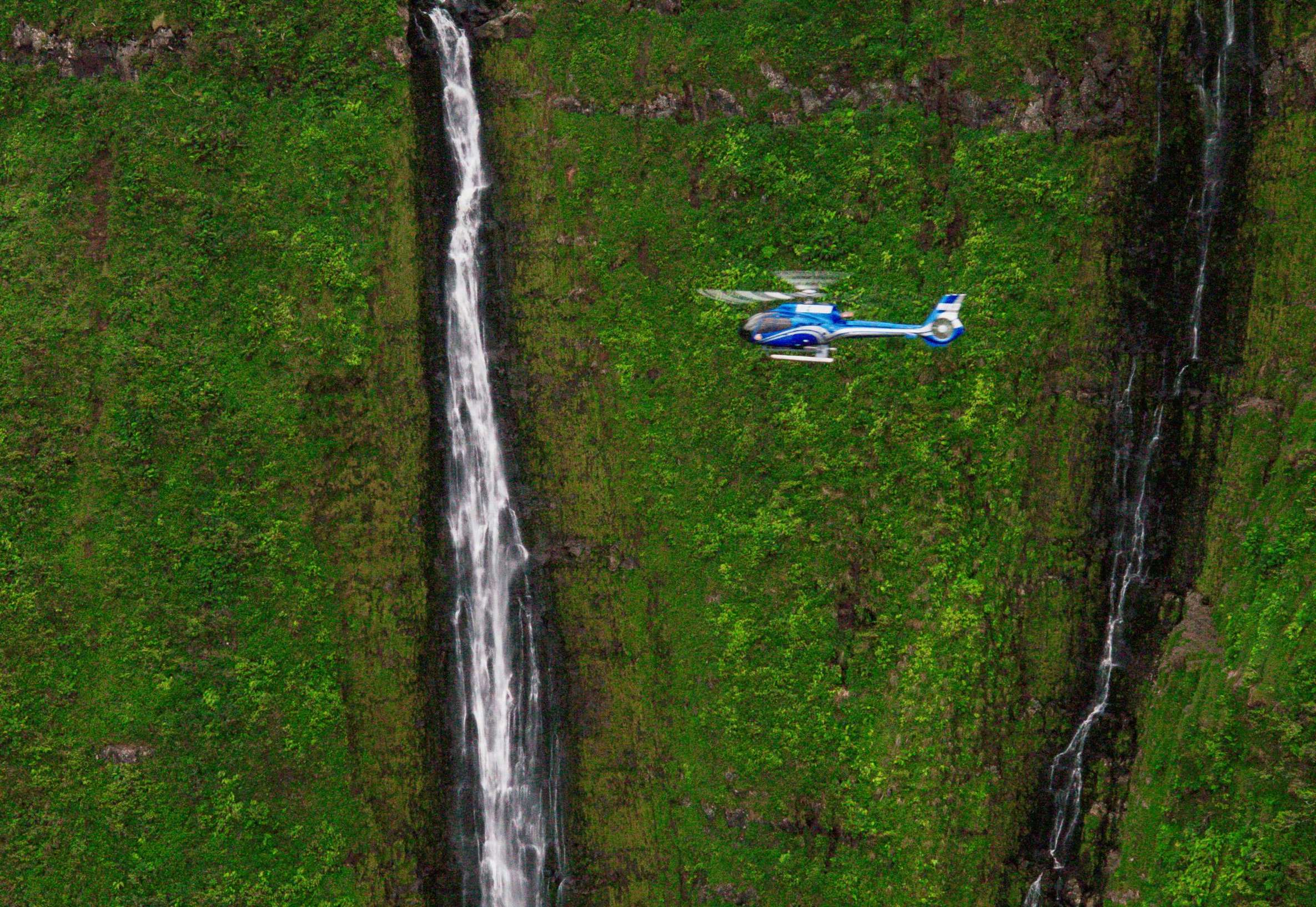
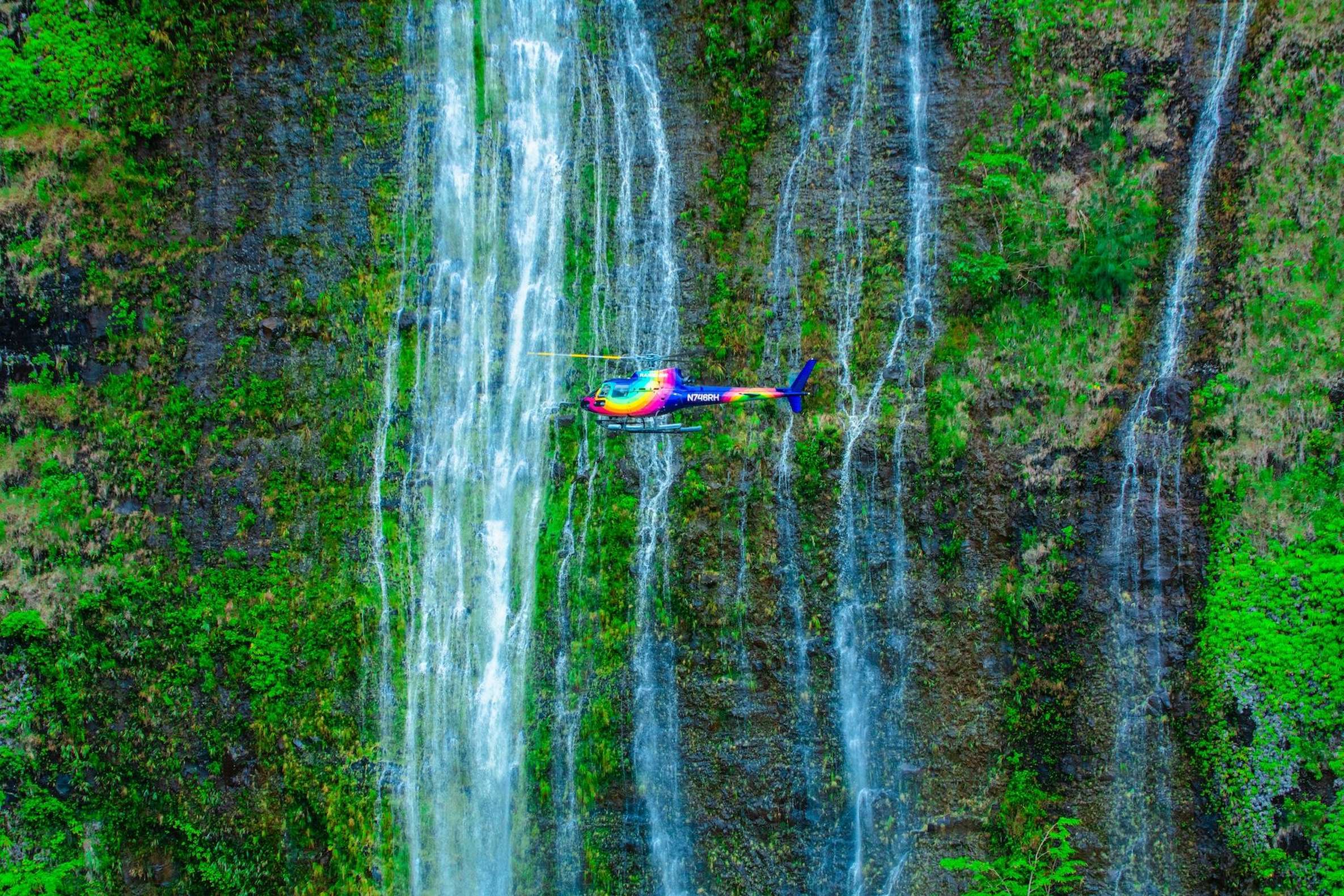
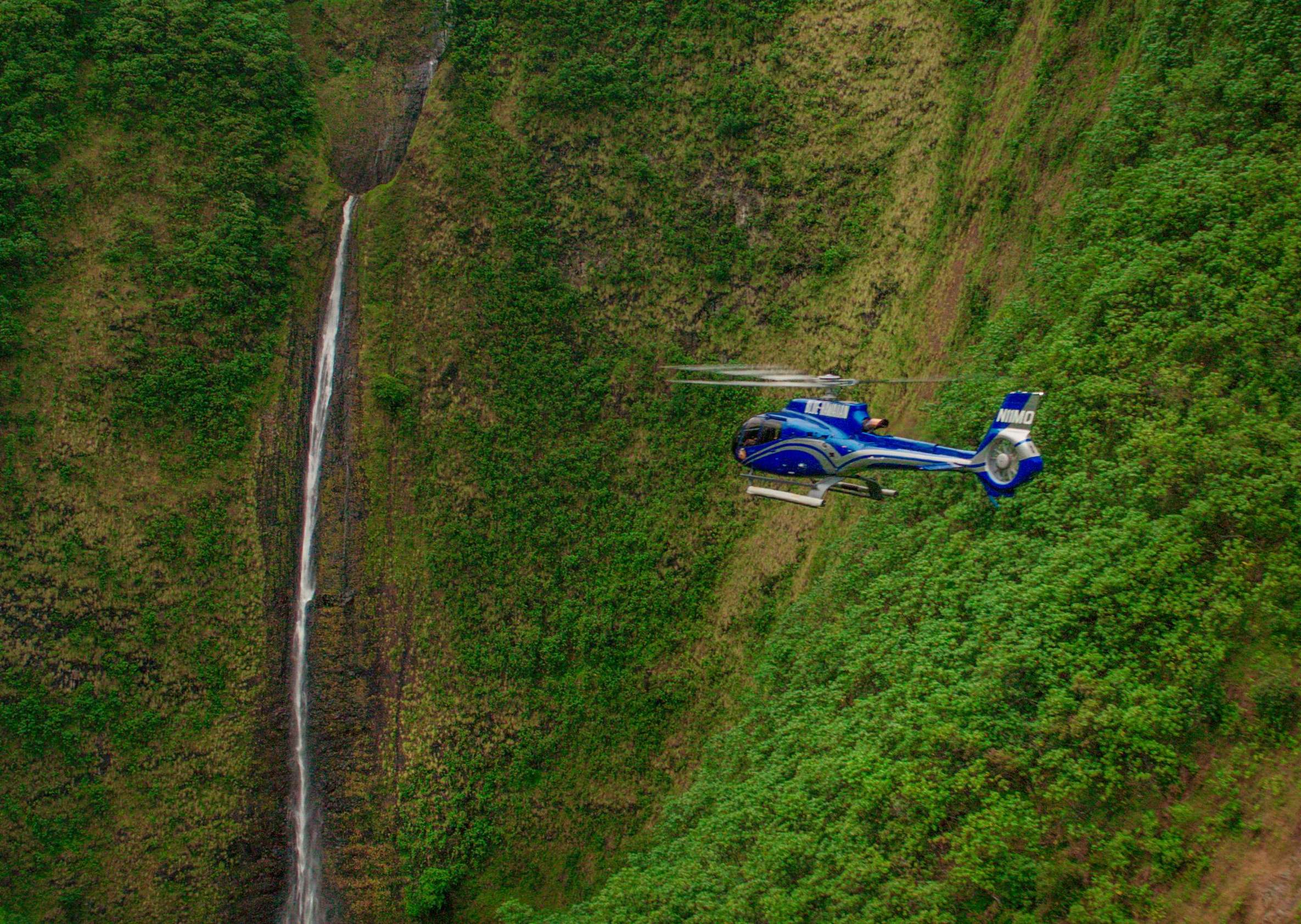
In North Kohala the helicopter flies into canyons whose walls reach about 2,500 feet, and the pilot hovers and turns so both sides of the cabin get their share of the view.
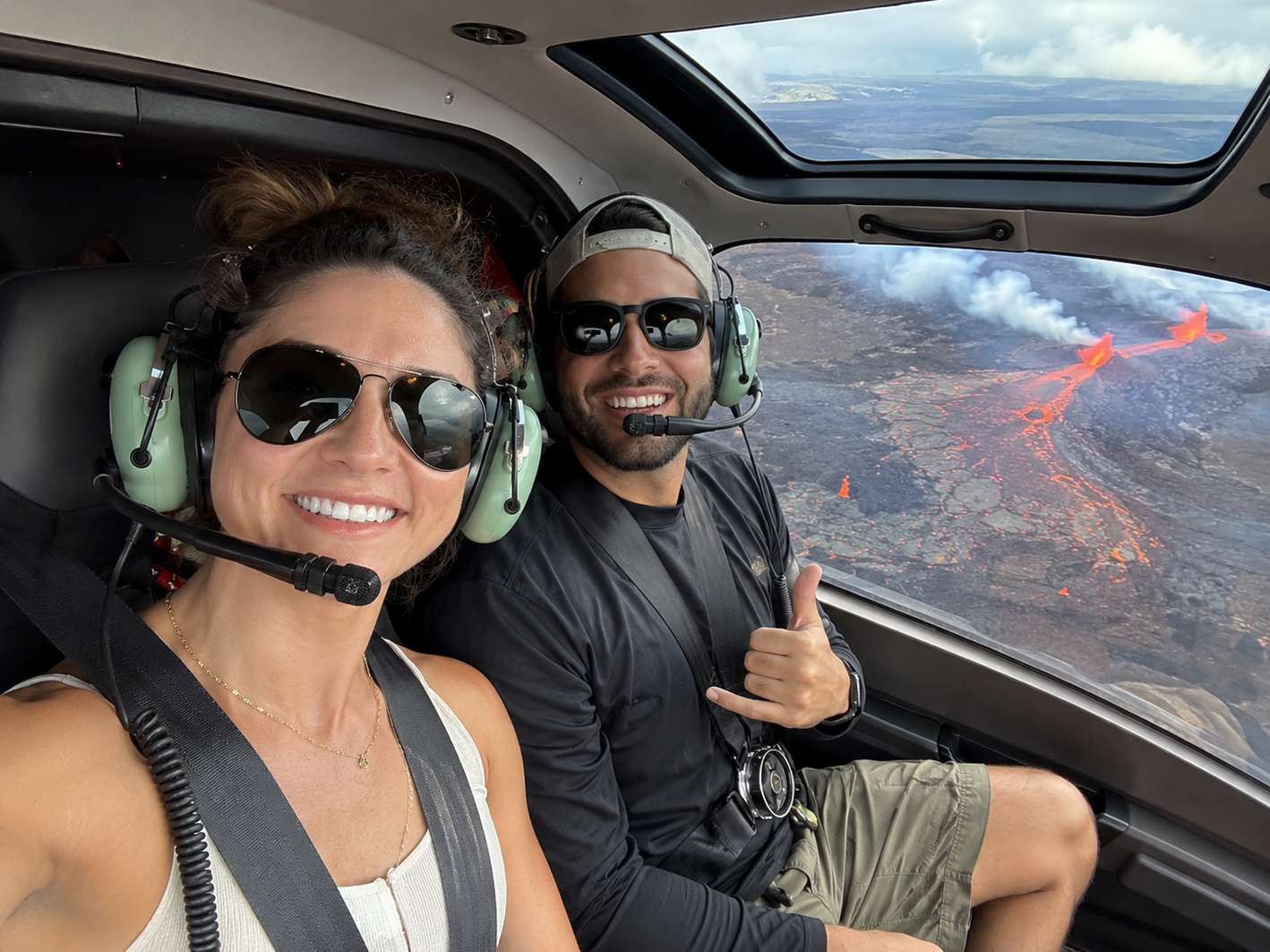
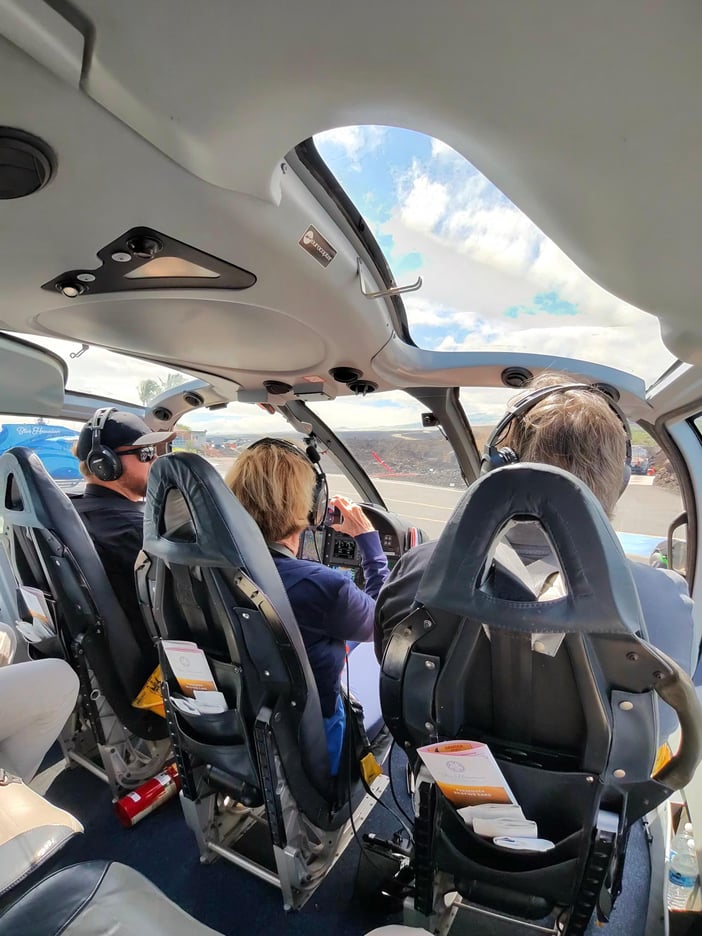
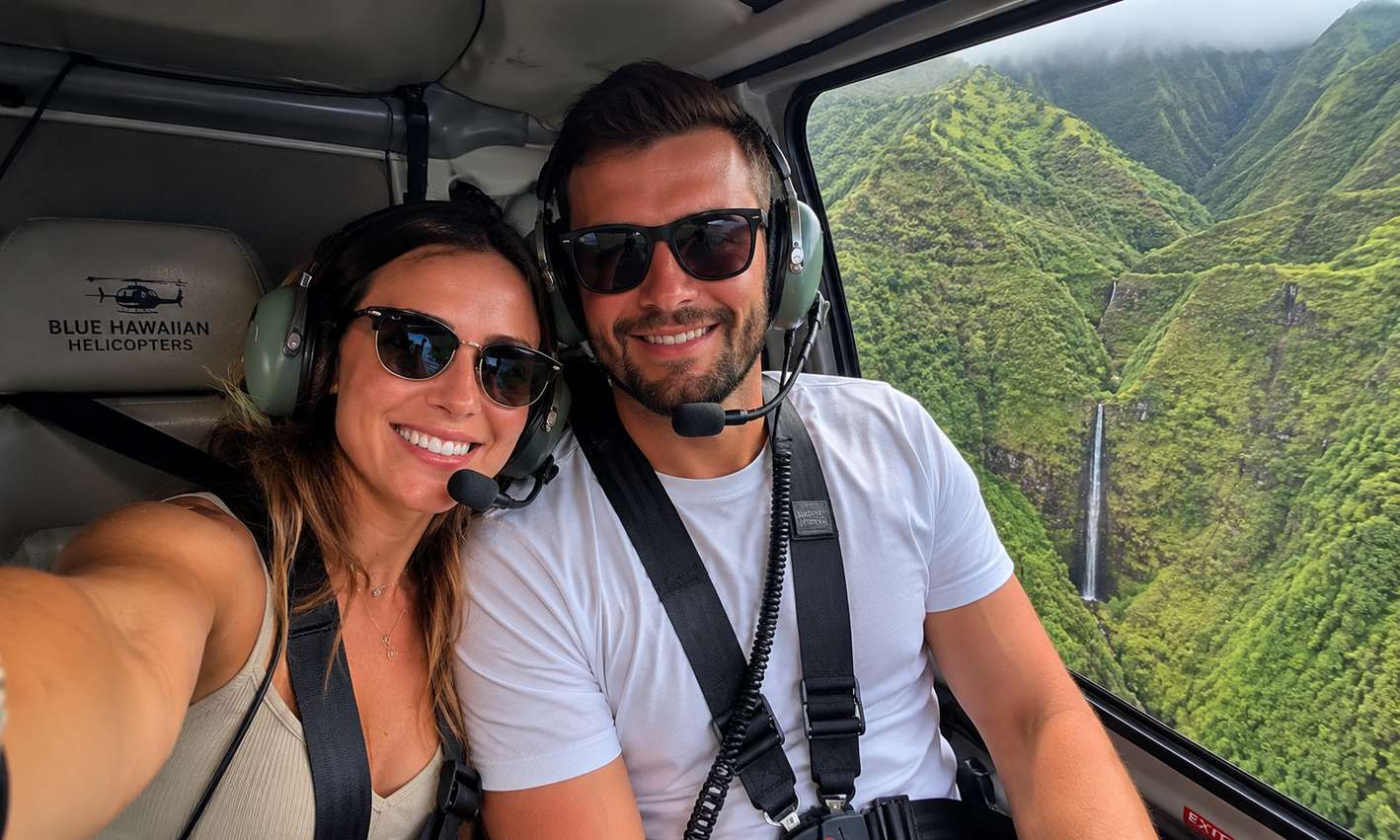
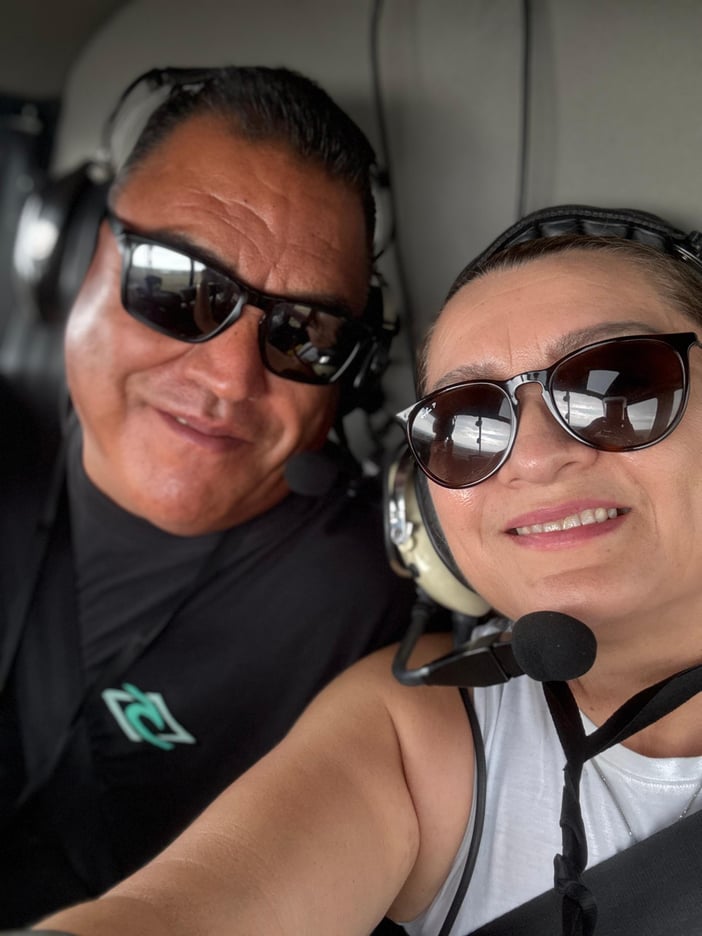
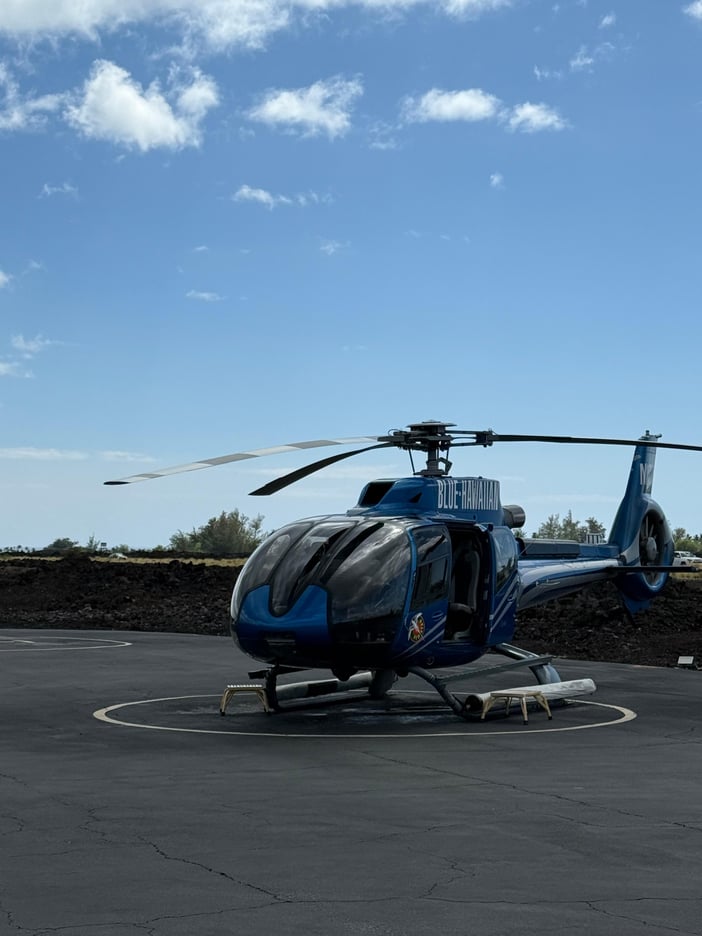
Your pilot narrates the whole route and holds a State of Hawaii Certified Tour Guide credential, and every passenger wears a Bose noise-canceling headset with a two-way mic to ask questions.
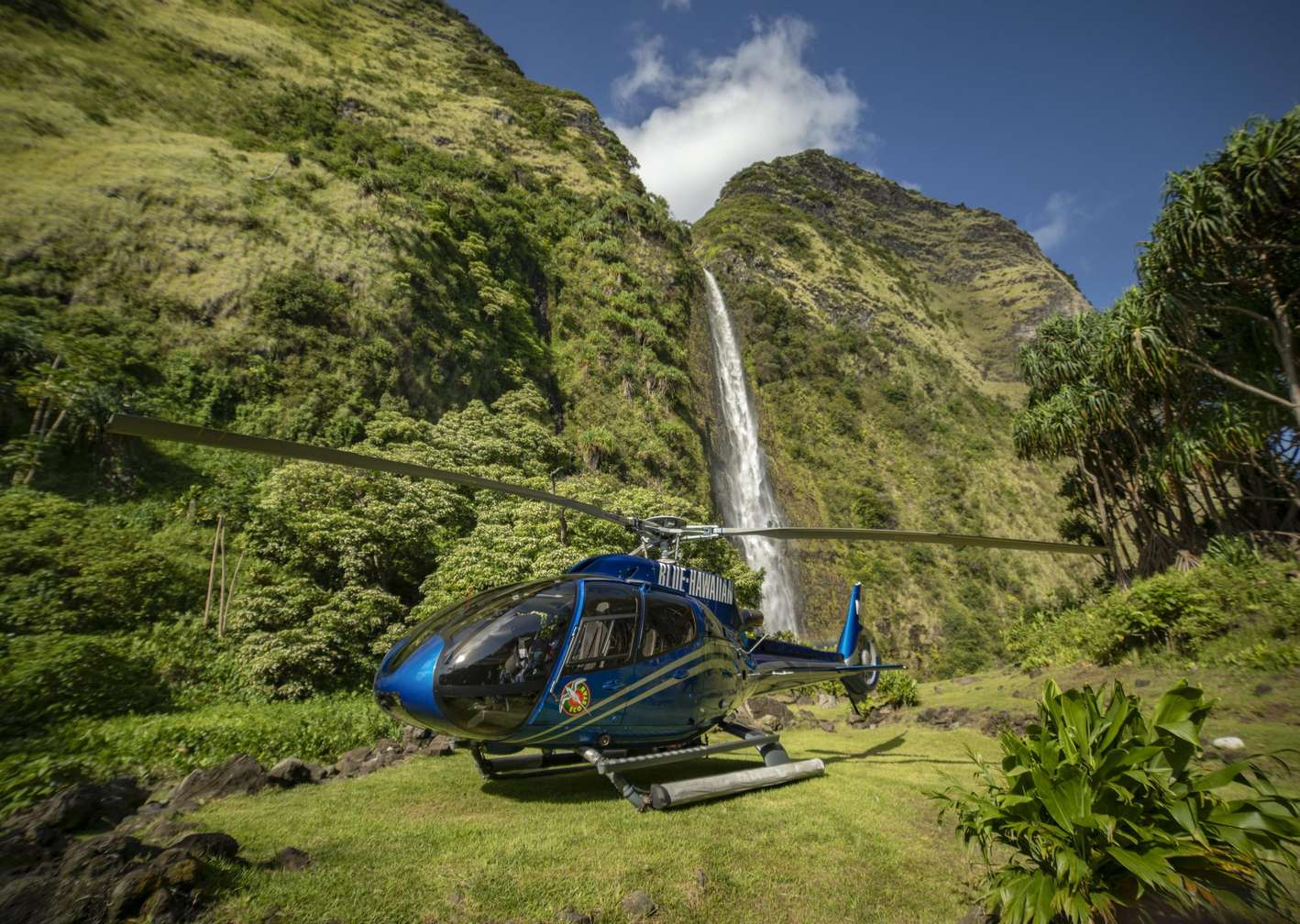
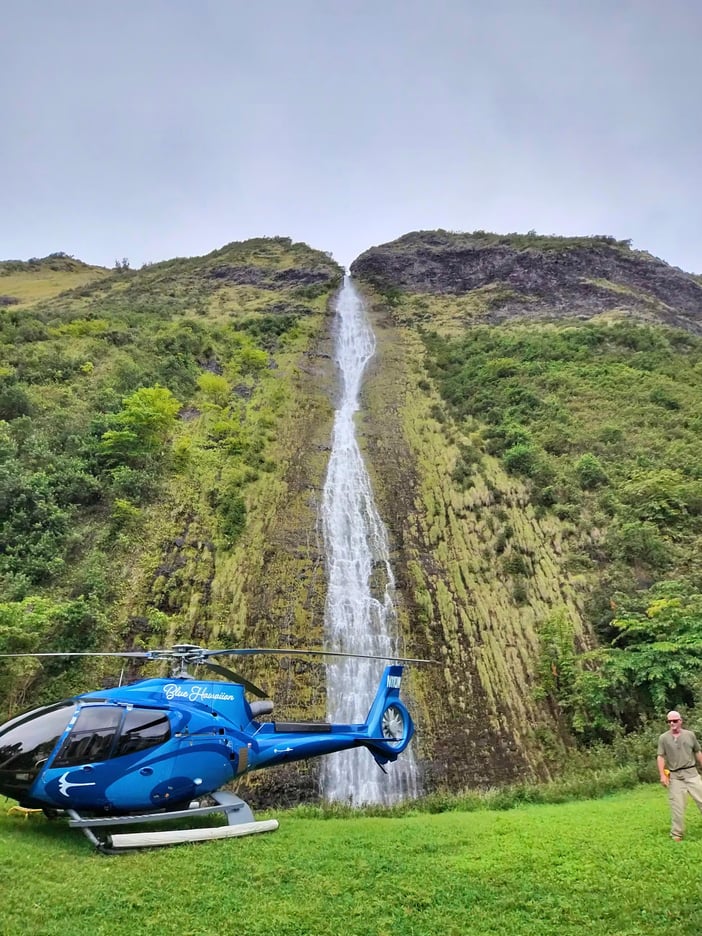
The standard flight runs 50 minutes; a 70-minute version adds a touchdown on a grassy pad beside a waterfall among 1,200-foot cliffs. Photo and video packages are available after you land.
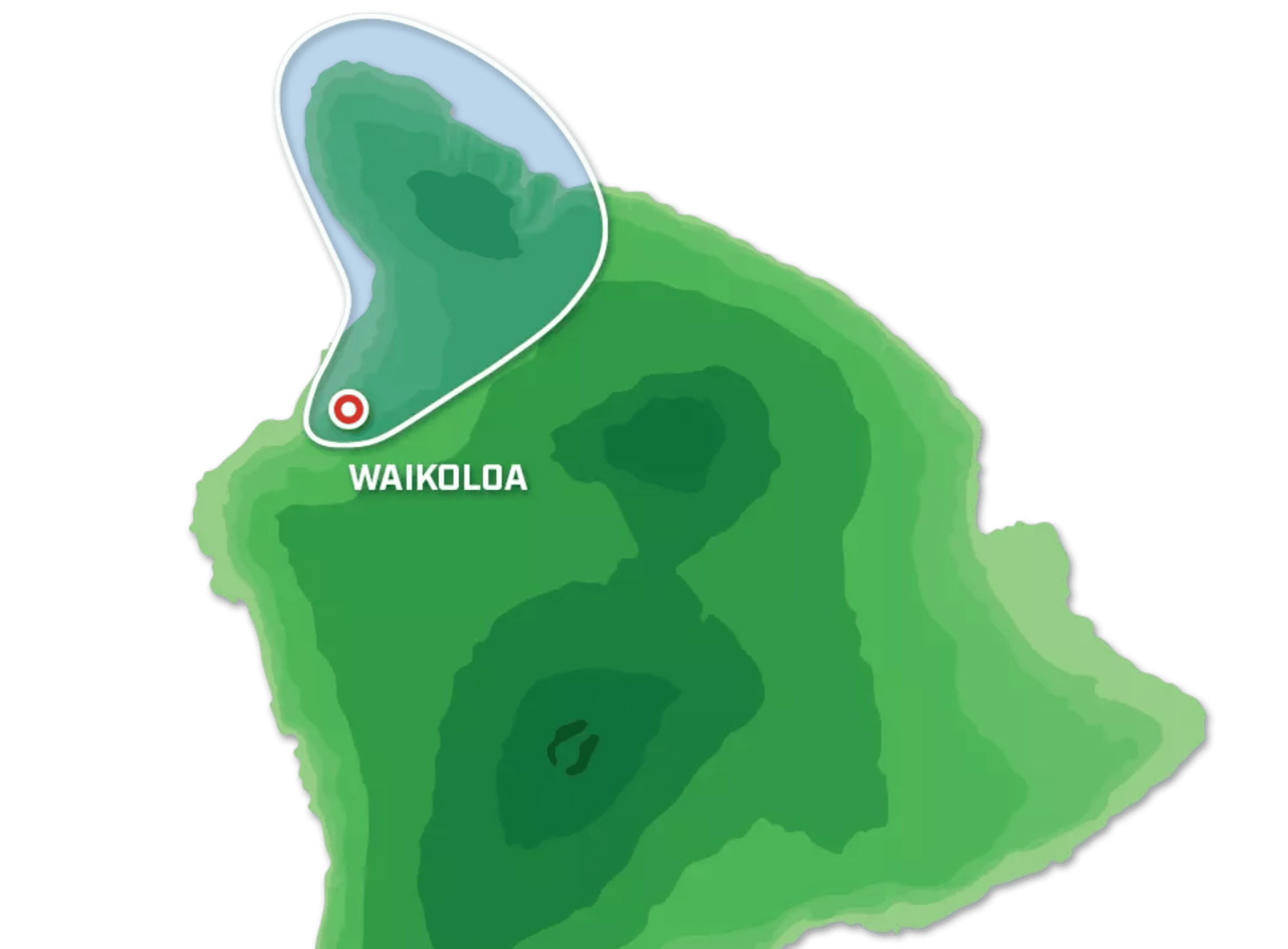
1The Waipiʻo sea cliffs· about 10 minThe flight opens over the towering sea cliffs of Waipiʻo Valley on the island's North Shore, before the terrain turns inland toward the Kohala Mountains.2Into the Kohala valleys· about 20 minThe deep, winding valleys of the Kohala Mountains take over, with waterfalls dropping thousands of feet into rainforest and traces of ancient Hawaiian settlements visible below.3Hovering at the falls· about 15 minInside the steep wall canyons the pilot hovers and rotates the aircraft, so passengers on both sides get a clear look and a fair chance at photos.4Guided commentary, then home· about 5 minThroughout the ride the certified pilot-guide narrates over two-way Bose headsets, then the Eco-Star turns back toward Waikoloa to end the loop.5The Waipiʻo sea cliffs· about 10 minThe flight opens over the towering sea cliffs of Waipiʻo Valley on the island's North Shore, before the terrain turns inland toward the Kohala Mountains.6The Waipiʻo sea cliffs· about 10 minThe flight opens over the towering sea cliffs of Waipiʻo Valley on the island's North Shore, before the terrain turns inland toward the Kohala Mountains.
Where the other tours go
KohalaWai‘ilikahi Falls
Kailua-Kona: Kohala, Volcanoes and Waterfall Helicopter Tour
Helicopter FlightState of Hawaii Certified Tour Guide/PilotTour narration and use of Bose aviation-grade, electronic noise-cancelling headsetsUse of microphones with 2-way communication with pilot
Not included
USB in-flight video and photo packages (available for purchase after flight)Transportation to and from heliport
Which Big Island waterfall flight fits your trip?
Green marks the lowest price. Each price says whether it is per person or per group.
Tour
Price
Duration
Best for
Our pick
From Waikoloa: Kohala Coast Helicopter Adventure
4.4★ (12)
from $459per person
50 - 70 minutes
Waikoloa guests who want a focused Kohala valley and waterfall flight
Most reviewers praise their pilot by name and say the ride stayed smooth from takeoff to landing.
Best surprise
Several first-time flyers expected to feel nervous but found the flight calm, and some loved the pilot's music.
Most common wish
A few wished they had been told sooner when weather shortened the flight or hid the volcano.
How to book your seat on a waterfall helicopter flight
01
Pick your date early in the trip
Choose a day in the first half of your stay and leave the last days open. If low clouds close the Kohala valleys, operators cancel or reroute, and a final-day booking leaves you no slot to rebook.
Pro tipMorning slots between 8 and 11 am give the calmest air and the clearest valley views, and they sell out first
Pro tipPrime morning departures can book out 30 days to six weeks in summer and the December holidays
02
Choose the option that fits
Most waterfall tours list several options on the same page: a standard valley flight of 50 to 70 minutes, versions with a landing at a waterfall base, and doors-on or doors-off seating. Pick the duration and configuration you want, then the time slot.
Pro tipThe landing version adds about twenty minutes in the air and puts you on the ground beside a 1,200-foot cascade
Common mistakePeople book a doors-off seat for the photos and forget that loose items like hats and bags stay behind in a locker
03
Enter names and weights exactly
Type every passenger's name as it appears on the ID you will carry, and give accurate body weights. Operators weigh you at check-in and assign seats from those numbers to balance the aircraft, so a guess here costs time at the pad.
ImportantBring a passport or ID card to the heliport, it is on every tour's required list
ImportantSkip scuba diving for 24 hours before the flight or the operator can refuse you boarding
04
Confirm and watch for messages
After payment you get a voucher by email with the meeting point and your departure time. The heliport address sits in the booking details, and no hotel pickup is included on these tours, so plan your own drive.
RecommendedBook a refundable rate where offered, most tours cancel free up to 24 hours ahead and a couple of the combo tours need two days
05
Plan the morning of the flight
Arrive at the heliport 45 to 60 minutes before takeoff, depending on which departure you booked, for check-in, weigh-in and the safety briefing. Late arrivals can be turned away with no refund, so pad the drive time.
RecommendedWear dark solid clothing so your shirt does not reflect in the window photos, and closed-toe shoes
Pro tipEat light and skip the heavy coffee, and keep your eyes on the horizon during the banking turns in the valleys
What to know before you book a waterfall helicopter tour
Can stop the dayGood to knowGood news
01
ChoosingWhat it is, who it suits, when to go
5
Weight and seatsCan stop the day
Your weight matters to the aircraft, not just to you.
Motion sickness
The tight turns in the Kohala valleys can unsettle a queasy stomach. Take ginger candy or a non-drowsy remedy before boarding, since medication works best before the motion starts. Keep your eyes on the horizon and tilt your head into the turns.
Loose items
Nothing loose flies on a doors-off flight. Hats, bags, purses, scarves, water bottles, selfie sticks and extra lenses stay behind or get stowed, and phones and cameras need a wrist or neck strap. The doors-off option on one Kona waterfall tour supplies straps and cases.
Photos
The window view covers the whole water path, where a road stop shows only the drop. One thing to accept: the aircraft keeps moving, so the time you get to frame a shot at each fall is short. Dark clothing keeps your reflection out of the glass.
Tipping
Tipping the pilot after landing is customary and optional in Hawaii. Travelers usually hand over a set amount of about twenty dollars per couple, or twenty for a solo passenger, instead of a percentage of the tour price.
02
BookingHow far ahead, and what happens if plans change
2
Weather days
Passing showers do not cancel a waterfall flight on their own, and the falls often run harder after rain. If the operator does cancel for weather or low cloud, that call usually comes near flight time, and you get a full refund or a reschedule.
Book early
Put the flight near the start of your trip, not the last day. In peak summer and the winter holidays, morning slots can sell out two to four weeks ahead, and booking early leaves buffer days to rebook if weather forces a change.
03
Before you goPapers, health, what to bring
2
What to wear
Wear solid dark clothing, since bright colors reflect in the windows and end up in your photos. Closed-toe shoes are required, long hair needs an elastic tie, and on doors-off flights add a windproof layer because the air at altitude runs 10 to 15 degrees cooler than the ground.
Health limitsCan stop the day
No scuba diving in the 24 hours before your flight, since cabin pressure raises the risk of decompression sickness. Infants up to 23 months ride on a lap on the Waikoloa and Hilo waterfall flights, while everyone 24 months and older takes a full-fare seat.
04
On the dayWhere to be, when, and how you get there
1
Check-in times
Arrive early, because the operator weighs each passenger and runs a safety briefing before boarding. One Waikoloa operator asks for check-in 60 minutes before takeoff, and one Hilo waterfall flight asks for 45 minutes. Late arrivals may be turned away without a refund.
05
During the tourWhat is expected of you
2
Seat choice
You cannot pick your own seat. FAA weight and balance rules decide exactly where everyone sits, and couples cannot count on sitting together. What helps is how the pilot flies: the aircraft hovers and rotates at each sight, so both sides of the cabin get the view.
How close
In the North Kohala mountains, waterfall flights hover directly inside cascading wall canyons up to 2,500 feet tall, and in Waimanu Valley they hold position near 2,600-foot cliffs. Federal rules set the safe distances, so the pilot does the close flying for you.
Waterfall helicopter tours on the Big Island - a guide to the Kohala valleys
Most of the falls hidden in North Kohala's green valleys have no road to them, and the one or two that do take a demanding trail. Here's how a Big Island waterfall helicopter tour works, from choosing a base to walking back to your car.
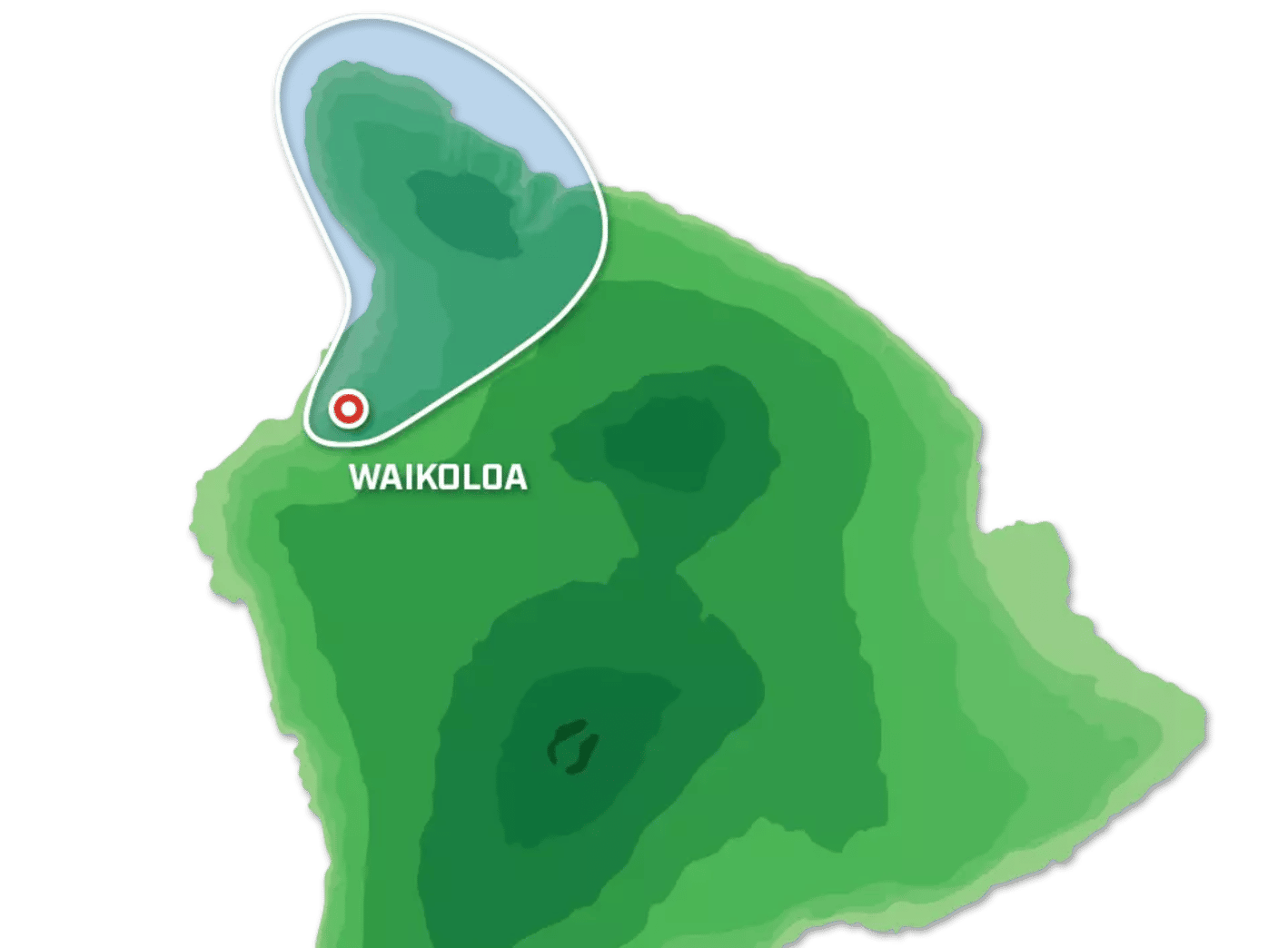
Waikoloa Village· 19.72° N, 156.04° W
If you only remember three things
1
Book a morning slot between 8 and 11 am for the calmest air and clearest valley views.
2
Check in 45 to 60 minutes before takeoff, where a real weigh-in decides your seat.
3
Schedule the flight early in your trip so weather cancellations leave room to rebook.
Is a waterfall flight worth it when Akaka Falls is a drive away
Akaka Falls costs a parking fee and a paved loop trail. A helicopter flight is a serious spend, and the honest question is what the extra money buys.
The answer is access. A road stop shows you one drop, framed by the rail in front of you. From the air you see the whole water path: the plateau it rises from, the valley walls it cuts, the pools it feeds.
The Kohala valleys have no road at all, and some back valleys can only be reached by air or by a hike most people never finish. One sweep of the Kohala Coast takes in more valleys and water channels than a full day of driving.
The trade is time. The helicopter keeps moving, so photo time at each fall runs to seconds, while a lookout rail lets you stand as long as you like.
What people get wrong about a waterfall flight
MythA helicopter just skims the coast like a bus tour in the air
Reality
Waterfall routes fly into the valleys themselves, and pilots hover inside the canyon walls so both sides of the cabin get the view
MythYou will land next to a waterfall
Reality
Most flights do not land at falls, because landing in remote valleys requires rare, strictly regulated permits
MythA lookout photo comes close to what a flight shows
Reality
A lookout shows the drop; from the air you see where the water collects and how the whole valley fits together
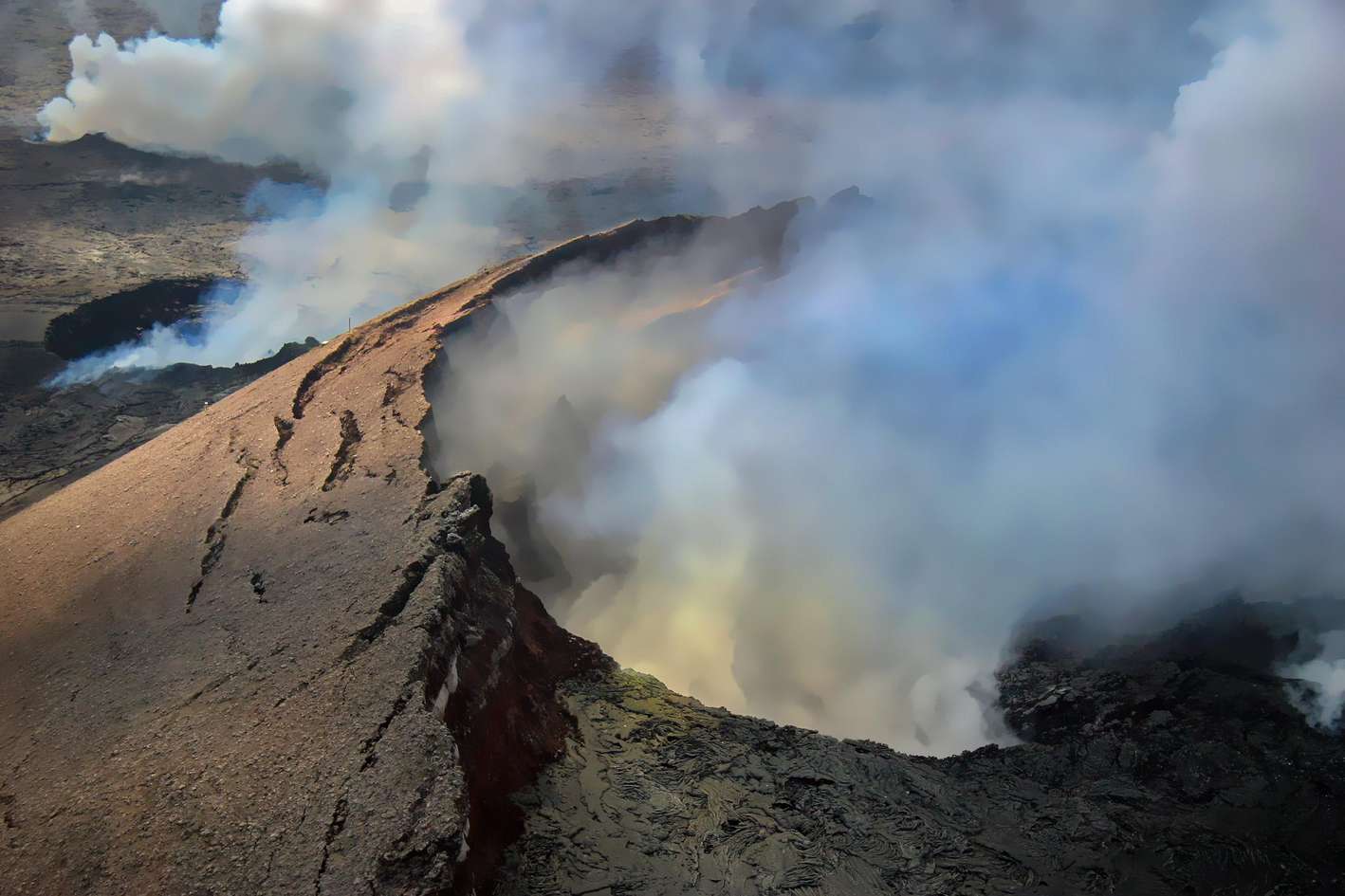
One more thing worth knowing before you book: if lava is the reason you came, look elsewhere. When Kilauea sits quiet, regulars say the green valleys and waterfalls outperform the craters anyway, but a volcano-first traveler will feel shortchanged by a waterfall route.
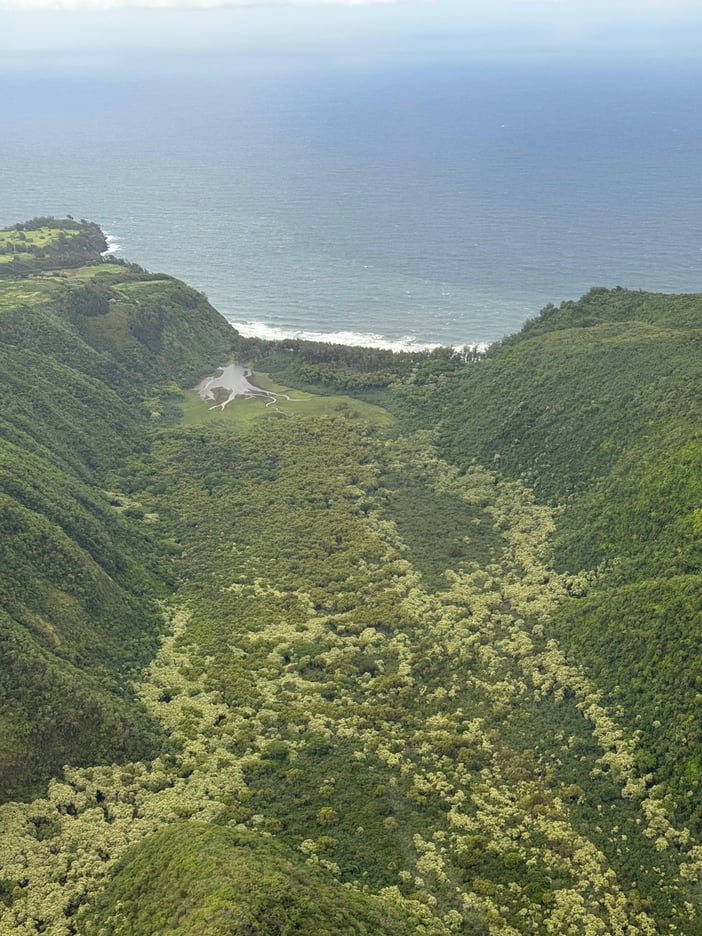
The valleys of North Kohala are steep-walled amphitheaters, carved rounder by water erosion than the V-shaped canyons of the island's younger volcanic slopes. A shift in the earth's deep structure sheared the sea cliffs away, and some valleys are so steep they can only be reached by boat or helicopter.
Waterfall flights fly straight into that country, hovering inside wall canyons that run to 2,500 feet. In Waimanu Valley, tours hover close to the falls and cliffs that rise 2,600 feet.
Waiʻilikahi Falls stands about 1,080 feet tall inside Waimanu, and the only other way to it is the Muliwai Trail: eight miles of hiking and thirteen stream crossings. Laupahoehoe Nui drops from the high plateau down a 1,200-foot cliff to the coastal terrace.
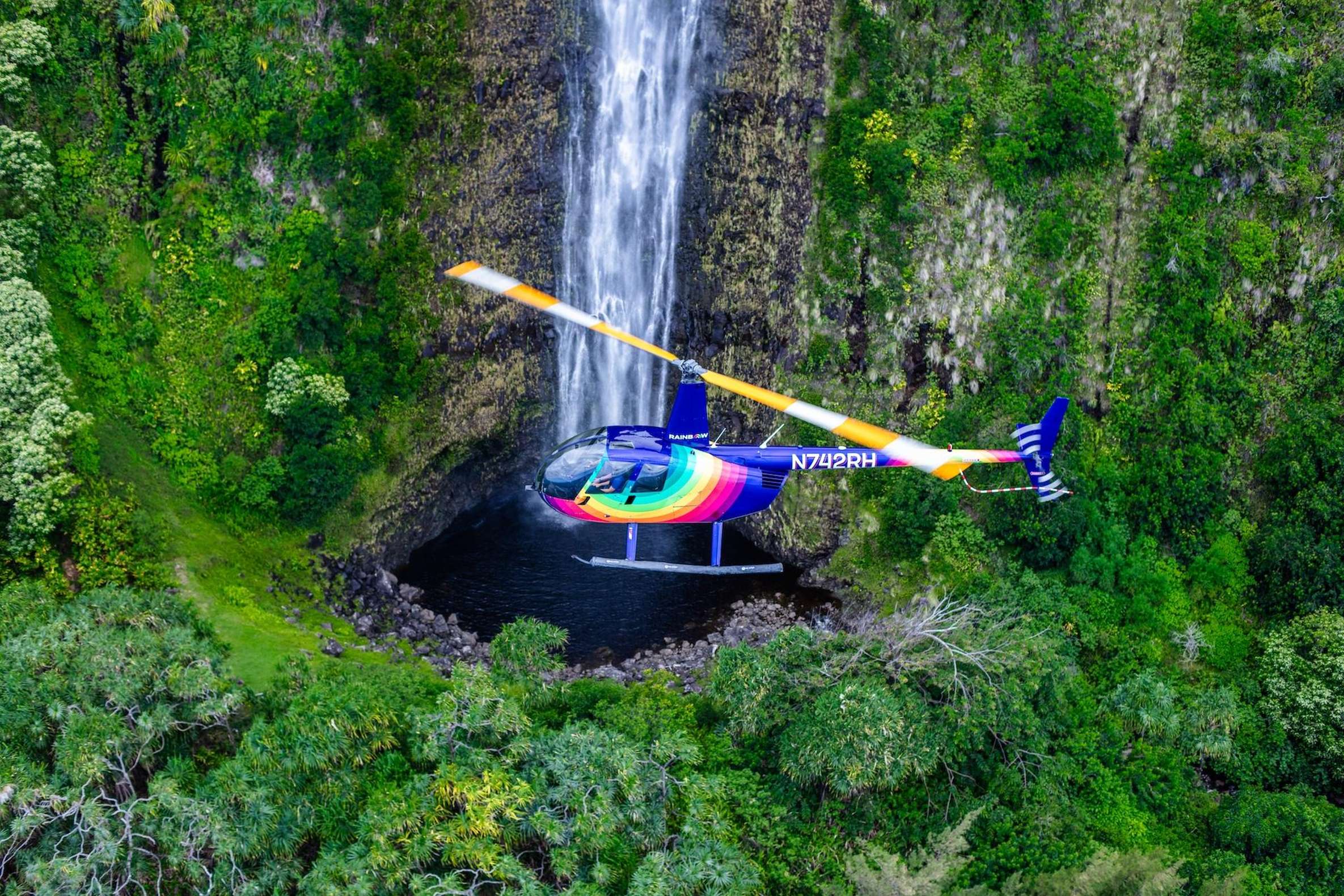
The maneuvering is part of the show. Pilots hover and rotate the aircraft so passengers on both sides of the cabin get their turn at the falls.
Federal rules set the margin: at least 500 feet above terrain, 200 feet over knife-edge ridges, and a standoff of 300 feet from raw cliffs where low-altitude authorization applies. Close, but never careless.
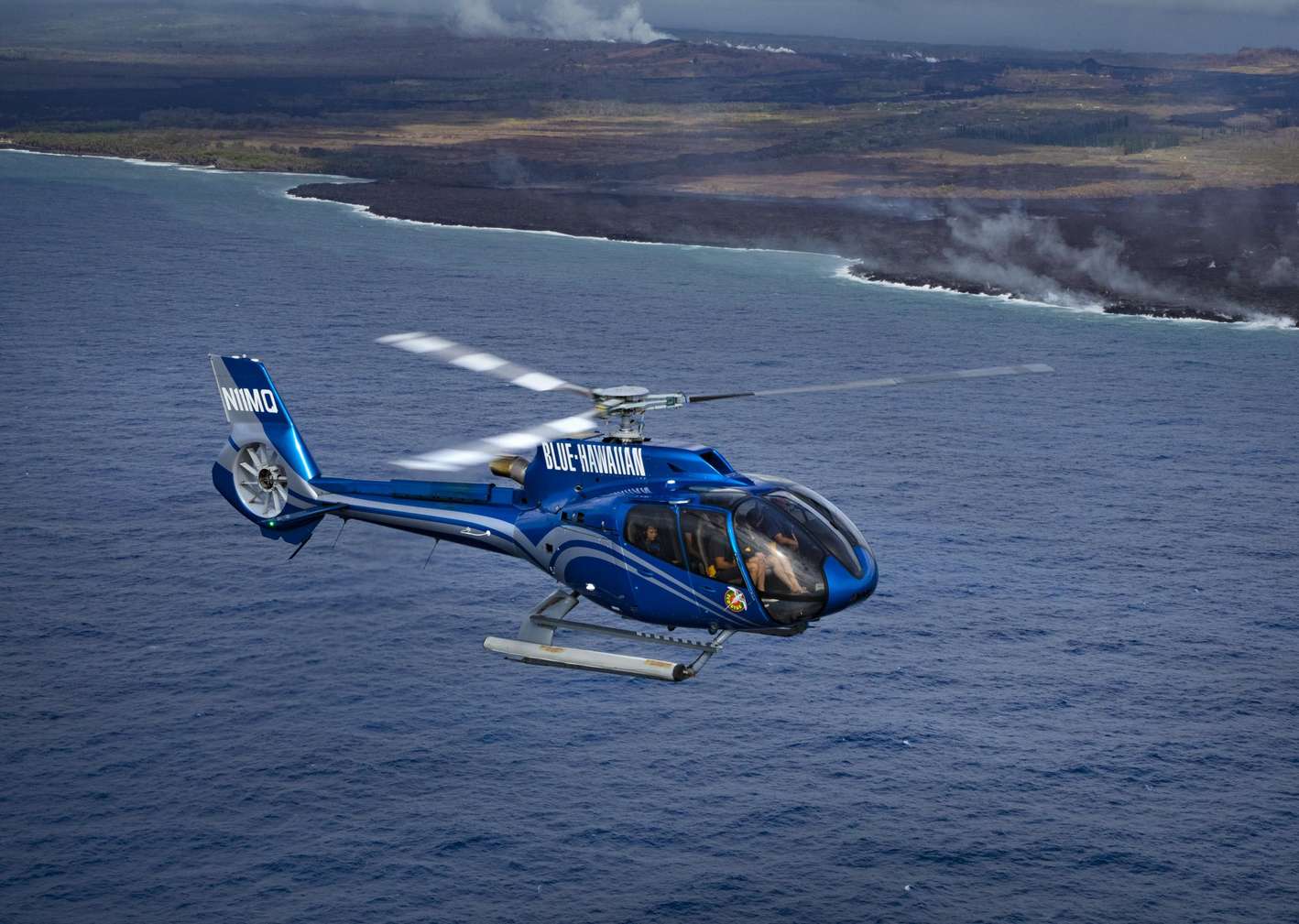
A route that does this well is the From Waikoloa: Kohala Coast Helicopter Adventure, a 50 to 70 minute flight over Waipiʻo's sea cliffs and the deep valleys beyond, narrated by a pilot who is a State of Hawaii certified guide.
Best time of day and season for a waterfall flight
Morning wins on the Big Island, and the physics explain why. Between 8 and 11 am the winds are calmest and the skies clearest over Kona and the Kohala ridges.
From midday the trade winds and thermal turbulence build over the interior ridges, and cloud peaks between 2 and 4 pm. An afternoon flight is not doomed, but the odds sit with the morning.
The east side plays by its own rules. Hilo faces rain and gray skies in every season, and the sweet spot there is late morning, around 11 am, after the early rainfall has passed. Kona and Waikoloa mornings run smoothest before the afternoon winds roughen the approaches.
The month you pick sets how much water is falling.
Hamakua Coast rainfall and wind by month
July: 130 mm of rain. Warm summer trade winds deliver brief coastal showers that maintain steady waterfall ribbons under sunny skies.
HighestApr, Jul to Aug, Dec119 to 130 mm
In betweenMar, May to Jun, Sep100 to 113 mm
LowestJan to Feb, Oct to Nov84 to 96 mm
Darker months: higher, from 84 to 130 mm
Tap a month to read it.
January: 13 dry days. Winter showers keep waterfalls surging with heavy volume while helicopter tours encounter occasional weather delays.
HighestDec to Feb10.4 to 13 days
In betweenMar, Oct to Nov7.2 to 8.6 days
LowestApr to Sep1.8 to 4.4 days
Darker months: higher, from 1.8 to 13 days
Tap a month to read it.
January: 0 windy days. Winter showers keep waterfalls surging with heavy volume while helicopter tours encounter occasional weather delays.
Lowestall year0 days
Darker months: higher, from 0 to 0 days
Tap a month to read it.
The falls run year-round on trade-wind moisture, but November through March brings the storm systems that swell them to full thunder. Summer keeps a steady, moderate flow. So winter gives you bigger water, and a morning slot gives you the best chance of actually seeing it.
A morning booking has one more quiet advantage: if clouds delay it, the afternoon is still there to reschedule into.
Picking the departure point for your waterfall flight
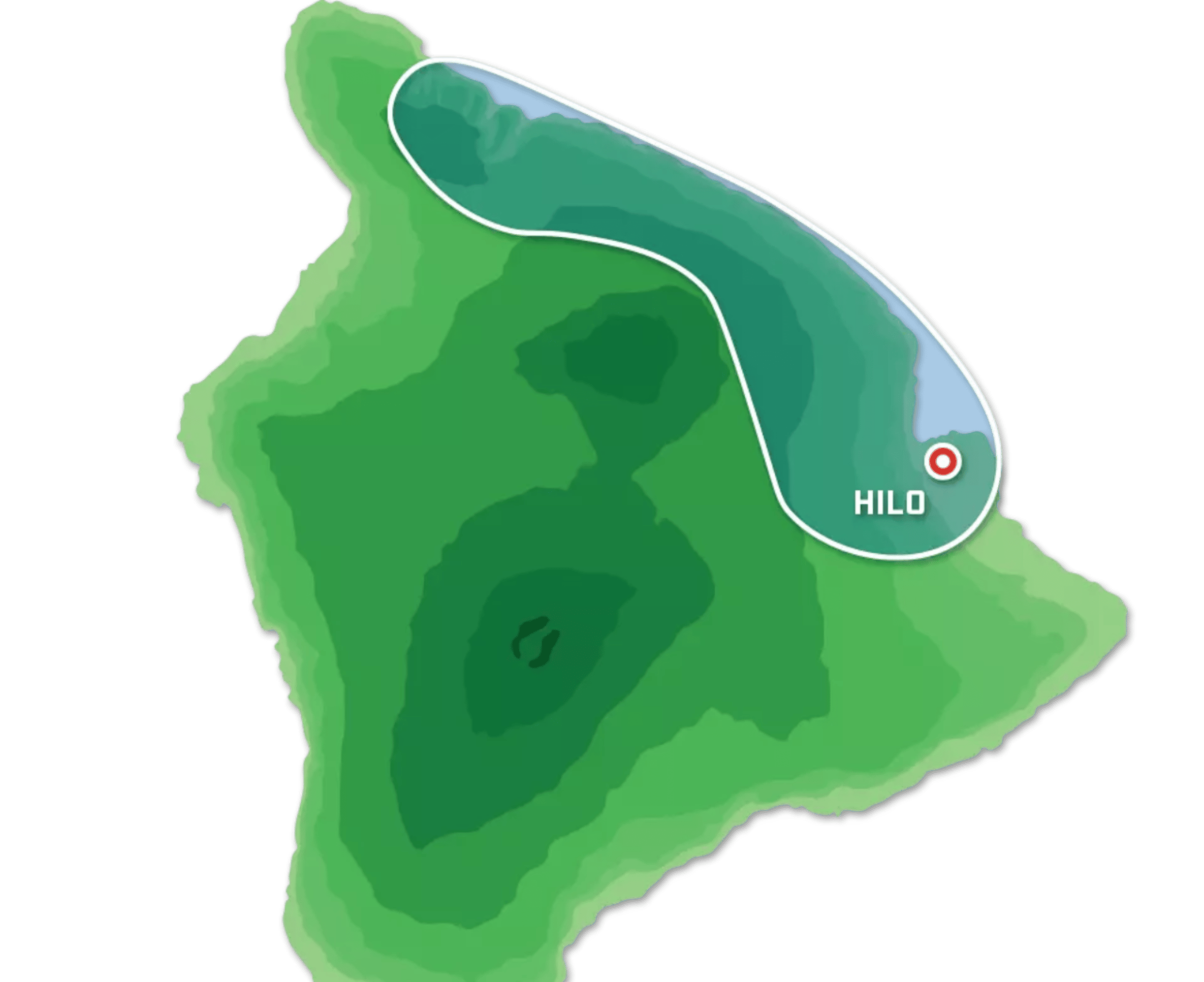
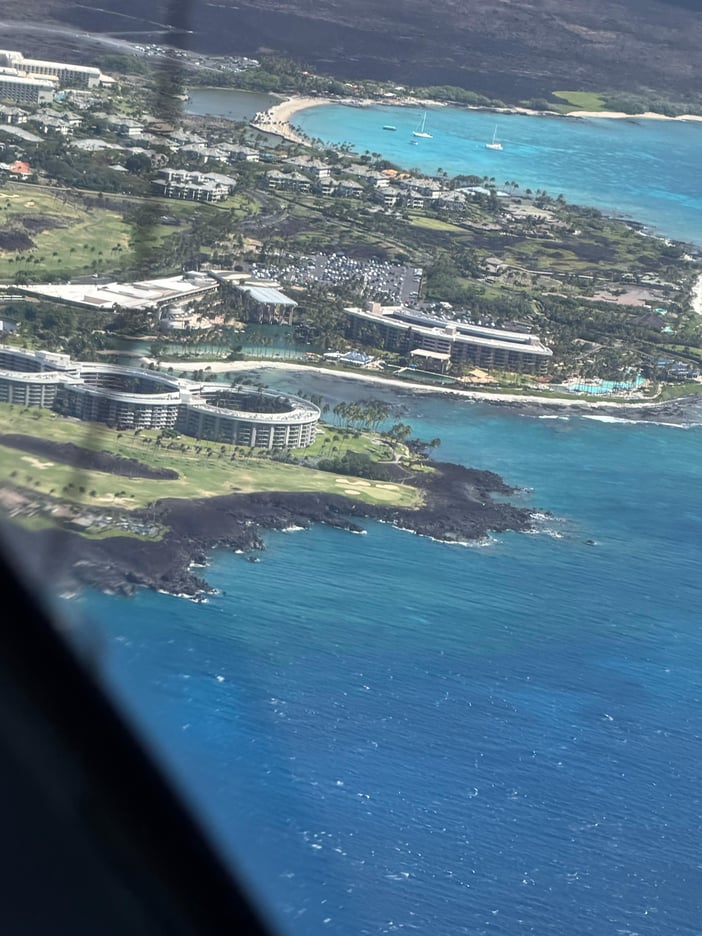
Where you sleep decides where you should fly from, more than any brochure does. From the Kailua-Kona resorts, Waikoloa Heliport is a 50-minute drive; Hilo International is 87 minutes and nearly twice the distance.
If you are staying on the Kohala coast itself, Waikoloa or Kona Airport keeps the morning easy instead of spending it on the highway.
The bases fly different routes. West-side departures run valley and coast flights, and longer ones cross the island to the volcano.
Hilo puts you straight onto the wet green side, so its flights reach the volcanic landscapes with the least transit time over dry lava plains, and Hilo waterfall flights run about an hour against roughly an hour and 45 minutes from the Kona side.
Waikoloa, Kona and Hilo departures compared
Waikoloa
Kailua-Kona
Hilo
Drive from the resorts
50 minutes from Kailua-Kona
Departures at Kona International Airport
87 minutes from Kailua-Kona
Route emphasis
Kohala valleys and sea cliffs
Coast loops and island crossings
Volcano and Hilo-side waterfalls
Flight duration
50 to 70 minutes for valley routes
30 to 60 minutes on coast loops
About 1 hour
Waikoloa
Drive from the resorts
50 minutes from Kailua-Kona
Route emphasis
Kohala valleys and sea cliffs
Flight duration
50 to 70 minutes for valley routes
Kailua-Kona
Drive from the resorts
Departures at Kona International Airport
Route emphasis
Coast loops and island crossings
Flight duration
30 to 60 minutes on coast loops
Hilo
Drive from the resorts
87 minutes from Kailua-Kona
Route emphasis
Volcano and Hilo-side waterfalls
Flight duration
About 1 hour
For a straight waterfall flight from the Hilo side, the Hilo: Hilo Waterfall Experience Helicopter Tour runs an hour in an Eco-Star with large windows and a certified pilot-guide doing the narration. The short version: Waikoloa wins on drive time, Hilo wins on shorter airtime at a lower rate.
Short valley run or full island loop for waterfall views
The choice comes down to one question: how much of the island do you want in one flight? A focused Kohala run of 50 to 70 minutes spends all its airtime on valleys and cascades, and runs cheaper because it skips the long crossing.
Island-wide flights that reach Hawaii Volcanoes National Park log 1.5 to 2.5 hours in the air, and the extra hour is where the fare climbs.
If you want both in a single flight, the Waikoloa: Big Island Spectacular Helicopter Tour covers Kilauea, the Hamakua Coast rainforests and the Kohala valleys in about 105 minutes, with an option that lands at the base of Laupahoehoe Nui, a 1,200-foot waterfall.
It is the version for travelers who want the whole island's range and accept the longer sit.
How to choose a Big Island waterfall helicopter tour
Check
Why it matters
Our pick
Route emphasis
A valley route spends every minute on waterfalls; an island loop splits time with the volcano
Fully dedicated to the Kohala valleys and sea cliffs
Duration
Longer flights cost more and test younger passengers
50 minutes standard, 70 with a waterfall landing
Aircraft
Seat layout decides the view from your chair
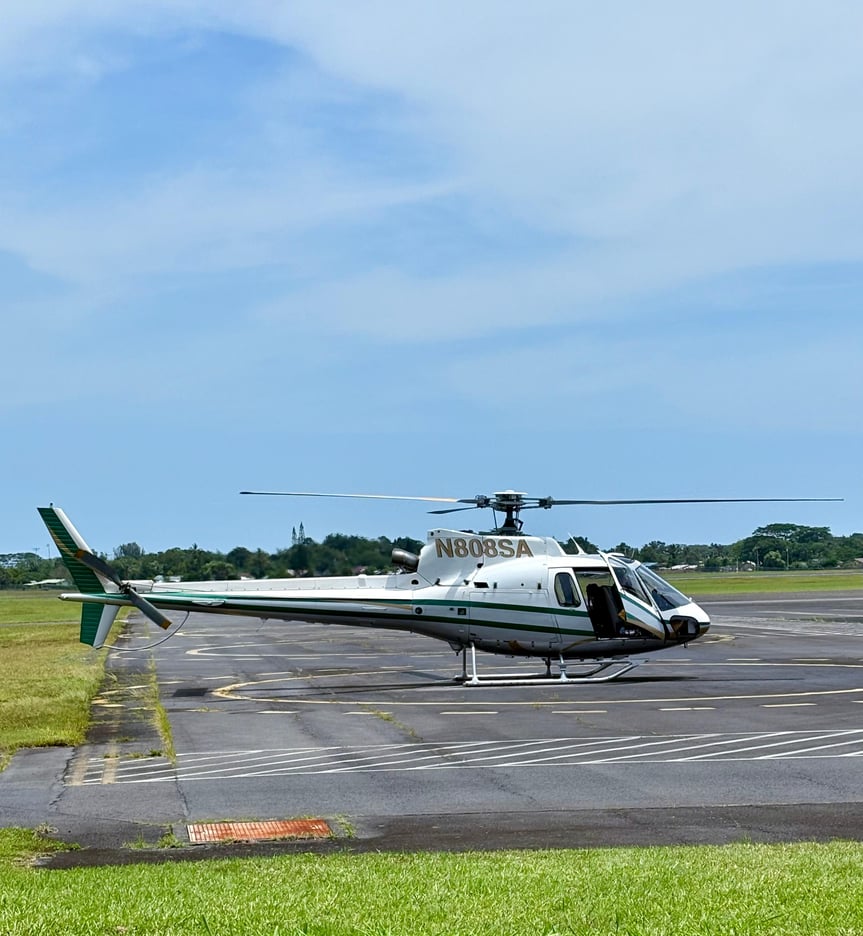
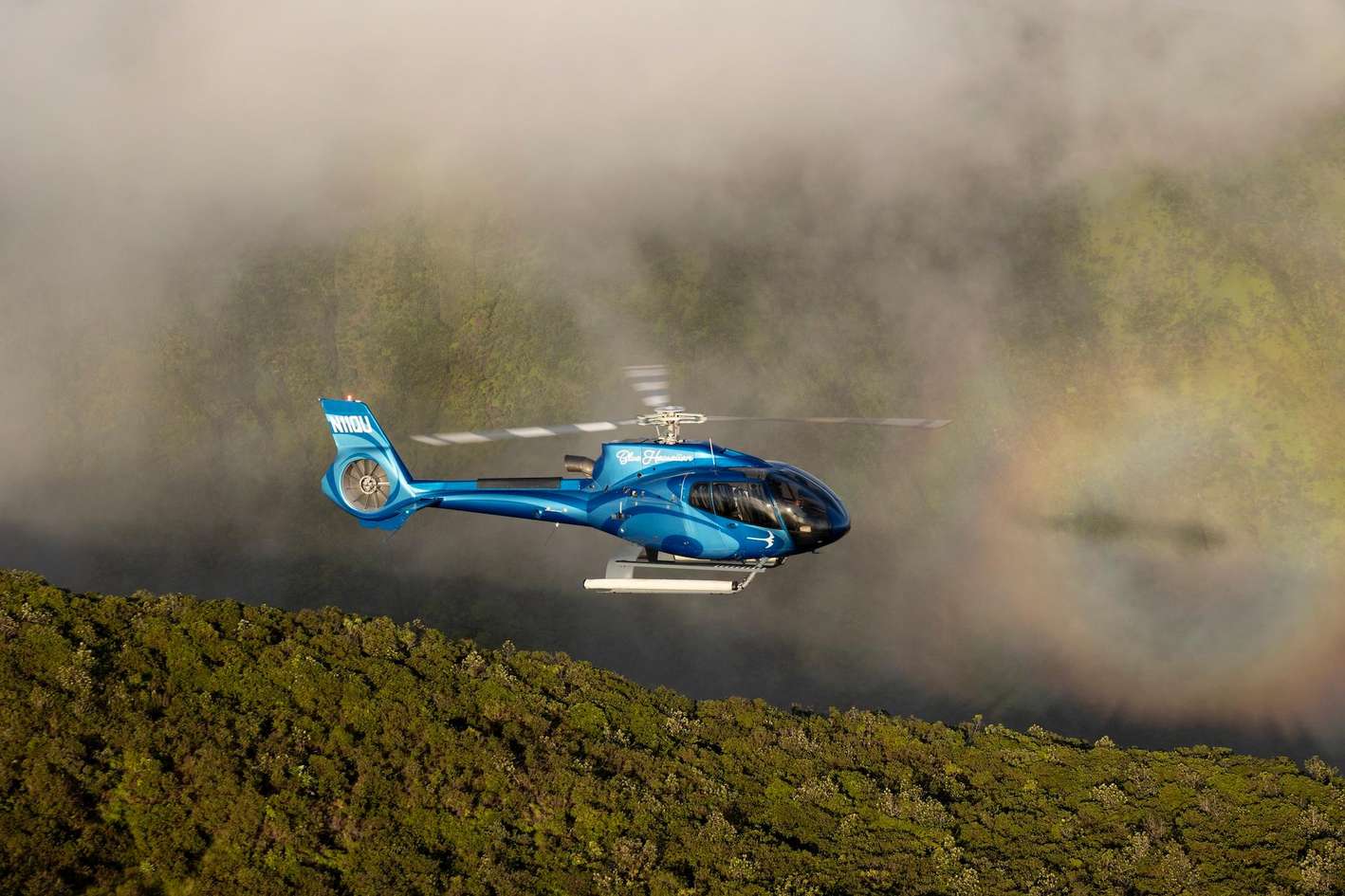
Eco-Star EC-130 with wide windows and raised rear seating
Landing
A touchdown at a fall is the rarest part of any tour
Optional landing at Laupahoehoe Nui on the longer option
Two ways to pay less: shorter tours from Hilo run cheaper than west-side island loops, and booking online directly usually beats the resort activity desk.
Tour for this
Waikoloa: Big Island Spectacular Helicopter Tour4.2★ (10) · 105 minutes - 2 hours · Free cancellation
The drive is the part people underestimate. From Waikoloa Beach Resort, Kona Airport is about 41 minutes away; Hilo Airport is an hour 21. From Kailua-Kona, the airport departures are effectively on your doorstep, while Hilo runs an hour 27.
Crossing the island is a different animal. The route over Saddle Road, the Daniel K. Inouye Highway, takes an hour 20 to an hour 30 in good conditions, but the airport's own guidance is to allow 1.5 to 2.5 hours, because weather and elevation change fast along that highway.
Climbing out of the dry lee side into Hilo-side rain in a rental car is exactly the microclimate shift the warning is about.
And plan the return too. Driving back to the west side after dark is the mistake regulars warn about: sudden torrential rainforest rain, fog, and rockfalls near the mountain gulches make that road a poor place to be at night.
Getting to your waterfall flight
Self-drive from Waikoloa or Kailua-Kona41 minutes to an hour 27 depending on your resort; leave a full hour of margin
Easy
Cross-island drive on Saddle RoadAllow 1.5 to 2.5 hours for weather and elevation changes
Moderate
Return drive to the west side after darkRain, fog and gulch rockfalls make the night crossing a risk
Difficult
The pattern is simple: the closer your bed is to the heliport, the more morning you keep. If Hilo is your departure, stay east the night before, and the whole problem disappears.
Driving yourself
Rent a car in Kailua KonaCompare cars from the rental companies in one search, then pick yours.
Check-in, weights and seating on a waterfall flight
The desk opens well before the rotors do. West-side flights ask you to check in 60 minutes before departure, Hilo flights 45 minutes, and one operator wants a full hour on the Hilo side.
That time goes into weighing every passenger and running the safety briefing, so a late arrival can mean no flight, with no refund. The weigh-in is real, and it decides more than the bill.
And your actual seat is not yours to choose: FAA weight-and-balance rules assign every seat by passenger weight, so couples and families cannot guarantee sitting together. Smaller four-seat aircraft give everyone a window view; larger six-seat helicopters have middle rear seats where views get partly blocked.
The hard stoppers are worth a second read.
No scuba diving within 24 hours of departure, and certain health conditions rule some flights out. ::alert Before you book: the rules that can stop the flight Scuba diving within 24 hours of the flight | The lower cabin air pressure raises decompression sickness risk, so divers are denied boarding; dive the day before the day before Weight over the operator's threshold (240 to 250 lb depending on the flight) | An extra seat is required for aircraft balance, at a reduced charge, and must be arranged after booking Health conditions like vertigo, pregnancy, or inability to sit upright | Several tours rule these passengers out; check your booked operator's own policy before paying
Weight, not preference, assigns your seat, and the rule that bites hardest is the dive rule. Check your own plans against that table before you pay, because these are the few conditions that cost you the flight outright.
What to wear and what not to bring on a waterfall flight
The clothes come down to the glass. Wear solid dark colors, black, navy or charcoal, because bright clothing reflects in the windows and ghosts into every photo you take through them. It is advice, not a rule, but everyone who has reviewed their photos wishes they had followed it.
Temperature is the second factor. Closed cabins are climate-controlled, so casual clothes are right and a heavy jacket is too warm. Doors-off flights run 10 to 15 degrees cooler than the ground, with the wind adding to the chill, so long pants, a long-sleeved shirt and a windproof layer go on, along with closed-toe shoes.
The item list is short because the bans are long. Hats, scarves, purses, bags, water bottles, extra lenses and selfie sticks all stay behind or in storage.
Phones and cameras fly only if tethered to you with a wrist or neck strap; some operators supply straps and cases at the base. Sunglasses stay on, held firm by the headsets, though a strap is smart. Tie long hair back tightly with an elastic.
What nobody tells you
Light clothing leaves ghosts in every photo
Bright tops reflect in the window glass and show up as glare or silhouettes in every shot through it
Your sunglasses are safe in flight
The aviation headsets grip them firmly at the temples, so they stay put even on doors-off runs
Straps can be bought at the base
Operators sell the wrist and neck straps phones need on doors-off flights, so a forgotten one is fixable
Pack once, the night before, against this list and you walk straight through check-in. The dark shirt is the one detail that decides whether your waterfall photos are worth keeping.
The fear is reasonable and the numbers are on your side. Fatal air tour accidents in Hawaii average fewer than one a year across all islands, and a 2009 study found the crash rate fell 47 percent after Hawaii's own 1994 safety rule.
For most people, the statistical risk on a commercial tour is comparable to or lower than a daily interstate highway commute.
The flying itself is constrained by rules that exist for exactly this. Pilots may only fly at heights and speeds that allow a safe landing if power fails, and if an engine does quit, they are trained in autorotation, a glide technique that brings the helicopter down under control.
Every tour files a performance plan before each flight, and flights over water carry flotation gear with a ditching briefing before takeoff. Reputable operators cancel or reroute when bad weather moves in.
The stomach is the smaller worry. Helicopters fly smoothly, and many people who get carsick feel nothing in the air.
The turns in Kohala's valleys bank the aircraft, so take ginger chews or non-drowsy medication before boarding, keep your eyes on the horizon, and mention severe motion sickness to the ground staff, which can sometimes land you a forward seat.
A traveler's note
The tour was simply incredible, our pilot was super nice and explained a lot. We'd book it again anytime. Nothing compares to an experience like this.
The cabin is where nerves go to settle. Everyone, children included, wears a headset that blocks the engine noise, and the pilot's briefing and two-way microphones mean you hear a calm voice the whole way.
First-timers say the fear of heights fades within minutes of leaving the ground, and plenty of nervous flyers report the flight felt smoother than the drive to the airport.
What happens if weather turns on your waterfall flight day
Rain alone rarely stops a waterfall flight. Passing showers are normal along the Hamakua Coast, and pilots usually fly through them; the route and sights simply shift with the wind and weather.
What grounds a flight is low visibility, low cloud, heavy rain or high wind, and the call gets made on the day, typically close to flight time.
When it happens, the terms are generous. Operators cancel, delay or reroute rather than fly into a bad microclimate, and a weather cancellation brings rescheduling or a full refund if you cannot make the new slot.
One operator refunds in full if it moves your tour to another day and you cannot attend the next time; another treats a changed route or flight time as the tour still running.
If the weather turns
If this happens
What happens then
Flight canceled for weather or low cloud
Reschedule to another slot, or take a full refund if you cannot
Tour moved to another day and you cannot attend
Full refund with no penalty
Flight runs but the route changes
No refund or discount for a changed route, points of interest or flight time
The hedge is on you: book the flight early in your trip, never the final day, so a cancellation leaves days to rebook. And book weeks ahead for peak summer and the December to January holidays, when morning slots sell out two to four weeks in advance, prime ones up to six weeks.
A morning flight puts you back on the ground by late morning with a whole day unspent, and both bases reward that.
On the Hilo side, the sights sit close together. Rainbow Falls, the 80-foot Waianuenue with rainbows in its mist, is 1.5 miles from downtown, and Boiling Pots two miles upriver, an easy pair in 45 minutes. ʻAkaka Falls runs a paved 0.4-mile loop to a 442-foot drop, 25 minutes north of town.
Add Liliʻuokalani Gardens on the bay, the farmers market that opens at 7 am, and Onekahakaha Beach Park just east of the airport.
Near Waikoloa, the coastline carries the afternoon. ʻAnaehoʻomalu Bay has a historic Hawaiian fishpond beside the sand, Holoholokai Beach sits near the Puakō petroglyph fields, and Spencer Beach Park walks to Puʻukoholā Heiau, a national historic site with a visitor center and interpretive trail.
The pairing works because the flight shows you the country and the ground day lets you walk through a piece of it, at your own pace, with the aerial map already in your head.
A waterfall flight earns its cost when the route goes deep into the Kohala valleys and the weather cooperates. Book a morning slot early in your trip, fly from the base closest to your hotel, and expect hover time inside canyons no road reaches.
Go ifYou want waterfalls and green valleys more than lava, and your trip has spare mornings for a weather rebookYou are staying on the Kohala or Kona coast and want the shortest drive to the heliportYou are visiting between November and March, when the Hamakua cascades run at full volume
Skip ifYour top priority is volcanic scenery and an erupting Kilauea; a volcano-focused route fits betterYou scuba dived within the past 24 hours or have a condition your operator rules outYour trip ends tomorrow and there is no buffer day to absorb a weather cancellation
Quick answers before you pick a flight over the Kohala valleys and Hamakua coast.
Waikoloa Village2026
Hovered inside a valley where the walls run 2,500 feet and the falls have no road. Book the earliest slot you can.
Is a waterfall helicopter tour better than driving to Akaka Falls or Rainbow Falls?
A road stop shows you the drop. A flight shows the whole water path, where the water collects, and the valley walls around it. Pilots also sweep past several valleys and water channels in a single run, and some Kohala falls have no road or trail at all.
Can a waterfall flight work if Kilauea is not erupting?
Yes. When no eruption is underway, visitors often find the green valleys and cascades of the Kohala Coast more impressive than the quiet craters. Flights into the canyons with walls of 2,000 to 4,000 feet deliver dramatic scenery on their own.
Do helicopters hover at the waterfall faces?
On Kohala routes, they do. Pilots hover inside cascading wall canyons up to 2,500 feet and rotate the aircraft so both sides of the cabin get a view and a chance at photos. In Waimanu Valley, flights hover close to the falls and its 2,600-foot cliffs.
Will the flight still go out if it rains along the Hamakua Coast?
Passing showers are normal there and usually do not stop a flight. Low clouds, severe rain, or high winds can delay, reroute, or cancel it, and the pilot makes that call near departure time based on safety and visibility.
Can we see Wai'ilikahi Falls without hiking?
The falls is about 1,080 feet tall, tucked inside Waimanu Valley behind the Muliwai Trail. Reaching it on foot means eight miles of hiking and 13 stream crossings, so most people see it from the air.
Why does a Kohala waterfall flight cost less than an island-wide volcano flight?
Flight time drives the price. Reaching Hawaii Volcanoes National Park and back takes 1.5 to 2.5 hours in the air, while a focused Kohala run is shorter, so you pay for less airtime.
Why can't my partner and I pick our own seats?
Operators assign seats by passenger weight to balance the aircraft, and FAA weight distribution rules set the exact arrangement. That means no choosing your own seat and no guarantee your party sits together.
Will the tight turns in Kohala's valleys make me nauseous?
The flight itself is generally smooth, but banking over deep valleys bothers some passengers. Ginger candy or a non-drowsy remedy before boarding helps, keep your eyes on the horizon, and tilt your head into the turns.
Is a waterfall tour a good fit if I mainly want to see lava?
Probably not. A Kohala waterfall route centers on valleys and cascades rather than volcanoes, and no helicopter flight guarantees flowing lava anyway. Pick a volcano-focused route if lava is your priority, or accept that a quiet crater often loses out to green valleys.
Do helicopter flights actually land next to waterfalls?
Usually not. Landing in a remote valley requires a rare and strictly regulated permit, so most flights stay in the air. One Waikoloa flight offers an add-on with a landing on a grassy pad below 1,200-foot cliffs, and a longer island flight includes a landing at the base of the 1,200-foot Laupahoehoe Nui waterfall.
More Hawaii waterfall helicopter tours and flight answers


 Your best match